The North Pond Hermit

“A poet is a nightingale, who sits in darkness and sings to cheer its own solitude with sweet sounds.”

Percy Bysshe Shelley

Strange tales abound here: this land of woods and rugged coast, of granite and fir trees and deep, cold, clear waters. In the waters, down at the harbor, seaweed and kelp stream from buoys and docks, pulled out and pushed in by a constant flow of tides. They flow out and stand, streaming, as if they are the hair of a strange and spooky spirit, barely tethered to the shore.

This place, this land of such long winter; right now, as I type, tiny flecks of ice and snow are hitting my deck and the rain is pouring down. It is 36 degrees, and it is April 12th. Hidden in these woods are old trucks, older houses, ancient bottles, middens: the remnants of lives lived here for centuries.

If you drive north of where I live, the land becomes level again, and then downright flat. The trees are spindly and lighter colored than the fir trees that populate this section of the state. This is the road to Baxter State Park, the place with the tallest mountain in Maine, Katahdin, and one of intense, majestic beauty. As you drive west from Millinocket, the flat roadway all of a sudden becomes intensely wooded again, out and up as you drive toward one giant mountain. I was informed the other day that the reason for this is a conjunction of two small tectonic plates: one that originates from the East, and one from the West. Each brings different rock, soil, and climatic features that inform the visage of this part of the state.

But today, the story is not about the lands north of Mount Desert Island, or of Baxter State Park, but rather, of Rome, Maine, a small town about 120 miles west of where I sit at this moment, typing while listening to the ice fall from a grey, cloudy sky. The videos linked below were made by our state media conglomerate, and I find them really fascinating. Mostly what I find fascinating is the attitude of the North Pond Hermit’s pursuers: they clearly knew of a person who was consistently robbing them of food and tools and other supplies, and had known of him for a long time. They also seem to have a fondness and a fascination for him, as if they don’t understand his behaviors but don’t want to make him feel scared. Almost, they want to protect him from others and protect him from himself, protect him from what sent him into the woods thirty years ago, while also understanding that if someone has burgled his neighbors close to 1,000 times over thirty years, that there must be some sort of consequence.

See what you think: each one is about two minutes long.

I am having trouble embedding the videos, so follow this link: Hermit Captured, Part 1. After watching Part 1, you can watch Parts 2 and 3.

At the end, when you are left with that mental image of a fifty-something man who has not seen his own face in almost thirty years, who lives in the woods of Maine in a nylon tent, who refuses to leave that tent during the long winter lest he be found, who spends his days reading and meditating, think about what that would mean for you. How would it be if your last conversation with another human being was in the mid-90’s? How would it be if your neighbors were the needles of fir trees, the birds that call in summer and migrate in winter, the rush of streams and rivers, and nothing else? How would it be if you hid, and I mean, really hid, away? And then, how would it be when you were finally found?

Do you think he is sad? Happy? Both?

“There is a chivalry, here, of a sort”, said Isak Dinesen in her book, Out of Africa, and that idea plays true here in the rural towns of the middle of Maine. People protect each other: it is the culture of the place. Never are you truly alone, even if you choose to live your life as if you are. Clearly, in the case of Christopher Knight, his isolation and his invisibility were protected both by his cleverness, but also by the people who surrounded him, even though they knew nothing of him. A strange cultural element of country life is that people are allowed to be here; encouraged by the spirit of Yankee independence, there is no one way to be.

“Knight remains at Kennebec County Jail, where he is being held with the general population of inmates.

He is not under suicide watch, according to jail officials, who said they couldn’t answer any additional questions.

“I saw him a couple days ago and I was pleased at how well he was adjusting,” Perkins-Vance said. “He was more social. He actually had expression on his face.”

She said Knight has been charged with the burglary of Pine Tree Camps, but noted that other charges also have been filed. She did not specify what those charges are.

“I think this is as much of a shock to him as it is to us to comprehend what’s going on inside his mind,” Hughes said.” (Bangor Daily News)

A Funny Thing Happened at the Health Food Store

IMG_2243

The Robert Frost poem that discusses paths in the woods, and taking the one less traveled by, is a tried and true trope of our contemporary culture, and represents both a great romantic idea and an understanding of risk and reward.

IMG_2257

How do we know anything that lies in front of us in this life? We can take the trodden path, the one we know, and expect at least some results based on past experience, but even experience does not prepare us for life’s pitfalls and surprises. And when we measure the risk of venturing out and down the path that is dark and laden with heavy woods, the fear of the unknowns can be all too overwhelming.

IMG_2249

These thoughts were cavorting through my mind the other day when I stopped into our local health food store in Bar Harbor, and there I found a friend who is dealing with this place in life herself. Both of us stand with two paths in front of us: the path of least resistance and more security, and the path of hope and the heart.

IMG_2269

Whilst chatting with her over my paper cup of coffee, she behind the register and me standing to its side, two people began to check out with their groceries and eavesdropped on our musings about life. They said, to us both, that you don’t have to choose, that the right course will become illuminated and just to trust that it will. Trust is something I struggle with, being a lady who likes to plan and problem-solve. How does one trust in the unfolding of one’s path in this great universe of ours? How does one trust in the unfurling of opportunities, knowing the risks of being one of spring’s buds, the new leaf growing outward into the coldness of the spring air? How do you know if summer’s warmth and light is here, or if some new frost will come around and stop your growth in its tracks?

IMG_2245

I suppose that you never truly know anything, in this life. You can plan and plan and plan, and still be surprised. Today, in the midst of a spring rain, I noticed tufts of green grass coming out of the ground that, for months, has been beige-brown and lifeless. I heard, again, new birds in the trees, and watched a loon hunt for fish in the harbor. As I worked, piecing together a necklace so many years in the making, I watched two seagulls fly together, playing in the wind. Tonight, I sit here, at my kitchen table-desk, wondering about what lies ahead, and how to remain grateful and surprised at the opportunities opening up before me. Like the receding ice that has covered the rocks for six months, there are surprises hidden underneath: new joys that are uncovered each day.

IMG_2260

To work!

IMG_2280

Spring Fever

“I respect kindness in human beings first of all, and kindness to animals. I don’t respect the law; I have a total irreverence for anything connected with society except that which makes the roads safer, the beer stronger, the food cheaper and the old men and old women warmer in the winter and happier in the summer.”

Brendan Behan

Feeling the seasons change in your bones, and in the bones of others, is a rather mystifying experience. All day today, in my travels over and across this island, people said the same thing to me: “are you enjoying the weather?” because, of course, we all are. It is amazing to feel the sun and warmth return after such a long time: my journal reflects our first snowfall from November 9th, and here we are April 4th, and although we may get another snowstorm or two, I think it is safe to say that winter is resolutely over, and spring is here. This season of spring is so short here in Maine: a mere two months, mid-April to mid-June, and then of course the shortness of summer, too, mid-June to beginning of September, then fall and winter find us, again.

But enough about that.

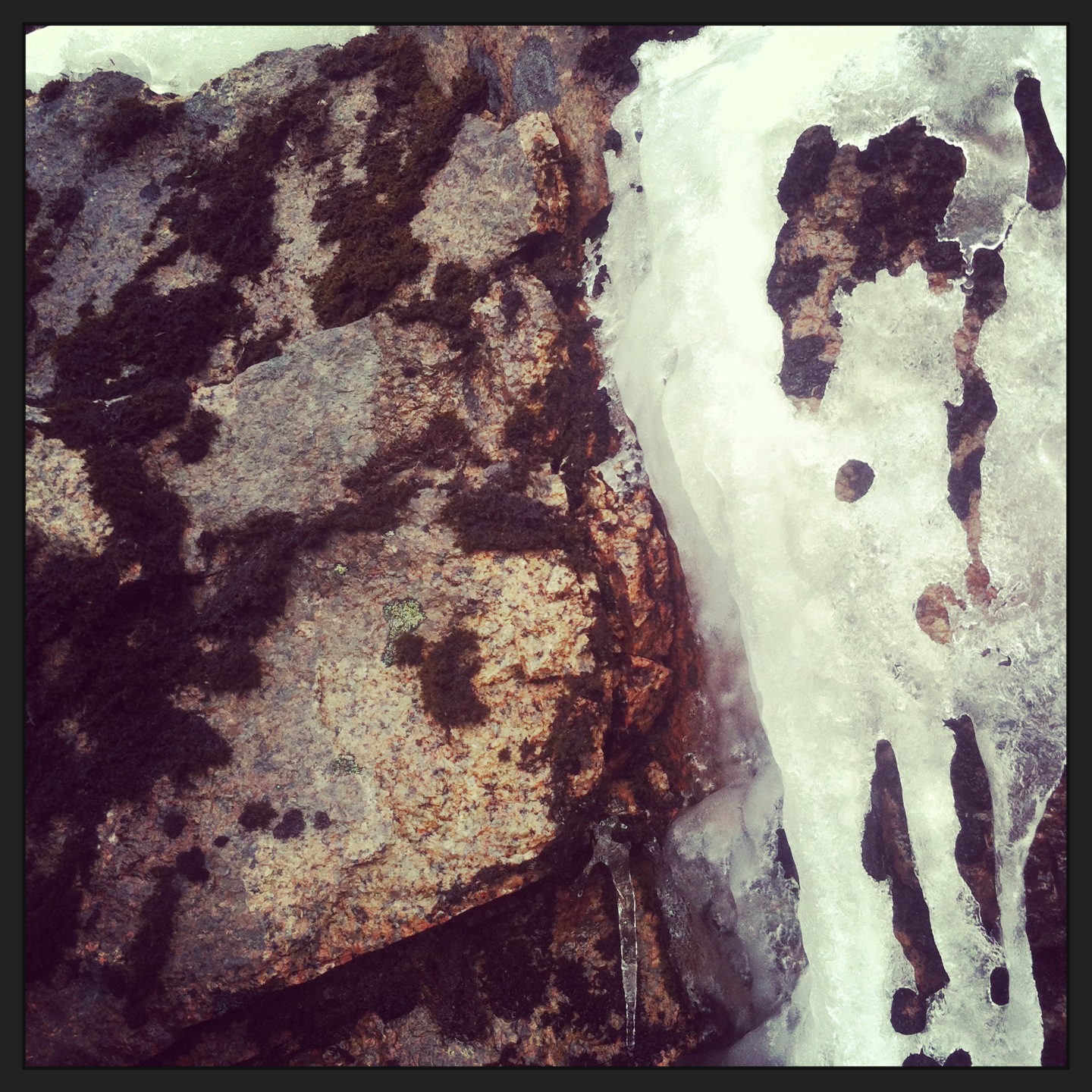
Spring fever is in the air: birds are singing about it, plants are bursting forth communicating their connection to our Earth and our position in space relative to the Sun, beautiful people near and far are catching each other’s eyes, gardeners are sweeping back the layers of leaves left on the ground after so many months. Ice is melting to reveal moss, no ferns or leaves just yet, but we all know they are lurking under there somewhere.

march 2013 7The Tarn, still frozen, two weeks ago!

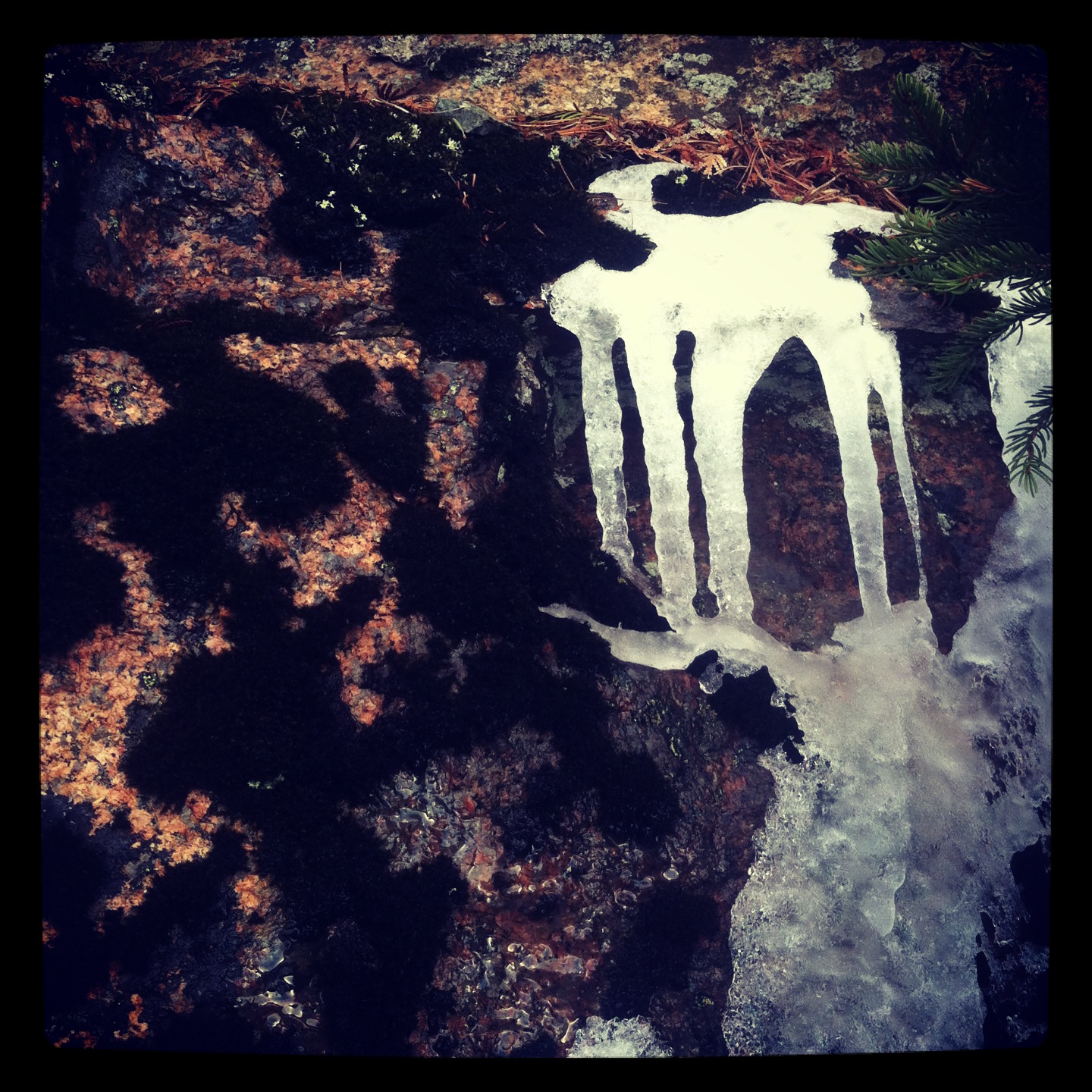
Driving home from Bar Harbor today, I took the scenic route and noticed the sunshine on the top of Dorr Mountain, and followed the light all the way down the cliffs edges and onto the surface of The Tarn. When I was a little girl, we used to fish in The Tarn, but I don’t remember catching much. Today, the sunlight seemed to burnish the golden-colored reeds leaning out of the dark blue water. A mere few weeks ago, those same reeds were held up and in place by white ice, the same ice that spread across the surfaces of all the ponds and lakes, and up mountainsides and dripped off ledges in suspended animation.

This afternoon, the glow of spring seemed to beam off the surface of The Tarn, clearly communicating that warmth is back, the sun has returned. During the sunset, as I drove the long way home through Otter Creek, and then took Cooksey Drive onto the Hill of Seal Harbor, over and through the wooded, mossy roadway, lined with the granite walls of the fancy peoples’ houses, the light remained a bronze-y, brass-y, gold, a colour that left us for so long. The last time I remember it was in the fall, one bronze morning.

Transitions, even joyful ones like this one, are difficult because your rhythm and routine is disrupted; it takes a while to regain the swing of things when the environment is fundamentally changing. I have said it before, but this place connects you so strongly to itself. You are quite literally a part of the landscape and you feel its shifts within your body and mind. For the last few days, the only way that I can channel this shifting energy, this cacophony of nature expanding and exhaling and returning to us after sleeping for six months, is to handle stones and place them in a path, to feel their rough texture, their weight in my arms.

Premier Automne

<p><a href=”http://vimeo.com/59230893″>Premier Automne (2013)</a> from <a href=”http://vimeo.com/user1362690″>Carlos De Carvalho</a> on <a href=”http://vimeo.com”>Vimeo</a&gt;.</p>

“Abel lives in the winter and Apolline lives in the summer. Isolated in their “natures”, they never met each other. They are not even supposed to meet. So when Abel crosses the border and discovers Apolline, curiosity is overwhelming. Their encounter soon becomes more complicated than they could imagine. Both of them will have to learn compromise to protect the other…”

Spring is coming here on the Maine coast; you can feel it in the wind, and smell it in the air. Spring, which in Maine means 36 degrees today and 28 yesterday, is full of sunshine. I have discovered my garden to be a very windy place. I believe that my proximity to the harbor, but placement up on the side of its hill, means the wind funnels up as if on a highway, hitting my part of town with some serious force. It’s hard to say whether the wind chimes will ever actually make it up onto their hook.

Compromise, the theme of the short film above, is a great theme for the transition into spring. All the members of my tiny town are gearing up for summer: realizing that our days of ease are numbered. Everyone is keyed up, in a way: thinking about hordes of out of towners, cars on the streets, the opening of restaurants and shops, seeing more than the 300 people who populate our town right now. We all have to compromise, in myriad ways, to live here and to live with each other. We have to compromise in terms of money, of jobs, and of earning potential. Here, you must be creative or  you must go somewhere else. We also have to compromise and understand that the peace of fall into winter comes at the price of serving thousands of people for three months in the summer. We have to compromise with each other and understand that each of us experiences this transition in a different way, probably, I suppose, based on the amount of years one has spent riding this tourist economy rollercoaster.

This is my first go-round: my first experience of seasonal living, of seasonal changes, of being a part of tourist-driven small paradise. The seasonal changes have effected me in profound ways; I feel this intense energy of spring bouncing around inside my body and mind. Each day there are new sprigs of grass, new calls of birds who have returned, bulbs are bursting forth from the ground. The pressure is on, as the Earth here in Maine finally exhales its winter breaths, welcoming in the smell of sunshine on chlorophyll-laden leaves.

Conversations with…

march 2013 4Somes Sound

I had a friend who I will call M. M was 52 when she died about three years ago, after a very short battle with a very intense cancer. M was my ex-husband’s best friend’s mother, and when we met, about ten years ago, we instantly became friends. At that time, she was living with her husband and youngest son in a wonderful bungalow in the Heights, an older neighborhood of downtown Houston: one of its oldest suburbs. The house was filled with artwork, and old furniture, trunks, animals, coffee cups, ashtrays, and M.

M was an acquired taste to many people. She could be difficult, she was snarky, she was wickedly intelligent, and had a wry smile that instantly communicated how she felt about any situation. She was genuine, she didn’t beat around the bush, she struggled, she never knew what to do, but always tried her best.

march 2013 8Precipice Trail

When I learned that M had cancer, it was about a year after I had split from my husband and about six months after we had divorced. I hadn’t spoken to her in quite a while because of the divorce, and I sort of felt like she was part of my ex-husband’s family, and so assumed that I wouldn’t see her again. But, when I learned she was sick, my heart was hit with what felt like a rock, and I realized that I needed to see her. I called her the next day, and told her I wanted to come over. It was near the end of the school year that year; the heat of the Texas summer already beating down on me as I walked through the parking lot of her apartment complex in South Austin.

When I walked into her apartment, she said something very simple to me. She said, “It is so good to see you.” And it was true; it was great to see each other. What was not great was that she was so sick that she was having a hard time using one side of her body and could not use one arm at all. Her apartment was a mess, and her younger son who used to be precocious and seven years old, was now sixteen and scared out of his mind, and expressed that fear by withdrawing and flunking out of school.

march 2013 5In the Woods

Over the next four months, I saw M almost every day, and tried my best to wrap my head around cancer, families, relationships, fear, death, illness, our failing healthcare system, courage, acceptance, grief, denial, and a host of other emotions. I took her to the doctor, I took her to the emergency room, I took her to a man named Francis the Healer, who let her lie on a bed and relax. It was at Francis’s that we had our most profound conversations. We spoke about love and life a lot. We spoke about the temporal nature of life, about what it was for and why it was important. We spoke a lot about me, and some of the time about her. M was an adopted mom of a sort, but she was more like that aunt that has always done her own thing, is irreverent and uncategorizable, who makes you uncomfortable sometimes, but who you are drawn to, like a magnet of life inside her just pulled you in.

M was tough. She was demanding, and most importantly, she was intensely protective of her three sons and how the situation impacted them. Denial is a serious and complicated emotion, and has a very important place when you are dealing with cancer. Denial comes in the form of your ex-husband showing up with $300 worth of organic groceries despite knowing that his ex-wife can barely eat anything. Denial comes in the form of renting a house with a crazy, winding set of front stairs knowing your mom is in a wheelchair, and planning on building a ramp so that she can get in an out of this beautiful house in a beautiful place. Denial is late night phone calls and emails begging someone to come and see his mother because she is dying, and him not listening. Denial is looking at your friend’s dead body in a hospital room, knowing she is gone, and not being able to leave her body because she hasn’t been alone, not even for a moment, for four months. Denial is fighting, from all sides.

Acceptance comes in strange ways, too. Acceptance comes in the form of arriving on the doorstep, even for two days, from across the country. Acceptance is not being able to speak in the emergency room of a hospital when your mom has to have an emergency blood transfusion. Acceptance is listening to a nurse explain to you that you should take your friend to France because there is no care for her at her age, without insurance. Acceptance is sitting on the stairs in that same house with all the steps, looking at photo after photo of your friend smoking cigarettes for her whole life, all the while touching her youngest son, just to let him know that he and you are physically here, in this moment.

I came up here, to Maine, for about two weeks, during that summer when M was dying. I called her one night, it was July 4th and I wanted to see if someone had taken her to the fireworks. We had this hilarious conversation in which she told me she wanted to be taxidermied and stuffed so that she could still come to all the important events in our lives, and that we could just carry her around to holidays and weddings. In this same conversation, as I was sitting on my friend’s brick patio, in July, in Maine, she told me that she understood what death was, that it was a crossing, but that she would be able to cross back sometimes and communicate in some way. She was in acceptance of what was happening and knew where she was going.

The day before she died, she was very in and out of her body and of time, she was traveling all over the world and through different eras. She said a lot of funny things, but the thing that she kept repeating was how much she loved her boys. There was no doubt, to anyone, about how much she loved them. No matter how much morphine she was on, or how much pain was racing through her tiny little body, she kept communicating that she loved them, she loved them, she loved them.

march 2013 11Looking Back at Mount Desert from Islesford, from a very tiny boat!

What does this have to do with me, now, today, in Northeast Harbor, Maine, after my two week hiatus, when I house sat in the woods with ten cats, and made jewelry, and mulled over my life? Tonight, I sat out on my deck for a while and stared at the stars, and watched the moon rise over the harbor, and talked to ________ (whatever you want to call it) for a while.

march 2013 10Moon Rise over the slowly melting Snow Mountain

While speaking to __________ tonight, on the deck, I asked the question: “why do I feel so lonely here? Why is it that this place is so lonely, so alone?” I love this place, but the sense of solitude is Great, and I mean great as in size, not value or experience. I feel, in my heart, that the loneliness here is part of the place, meaning that it is somewhat inescapable, and therefore, must be accepted into your heart as not a negative aspect, but just another part of the environment, like the wind off the ocean, the sculpted granite, the six month long winter, the call of seagulls from the roofs of buildings. My question of loneliness was more related to my own fear of closeness with others. In cities, there are so many people and restaurants and cafes and museums that you are never confronted with that truth of our own isolation, our aloneness in the world. You can be so easily distracted and meet so many people to have friendships with that you never have to confront the deep thoughts that come in winter, in Maine, on a wooden deck, on the edge of a harbor.

march 2013 1Somes Sound from Sargeant Drive

Coming back to my friend M: when I first saw M in that tiny apartment, when her arm didn’t work (Francis and M and cancer treatments fixed that, by the way), she told me that she knew how she had gotten cancer. I looked at her and asked her, “how?”. She told me that every morning she poured a cup of coffee and went outside to smoke her morning cigarette and asked the same question: “Well, what the fuck am I going to do now?”. She told me that she believed she got cancer because that was the energy she put out every morning, and the thought with which she started each new day. Whether you believe in that or not, she believed in it, and it resonates with me to this day.

One of the things that I have learned from winter, from Maine, from Northeast Harbor, is that this life, this time, is all about perspective. Sometimes the tininess and the loneliness of this place scares me, like tonight. And sometimes, the loneliness, the solitude, is utterly joyous because you feel like your slice of the world is wholly yours, and that the beauty of the moment is happening to only you, as if you can hold on to beauty and awe in your hand, heart and mind, for pure moments of time.

march 2013 3Somes Sound

Today, for the first time in months, I sat on the grass, with a cup of coffee, a book, some chicken salad and some french bread and had a picnic with myself in the spring sunshine. I had just spent two hours digging out a path to my new house, from the road. The path will be lined with rocks, and filled with grey pea stone. It will be a lovely start to my first garden in a long time: the first garden, really, since I sold my house back in the fall of 2009. So, perspective comes with time, and the memory of those who have impacted our lives in myriad ways. Perseverance comes in the last dregs of winter, knowing that change is on the horizon, that the sun is coming back, that green things are almost ready to peep out of the ground, and the warmth on the back of your head isn’t from a knit cap, but from the warmth of a new season itself.

march 2013 7The Tarn

I Wake to Sleep, and Take My Waking Slow

“Reflection must be reserved for solitary hours; whenever she was alone, she gave way to it as the greatest relief; and not a day went by without a solitary walk, in which she might indulge in all the delight of unpleasant recollections.”

Jane Austen

path

On Sunday, I begin housesitting at a beautiful post-and-beam house in the woods. This house is made of wood and windows, and is populated by ten cats who perch on shelves and beams and chairs and stairs. Outside are twelve large chickens who live in a henhouse with a red light, and two giant angora bunnies with tufted ears. Inside, in a black cage that hangs from the ceiling are two lady canaries who, I was informed, occasionally lay tiny eggs which, when cooked, have whites that stay clear, not turning to white as chicken eggs do.

During this housesit, this time in the woods, this time away from town, I am embarking on a daily writing and photography project, which will, of course, begin and end here. A photograph of the day, at least, and a prompt will frame the course of the day. Almost two weeks of time alone, to reflect on all that has happened, to prepare for the coming spring, to think about what lies ahead. The steps, still, are a bit murky, are still covered with snow and ice. The path’s end isn’t clear, as has been the case now for many months. I am beginning to be comfortable with the unknowns, with the trust that I will be borne by the universe, carried by my community, and spurred forth by love and faith in myself, by friends, by putting one foot in front of the other. I am looking forward to this small vacation in a home away from home.

I wake to sleep, and take my waking slow.
I feel my fate in what I cannot fear.
I learn by going where I have to go.

We think by feeling. What is there to know?
I hear my being dance from ear to ear.
I wake to sleep, and take my waking slow.

Of those so close beside me, which are you?
God bless the Ground! I shall walk softly there,
And learn by going where I have to go.

Light takes the Tree; but who can tell us how?
The lowly worm climbs up a winding stair;
I wake to sleep, and take my waking slow.

Great Nature has another thing to do
To you and me, so take the lively air,
And, lovely, learn by going where to go.

This shaking keeps me steady. I should know.
What falls away is always. And is near.
I wake to sleep, and take my waking slow.
I learn by going where I have to go.

Theodore Roethke

Time Capsules

cowboy boots

I have been many things in my short life. I have been a camp counselor for young students at the Museum of Natural History in Houston, as well as a genetics lab research assistant (I mostly did what I was told and spent a lot of time inside a giant freezer cataloguing little vials). I have been a bead- and oddities-seller in Austin, as well as a middle school science teacher. I have been a gallery girl in central Mexico, as well as a governess who conducted class on the brick patio of a beautiful hotel. I have been a gardener in New York City, as well as the personal assistant and later business manager of an art dealer. I have been a cross-country-traveling event planner. I have been a middle school teacher in Philadelphia. I have been a gallery girl in Maine, and now a jeweler, seamstress, drawing model, dog- and house-sitter, tutor, teacher, and writer.

ice melting 3

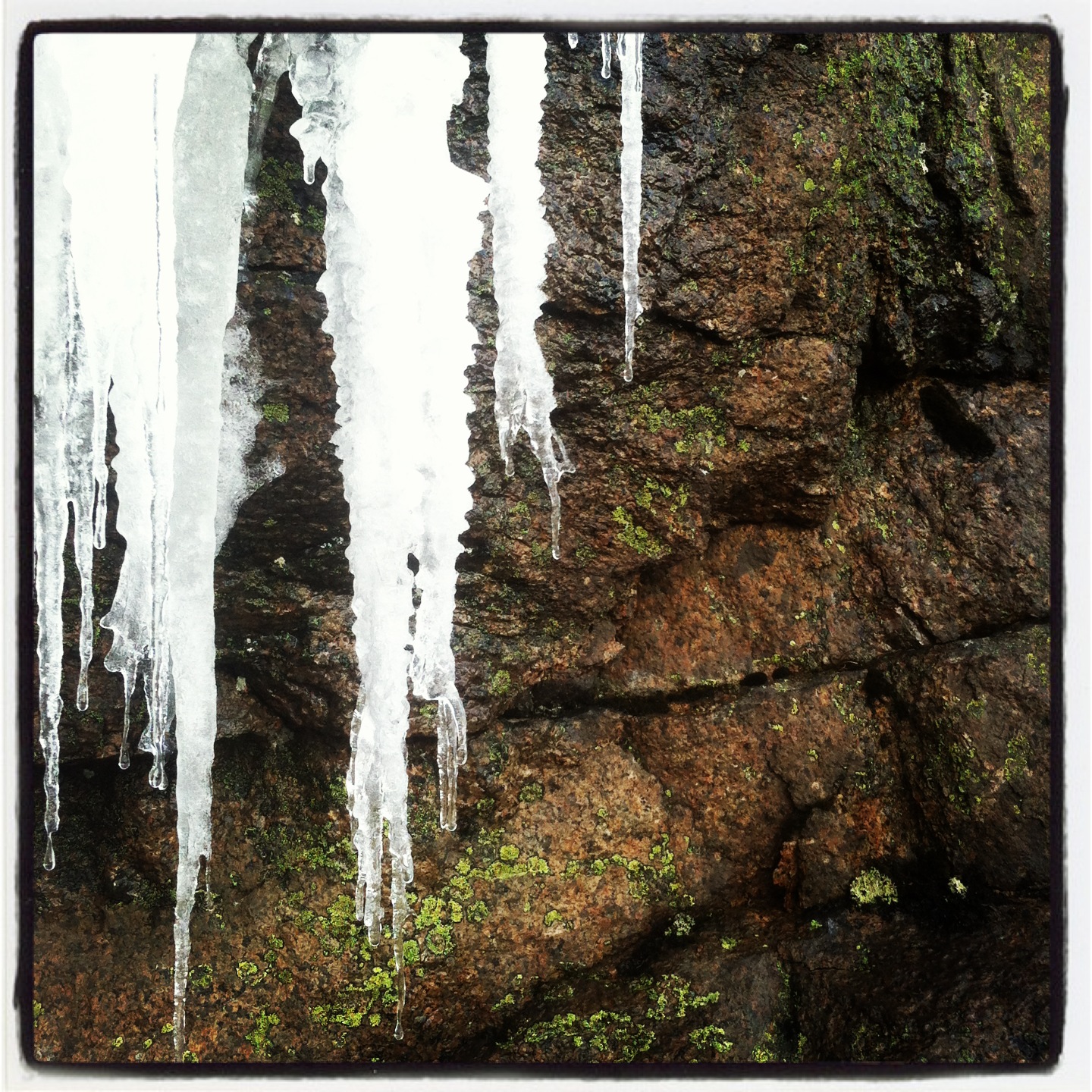
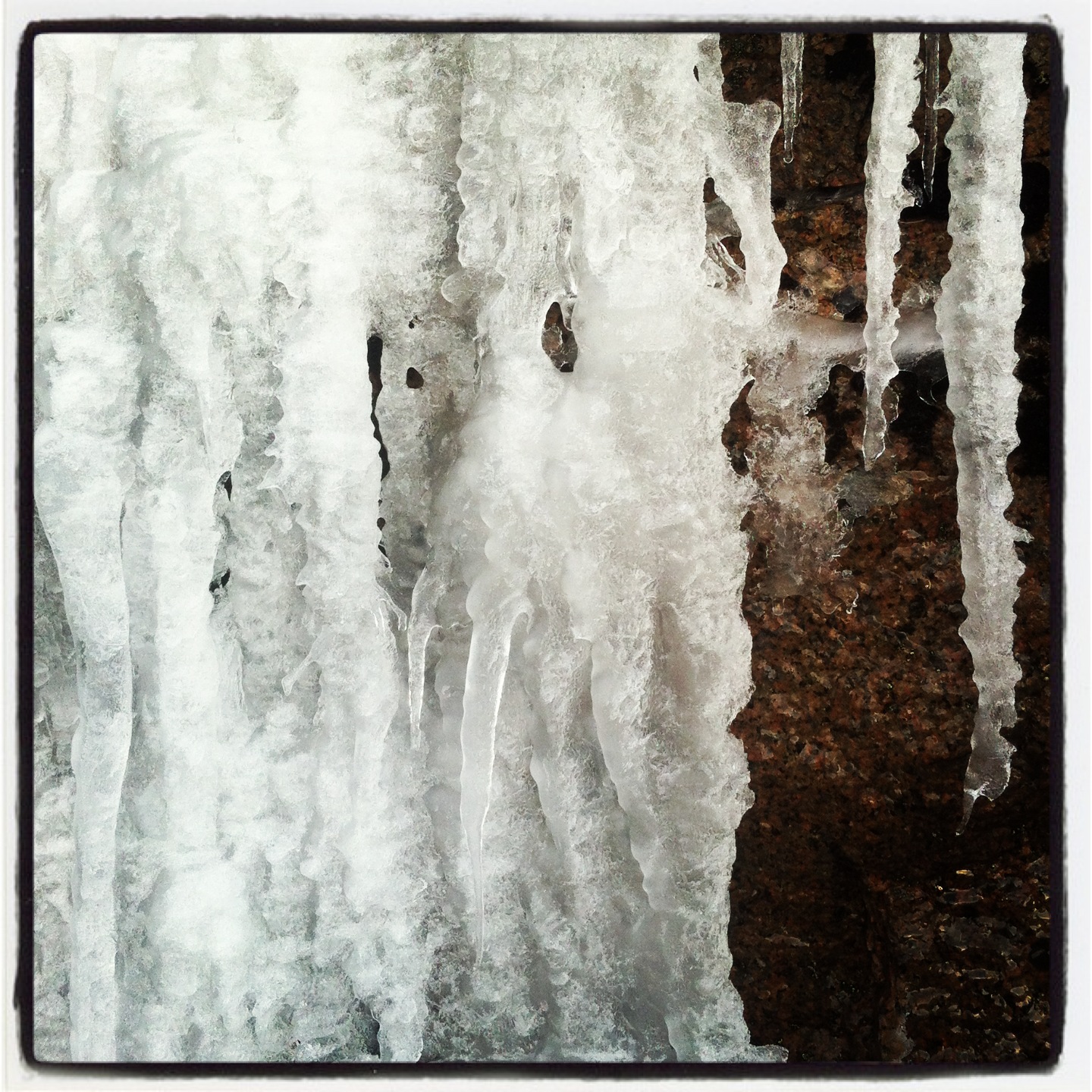
The ice is melting: winter is slowly coming to an end. Water is seeping and sometimes rushing out into the landscape. Little Long Pond, scene of so many early morning ice skates, is now covered with sheets of ice and water all around the edges. Gone is the deep cold, replaced by mud and water, by slush and a landscape that seems to spit up onto your clothes, your car, your everything. There were no deafening cracks or booms as the ice cracked and melted, as I had hoped, just a slow process of light returning, the path of sunlight expanding onto our landscape as if the beam of light was being pulled back, further away, its path widening as each day passed. The sunlight breathed life back into the wilderness, as if finally, after many months, the land began to exhale and inhale again, no longer holding its breath, steeling itself against winter.

grandpa

I received quite a gift today.

In my bedroom for as long as I can remember, I have hung a picture embroidered by my great Grandmother. It depicts two owls, one smiling sweetly at the other, in the tops of grapefruit trees. The colours are green and yellow and brown, and it is something that makes my bedroom feel complete: without it, something is missing. When I moved to Maine last June, the glass in the picture broke due to the overwhelming amount of stuff I had packed into my VW station wagon. My mom took it to the frame shop a few weeks ago to replace the glass, and hidden inside the frame was a note written to me by my Grandpa, for my 1st birthday:

“Canvas done by Mrs McDowell (Grandmother’s mother) between 1940 1942 during the air raids on Liverpool. For P.M. Blythe With Love 1st Birthday” (Also inscribed is 1981 and his name, to the right)

Neither I nor my mother knew this note was hidden inside the frame, and had the glass never broken, we would have never known. Discovering time capsules, like this one, is a bittersweet gift that comes around not often. My Grandpa died in 1994, when I was in 7th grade, the year my parents lost all their money and our family life significantly changed. I remember being a latch-key kid for the first time that year; our front door had a terrible stained glass design of a duck flying through cattails on it. The entryway was linoleum, beige in colour, and the rest of the house was carpeted in drab brown. I remember, when Grandpa died, when we all couldn’t go to England because we couldn’t afford it, and I think were probably limping along quite a bit in those days, being so sad because he was one of my favorite people in the world, if not the favorite. I hadn’t seen him, at that time, in four or five years, and had missed the ending of his life. Those days were hard days for many reasons, and I remember sitting on the linoleum floor by the front door, after school, alone in the house as my brother was outside playing, crying desperately with the knowledge that I would never see him again.

salisbury cove

Once, when my grandparents visited, we went to Galveston as a family and walked around The Strand. I think that my Grandpa really liked the States; he always found humour in our culture here no matter where we took him. After he died, my mom and brother and I went to Galveston one day, and I was walking around my favorite store there: a junk and antique shop full of curiousities. I looked up and saw an old man with bright white hair, a button down shirt and glasses, with a camera around his neck. It was him! I turned to tell my mom, couldn’t find her, turned back around, and of course, he was gone.

ice melting 2

Later, I had a dream that we were all together at the church yard where he is buried, where also my grandparents were married. It is a tiny church, built of old mossy stone, with a yard of graves around three sides. In my dream, our whole family was together: grandma, aunt, cousins, parents, children. We were walking through a churchyard and Grandpa appeared to us, only he was very young: as he was in photos of him during the war. He was smiling and happy, with his strong jaw and bright eyes. We spent time together: the time you can only spend in dreams, when you are not exactly sure how much time has passed, whether it is mere moments, or days, or months. We were all so happy just to be together: my Grandma especially (he died months before their 50th wedding anniversary). Then, suddenly, an array of white stones, set out in the pattern of an English cross, the St George’s cross with its even arms, began to hop up and down, tapping onto the flagstones but keeping their arrangement. He turned to us all and told us he loved us, but that he had to go. We all said goodbye. I haven’t seen him since, haven’t heard from him either.

That is, until yesterday. Love survives: I shall never doubt that again.

breakfast with grandpaBreakfast with Grandpa in 1987 in Formby, Liverpool, England…I would sneak downstairs to have breakfast with him before anyone else was awake.

I’m Not Young Enough To Know Everything

“All the world is made of faith, and trust, and pixie dust.”

J.M. Barrie, Peter Pan


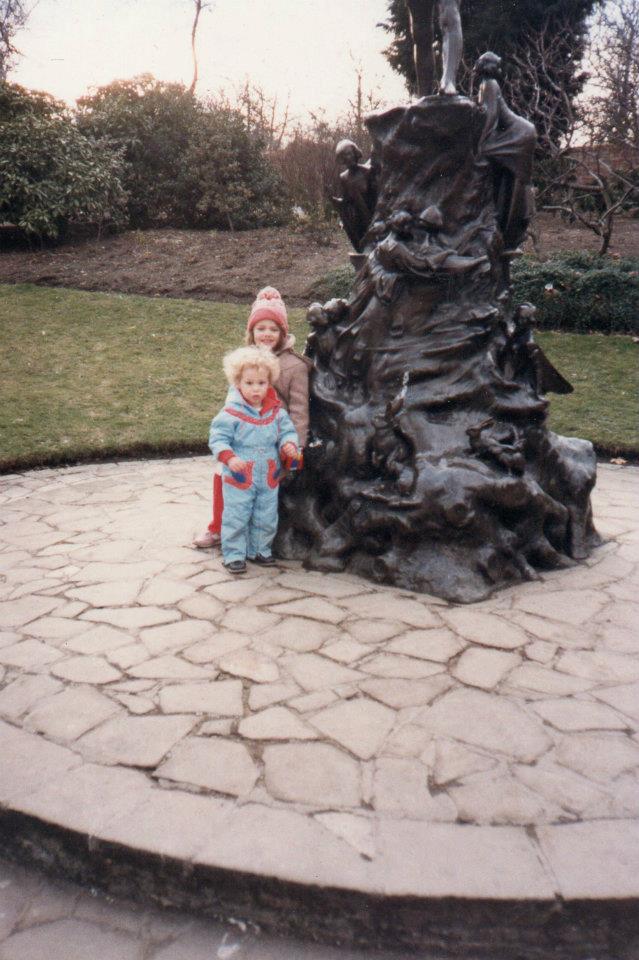
426299_3462935531267_2111031890_nMy brother and I at the Peter Pan statue in Kensington Gardens, London…in 1986…

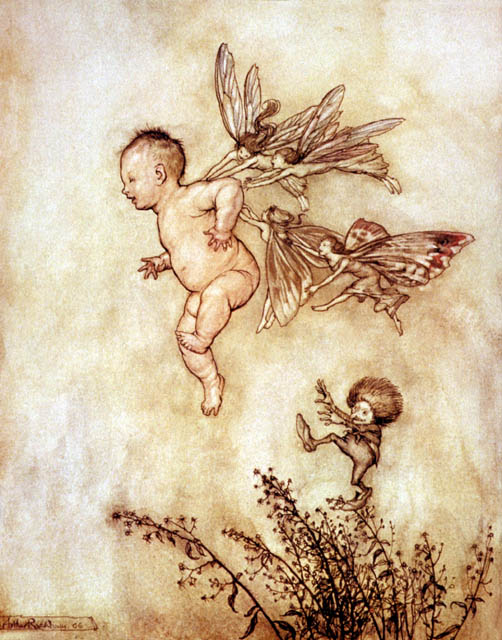
My first tattoo is quite terrible, and in a terribly predictable spot on my body. My “Tramp Stamp” is of one of the faeries from the book “Peter Pan in Kensington Gardens” by J.M. Barrie. This specific faerie was drawn by Arthur Rackham, my favorite children’s book illustrator, and is a depiction of one of the faeries who carry lonely, orphaned and abandoned Peter to safety. The tattoo was made many years ago, when I was all of nineteen, at a tattoo shop on 6th Street in Austin, before I knew anything about getting tattoos. It fades with each passing year, and needs to be retouched very much. But, the sentiment of it remains.

peter_with_fairies

Today, I am reminded, from the advice of my wonderful friend Julie, to be grateful everyday for all the things that are happening. To keep the faith, so to speak. I wrote the following in my journal the other night. I typically don’t combine my journals with the blog, but will today…

“Always remember each lesson, each truth as it is revealed, and be grateful for each, even if in hindsight.

Always remember the power of being true to myself, and that boundaries don’t have to be walls.

Always remember the raw beauty of love, of being in love, even if I fall in love with not the right people…be able to love, and to really understand love as accepting the differences between myself and other people and being able to see the beauty of others through seeing the world through their eyes: to accept others, to really forgive.

To let people teach me, even if their way is confusing or difficult or different from the way I would like.

Remember to be grateful just to have this time to make these realizations. To understand unconditional love and do my best to let go of fear. To be peaceful and loving and happy. To accept people’s faults and my own. To believe people’s compliments.

For more on the Snow Moon, you can read Angel’s more detailed interpretation of the impact of February on the psyche here…..

02 arthur.rackham.imagina.1914.frontispiece.

Six Houses in One Year

“We travel, some of us forever, to seek other states, other lives, other souls.”

– Anais Nin

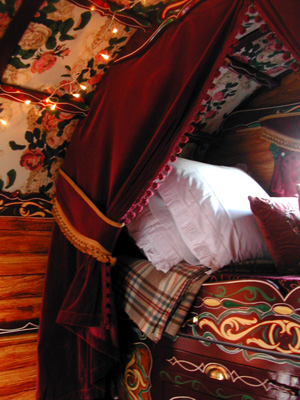
Gypsy Caravan Simple Sue 2The tiny, less than 350 square foot-ness of my new house is making me think of the interiors of caravans. When I was a little girl, we would drive through the countryside in England and sometimes, I would be lucky enough to catch sight of these in fields. I have always dreamed of making one of my own…

I have lived a vagabond lifestyle over the past year; leaving my row house in South Philly last April started a path of moving every month or two, from house to house.When I move into the new house next week, it will be my sixth home in one year. A year ago, I lived on Rosewood Street, in between Broad Street and Mifflin Street in the Newbold neighborhood of South Philly. About one year ago, my house was broken into and everything I owned was thrown into piles of disarray in the living room, kitchen, and bedrooms. I remember walking through the door that day, into the darkness of the living room, darkness created by heavy velvet curtains on the front windows, and noticed the cushions of the couch, books, decorations were all jumbled on the floor, tumbled into a giant mess. When I walked upstairs into my room, my mattress was tossed in one direction, and everything in my bedroom was torn asunder, cabinets opened, shelves ripped apart, everything on the floor as if a tornado had ripped it all apart.

tumblr_m4x9jp6UsE1r1qrlfo1_400

I remember that night vividly, despite the tequila haze that clouded my vision. I spent the whole night on my leather couch, after putting it back together, calling everyone I knew and trying to figure out how this all happened. I kept walking upstairs to try to deal with my bedroom, only to see it again, and walk back downstairs. It took me 24 hours to be able to even go into that room.

After that day, I never felt safe in the house, and ceased to sleep well. It has taken until the last few weeks to be able to sleep well again. About a month after that, my roommate and I got rid of all but our most important possessions, and moved out: she to her brother’s house, and me to my friend’s. That was house #2, in Germantown. It was a beautiful house filled with a beautiful family and their many pets: I shared a room with a canary who sang. House #3 came about a month or so later, when I drove to Maine and landed in my parent’s basement. I took every sheet I could find and made the basement into a giant tent, in which I lived until August. In August, I moved into House #4 in Seal Harbor, Maine; a house with no cell phone reception. I had to walk one mile to the beach to use my phone, and spent many nights there sitting at the dining room table, facing my demons, writing about them, meeting them halfway. I spent nights sitting on the Seal Harbor beach sketching, and drank tea on the rocks in the waning summer sunlight.  In late September, I traveled across the country, and then returned to Maine in late October, moving into house #5, on Lookout Lane in Northeast Harbor. Here I have been, in the house that floats above the street, in this beautiful garage apartment, until now. Next week, I shall gather together the few possessions that I have in bins and boxes, and trundle across town to the new house. The house that I don’t have to leave, because, although I am still a renter, it is mine.

The little house that sleeps on the harbor, up on a hill, next to a day parking lot, and a tree-lined path down to the ocean. Across the street from a few houses, an art studio, a restaurant, and a jewelry gallery, behind a museum and a demolition company with a fleet of red trucks.