
“Worrying is carrying tomorrow’s load with today’s strength- carrying two days at once. It is moving into tomorrow ahead of time. Worrying doesn’t empty tomorrow of its sorrow, it empties today of its strength.”
– Corrie ten Boom
I met Adam in the early fall of 2011. As a new teacher at my North Philly charter school, I was required to visit the homes of all of the students in my home room. Adam lived in the Ojo de Oro neighborhood of North Philly: an area just off Lehigh Avenue that is most easily described as a melange of row houses, bodegas, cars, streetlights, and families.
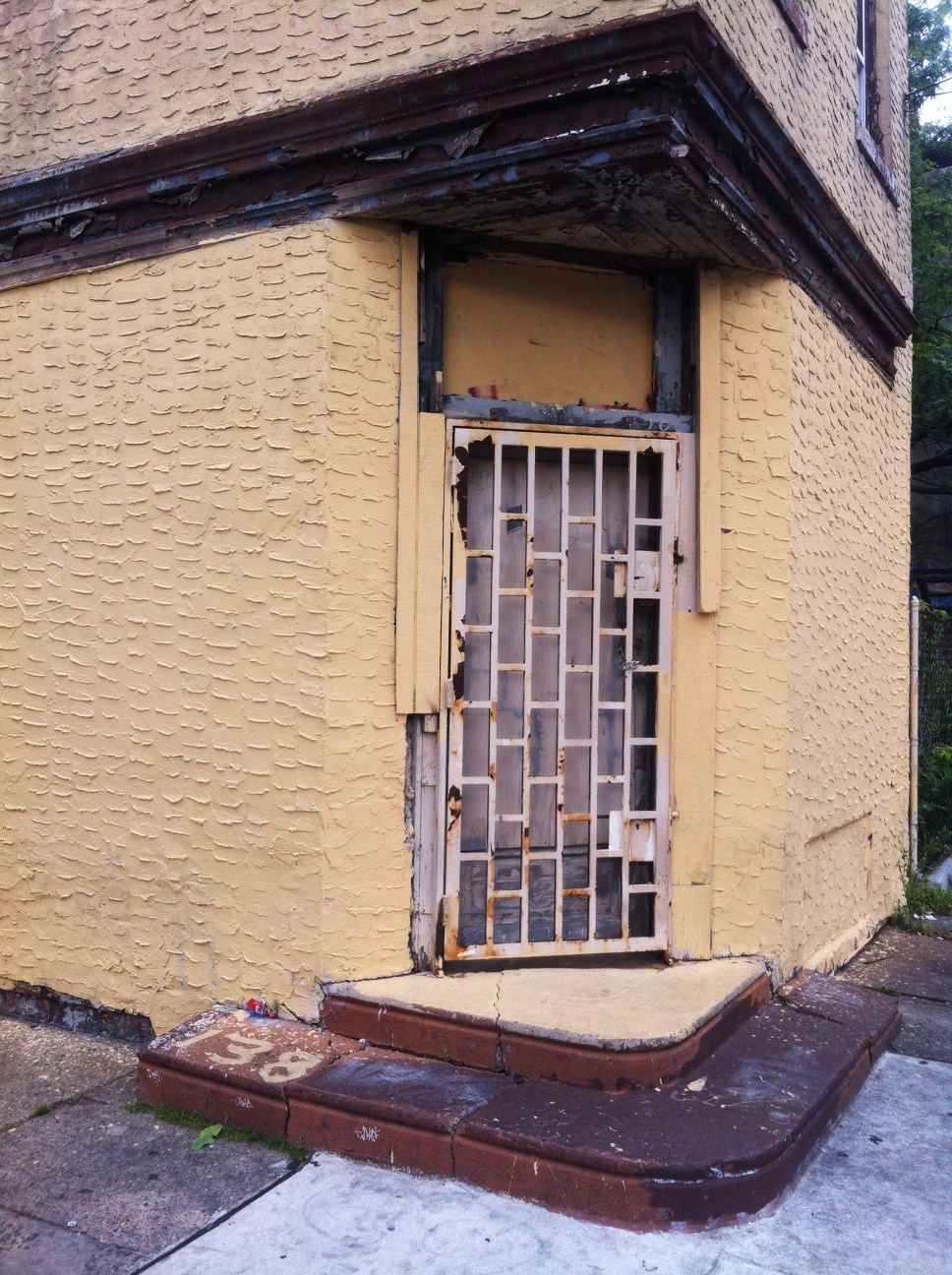
When I pulled up to Adam’s house, or where I thought it was, anyway, I ran into a group of little kids sitting on a stoop, watching a movie on a laptop. Inside, their house was dark and they told me how great it was that they were watching the movie on the stoop. I asked if this was Adams house, and they said, “No! But he lives over there!”. Pointing, they steered me to a cream-colored house with a plain door. I knocked, and was let in by Adam’s mom. Inside, the house was dark, and I soon noticed that there was no floor. I sat on an armchair in the living room, and, looking up, I noticed that there was a huge hole in the ceiling where pipes were visible. His mom told me that some of the pipes had burst and they had tried to fix them earlier, but that the basement still flooded all the time.
Into this room walked a tall, slender boy carrying a huge bottle of blue Kool-Aid. He was wearing a wife beater and basketball shorts, and had just come from his room where he was playing video games. Politely, he told me it was nice to meet me. His mom told me that I was the first teacher that had ever come to their house.

Adam was challenged and challenging: life had set up many obstacles for him including a learning disability, emotional disturbance, a father with a history of incarceration, poverty, and a dominant anger management problem. During the first few weeks of school, Adam refused to attempt any assignment, and when asked a question, would laugh at the fact that I had dared to ask it of him. He sat, in the front of the room, where I had moved him, and did his best to do absolutely nothing.
In this room was a wall of closets, leftover from an educational past that would have had all the students hang their belongings in the closet at the beginning of the day. The school building was about 100 years old and had been built, owned, but not maintained by the School District of Philadelphia for all of those years. When the building was taken over by the charter school, it had sat, abandoned, for many years. Inside, homeless people had used it as a squat house and had stripped every piece of wire, every light bulb, everything of value, from its walls. When the charter started, they had to rewire, paint, and scrub every surface to make it into a semi-functional school again. Its three floors held its history in the peeling paint of its surfaces, its lack of air-conditioning, its squeaky floors, and those long, open-doored closets.
In the closet I kept all the tricks of my trade: lab supplies, baskets, colored pencils, paper, books, and fabric. I find that fabric is a great teaching aid, both as decoration and as a mechanism of soothing troubled children. All of us love touching fabric and looking at patterns and bright colors: this sense of touching something soft and flexible is a tangible way to relax and experience our environment.
One morning, Adam was supposed to take a test to determine his “levels”. These tests are notorious for the stress they cause in the students who are forced to take them. Racially, culturally, and economically biased, their results are questionable and do not take into account the individuality of the test taker. Adam had taken these tests every year he had been in school, and he knew what he was getting into, and most likely, what the results would say. So, he disappeared.
A few minutes passed and I asked the children where Adam was, and no one seemed to know. It was typical for the students to defend each other against the new teachers: they treated us like enemies who were out to hurt them in some way. This reaction to new people was not their fault: it was simply how they had learned to deal with the constant stream of teachers, counselors, and other adults who desired to help them when they didn’t want any help. In a moment of frustration, I happened to look into the closet and noticed that the fabric was moved, and looked almost wrapped in a cocoon. It was then I realized where Adam was.
Walking to the closet, I looked inside and saw a pile of fabric in the shape of a tall and slender boy. Crouching down, I touched him gently and said, “Adam? Why are you wrapped up in fabric?” He said, matter of factly, “I’m just in the closet”. I asked him if it was okay for me to ask him to unwrap himself and come back to his seat. He said no, again, very matter of fact. I asked again, gentler this time, if he would come back to class. Slowly, after a few moments of weighing his options, he uncurled his body, climbed out of the closet and back to his seat, laughing to himself the whole time. In his seat, he seemed to not acknowledge anything strange about his behavior. When the other teacher came to get him for his test, he refused to move, sitting in his seat, stuck as if with glue. When asked again, he became angry: cursing, he still refused to take the test. After much time and power struggles, we succeeded in getting him out of the room, after he locked the door, refusing to leave, and pushed himself against the door frame to stop the adults from being able to physically move him. Despite his slight stature, he was strong and young and absolutely determined not to have his intelligence measured by a test. Later, when we received the results, he was flippant and refused to engage with what those results meant. Again, sitting in the front row, he refused to attempt any of his assignments, and began his path to almost failing the seventh grade for the second time.

Adam suffered from anxiety and, no doubt, felt an incredible amount of pain due to the circumstances of his life. He, often, could not see beyond his feelings to be able to see solutions that were actually fairly simple and direct. In refusing to attempt his assignments, he set himself back day by day, hour by hour. In becoming angry and potentially violent, he instilled in the adults around him a belief that this child was always going to be this way: there was no capacity for change. He had grown up in a terrible neighborhood that was enslaved by urban blight, poverty, open air drug markets, and violence. He lived in a house with no flooring, with a family that was trying their best to succeed when the deck was most certainly stacked against them.
Over time, Adam would occasionally arrive to school in a good mood and his almost constantly sarcastic laughter would give way to real laughter and enjoyment, Slowly, I could tell, he was learning something, even if hardly a pen touched paper during our ten months together. He complained that he was in the front row, and oftentimes was rude to the point of causing me to emotionally react to his behavior. Eventually, though, he grew on me and I on him, and he began to defend me against the other students who insisted on disrupting my attempts at teaching. One time even he turned to the other students and told them that “Miss is the only teacher that ever came to my house”.
I told him once that I was going to take him to Maine with me and put him on a lobster boat because that job was something that would be good for him. He needed time every day to do something kinesthetic: he needed to do things with his hands in order to bridge the gap between his anxiety and his intelligence. Adam was remarkably intelligent, funny, bright, sharp-witted, calculating and had a great capacity to learn and do almost anything. What stopped him were the negative feedback mechanisms of his own brain. When I told him about Maine, he laughed and said, “nah, Miss, I can’t leave my hood!”. I told him that he deserved a better ‘hood, and he just shook his head.
Almost at the end of the year, when I had reached my wit’s end with the school, with Philadelphia, and with teaching science to a group of kids who had never been given a science lesson in their lives, we were learning about dinosaurs. Each day we learned about a new animal because it was a good way to pack vocabulary words into a concise and manageable space for the students. Also, one of the teachers had told one of my classes that dinosaurs didn’t exist because they were not in the Bible. I decided to fight fire with fire and teach the students about one dinosaur per day for two weeks. On this day, we were learning about Pterosaurs: flying dinosaurs. As I was teaching the names of the dinosaur to the students, and talking about its dimensions and what scientists thought its behaviors might have been, Adam raised his hand.
“Yes Adam?”, I said.
“Did you know that the military uses flying dinosaur skeletons to design drone aircraft?”
Stunned, I said, “no, Adam, I didn’t know that. How do you know that?”\
“I just like this sort of stuff”, he said, and went back to being quiet in his chair.
During that period of time, as I watched each day pass on toward the end of another school year, my seventh as a classroom teacher, every day I wanted Adam to pipe up and say something. He did, on only one day, but that one day was a huge step forward for him as a student and as a citizen of his class and school.
Anxiety and our interpretations and expressions of our past experiences can show our pain, raw and red, to the world. Sometimes we cannot understand the actions of someone with anxiety because we cannot see beyond the ends of our own noses, and because, honestly, we wish to help when sometimes no help can be heeded. In those moments, it is important to remember that we are all only existing in this one, present moment, and to look for the glints of hope amidst the darkness. Those moments of precious clarity are fleeting, and some would say insignificant. I say that in that one moment, Alex let go of his anxiety and his anger and his learning disability and his father and his past, and was a normal middle school kid who loves dinosaurs, and planes, and video games.
And I will always be thankful to him for that.
“Do you know what hurts so very much? It’s love. Love is the strongest force in the world, and when it is blocked that means pain. There are two things we can do when this happens. We can kill that love so that it stops hurting. But then of course part of us dies, too. Or we can ask God [whatever we consider her/him to be] to open up another route for that love to travel.”
– Corrie ten Boom
 Paciencia, Paciencia