“I respect kindness in human beings first of all, and kindness to animals. I don’t respect the law; I have a total irreverence for anything connected with society except that which makes the roads safer, the beer stronger, the food cheaper and the old men and old women warmer in the winter and happier in the summer.”
Feeling the seasons change in your bones, and in the bones of others, is a rather mystifying experience. All day today, in my travels over and across this island, people said the same thing to me: “are you enjoying the weather?” because, of course, we all are. It is amazing to feel the sun and warmth return after such a long time: my journal reflects our first snowfall from November 9th, and here we are April 4th, and although we may get another snowstorm or two, I think it is safe to say that winter is resolutely over, and spring is here. This season of spring is so short here in Maine: a mere two months, mid-April to mid-June, and then of course the shortness of summer, too, mid-June to beginning of September, then fall and winter find us, again.
But enough about that.
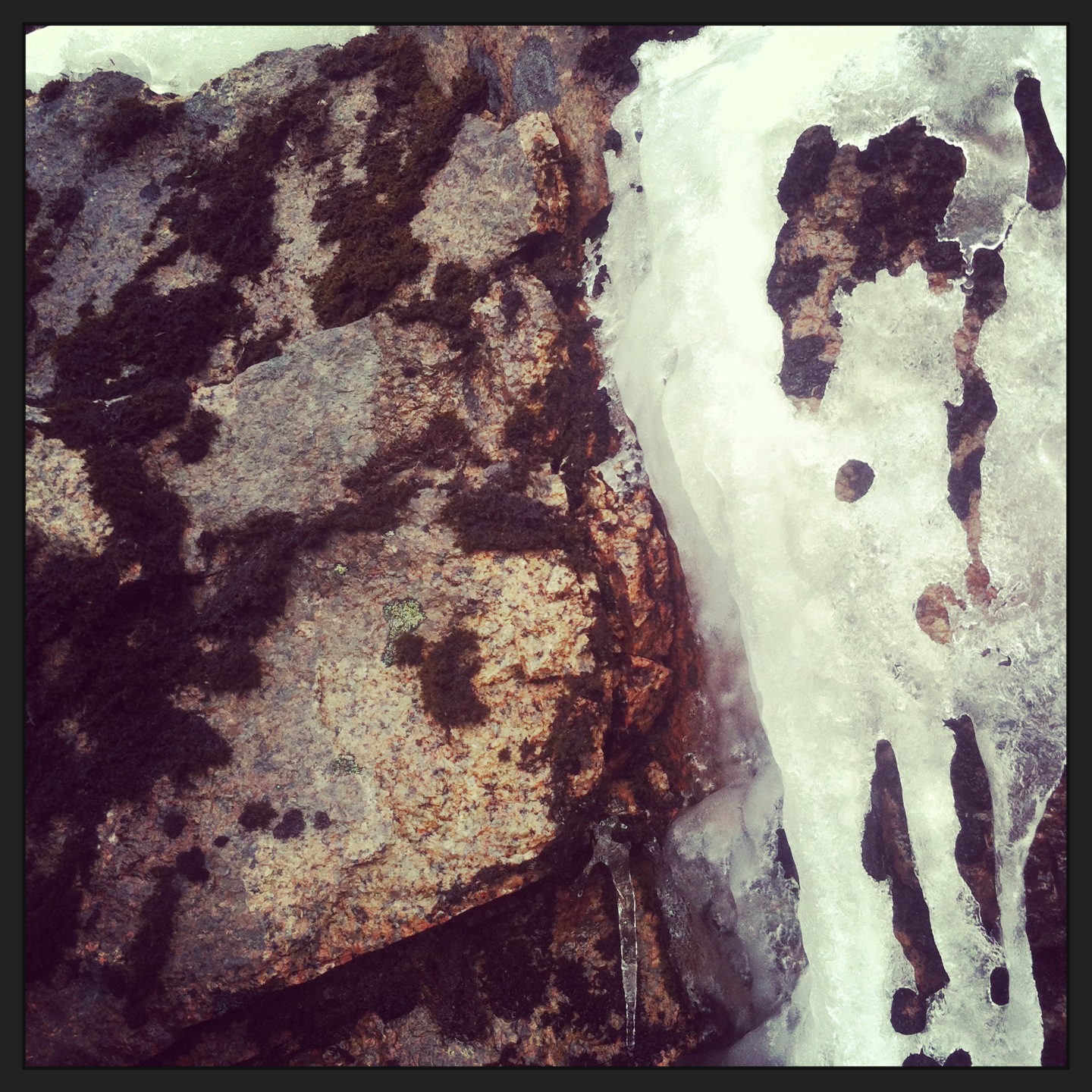
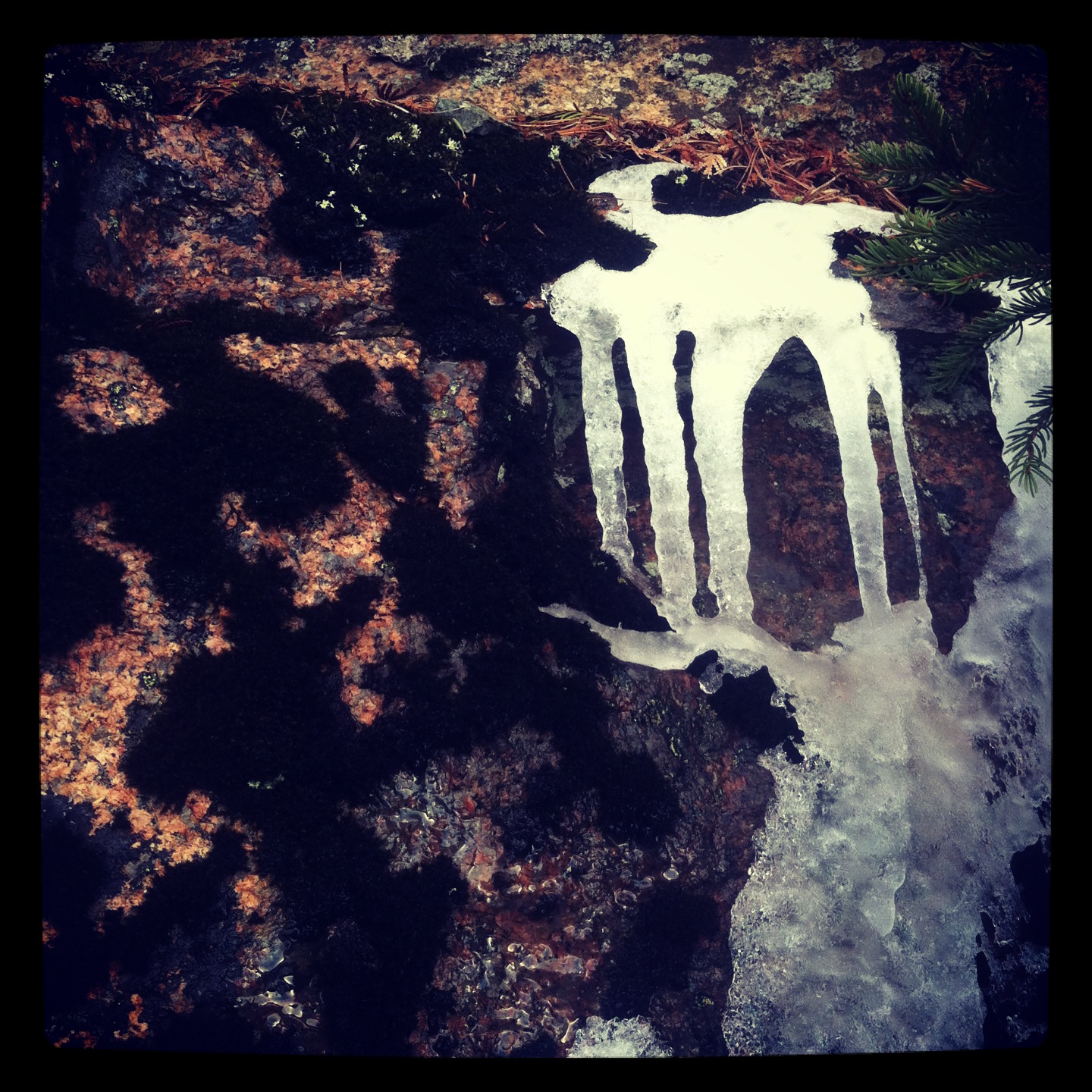
Spring fever is in the air: birds are singing about it, plants are bursting forth communicating their connection to our Earth and our position in space relative to the Sun, beautiful people near and far are catching each other’s eyes, gardeners are sweeping back the layers of leaves left on the ground after so many months. Ice is melting to reveal moss, no ferns or leaves just yet, but we all know they are lurking under there somewhere.
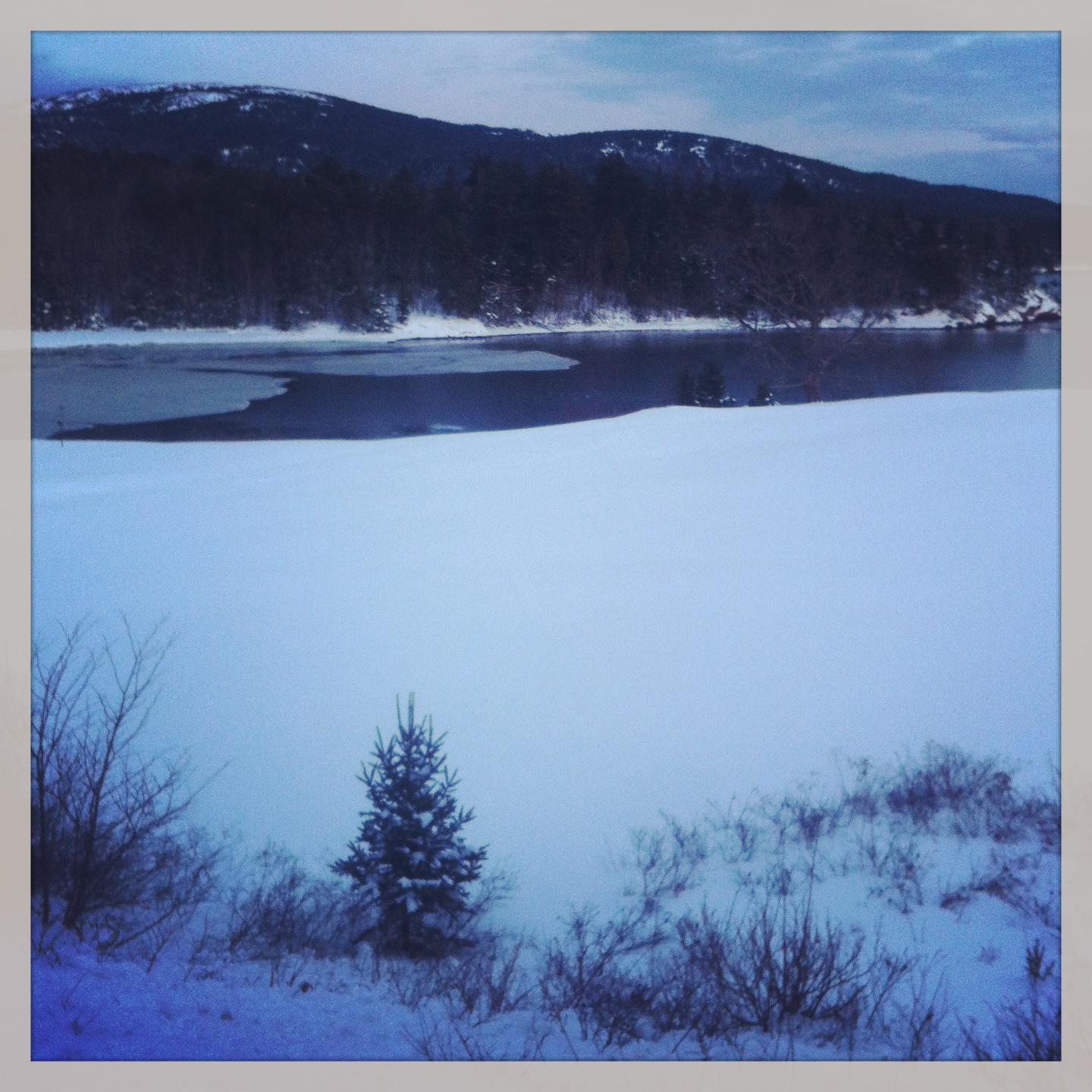
The Tarn, still frozen, two weeks ago!
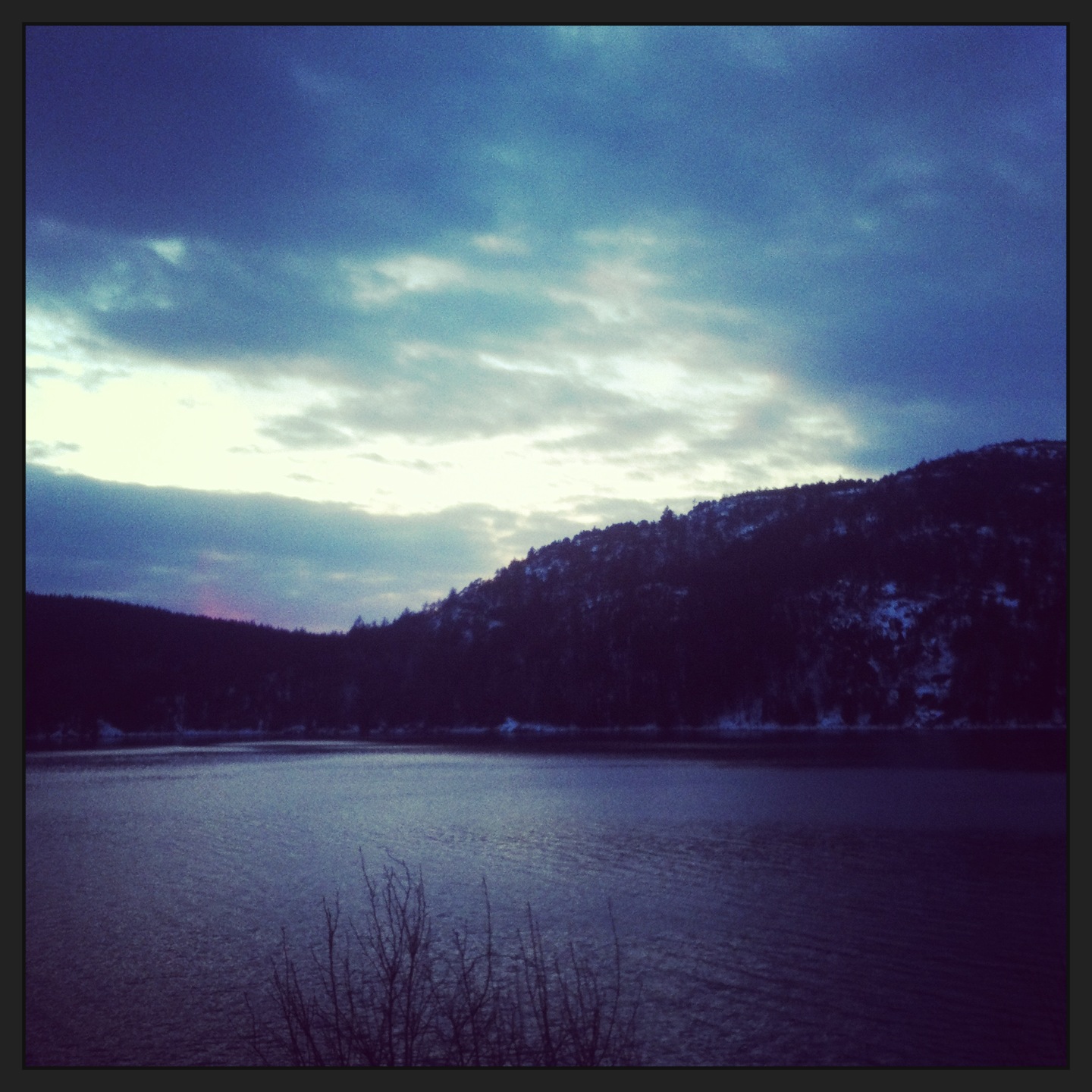
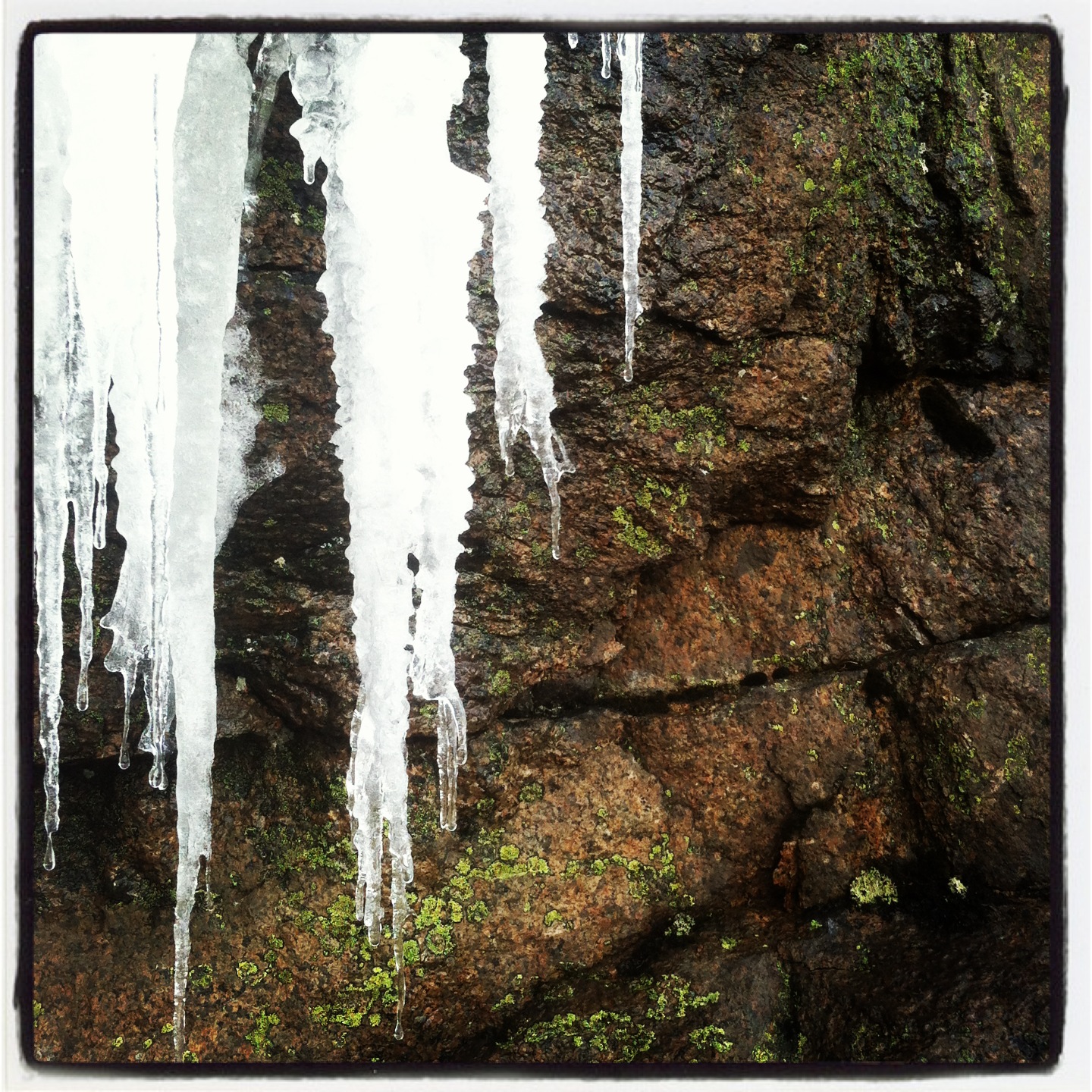
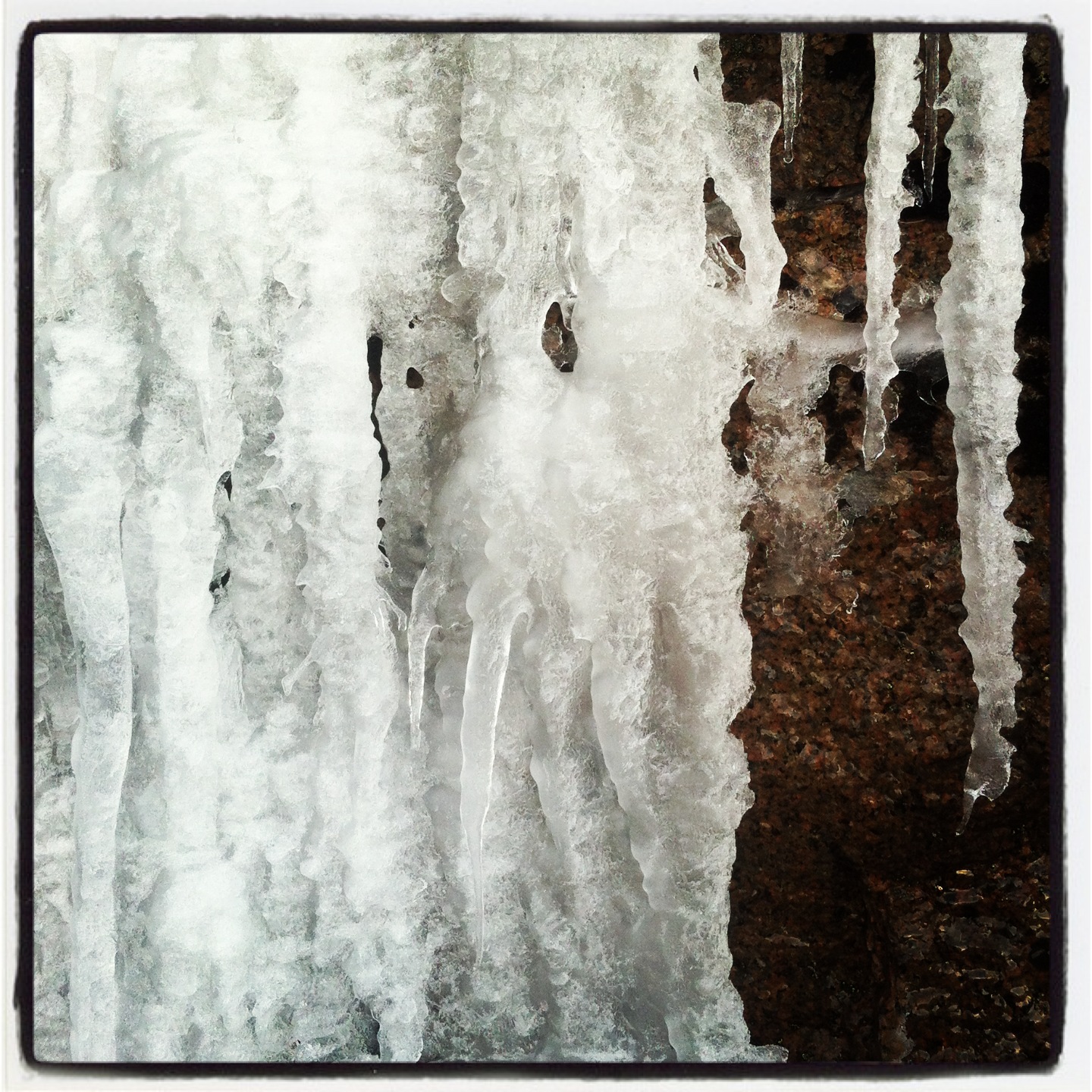
Driving home from Bar Harbor today, I took the scenic route and noticed the sunshine on the top of Dorr Mountain, and followed the light all the way down the cliffs edges and onto the surface of The Tarn. When I was a little girl, we used to fish in The Tarn, but I don’t remember catching much. Today, the sunlight seemed to burnish the golden-colored reeds leaning out of the dark blue water. A mere few weeks ago, those same reeds were held up and in place by white ice, the same ice that spread across the surfaces of all the ponds and lakes, and up mountainsides and dripped off ledges in suspended animation.
This afternoon, the glow of spring seemed to beam off the surface of The Tarn, clearly communicating that warmth is back, the sun has returned. During the sunset, as I drove the long way home through Otter Creek, and then took Cooksey Drive onto the Hill of Seal Harbor, over and through the wooded, mossy roadway, lined with the granite walls of the fancy peoples’ houses, the light remained a bronze-y, brass-y, gold, a colour that left us for so long. The last time I remember it was in the fall, one bronze morning.
Transitions, even joyful ones like this one, are difficult because your rhythm and routine is disrupted; it takes a while to regain the swing of things when the environment is fundamentally changing. I have said it before, but this place connects you so strongly to itself. You are quite literally a part of the landscape and you feel its shifts within your body and mind. For the last few days, the only way that I can channel this shifting energy, this cacophony of nature expanding and exhaling and returning to us after sleeping for six months, is to handle stones and place them in a path, to feel their rough texture, their weight in my arms.
“Abel lives in the winter and Apolline lives in the summer. Isolated in their “natures”, they never met each other. They are not even supposed to meet. So when Abel crosses the border and discovers Apolline, curiosity is overwhelming. Their encounter soon becomes more complicated than they could imagine. Both of them will have to learn compromise to protect the other…”
Spring is coming here on the Maine coast; you can feel it in the wind, and smell it in the air. Spring, which in Maine means 36 degrees today and 28 yesterday, is full of sunshine. I have discovered my garden to be a very windy place. I believe that my proximity to the harbor, but placement up on the side of its hill, means the wind funnels up as if on a highway, hitting my part of town with some serious force. It’s hard to say whether the wind chimes will ever actually make it up onto their hook.
Compromise, the theme of the short film above, is a great theme for the transition into spring. All the members of my tiny town are gearing up for summer: realizing that our days of ease are numbered. Everyone is keyed up, in a way: thinking about hordes of out of towners, cars on the streets, the opening of restaurants and shops, seeing more than the 300 people who populate our town right now. We all have to compromise, in myriad ways, to live here and to live with each other. We have to compromise in terms of money, of jobs, and of earning potential. Here, you must be creative or you must go somewhere else. We also have to compromise and understand that the peace of fall into winter comes at the price of serving thousands of people for three months in the summer. We have to compromise with each other and understand that each of us experiences this transition in a different way, probably, I suppose, based on the amount of years one has spent riding this tourist economy rollercoaster.
This is my first go-round: my first experience of seasonal living, of seasonal changes, of being a part of tourist-driven small paradise. The seasonal changes have effected me in profound ways; I feel this intense energy of spring bouncing around inside my body and mind. Each day there are new sprigs of grass, new calls of birds who have returned, bulbs are bursting forth from the ground. The pressure is on, as the Earth here in Maine finally exhales its winter breaths, welcoming in the smell of sunshine on chlorophyll-laden leaves.
I had a friend who I will call M. M was 52 when she died about three years ago, after a very short battle with a very intense cancer. M was my ex-husband’s best friend’s mother, and when we met, about ten years ago, we instantly became friends. At that time, she was living with her husband and youngest son in a wonderful bungalow in the Heights, an older neighborhood of downtown Houston: one of its oldest suburbs. The house was filled with artwork, and old furniture, trunks, animals, coffee cups, ashtrays, and M.
M was an acquired taste to many people. She could be difficult, she was snarky, she was wickedly intelligent, and had a wry smile that instantly communicated how she felt about any situation. She was genuine, she didn’t beat around the bush, she struggled, she never knew what to do, but always tried her best.
Precipice Trail
When I learned that M had cancer, it was about a year after I had split from my husband and about six months after we had divorced. I hadn’t spoken to her in quite a while because of the divorce, and I sort of felt like she was part of my ex-husband’s family, and so assumed that I wouldn’t see her again. But, when I learned she was sick, my heart was hit with what felt like a rock, and I realized that I needed to see her. I called her the next day, and told her I wanted to come over. It was near the end of the school year that year; the heat of the Texas summer already beating down on me as I walked through the parking lot of her apartment complex in South Austin.
When I walked into her apartment, she said something very simple to me. She said, “It is so good to see you.” And it was true; it was great to see each other. What was not great was that she was so sick that she was having a hard time using one side of her body and could not use one arm at all. Her apartment was a mess, and her younger son who used to be precocious and seven years old, was now sixteen and scared out of his mind, and expressed that fear by withdrawing and flunking out of school.
In the Woods
Over the next four months, I saw M almost every day, and tried my best to wrap my head around cancer, families, relationships, fear, death, illness, our failing healthcare system, courage, acceptance, grief, denial, and a host of other emotions. I took her to the doctor, I took her to the emergency room, I took her to a man named Francis the Healer, who let her lie on a bed and relax. It was at Francis’s that we had our most profound conversations. We spoke about love and life a lot. We spoke about the temporal nature of life, about what it was for and why it was important. We spoke a lot about me, and some of the time about her. M was an adopted mom of a sort, but she was more like that aunt that has always done her own thing, is irreverent and uncategorizable, who makes you uncomfortable sometimes, but who you are drawn to, like a magnet of life inside her just pulled you in.
M was tough. She was demanding, and most importantly, she was intensely protective of her three sons and how the situation impacted them. Denial is a serious and complicated emotion, and has a very important place when you are dealing with cancer. Denial comes in the form of your ex-husband showing up with $300 worth of organic groceries despite knowing that his ex-wife can barely eat anything. Denial comes in the form of renting a house with a crazy, winding set of front stairs knowing your mom is in a wheelchair, and planning on building a ramp so that she can get in an out of this beautiful house in a beautiful place. Denial is late night phone calls and emails begging someone to come and see his mother because she is dying, and him not listening. Denial is looking at your friend’s dead body in a hospital room, knowing she is gone, and not being able to leave her body because she hasn’t been alone, not even for a moment, for four months. Denial is fighting, from all sides.
Acceptance comes in strange ways, too. Acceptance comes in the form of arriving on the doorstep, even for two days, from across the country. Acceptance is not being able to speak in the emergency room of a hospital when your mom has to have an emergency blood transfusion. Acceptance is listening to a nurse explain to you that you should take your friend to France because there is no care for her at her age, without insurance. Acceptance is sitting on the stairs in that same house with all the steps, looking at photo after photo of your friend smoking cigarettes for her whole life, all the while touching her youngest son, just to let him know that he and you are physically here, in this moment.
I came up here, to Maine, for about two weeks, during that summer when M was dying. I called her one night, it was July 4th and I wanted to see if someone had taken her to the fireworks. We had this hilarious conversation in which she told me she wanted to be taxidermied and stuffed so that she could still come to all the important events in our lives, and that we could just carry her around to holidays and weddings. In this same conversation, as I was sitting on my friend’s brick patio, in July, in Maine, she told me that she understood what death was, that it was a crossing, but that she would be able to cross back sometimes and communicate in some way. She was in acceptance of what was happening and knew where she was going.
The day before she died, she was very in and out of her body and of time, she was traveling all over the world and through different eras. She said a lot of funny things, but the thing that she kept repeating was how much she loved her boys. There was no doubt, to anyone, about how much she loved them. No matter how much morphine she was on, or how much pain was racing through her tiny little body, she kept communicating that she loved them, she loved them, she loved them.
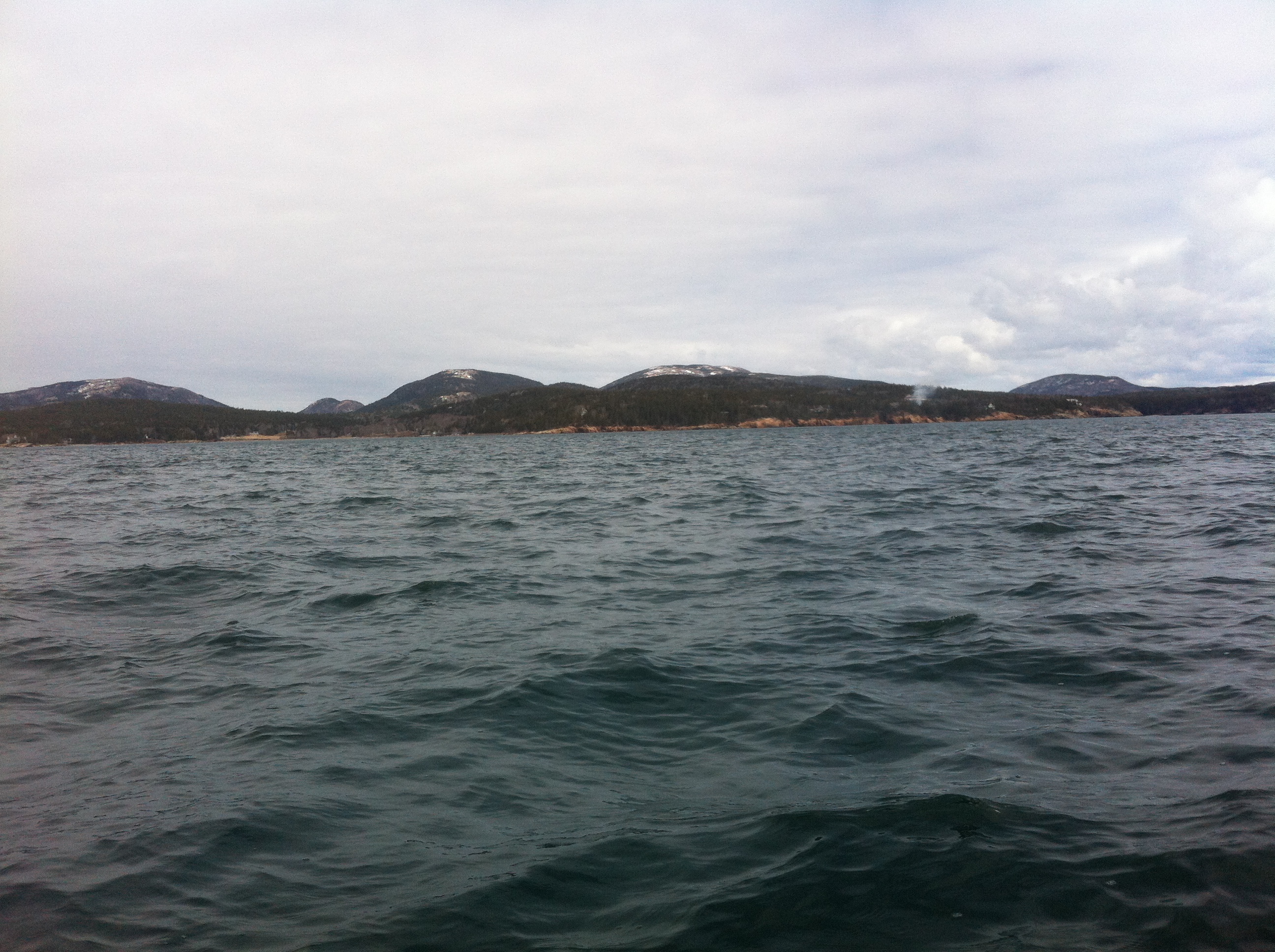
Looking Back at Mount Desert from Islesford, from a very tiny boat!
What does this have to do with me, now, today, in Northeast Harbor, Maine, after my two week hiatus, when I house sat in the woods with ten cats, and made jewelry, and mulled over my life? Tonight, I sat out on my deck for a while and stared at the stars, and watched the moon rise over the harbor, and talked to ________ (whatever you want to call it) for a while.
Moon Rise over the slowly melting Snow Mountain
While speaking to __________ tonight, on the deck, I asked the question: “why do I feel so lonely here? Why is it that this place is so lonely, so alone?” I love this place, but the sense of solitude is Great, and I mean great as in size, not value or experience. I feel, in my heart, that the loneliness here is part of the place, meaning that it is somewhat inescapable, and therefore, must be accepted into your heart as not a negative aspect, but just another part of the environment, like the wind off the ocean, the sculpted granite, the six month long winter, the call of seagulls from the roofs of buildings. My question of loneliness was more related to my own fear of closeness with others. In cities, there are so many people and restaurants and cafes and museums that you are never confronted with that truth of our own isolation, our aloneness in the world. You can be so easily distracted and meet so many people to have friendships with that you never have to confront the deep thoughts that come in winter, in Maine, on a wooden deck, on the edge of a harbor.
Somes Sound from Sargeant Drive
Coming back to my friend M: when I first saw M in that tiny apartment, when her arm didn’t work (Francis and M and cancer treatments fixed that, by the way), she told me that she knew how she had gotten cancer. I looked at her and asked her, “how?”. She told me that every morning she poured a cup of coffee and went outside to smoke her morning cigarette and asked the same question: “Well, what the fuck am I going to do now?”. She told me that she believed she got cancer because that was the energy she put out every morning, and the thought with which she started each new day. Whether you believe in that or not, she believed in it, and it resonates with me to this day.
One of the things that I have learned from winter, from Maine, from Northeast Harbor, is that this life, this time, is all about perspective. Sometimes the tininess and the loneliness of this place scares me, like tonight. And sometimes, the loneliness, the solitude, is utterly joyous because you feel like your slice of the world is wholly yours, and that the beauty of the moment is happening to only you, as if you can hold on to beauty and awe in your hand, heart and mind, for pure moments of time.
Somes Sound
Today, for the first time in months, I sat on the grass, with a cup of coffee, a book, some chicken salad and some french bread and had a picnic with myself in the spring sunshine. I had just spent two hours digging out a path to my new house, from the road. The path will be lined with rocks, and filled with grey pea stone. It will be a lovely start to my first garden in a long time: the first garden, really, since I sold my house back in the fall of 2009. So, perspective comes with time, and the memory of those who have impacted our lives in myriad ways. Perseverance comes in the last dregs of winter, knowing that change is on the horizon, that the sun is coming back, that green things are almost ready to peep out of the ground, and the warmth on the back of your head isn’t from a knit cap, but from the warmth of a new season itself.
Sometimes, I get so caught up in the daily minutiae of life, in all the little things that must be accomplished, that I forget to stop, pull off to the side of the road, and look….
Last week we had a huge snowstorm here. Nemo, we were warned, was the storm of the century, but it turned out just to be about two feet of snow and lots of wind. The wind woke me up that night because it shook the house. I dislike sleeping on the second floor of buildings: I am more comfortable on the first floor, and this apartment is very high off the ground. At some points it felt as if the whole building was twisting around its center point, and I remembered how, in the old days here, they used to bolt the houses into the ground using ropes and later, cables, that were driven into the bedrock to stop the houses from blowing away during the gales. The coast of Maine: so wild, so windy, with its daily changing weather and unpredictable light, dark, air, stars, water. Last week, during the storm, the seas were up to 30 foot swells and the boats stayed in the harbor, lashed down to the docks with nylon ropes. The sea roiled and boiled and changed color to a darker winter green as it swooped all around our island. A storm surge of 2 feet covered the rocks and froze the grasses at water’s edge.
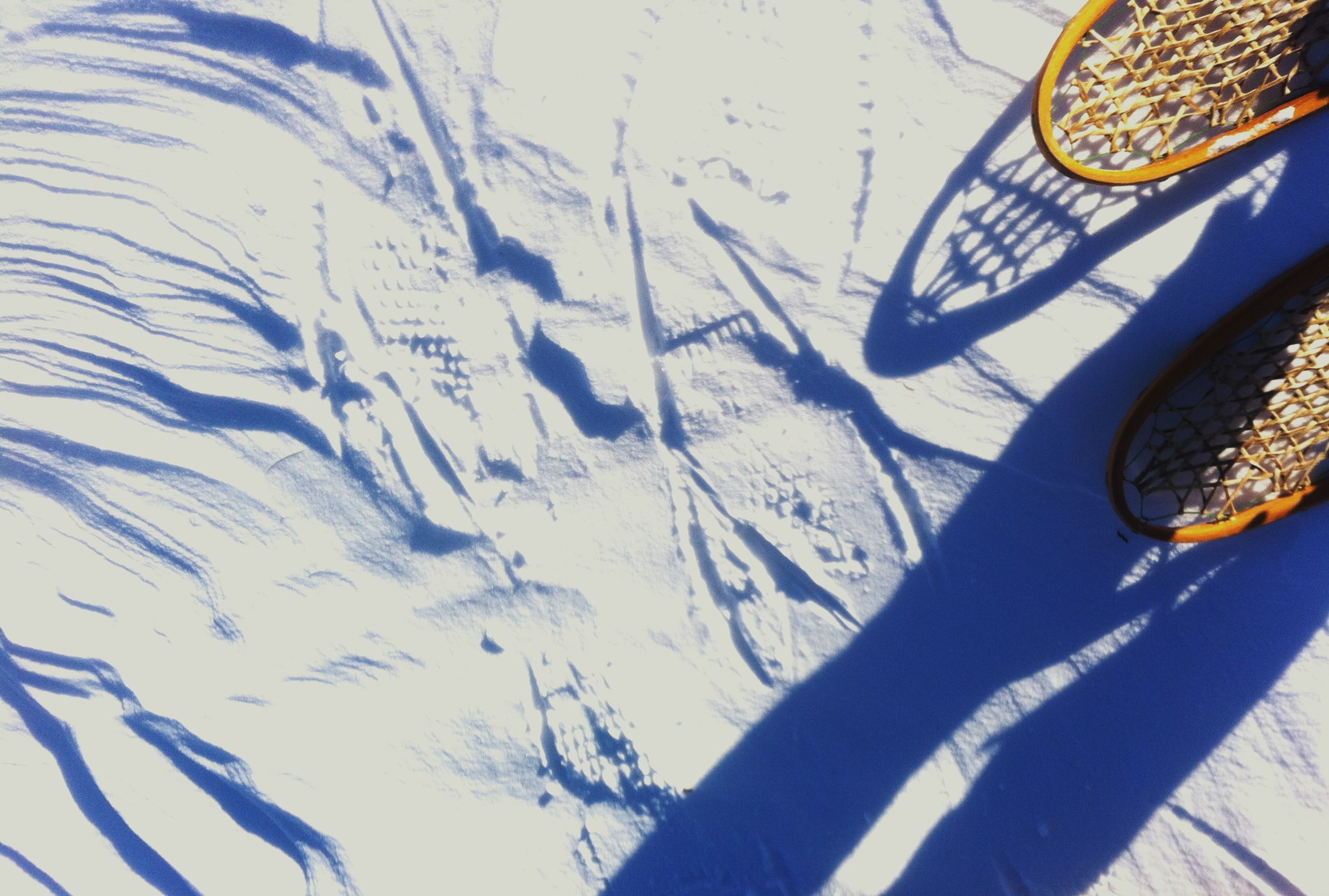
After the storm had passed, and I had dug myself out of the driveway, I went snowshoeing for the first time, down at Jordan Pond, my favorite skating spot that was now covered in snow.
This place is a winter wonderland, and now that I am no longer scared of winter, and know what it is, and how long it lasts and how different it makes you feel, so reflective, I love to go outside and explore how it changes from day to day. Each day is distinct: as if the environment switches, late at night, when we are asleep, like the screens in that story The Veldt. Each morning when I wake up I see differences in the snow, in the ice, in the light; I hear different bird calls and the shadows on the rocks have changed. The idea of Earth as Dynamic is nowhere more true than here: where you can watch the landscape change almost before your eyes.
Here I am, just past the point of no return for winter, when the first hints of spring are peeping in the tips of oak trees in the forests….when the birds are singing more than they have for three months. In other places, plants are bursting forth, but for us, we have a while yet to wait.
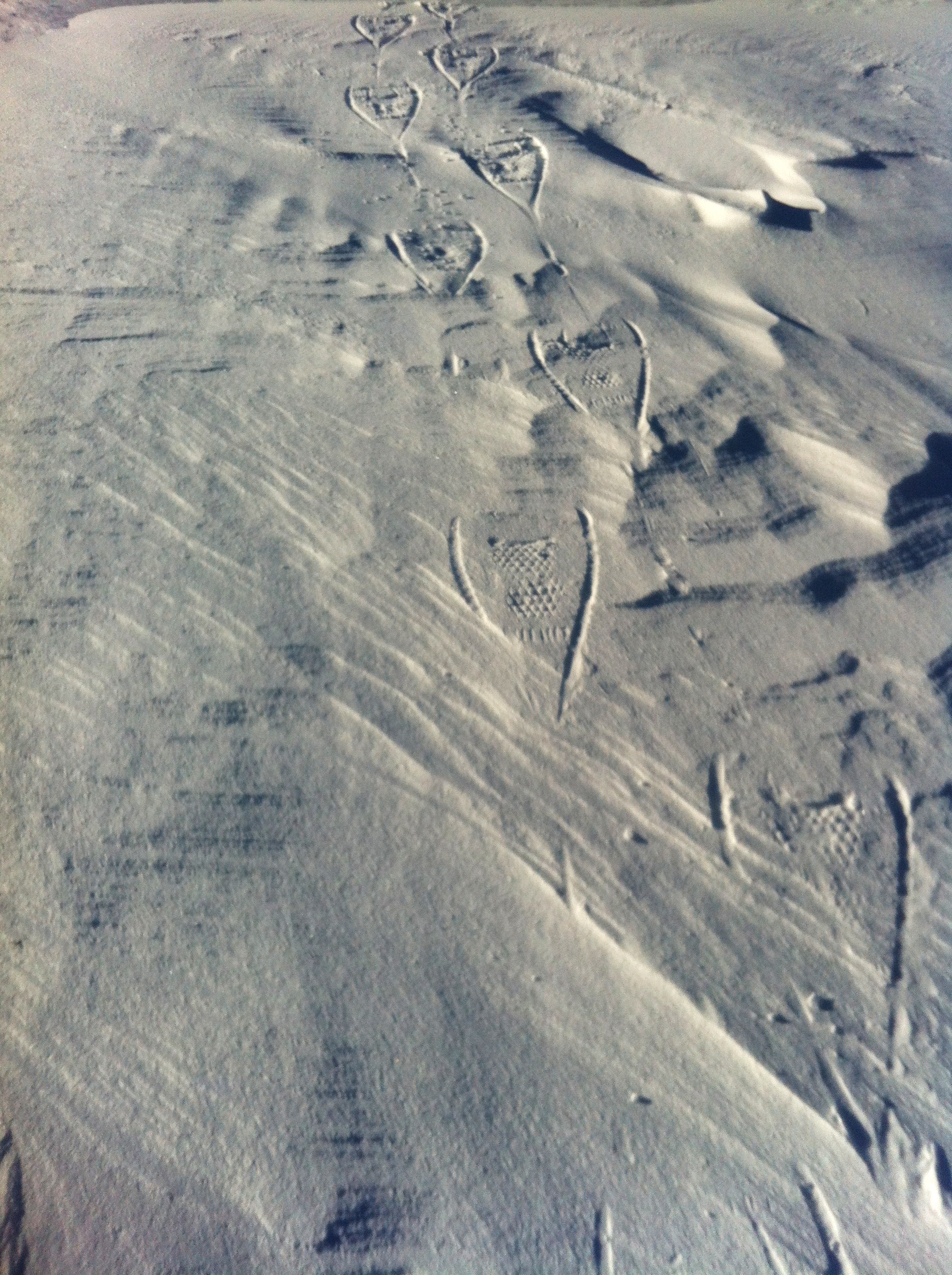
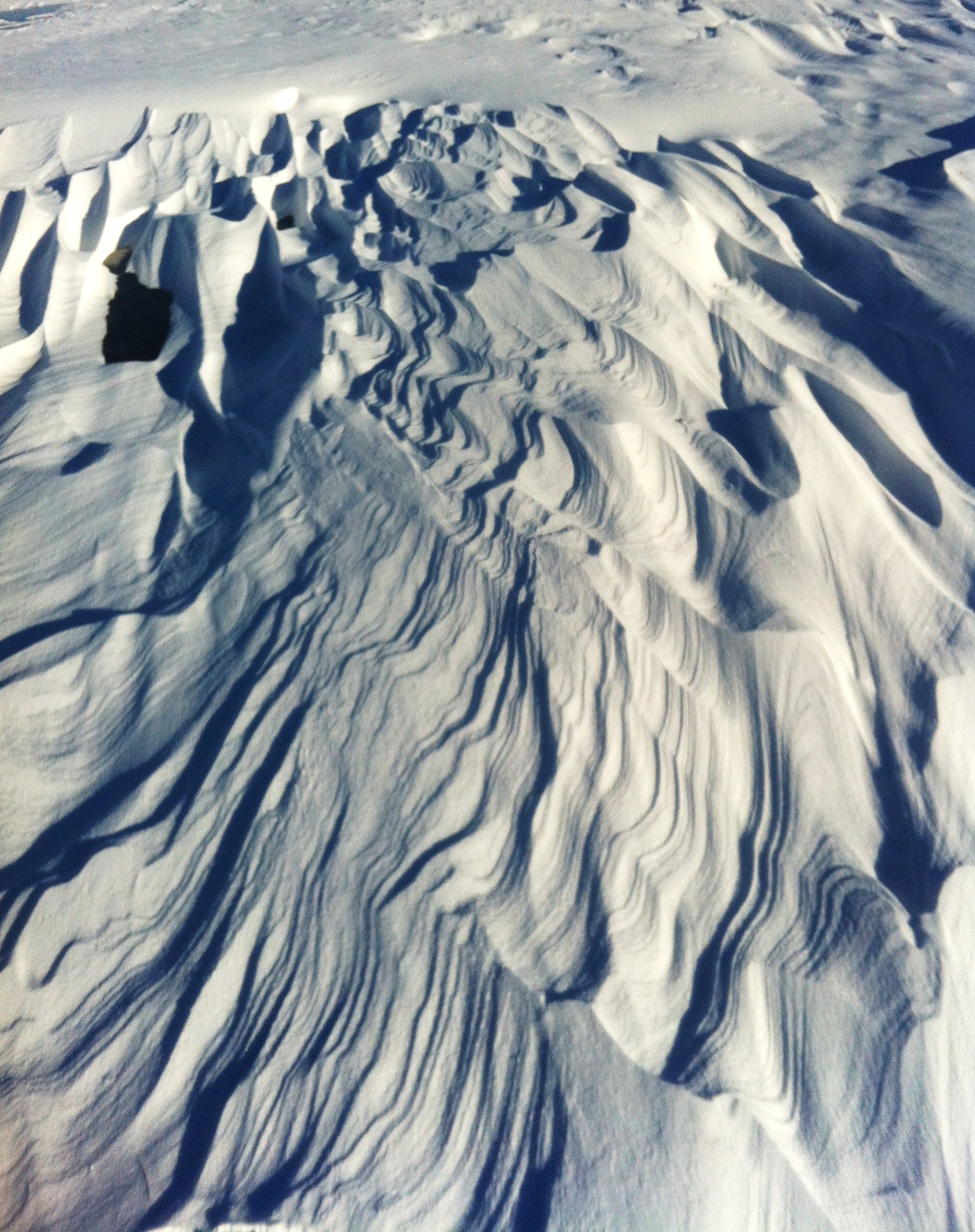
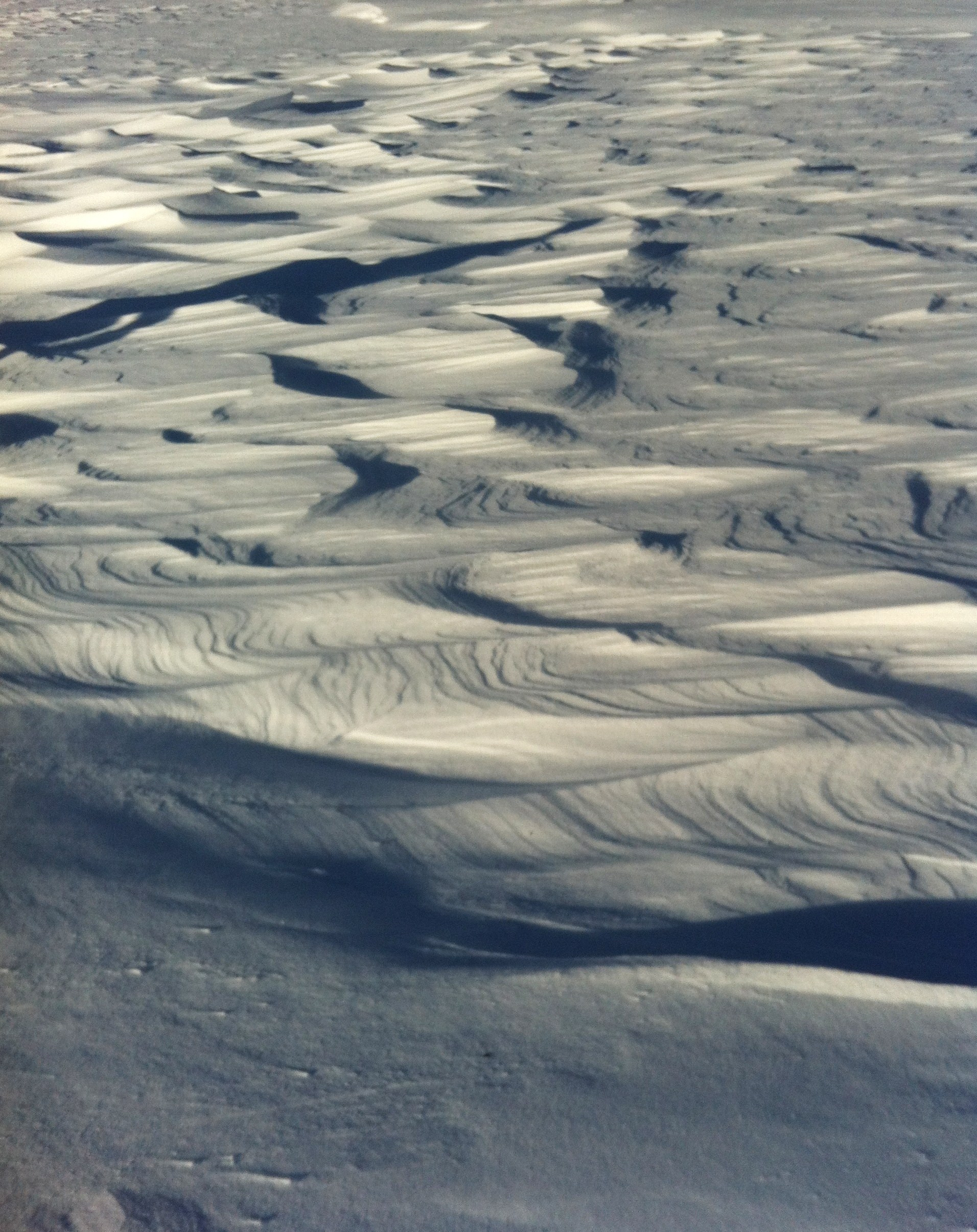
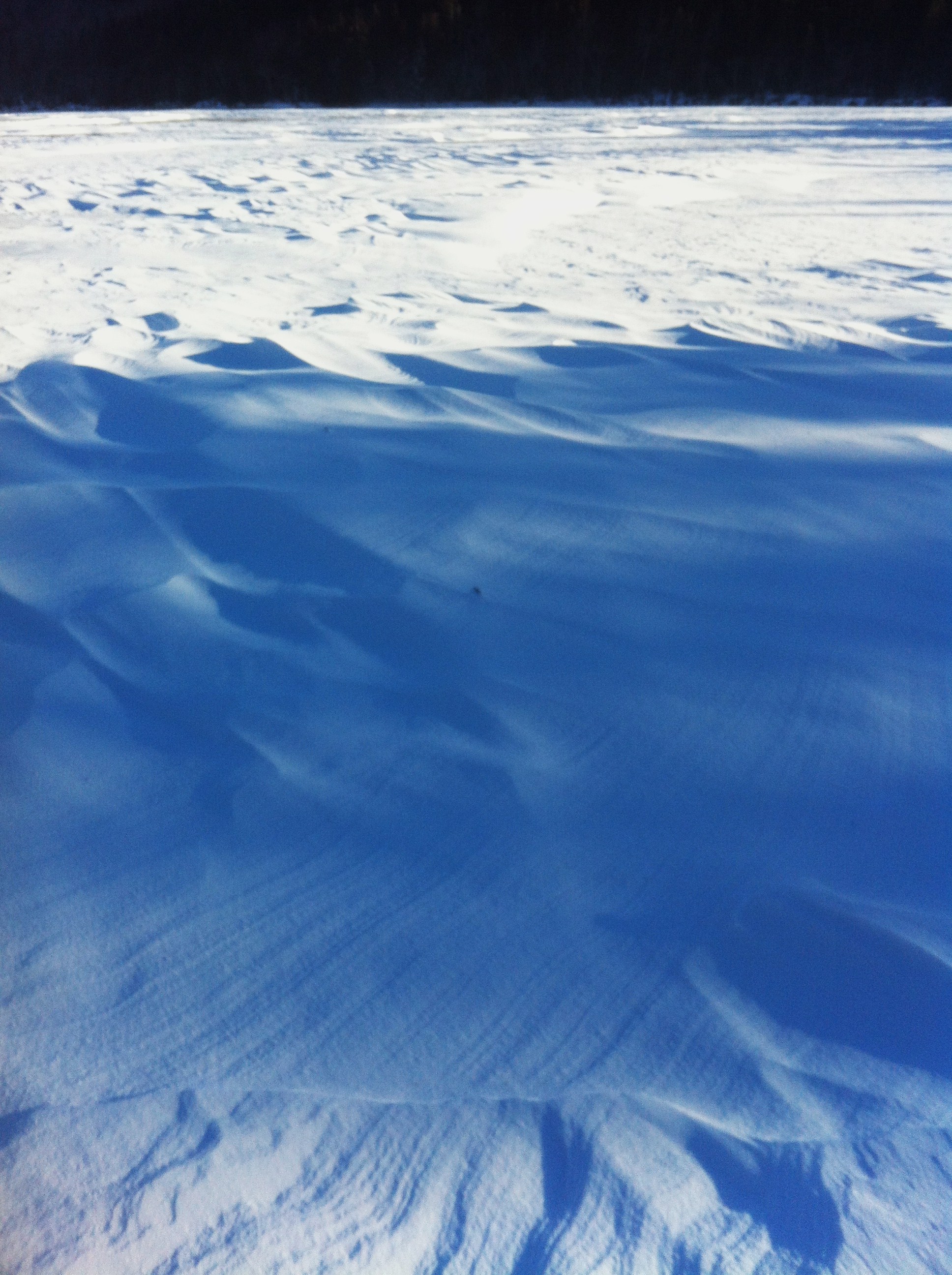
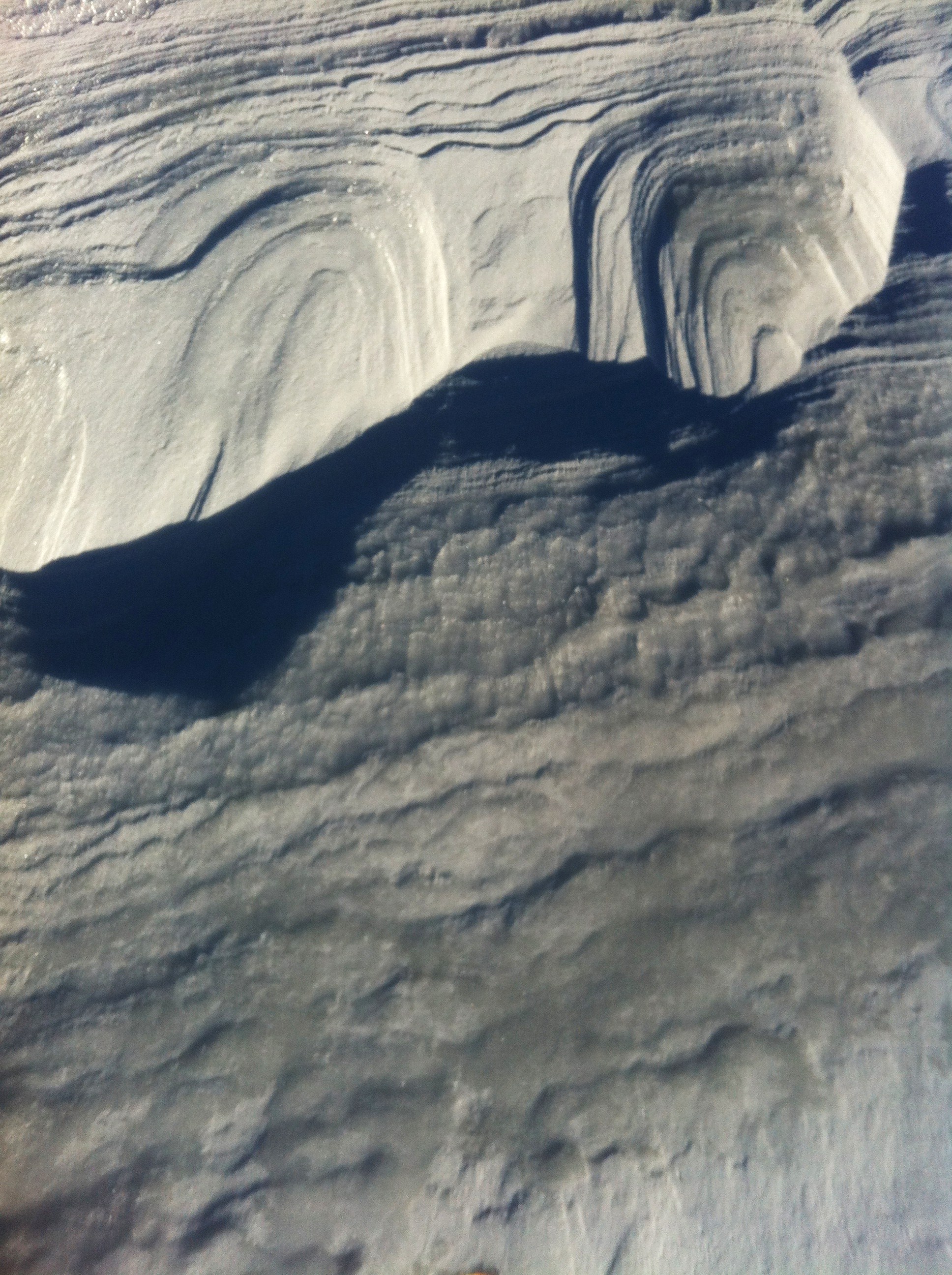
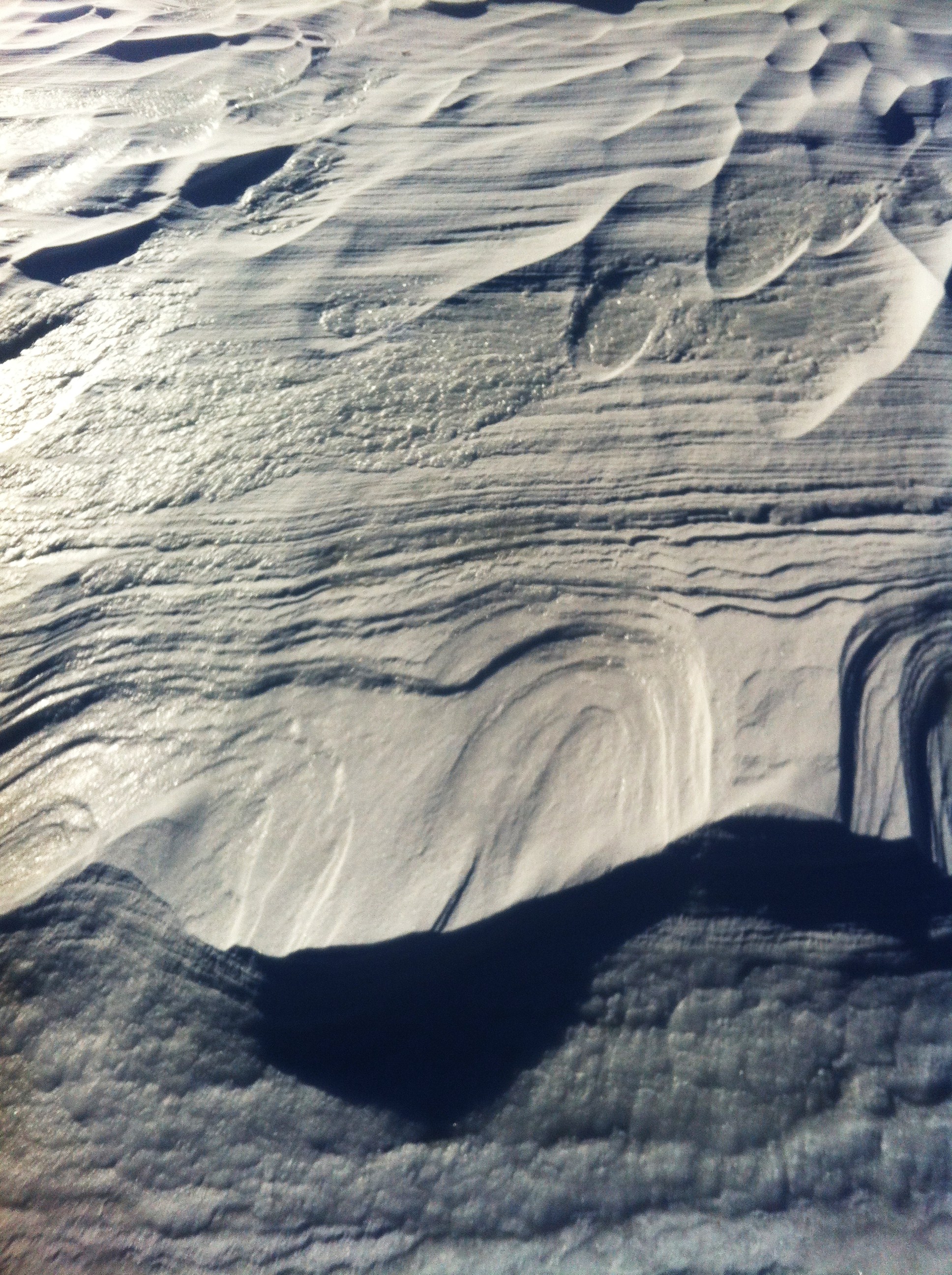
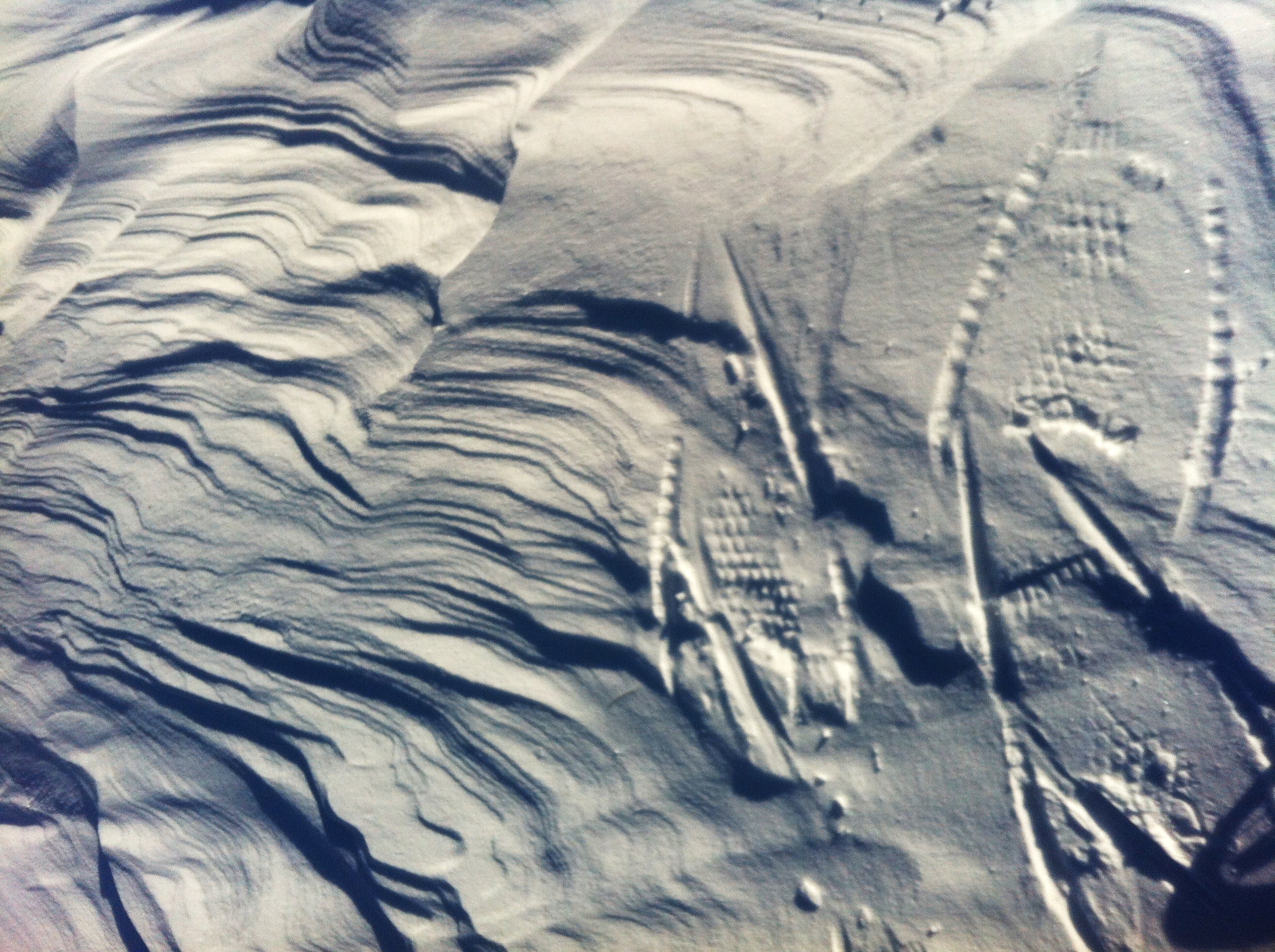
While snowshoeing, I paid attention to the snow, and noticed how much it looked like sandstone in the desert. The wind had licked layers of ice crystals and made beautiful dunes that reminded me of being at the beach in England, or in the desert of California.
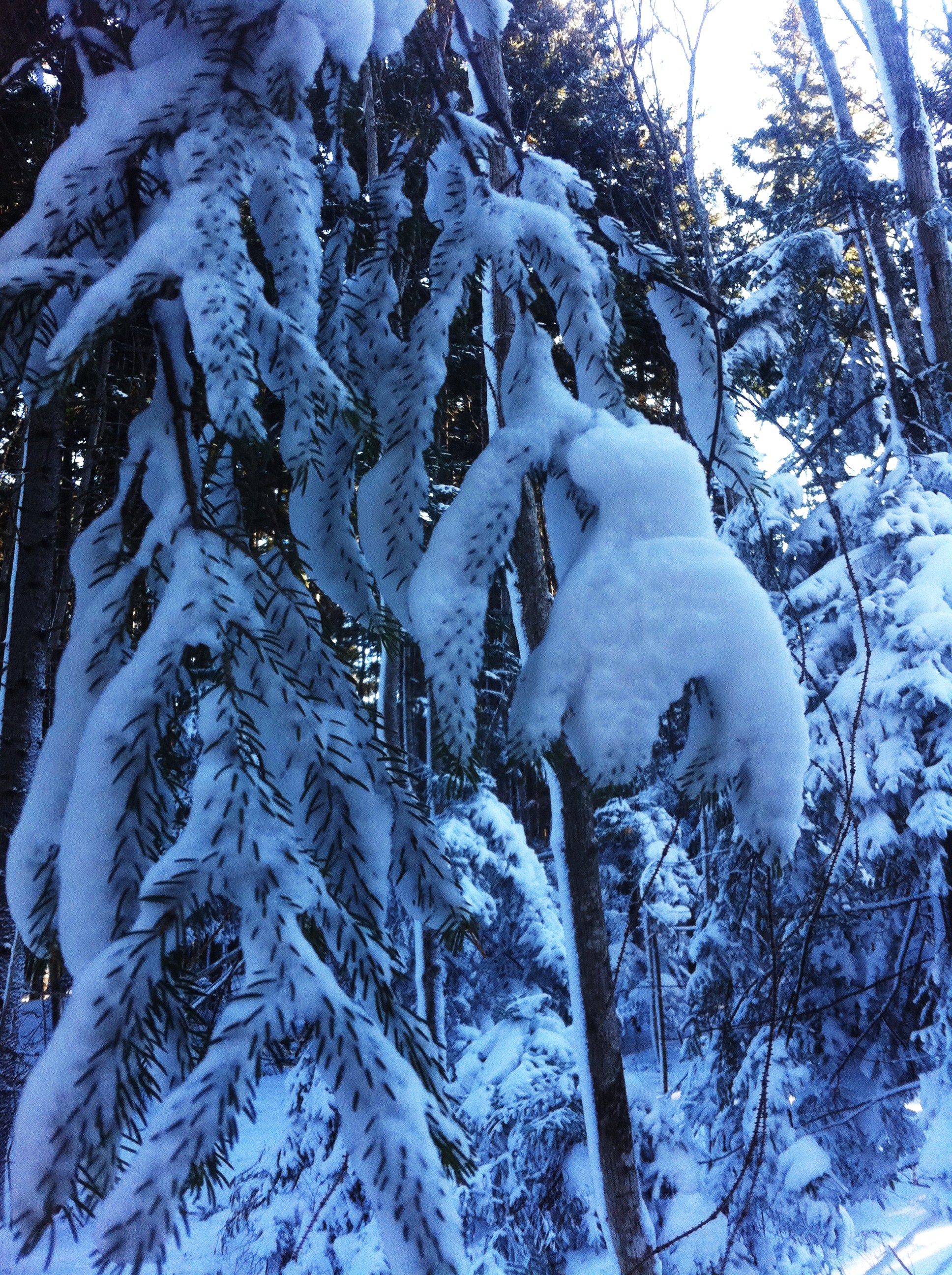
After snowshoeing on top of the frozen lake, on top of the powdery snow, I took a moment to snowshoe into the woods at pond’s edge and look at the trees. So much like the setting of a fairy story, this wintertime; I am constantly on the lookout for wolves, or harpies, or secret, magic people dressed in capes, or….something. Mostly, though, I see no one at all.
“The clearest way into the Universe is through a forest wilderness.”
“We take from life one little share, And say that this shall be A space, redeemed from toil and care, From tears and sadness free.”
I came here in June, sick and tired. I came here late at night, with a headache splitting my head in two: it felt as if an axe blade was lodged in the left side of my skull. My car was packed with belongings and I drove, forward, through the black night, past houses and the ocean streamed at my right side. That night I cried, cried, cried, and continued through days and nights as my head hurt and my heart ached at realizing I had made it away from a place of so much pain. After re-decorating that basement space that was mine, for a time, I stayed in bed for weeks, while shingles wracked my body, erupting on my face and eyelids and scalp, causing pain and burning and itching. As it healed and the nerves reconnected, I had a hard time sleeping because it felt like electricity was running through my skin. There were days when I would venture out to swim or to bike ride, and feel as if I almost had to crawl back inside the house, into bed, because I was so tired.
“And, haply, Death unstrings his bow, And Sorrow stands apart, And, for a little while, we know The sunshine of the heart.”
Time passed, and I began to feel better. In time, I ventured out more often, and was able to plant plants in the ground again, and be in the sunshine, take walks, swim across the lakes. Late in the summer, after a confusing but exciting trip to the Yucatan, during which I learned how to make pie crust in the tropics, became a certified scuba diver, watched a hurricane pass by, and learned that a special someone was not who I thought he was, I worked in a large, open barn with wooden sculptures everywhere. I started the day by weeding the granite paths in a flower garden, and passed the day helping children paint boards and wooden fish, and painted my own things, too. There was a moment on the third or fourth day when my head came back — my mind came back to my body and I felt reconnected again. It had been months since I had felt that way.
“Existence seems a summer eve, Warm, soft, and full of peace, Our free, unfettered feelings give The soul its full release.”
Time passed, and the fall began. I continued to work in the garden, weeding cosmos flowers and beets and kale and onions. I watched pumpkin vines grow in compost piles, and planted evergreens on a steep hillside and pondered how quickly lavender will grow in a place with such a short summer. I took drives in a 1970s Porsche into the hills of this island, and looked at fancy houses and ocean views. I housesat in a little house in Seal Harbor, where I had to walk one mile to the beach to use my cell phone and reconnect with those people in my life who felt, at that time, so far away. One afternoon, one of those days of golden light and warmth, I was standing on a roof deck of a beautiful wooden summer house on the top of a hill and looked out at the trees that grew all over the mountaintops, at the water of Somes Sound, and decided to stay.
“A moment, then, it takes the power To call up thoughts that throw Around that charmed and hallowed hour, This life’s divinest glow.”
Staying is hard for me. I am more apt to run: I am the world’s most skilled runner. Adaptable to any situation, a great and hard worker, friendly, I can fit in anywhere. I can come and go, and do, quite often, if I am unhappy. I find ways to escape: I am an artist that way. I am the Queen of leaving. Committing to anything is, well, plainly terrifying to me, and the decision to stay here, while I knew it was the right thing to do (I had originally planned to be in Mexico and had sold everything I owned toward that purpose), was scary. I felt I had to hide a little bit, hole up and re-evaluate, re-group. I rented a beautiful apartment, and then left on a huge trip across the country to see everyone that I loved. I documented that trip here, detailing all the themes that appeared in my mind and my life along the way.
“But Time, though viewlessly it flies, And slowly, will not stay; Alike, through clear and clouded skies, It cleaves its silent way.”
I came back, and fall passed quickly. The light changed, and faded away. It became dark, and cold. I spent much time walking and looking, looking and listening, writing and sitting. I made a lot of jewelry and tried to stay quiet. Christmas came and went, as did the New Year. Emotions ran the rainbow of possibilities: I felt happy, then sad, then elated, then scared, then passionate. Then suddenly, the miasma of the holidays, the painful memories and the excitement at that season, passed, and it was winter.
“Alike the bitter cup of grief, Alike the draught of bliss, Its progress leaves but moment brief For baffled lips to kiss”
Winter is a new experience for me. I have no frame of reference for this season. Yes, we all have experienced “winter” wherever we live as a cooling of temperatures and changes in light, but Maine winter is different. Maine winter is quiet. Maine winter is empty: you know the people are here, but you don’t see them. You see evidence of them in the glow of windows, and the sounds of snow plow trucks trundling past your house. Maine winter is three feet of snow that sits for weeks. Maine winter is going ice skating on a lake that a month ago was liquid water; now you can skate across the surface almost silently, watching ice fishermen wait for their orange flags to bob down letting them know they have caught a fish. Maine winter is watching people in canvas tents in the woods, nestled around woodstoves, escaping their daily lives for a day or so. Maine winter is cold, and the cold is biting. It freezes your toes and feet, and your hands. The wind whips around your face and stings your eyes and lips and nose. Maine winter steals heat from your body as you walk, sucking it out of the top of your head if you, stupidly, go without a hat. Maine winter is long, and it just began in earnest.
“The sparkling draught is dried away, The hour of rest is gone, And urgent voices, round us, say, “’Ho, lingerer, hasten on!””
For the last week or so, I have been taking an informal survey on “What Winter Means”. I have asked everyone that I know who has lived here for a while the same few questions: Why is it so different? Why do people go kooky after New Years? and Is it true that everyone will go nuts in February?
“And has the soul, then, only gained, From this brief time of ease, A moment’s rest, when overstrained, One hurried glimpse of peace?”
I can tell you that winter is a lonely time, if one is alone. It is cold, and you want to cozy up next to someone to get warm. Winter’s coldness is felt inside your body, down to your bones and further inside. Winter is scary because, in January, you realize that it will be like this until March or April, but most likely, April. Winter draws out before you with the promise of ice and snow and bright sunny days and deep cloudy ones. Winter causes you to question yourself, and realize that you do not know exactly what will happen to you in a place of this much cold, this few people, this slow of a pace.
“No; while the sun shone kindly o’er us, And flowers bloomed round our feet,— While many a bud of joy before us Unclosed its petals sweet,—”
On Monday, I rode in a small steel boat to the outer islands to interview to become a substitute teacher in a two-room schoolhouse for 9 students. The ride out was cold, but it had the hopefulness of morning, and the water was deep blue and turquoise green and the smell of diesel is comforting, in its own way. People kept busy reading their mail, playing games; I spent the time knitting and chatting when I could. First we stopped at Great Cranberry, and I looked at the pileons all covered with bronze seaweed and barnacles. We pulled away and across the straight to Islesford, where I embarked and walked up a narrow road, perfectly snowplowed. Snow two feet deep was on either side of me, and most of the houses, summer places, were empty. The field that, last summer, I used to play volleyball with two friends from Philly lay vacant, vast, white and empty. Everything was silent with the empty echo of winter: the sound of silence and of hunkering down. This is survival time. I spent the day in the school, visiting with children and adults and a dog named Ruby, and then took the same steel boat back to Northeast Harbor. The sun set over the mountains as we rode in, all orange and red and salmon pink over deep blue mountains. It was cold, colder than cold on that boat, and everyone seemed to be adjusting to it well but me. I walked up the gangplank to the harbor area and felt colder than I have ever felt. Walking into town, I began to panic thinking I would never get warm, or I would get sick again, or both. I slipped on ice and sank into snow, feeling colder by the minute. In that cold, your head hurts with the cold air, your eyes water, your hands and feet ache despite boots and gloves.
“An unseen work within was plying; Like honey-seeking bee, From flower to flower, unwearied, flying, Laboured one faculty,—”
I went to a friend’s house then and bemoaned the cold and he laughed and said he was at least happy that I understood that he wasn’t kidding when he said the cold was serious. I sat, practically hugged, the woodstove, took off my shoes and socks and he handed me steaming hot coffee and eventually, my warmth came back and I stopped panicking about the winter, about the cold.
“Thoughtful for Winter’s future sorrow, Its gloom and scarcity; Prescient to-day, of want to-morrow, Toiled quiet Memory.”
And just like that, the deep cold left us that very next day. The next day, the sun shone on our town and the snow began to melt and temperatures that were in single digits and teens all of a sudden were almost to 40. The snow melted into water and dripped off the eaves of buildings into the street, making slick patches of clear ice, impossible to see but easy to slip on, and catch yourself before a fall.
“’Tis she that from each transient pleasure Extracts a lasting good; ’Tis she that finds, in summer, treasure To serve for winter’s food.”
Despite our warmer week, the winter’s chill has taken hold and taken effect on people. People are changing. I wish to record these feelings here so that I remember them in a month, when winter is really in full swing, and in its depth of experience. People are spending less and less time out, more and more time in their homes. I, too, feel the desire to curl up inside and surround myself with blankets and fabrics and sewing projects, and other creations of comfort. I seek to design and build things that reflect those aspects of life that I miss: warmth, light, plants, flowers. I dreamt the other day of a place where the plants are still growing, where leaves are unfurling and flowers are in bloom. I remembered the pink oleander in front of my old house in Austin that still grew and even bloomed, sometimes, in the winter of central Texas.
“And when Youth’s summer day is vanished, And Age brings Winter’s stress, Her stores, with hoarded sweets replenished, Life’s evening hours will bless.”
So what will Winter bring? I have no idea what is coming toward me, except a distinct sense that my perception and interaction with my environment will become even smaller than it is now. It is hard to imagine that a year ago I was living in a large American city, and now my world has shrunken so. In the cold, even though the light is returning to us, I envision a time of watching, and waiting. My new motto is “don’t think, don’t feel, any more than you can help, don’t conclude or decide — don’t do anything but wait.” Henry James must have spent a winter in Maine as an outsider, and spent much of his time just watching how people’s restlessness magnified, how all people turned inward to the coziness of houses and hearths.

 The Tarn, still frozen, two weeks ago!
















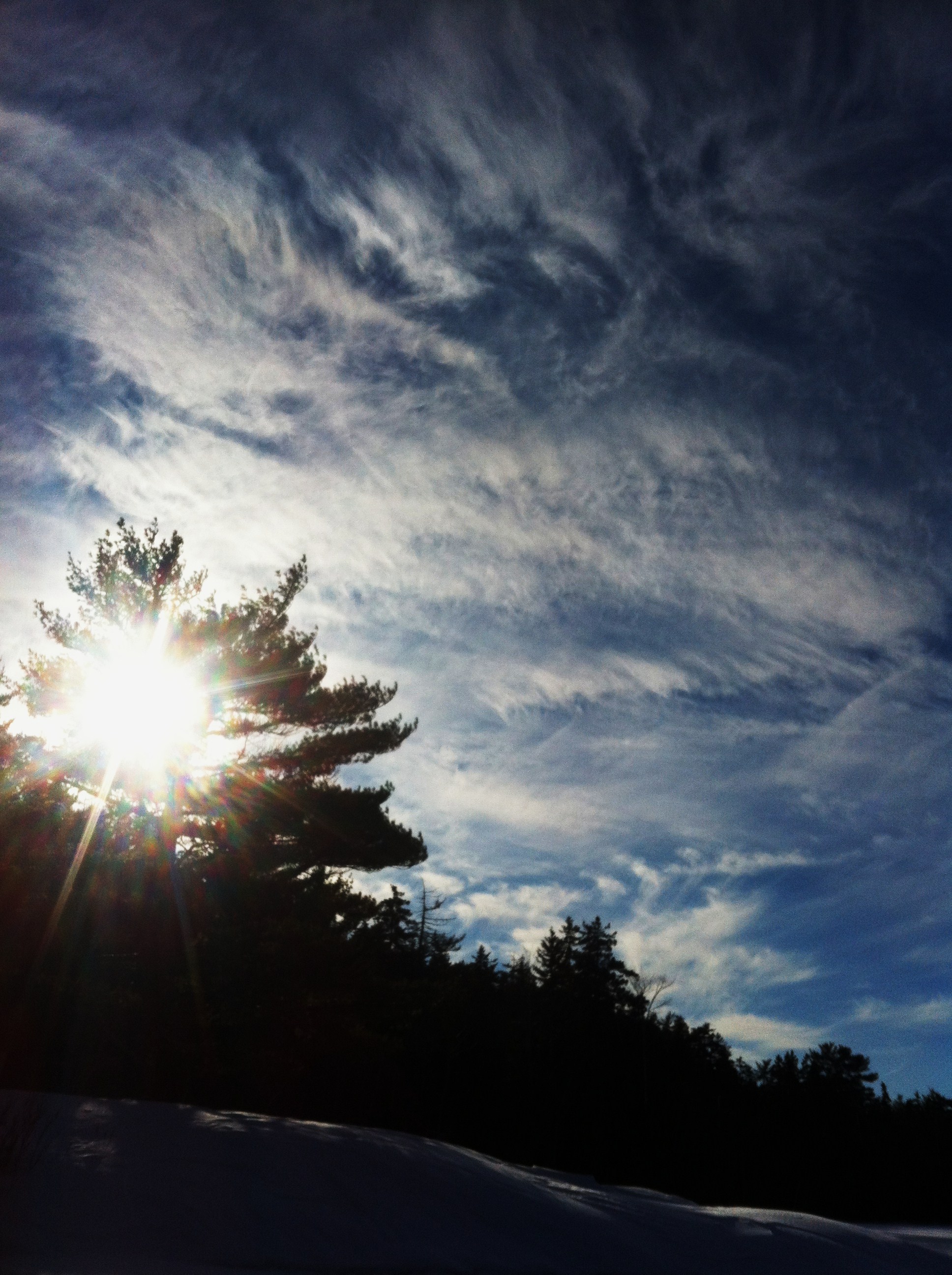

 Paciencia, Paciencia