Mirages — or, the Power of Forgiveness

FORTY-FIVE

Great accomplishment seems imperfect,
Yet it does not outlive its usefulness.
Great fullness seems empty,
Yet it cannot be exhausted.

Great straightforwardness seems twisted.
Great intelligence seems stupid.
Great eloquence seems awkward.

Movement overcomes cold.
Stillness overcomes heat.
Stillness and tranquility set things in order in the universe.

photo 2

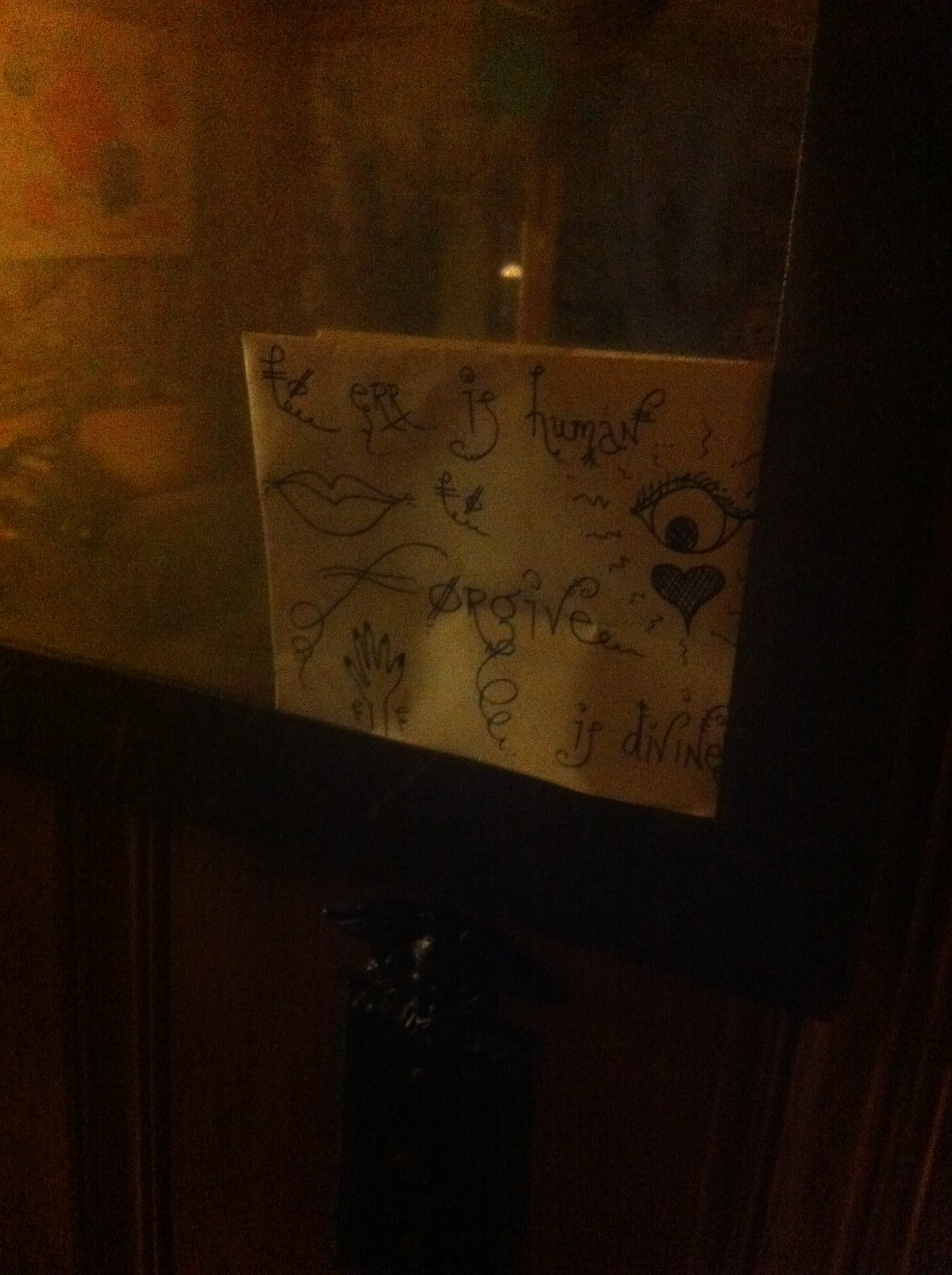
In my house, near the door, there is an old mirror that I gleaned from my parents’ camp house in Salisbury Cove, before it was torn down sometime in the fall of 1999. The mirror is chipped and faded: covered in scratches, you can hardly see any reflection but light. Tucked in one of its corners is the mantra: to err is human, to forgive divine.

For a few years now, I have posted this mantra in two places: by my front door, and on the wall of my studio-workspace. I look at it multiple times each day and think about what it means for that specific day and time. For the most part, I seek forgiveness of myself: for my mistakes, for my actions, and sometimes, for my speech.

When I returned from Austin last week, late on Tuesday night, I found my home changed. No longer was it the comforting, cozy space that I had left. Instead, it was a comforting and cozy home in which I live alone, on 10 acres, far off in the distant lands of Maine. After ten days in the light and love of friends and discovering new love, I came to Maine changed. I realized that I have a powerful and profound sense of positivity, and this is something that I can hold in my heart as a true strength, despite any and all adversities that are flung at me. However, as in all things, it is valuable to take time to reevaluate circumstances and belief systems when they are presented with alternative truths and/or realizations.

About a week ago, I took off on a road trip to West Texas with my best friend of many years. We camped in Marfa and in Presidio, Texas, and we drove through Big Bend. On our first night out in the desert, we made bean tacos in a community kitchen and camped in the parking lot of a place called El Cosmico. We drank tequila and smoked cigarettes whilst wearing hoodies. We laughed and we cried, but mostly laughed. We stared at stars. We talked about friends and lovers and life and husbands and divorces, change and acceptance and the present. It was, to me, one of the highlights of our friendship. The next night, we met a gaggle of strangers and later left them to perform some rituals in the dark that involved prayers for presence, prayers for strength, prayers for forgiveness, and a genuine desire to strive to be happy. In the darkness of the Chinati mountains, with a frog chorus behind us, we lit some words and some photographs on fire, we stamped them out from this world into the next, and we drank more tequila and laughed and cried and told stories to each other and thanked each other for the other one’s time.

Upon returning to Maine, I was forced to reevaluate that positive attitude that I am so proud of. I realized that maybe I was missing some things, or kidding myself, somehow. I realized that the vision of myself as an axe-wielding, blizzard-braving woman who lives in a cabin in Maine was missing some huge pieces: namely, the love of old friends and the love of one who sees your darkness and wants to walk with you, anyway. In Austin, I was almost constantly struck with the beautiful merging of those two relationships, for my friend-family in Austin not only have loved me for years, but recognize my darkness and choose to love me, anyway. Perhaps this is the mark of true friendship: something I have been lucky enough to find here, as well. And in a mystical universal bonus, I found one old friend who wanted to hold my hand and gaze into my eyes and love me and walk with me. When I think about those ten days, it is with utter awe that I reflect upon them, for I feel like my large and open heart, one that keeps growing as time goes by, was rewarded a million fold by those who already lay within it: my friends, my loves of my life.

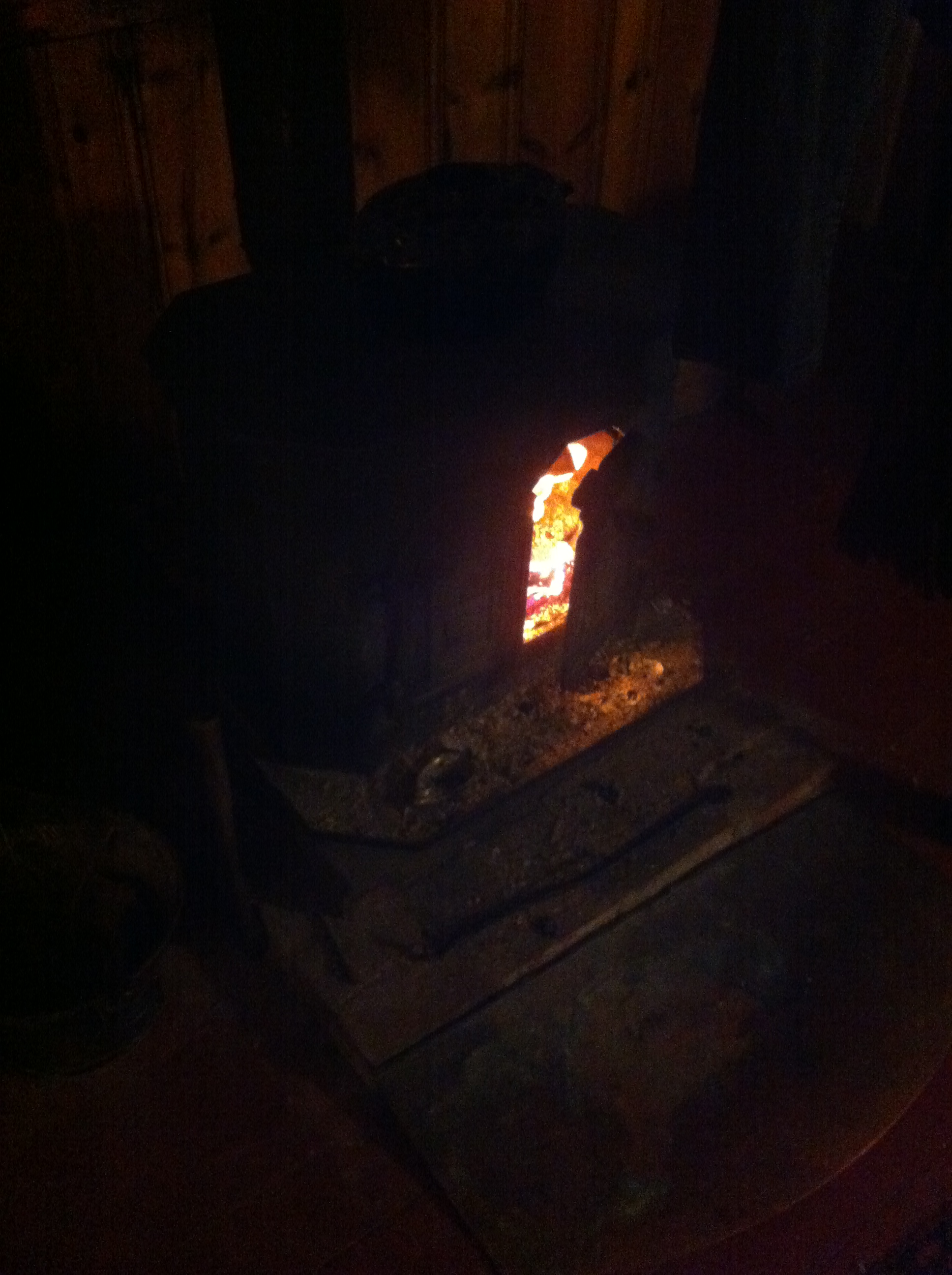
In this cabin, late at night on a weekday, as I sit in the light of an old brass lamp and listen to music on a tiny speaker, watching the crackle of wood in the wood stove, I am almost constantly reminded of Jackie’s kitchen with its loteria cards, of Rodi’s laughter in the West Texas desert, of Chuck’s maligning of roses in his living room vase, of Angel’s tarot trailer, of Cody’s garden and the stars that shone out above him, of Bob’s studio and his knowing smile, of Julie’s tears and honesty, of Martha sitting in her office in her purple silk shirt, of the movement and changes of all the people who formed my family of friends for twelve years. It is the history of our lives, the mystery of the wending and waving paths of life, that forms our concept of love and life and friendship. While I have loved my time here, and I truly have: having grown from a broken and bent version of myself to the stronger and resilient and more prone to humor version that presents itself now, I have done so with a sense of resolute solitude and independence. However, whilst in Austin, not only did I realize that I ran away from my life of many years, from my family and friends, but that I was a critical part of a net, a spider’s web, of people, who would never really let me go no matter how long I stayed away. So while I felt truly alone, which I did, especially in the fall-winter of 2012, all my loved ones regarded me from afar with love, kept the net close and strong, and waited with love for me to visit them again.

There is a great comfort in change and realization and personal growth. There is a message in this from the universe, and that message is the one tacked up on a piece of white paper, written in blue pen, decorated with squiggles and eyeballs and hearts: to err is human, but to forgive, divine.

photo 3

A Vintage Valentine

vintage-valentine-cupid

“Only once in your life, I truly believe, you find someone who can completely turn your world around. You tell them things that you’ve never shared with another soul and they absorb everything you say and actually want to hear more. You share hopes for the future, dreams that will never come true, goals that were never achieved and the many disappointments life has thrown at you. When something wonderful happens, you can’t wait to tell them about it, knowing they will share in your excitement. They are not embarrassed to cry with you when you are hurting or laugh with you when you make a fool of yourself. Never do they hurt your feelings or make you feel like you are not good enough, but rather they build you up and show you the things about yourself that make you special and even beautiful. There is never any pressure, jealousy or competition but only a quiet calmness when they are around. You can be yourself and not worry about what they will think of you because they love you for who you are. The things that seem insignificant to most people such as a note, song or walk become invaluable treasures kept safe in your heart to cherish forever. Memories of your childhood come back and are so clear and vivid it’s like being young again. Colours seem brighter and more brilliant. Laughter seems part of daily life where before it was infrequent or didn’t exist at all. A phone call or two during the day helps to get you through a long day’s work and always brings a smile to your face. In their presence, there’s no need for continuous conversation, but you find you’re quite content in just having them nearby. Things that never interested you before become fascinating because you know they are important to this person who is so special to you. You think of this person on every occasion and in everything you do. Simple things bring them to mind like a pale blue sky, gentle wind or even a storm cloud on the horizon. You open your heart knowing that there’s a chance it may be broken one day and in opening your heart, you experience a love and joy that you never dreamed possible. You find that being vulnerable is the only way to allow your heart to feel true pleasure that’s so real it scares you. You find strength in knowing you have a true friend and possibly a soul mate who will remain loyal to the end. Life seems completely different, exciting and worthwhile. Your only hope and security is in knowing that they are a part of your life.” 
― Bob Marley

When Things Get Weird

woodland-prayer-1915

I wrote this text earlier to a friend of mine, and it was about socks. I said something to the effect of “don’t make me come over there and throw them all around to show you to appreciate what you have!”. After texting that little gem over, I realized something, which was that I needed to read that statement as much as I snarkily needed to send it.

tumblr_ms9u68fbZF1sutckqo1_500

This post is not about socks, obviously, although I am a huge collector of socks and really, really appreciate them, especially on days when it is hovering around 0 degrees. Right now, as I write this, I am wearing two pairs of socks, thigh highs and silk tights, a wool cardigan and a wool hat that was almost snaked off my head last night by an unmentionable character. But that is another story.

conversion-1912

I have been thinking about winter, about things getting weird, about analogies like sharks and minnows. In short, winter is beginning and so are the deep thoughts: the thoughts that cover things like: what am I doing? How am I doing it? Am I doing it well enough? What do others think of what I am doing? What do I think of others? What is the meaning of all of it? Is it temporary or is it really a giant game of dominoes, sometimes cascading quickly and sometimes piece by piece?

bare-tree-behind-a-fence-1912

It is January 6th, 2015. On January 6th, 2010, I was living in a small house with white walls in Hyde Park in Central Austin. On January 6th, 2005, I was living in a small apartment with orange walls in San Miguel de Allende, Guanajuato, Mexico. On January 6th, 2000 I was living in a terrible but cheap apartment with tapestries on the walls in South Austin. On January 6th, 1995 I was a freshman in high school in Conroe, Texas, and was learning alot about people. I had met my first love and was tossing around the idea of having a boyfriend for the first time, not yet knowing that I had met my first love because at that time, we just shared Capri Suns and tangerines at debate tournaments.

Lovers-Man-and-Woman-1-Egon-Schiele-1914

I was just reading another blog by a very talented flower artist, Sarah of SAIPUA, and she mentioned the self-indulgent nature of end of the year wrap-ups and instead focused on goals and hopes for the new year. I am hoping (ha!) to do the same as her: instead of focusing on what happened, because holy hell what a year, I am looking ahead knowing what is behind. She made a statement in her year-end review to the effect of hoping that she keeps doing what she is doing with love and intention, and that it doesn’t get weird, and neither does she. Her quote “…I hope I don’t get weird. Because that shit happens in the creative world, you and I both know it” really hit me, because “getting weird” is something I do think about in terms of being an artist. In myself, I know myself to be an ethically conservative, politically liberal person who looks to outside observers, probably, like a tattered bouquet or a well-traveled moth: many colors thrown together, prints, patterns, textures, all topped with wild and crazy curly dark hair and eyes that are green-blue-grey, irises ringed in dark. I am distinctly black Irish in appearance, in my face: in my clothes, I am a walking ad for loud prints that somehow complement each other most of the time.

egon-schiele4

I am getting off topic. Things Getting Weird — whether this is with self, with space, or with vocation, it is something that I worry about. I am embarking on this life that very much evolves every day, in the sense that there is no outside structure that I am working within anymore, like I did when I was teaching in the public schools. Now I am inventing the structure, embarking on what I hope will be a huge adventure that sustains me emotionally, spiritually and financially as well as providing space and skills to others who wish to hone them. At this point, after these last two years, my contention is that artistic expression and care for yourself and others is THE answer to THE question of Why. We are here for each other, we are here to create beauty, we are here to make the world a more beautiful place, a better place.

egon-schiele-edge-of-town-22149

I know that artists, typically, see the world through a more colorful lens than other people. I only know how I see the world, being that I am only privy to my own experience. I know that I have always seen the world my way and have sought to express my feelings within it by making things for as long as I can remember. When I was five I was carving stamps out of linoleum and trying to watercolor clouds on blue sky backgrounds. Soon after, I learned to sew. Later, I learned how to bead, and then to make jewelry. Somewhere in the middle there I started making the boxes that are my favorite things to make, the assemblage sculptures as they are technically described.

fuchsia-1910

I also know that artists are regarded with a bit of chagrin from the general public: our passion and our emotions are regarded as questionable in a sense, despite the fact that the general public benefits from our ideas as they are constructed through physical objects like paintings or clothing or jewelry or sculptures. I know that our strong connection to our emotional selves can sometimes be overwhelming, although I suspect that all people, even hedge fund managers, get overwhelmed by emotions some of the time. Sometimes artists are regarded as lazy or flaky, and while our behaviors may dictate those judgements (mine definitely do), it is often that our thought processes, our spinning wheels if you will, are diving into the Weird, into the Dark, into the Heart of the matters of our lives. Without those dives, nothing we would create would have the meaning to ourselves or to those who consume our artworks. Oftentimes, I find that people find meaning in small elements, in the minutiae, and that in my creations, people will see things entirely different than what was my intention or my take away from a creation. I like the personal and the profundity of objects: our markers of our time on the Earth. Many artists, I know, fall from time to time into what I call the Deep Well: the mental cage of fragility and doubt and loneliness that can cloud and confuse our judgement of others and of ourselves.

Egon_Schiele_-_Self-Portrait_with_Physalis_-_Google_Art_Project

So, when things get weird in the creative world, as they are bound to do, how do we communicate out of those spaces so that the weird doesn’t become crippling, or that we truly distance ourselves from everyone, regardless of their merit? In other words, how do we maintain the creativity as a positive force, and not just a vomitous outpouring of emotion and insecurity? How do we maintain and function despite the delicate ins and outs of our conscious and subconscious beings? As I continue along this path that I have taken, a path to create a school and opportunities for more artistic resources in this community, I have to consistently take stock of how my own worries about how others see me is really not a part of the project as a whole. What I make is my own, what I do is my own, what others take away from it is theirs. Lately, I have been working hard on understanding that I have to have the confidence to do what I believe in, and that everyone may not like me or understand my choices along this path, but that if I am true to my heart, then that is what is most important.

tumblr_m1yytnms4L1rn6sipo1_1280

This is rather a lengthy and rambling treatise of fear of the unknown and expectations of a new year; I need to stop for a moment and remember that the fear of failure, or fear of disappointment, is illogical and also immaterial. It doesn’t matter. What does matter is what I do on the Earth, because for my own experience, my own self worth, is predicated by decisions that I make for myself.

Egon Schiele - Autumn Tree

What is the takeaway here? What do I mean: what do I want to say? Little else than I am trying to look forward and spend less time in the far ago. I am going to try to be more emotionally available, finally, and this means that I am also becoming more responsible and less selfish. I am going to try to be more comfortable in my colorful skin: to connect the pieces of myself within myself and not doubt it all so much. I am going to have more fun.  I am trying to stay true to my beliefs and be okay with being a little bit odd, but not become “too weird”, because you and I both know that shit can happen. Art and the business of art is a beautiful way to live in and create a world, one for yourself and one for others.

Maybe I am the shark, and maybe I am the minnow. Maybe I am both.

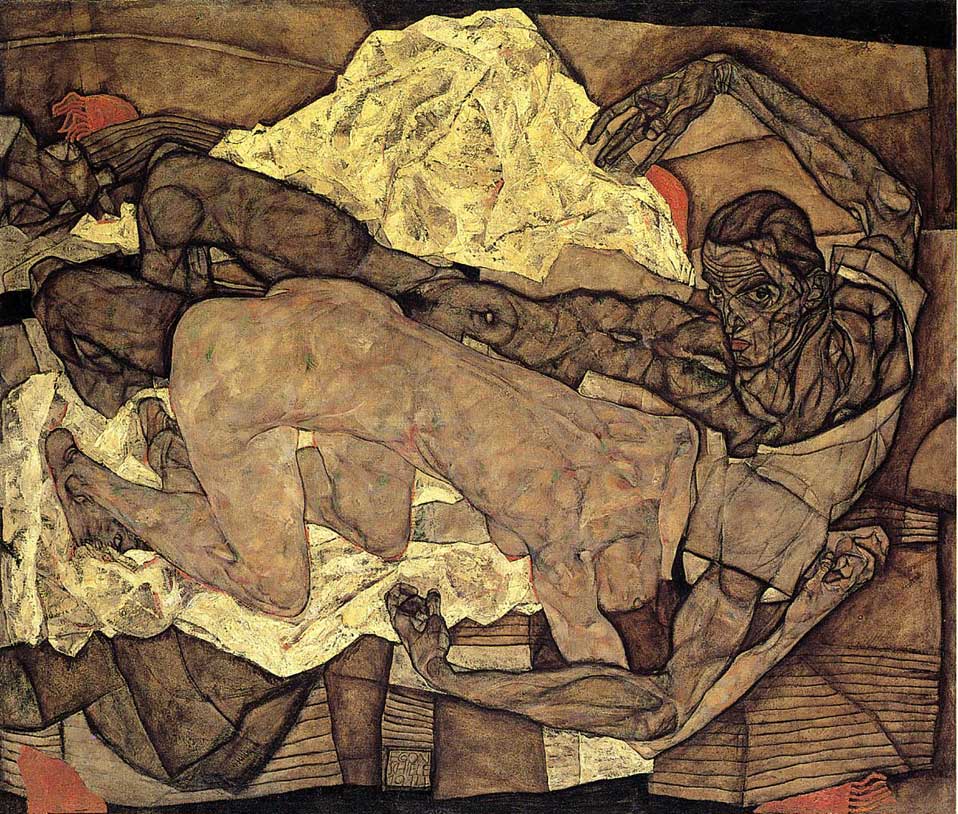
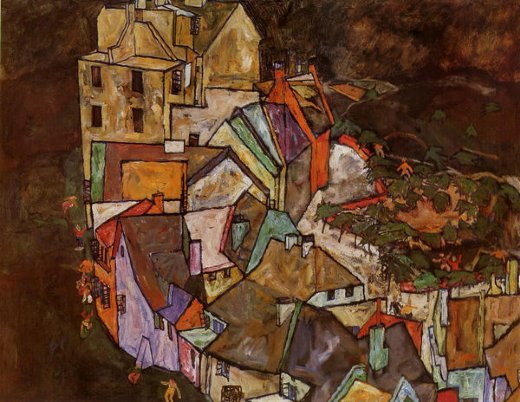
{…all paintings in this post are by Egon Schiele}

New Beginnings

“THAT crazed girl improvising her music.
Her poetry, dancing upon the shore,

Her soul in division from itself
Climbing, falling She knew not where,
Hiding amid the cargo of a steamship,
Her knee-cap broken, that girl I declare
A beautiful lofty thing, or a thing
Heroically lost, heroically found.

No matter what disaster occurred
She stood in desperate music wound,
Wound, wound, and she made in her triumph
Where the bales and the baskets lay
No common intelligible sound
But sang, ‘O sea-starved, hungry sea” 

W. B. Yeats

10620829_10205117578118225_563224729954639225_n

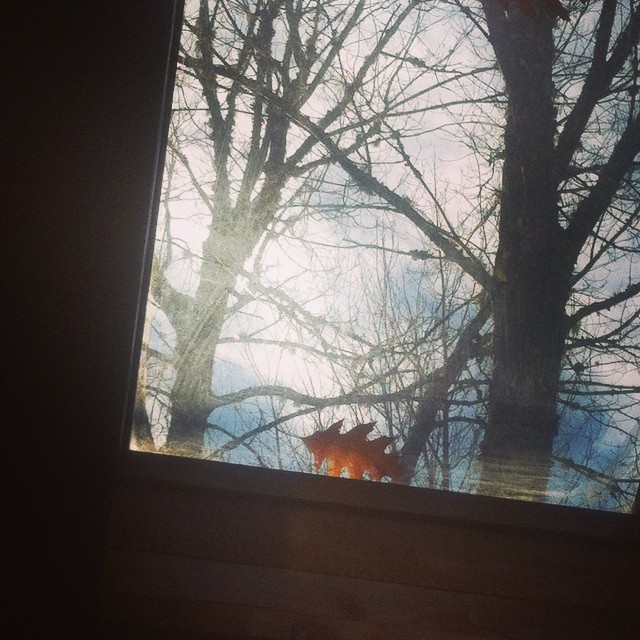
Late Autumn via Skylight: Degregoire Park, Mount Desert Island

So here we are, on the first day of a new year: 2015! How did we make it here, marching through the muddy cloudiness of life, keeping feet forward and a sense of hope in our ragged hearts? Magically, almost, the universe ushered in a new year last night late on a cold January evening; ours was marked with fireworks and fire and friends, and it was good to kiss a new year on the cheek, welcoming in the wishes of another turn around the Sun.

10444338_10204095579408896_2619884559901873916_n

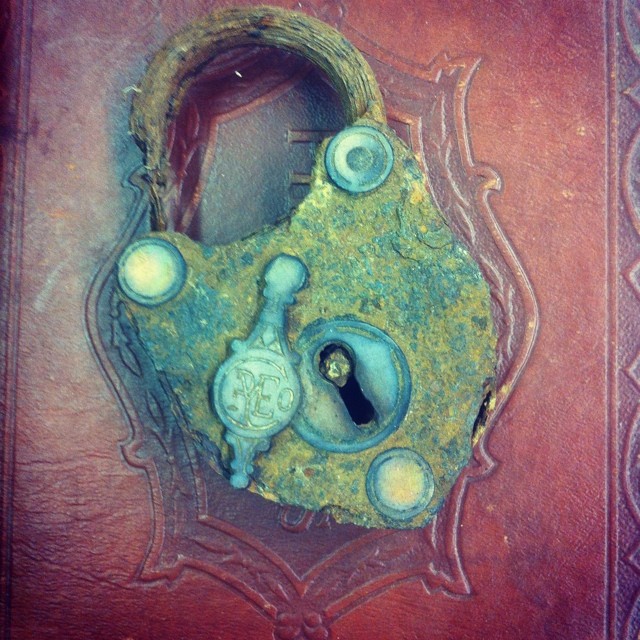
Treasure from the River’s Bottom: Lincoln, Maine

This is the third January 1st that I have ushered in this cold and magical place where the ground is covered with moss and crinkles when you walk upon it on a cold winter’s morning. This afternoon, as I moved armload after armload of freshly chainsawed wood to its winter home of pallets set in the side yard, I watched the sunset over two mountains in the distance: it was colored pink and peach and seemed to be held interminably above the ridge of those mountains, clouding them in rose and salmon and magenta. I remarked to the neighbor who was helping me chainsaw piles of birch timber how lucky we are, and he remarked how everyone watches the sunset in different parts of the world, everyday. I disagreed and still feel that today was special.

10176255_10205074742887371_5953263098488244806_n

Sargent Drive in Snow: Northeast Harbor, Maine

So what does a new year mean, in its essence, in its whole, in the grand scheme of things? It is hard to posit meaning in and of itself; only to say that we are welcomed with opportunities and responsibilities in each moment, really, but especially in the birth of a new year, another transit around our central star, a time to reflect and plan and foresee, as best as we can, what is to come.

10670212_10205170650725007_3935724932328490496_n

Ice in the Driveway: at the Tool Barn, Hulls Cove, Maine

I have spent my year of 2014 in quiet and not so quiet contemplation of how I got here: how I came to be in this peaceful and quiet place, surrounded by misfits and oddballs, a kinfolk for sure of people who seek meaning in the everyday, who try to make it despite the natural adversities of life here. Here is a place you have to consciously commit to, as the way of life is so different, so difficult, even, and yet, so soothing and comforting and welcoming and warm. As I sit here in my new house, my home I hope to say, I am listening to and watching the fire burn, staring at old brass lamps that are glowing in the darkness. I type on a table that has been in my family since I was a small child, transplanted from England to Texas. This small pine table sat in many kitchens of ours; we moved many times within the same corporate-created borough of north Houston. We, an immigrant family seeking place and meaning in a foreign environment, created ourselves, as we all do, as products of our environment, our family and our friends. Today, that old table is covered with an antique quilt top gifted to me by Angel many years ago, one night during jewelry class. I always meant to make it in to a quilt, but haven’t so yet, and so it has become a beautiful tablecloth, covering a cheap heirloom of sorts, providing a grounding force in this new home.

10313849_10204164128882590_6623579078885472574_n

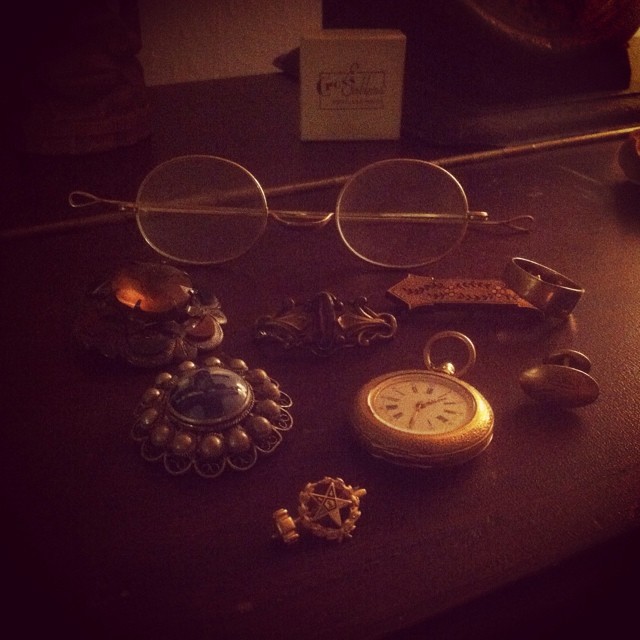
Treasures Hidden Inside an Antique Piano: Bar Harbor, Maine

Each morning, I look out my kitchen window at Champlain and Gorham mountains while I drink coffee. When I venture outside to grab more wood or make the move to my car to go to work, I gaze upon the notch between Dorr and Cadillac. At all houses here, previous to this one, I gazed upon the ocean. Here I look at the mountains, and the metaphor is clear: no longer a time of intense reflection, this time is for grounding and building, embracing this place and finding a spot in this community, continuing to build upon my projects, create more beauty, more artwork, in these awe inspiring, and at this time of year, rather desolate surroundings.

10376829_10205284324966792_7518633452669713655_n

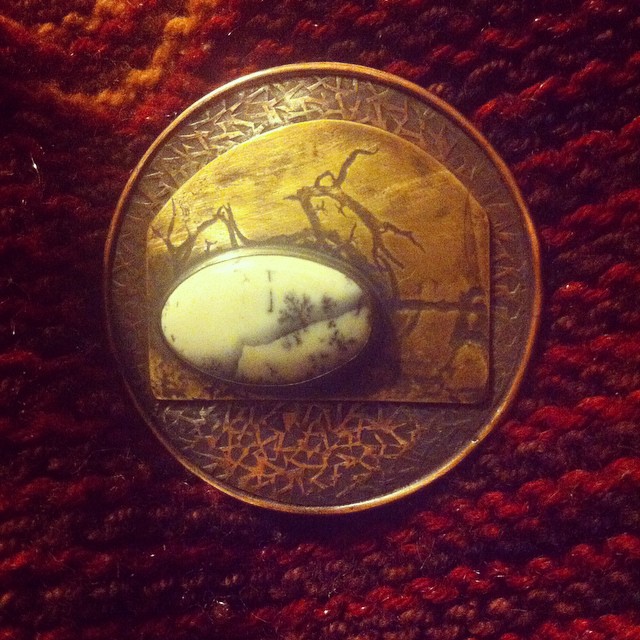
The Cusp of December: Belt Buckle in Copper, Bronze & Milky Opal, 2014

I have found that it takes a certain person to make life work here: there is an intention within those who choose to be here to live and work and make a life despite adverse circumstances that are mostly based on a seasonal economy and general lack of orientation around money. Money here is not a driver, but experience is, peace is, serenity is, building things that will stay becomes a sort of guiding force for all of us. Once you have found it, you want to hold on to it. I remember discussing with a friend how he felt about his first stone wall, and how he went to check on it regularly over its first few years. I asked him if he was afraid it would have fallen down, but no, that wasn’t it: he wanted to see how it was standing, how it was living as a piece in a grander landscape. I suppose that is how all of us are here, there, and everywhere.

1610820_10205057898266266_7893181336443430626_n

The Flower Tower: a Memorial for Eden, Bar Harbor, Maine

My hopes for 2015 are for more creativity and more communication and for connecting the dots between how I see myself and how others see me. I wish to become more present, more available, less of a mystery and more a citizen of this place. For the past two years, I have waffled back and forth about staying and going, whether to commit, or not. In reality, I haven’t committed to anything in five years, until right now. I moved into this beautiful little house (photos forthcoming) a bit less than a month ago, and have found, after all the ups and downs of recent times, of the discoveries, enlightenments, experiences, sadnesses and true joys, have found a home.

10313761_10203735659251117_1145029698962192078_n

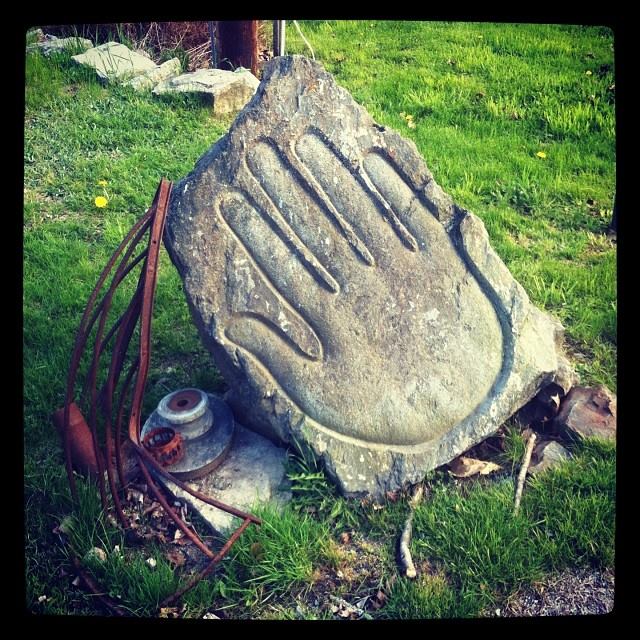
A Helping Hand: Davistown Museum Sculpture Garden, Hulls Cove, Maine

Thank you for reading. It is the winter, truly, now, and I look forward to writing more about how it unfolds here, sharing my thoughts with you and yours. It is time for a celebration of a sort: as a friend told me the other night, how amazing is it to be 34 years old? Or however old you are. Enjoy it.

10885568_10205463497245987_3021704100087322118_n

At the Tool Barn, Autumn 2014 – photography by George Soules

Kindness

10712966_10152360298497120_989873323379479642_n

I have just learned that Stuart Kestenbaum, long time director of the Haystack Mountain School of Crafts, is leaving his position in the spring of next year. My last post discussed at length my last Haystack experience, and how transformative it was for me and for the people in our class. One of Stu’s great gifts is his incredibly wacky sense of humor: his voice is soft and his manner full of grace, and his jokes sneak across to you almost constantly, causing everyone in his presence to have no choice but to laugh. In addition to this, he is a beautiful writer and has a habit of sharing poetry with Haystack attendees, including myself.

When I went to Haystack two weeks ago, I was shrouded with doubts and feeling regarding an ethical position of mine in this life: one of attempting to be truly kind to all people regardless of how they act outwardly. A couple of years ago, I started trying to adopt an attitude of not taking anything personally and understanding that we all act out of fundamental self interest, regardless of how things may feel in the moment. Recently, I had added to this philosophy by tacking on the idea of impermanence, or the temporary nature of all things. I find that when people are challenging, rude or just plain mean, an attitude of understanding it is not personal, but rather is something happening within their own hearts, and that the experience itself passes in mere moments, it helps to remain kind and to feel solid enough in my own self to keep progressing in this beautiful game that is life.

Here is the poem that changed my doubts into confidences a couple of weeks ago. Stu read it to us on Saturday night, just before workshops started, and it changed my questioning feelings into feelings that made me feel stronger and more determined to do what I love to do on the Earth, which is to talk to people, share with them, be kind to them, try to understand them, and help them express themselves in positive and productive ways.

Lots of love and admiration to Stu: wherever he goes from here is lucky beyond words to have him tell stories in his unique, lilting and loving style.

Kindnessby Naomi Shihab Nye, 1952

Before you know what kindness really is
you must lose things,
feel the future dissolve in a moment
like salt in a weakened broth.
What you held in your hand,
what you counted and carefully saved,
all this must go so you know
how desolate the landscape can be
between the regions of kindness.
How you ride and ride
thinking the bus will never stop,
the passengers eating maize and chicken
will stare out the window forever.
Before you learn the tender gravity of kindness,
you must travel where the Indian in a white poncho
lies dead by the side of the road.
You must see how this could be you,
how he too was someone
who journeyed through the night with plans
and the simple breath that kept him alive.
Before you know kindness as the deepest thing inside,
you must know sorrow as the other deepest thing. 
You must wake up with sorrow.
You must speak to it till your voice
catches the thread of all sorrows
and you see the size of the cloth.
Then it is only kindness that makes sense anymore,
only kindness that ties your shoes
and sends you out into the day to mail letters and purchase bread,
only kindness that raises its head
from the crowd of the world to say
it is I you have been looking for,
and then goes with you everywhere
like a shadow or a friend.

4300_90812087119_3001201_n

Three Things

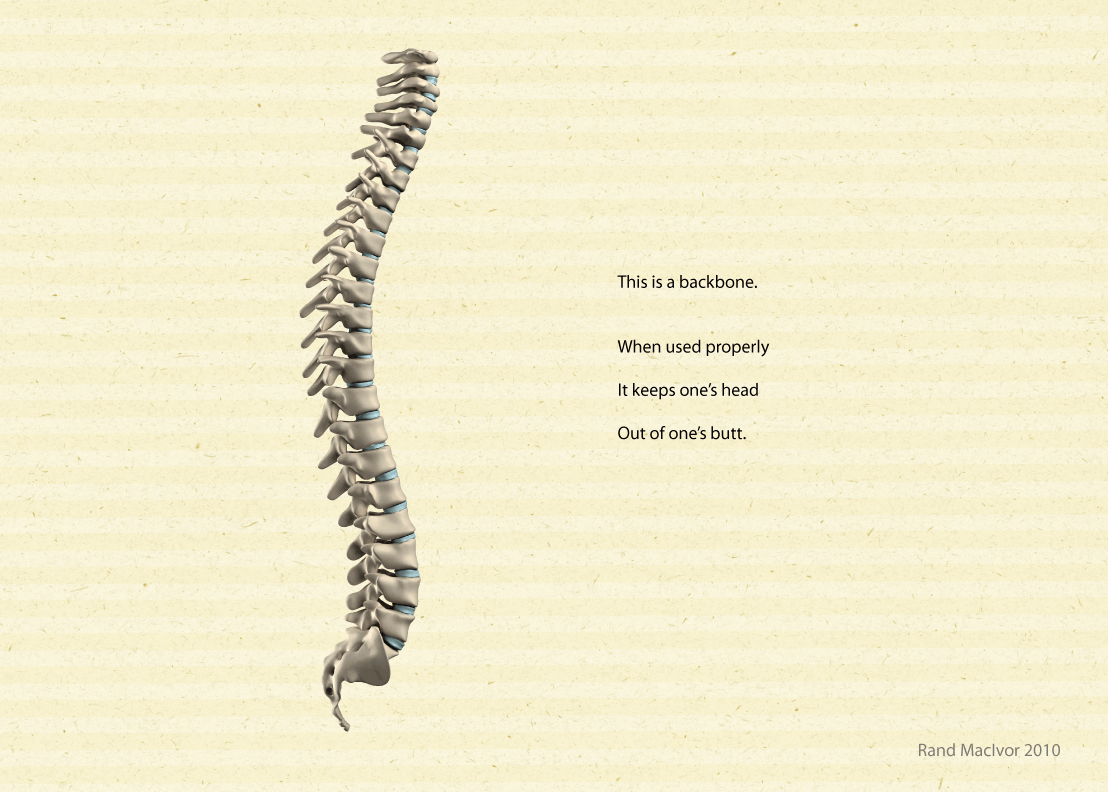
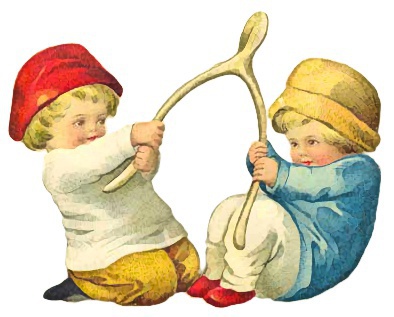
Never grow a wishbone, daughter, where your backbone ought to be.

Clementine Paddleford

How do we know when it’s time? Is it something that occurs to you on a cold spring day whilst walking through the woods? Is it a hidden message in the wind on a fall evening? Is it a discovery, during the eating of ice cream on a walk along the shore? Is it just, finally, paying attention?

1315_1

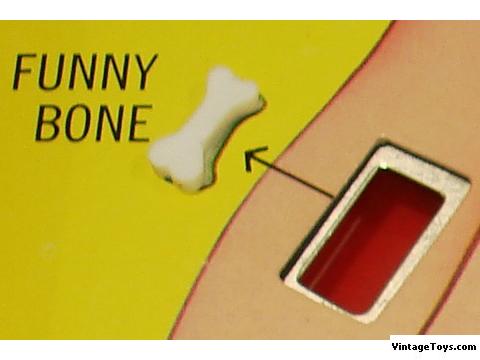
The Funny Bone

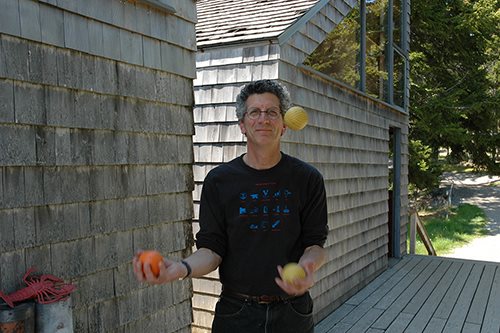
I am sitting in my bedroom, listening to the soft sounds of skateboarders coasting under my windows, having just returned from another lovely weekend at Haystack: site of creative encouragement and exploration on an approachable yet massive scale. Two weeks ago, for three days, I helped others learn how to make machines out of wood and metal, I encouraged peoples’ senses of their own creativity, and helped them develop an aesthetic. I listened to people become frustrated, I watched people remain calm, I taught people how to solder and how to raise bowls from copper sheets, I supported our wonderful teacher rise to the occasion of others’ creative urges time and time again. I helped someone make a robot that walked, and an Icarus who flew. I listened to a poem read aloud once per night, and also listened to peoples’ encapsulated memoirs read early on a Monday morning. I witnessed dedication and laughter, struggle and success. I grew physically tired but mentally inspired. I sat at dinner with strangers and with friends, and I felt a part of something larger than myself: a fleeting feeling that when one gets it, one has to hold on to it, note it, and pay attention.

I went to Haystack two weekends ago with a decision in mind: one that is rather large and means uprooting, change, and new beginnings. I went to Haystack with one thought in mind, and that was to sit with this decision and listen to its comings and goings until I had an answer. Through teaching people how to make automata, mechanical toys, and watching them persevere, learn, grow, and begin to know each other, and as I sat at a distance, next to a large yellow anvil in the center of the studio, I spent my time thinking about changes, and “going back”, and going forward. The only thing I made this weekend was a cutout in copper of a rather important idea, I think:

What are you really thinking about right now?

As I cut this out of copper, over about two and a half hours on a Friday night, I thought to myself about all the meanings of this question. I gleaned it from the Oblique Strategies, a pet project designed to help creative types overcome blocks in their processes. I found it related it to my life and probably, the lives of others in my life. I am really thinking right now about the course my life has taken, where I am right now, and where I wish to be. For the first time in a long time, I feel the pieces of life are quite clear to me;  as in, I can see what I wish to be components of my life in a holistic way, and am now seeking to craft that life for myself. That craft-work of life-making, if you will, requires some significant changes in my day to day life and in my interactions with the world, while also requiring holding on to the huge lessons I have learned here in the two years since I started this writing project, with you, in the fall of 2012.

backbone

The Backbone

Let me begin with a story from the fall of 2006, when I was a very new teacher. I taught a science elective for 8th graders and had the requisite crew of misfits who came to my room for an hour and a half every other day. One sat in a sink, one constantly drew pictures of knights and dragons, one was very tiny and giggled, two barely spoke English, one was a mathematically oriented super Goth teenager who counted things like floor tiles, and one was obstinate and charming at the same time. This group, of course, ended up being my favorite group of that year, mostly because they were so strange and goofy and would do anything I asked of them. We navigated through that year together doing projects  on pollution and archaeology and space and inventions, but the best day was one day when I brought a huge box of crap from my house and dumped it on a table and told them that they had to make something. The girl who sat in the sink immediately grabbed some sparkly fabric and made a cape and wore it, I think, for the rest of the day. The tiny one who giggled made me a tyrannosaurus rex out of parts of an old sewing machine and hot glue and delivered it to my desk the next day. Later, we invented fantasy environments that had to have all the components of actual biomes: shelter, water, food, etc. and I discovered that the boy who later lit a toilet on fire truly appreciated the ins and outs of colored pipe cleaners and pom poms, having created a fuzzy environment that was rainbow colored and bedecked with glitter.

Today, in the fall of 2014, eight years and what feels like a lifetime later, I am realizing the power of that class in terms of my teaching and my learning and what I create on the Earth. I am currently seeking a way to integrate my love for teaching with my current life as an artist. I miss teaching children: the children who I see as needing bridges into our larger cultural landscape, but didn’t know how to integrate all of these parts until a friend of mine and I were talking and he told me he felt that maybe I could just do it again: that I was hiding a set of skills and passions in an apartment that looms above a quiet street in a small town. For many reasons, I felt like I had to choose one or the other: the city or the country, the teacher or the artist, and in that conversation, I realized that I didn’t have to choose between because I could choose all.

When I took a step back and looked at all of the pieces, as a whole, I realized that I had devoted many years of my life to teaching and improving children’s access to education in disparate circumstances, and that I had a litany of experiences and stories of children who had impacted me in a meaningful way, and vice versa. As Maya Angelou said, these myriad stories are the rainbows in my cloud, and are all of those who I call up with me when times are challenging and troubled. To give them up would be a shame, would be a sorrow, and would not be acknowledging the power of all of those tiny rainbows, even the ones who I met during that hard experience in inner city North Philadelphia.

Let me tell you another story. This past weekend, I assisted my friend Sarah and we taught fourteen adults how to make automated machines using wood, plastic, metal, porcelain, etc. One of our students was a woman about my own age, who turned up looking a little unsure, but all of us show up to Haystack looking a bit unsure. On the first night, she carried in a giant suitcase full of stuff. She was a beautiful woman, shorter than I with dark hair under a knit cap. She had a strange air to her, as if she was distracted or not fully present,  a lilt and a slight lisp to her voice, and a dark scar under one eye. After she brought the case in, and opened it, she exclaimed how she couldn’t believe how she had made everything inside it. I asked her to explain and tell me what was happening with her as I had heard her earlier explain rebuilding an old cabin and living in a small town near Blue Hill. She told me that she had recently been in a serious accident and had broken her back and had had to relearn how to walk and take care of herself again, and had somehow found herself living in her father’s old cabin with broken windows and trash and tools half buried in the yard, and that she had to haul water daily and had replaced the roof and was wondering what she was doing and was slowly realizing that she wasn’t going to be able to stay there for the winter. I identified with her, and she reminded me of myself, broken apart, confused, and full of sorrow, when I landed on this island two years ago, and I told her that I thought I understood what was up: that her survival instinct had kicked in at some point and that her homeplace was her land and her project and that she was just reconnecting the parts that had been flung apart during her traumatic experience. Interestingly enough, after a day of confusion and no direction in her process, she ended up cutting out a backbone of brass, and building a ribcage of copper that she riveted to the backbone. Later, we soldered a sternum on to the ribcage, added a tube and made it a syringe ring that, when the plunger was pushed, springs shot out of a central tube and out and up of her ribcage. In a way, she rebuilt her back and her body out of shiny, beautiful metal: a model of what she was going through in her life, made by her hands, directed and coaxed and bent and heated and cooled, tumbled, refined, she created something so beautiful that it caused many people to draw their breath in sharply, even if they didn’t know her story.

thanksgiving_Wishbone

The Wishbone

What do I want?

I want to spend time remembering, here, with myself and with you, my audience, the many rainbows in my cloud, for I had almost forgotten them. From now on, for a while, I will spend some time recording my teaching stories, which are the backbone/funnybone/wishbone of my blogging. After all, I started blogging about my teaching stories way back in 2006 on LiveJournal.com, an outdated blogging resource but very interesting to reread 8 years on. It is amazing how one’s writing style can change for the better…thank goodness for time!

I want to teach kids who need adults who really care about them to build bridges with them to learn science and read books and create art in a supportive atmosphere that is stable and has a history and is run by a caring staff who is in it for the kids, not for their own self interest. I want to teach at places like Haystack, and Metalwerx, and Arrowmont, and Penland. I want to teach classes in my studio and bring the creative spirit out in anyone who crosses my threshold. I want to share with people the power of their own expression. I want to challenge myself to always express myself, too. I want to see different kinds of people every day, and occasionally, to hide out in a coffee shop late at night. I want to be able to bike some places, and walk some places. I want to go to community discussions on social issues that are important to me, watch documentaries in the dark, and to stroll through museums. I want to cease to be intimidating, but become intimidated and challenged by others. I want to be surprised by people, places and things. I want to take my love of my last two years, and my knowledge of the thirty two that preceded it, and combine it in a life in a place that is good for me.

I spent the three days two weekends ago learning and growing from fourteen strangers and a few friends. I purposefully didn’t really make anything, but just sat by that anvil and thought, when I wasn’t up and helping people make their automata. I sat on steps and thought, I lay in my bed and thought, I stared through trees and out at the ocean. I watched crows fly and coast on thermals over the tops of the studios yesterday morning with the glinting ocean stretching out behind them. I realized, here we are. Nothing really is right or wrong: our decisions are just choices, realities that we put into place, knowing what we know, recognizing imperfection, seeking a more holistic hold on life, one of people big and small, of the possibility that love means a myriad things, that being able to spread ones arms or wings or whatever you want to call them, may be something to consider, after all.

Gloriousness & Wretchedness

Fear

“Once there was a young warrior. Her teacher told her that she had to do battle with fear. She didn’t want to do that. It seemed too aggressive; it was scary; it seemed unfriendly. But the teacher said she had to do it and gave her the instructions for the battle. The day arrived. The student warrior stood on one side, and fear stood on the other. The warrior was feeling very small, and fear was looking big and wrathful. They both had their weapons. The young warrior roused herself and went toward fear, prostrated three times, and asked, “May I have permission to go into battle with you?” Fear said, “Thank you for showing me so much respect that you ask permission.” Then the young warrior said, “How can I defeat you?” Fear replied, “My weapons are that I talk fast, and I get very close to your face. Then you get completely unnerved, and you do whatever I say. If you don’t do what I tell you, I have no power. You can listen to me, and you can have respect for me. You can even be convinced by me. But if you don’t do what I say, I have no power.” In that way, the student warrior learned how to defeat fear. ” 

Pema Chodron

Dandelion Flowers Wallpapers 05

Fear sat behind us on a beige couch as we ate dinner together at a short table. Fear sat and watched, and waited for us to notice its presence as we talked and laughed and touched.

Into the kitchen, it followed us as if it knew that one of us would look up and see it staring us in the face. It had been a glorious afternoon and evening. Fear stepped in and overtook a simple request, twisting it into something with a meaning it didn’t really have. Fear caused silence and a lack of joy: it caused confusion and awkwardness and a smidge of sorrow. Later, in bed, it caused us to turn away, and later still, to miss each other somehow, and to drift away.

What happens when fear drives the bus? What happens when it overtakes simple affections and communication and steers us away from each other? All too easily can this happen, and sometimes, only a couple of hours or days of clarity can help shed light on something so murky as those feelings of: Will s/he listen to me in the future? What is happening here? Is this meaningless, or meaningful?

I think the answer lies somewhere in the area of deep breaths and clear thoughts, of truly listening to the other and attempting to meet their needs even if it inconveniences our own momentary desires. There can be such anxiety in moments, as if the whole world hinges on a singular passing segment of time, when, with perspective, we of course can see and realize that we are all, after all, only living and acting out of our own beliefs and our own minds in that selfsame moment. It is so difficult not to ascribe deep meaning to things like the sweet words lovers speak to one another late on a fall afternoon, or to a feeling of uncertainty very early in the morning.

acb022327f27a15c43169e0a5fb05048

Time, in its passing, teaches us that although we may notice the moments and feel them intensely, that perhaps instead of acting based on reactive decisions made in those moments, that we should see the experience as a whole, and take a deep breath, a step back, and realize that…the only thing to fear, is Fear itself. And keep moving: understanding that the value of the whole outweighs momentary confusion or inconvenience or uncertainty or that dirtiest of dirty words, insecurity.

“The only reason we don’t open our hearts and minds to other people is that they trigger confusion in us that we don’t feel brave enough or sane enough to deal with. To the degree that we look clearly and compassionately at ourselves, we feel confident and fearless about looking into someone else’s eyes. ”

~ Pema Chodron

Yoga-For-An-Open-Heart

The Velveteen Rabbit, or How Toys Become Real

THERE was once a velveteen rabbit, and in the beginning he was really splendid. He was fat and bunchy, as a rabbit should be; his coat was spotted brown and white, he had real thread whiskers, and his ears were lined with pink sateen. On Christmas morning, when he sat wedged in the top of the Boy’s stocking, with a sprig of holly between his paws, the effect was charming.

There were other things in the stocking, nuts and oranges and a toy engine, and chocolate almonds and a clockwork mouse, but the Rabbit was quite the best of all. For at least two hours the Boy loved him, and then Aunts and Uncles came to dinner, and there was a great rustling of tissue paper and unwrapping of parcels, and in the excitement of looking at all the new presents the Velveteen Rabbit was forgotten.

christmas

For a long time he lived in the toy cupboard or on the nursery floor, and no one thought very much about him. He was naturally shy, and being only made of velveteen, some of the more expensive toys quite snubbed him. The mechanical toys were very superior, and looked down upon every one else; they were full of modern ideas, and pretended they were real. The model boat, who had lived through two seasons and lost most of his paint, caught the tone from them and never missed an opportunity of referring to his rigging in technical terms. The Rabbit could not claim to be a model of anything, for he didn’t know that real rabbits existed; he thought they were all stuffed with sawdust like himself, and he understood that sawdust was quite out-of-date and should never be mentioned in modern circles. Even Timothy, the jointed wooden lion, who was made by the disabled soldiers, and should have had broader views, put on airs and pretended he was connected with Government. Between them all the poor little Rabbit was made to feel himself very insignificant and commonplace, and the only person who was kind to him at all was the Skin Horse.

The Skin Horse had lived longer in the nursery than any of the others. He was so old that his brown coat was bald in patches and showed the seams underneath, and most of the hairs in his tail had been pulled out to string bead necklaces. He was wise, for he had seen a long succession of mechanical toys arrive to boast and swagger, and by-and-by break their mainsprings and pass away, and he knew that they were only toys, and would never turn into anything else. For nursery magic is very strange and wonderful, and only those playthings that are old and wise and experienced like the Skin Horse understand all about it.

“What is REAL?” asked the Rabbit one day, when they were lying side by side near the nursery fender, before Nana came to tidy the room. “Does it mean having things that buzz inside you and a stick-out handle?”

“Real isn’t how you are made,” said the Skin Horse. “It’s a thing that happens to you. When a child loves you for a long, long time, not just to play with, but REALLY loves you, then you become Real.”

“Does it hurt?” asked the Rabbit.

“Sometimes,” said the Skin Horse, for he was always truthful. “When you are Real you don’t mind being hurt.”

“Does it happen all at once, like being wound up,” he asked, “or bit by bit?”

“It doesn’t happen all at once,” said the Skin Horse. “You become. It takes a long time. That’s why it doesn’t happen often to people who break easily, or have sharp edges, or who have to be carefully kept. Generally, by the time you are Real, most of your hair has been loved off, and your eyes drop out and you get loose in the joints and very shabby. But these things don’t matter at all, because once you are Real you can’t be ugly, except to people who don’t understand.”

“I suppose you are real?” said the Rabbit. And then he wished he had not said it, for he thought the Skin Horse might be sensitive. But the Skin Horse only smiled.

horse

“The Boy’s Uncle made me Real,” he said. “That was a great many years ago; but once you are Real you can’t become unreal again. It lasts for always.”

The Rabbit sighed. He thought it would be a long time before this magic called Real happened to him. He longed to become Real, to know what it felt like; and yet the idea of growing shabby and losing his eyes and whiskers was rather sad. He wished that he could become it without these uncomfortable things happening to him.

There was a person called Nana who ruled the nursery. Sometimes she took no notice of the playthings lying about, and sometimes, for no reason whatever, she went swooping about like a great wind and hustled them away in cupboards. She called this “tidying up,” and the playthings all hated it, especially the tin ones. The Rabbit didn’t mind it so much, for wherever he was thrown he came down soft.

One evening, when the Boy was going to bed, he couldn’t find the china dog that always slept with him. Nana was in a hurry, and it was too much trouble to hunt for china dogs at bedtime, so she simply looked about her, and seeing that the toy cupboard door stood open, she made a swoop.

“Here,” she said, “take your old Bunny! He’ll do to sleep with you!” And she dragged the Rabbit out by one ear, and put him into the Boy’s arms.

That night, and for many nights after, the Velveteen Rabbit slept in the Boy’s bed. At first he found it rather uncomfortable, for the Boy hugged him very tight, and sometimes he rolled over on him, and sometimes he pushed him so far under the pillow that the Rabbit could scarcely breathe. And he missed, too, those long moonlight hours in the nursery, when all the house was silent, and his talks with the Skin Horse. But very soon he grew to like it, for the Boy used to talk to him, and made nice tunnels for him under the bedclothes that he said were like the burrows the real rabbits lived in. And they had splendid games together, in whispers, when Nana had gone away to her supper and left the night-light burning on the mantelpiece. And when the Boy dropped off to sleep, the Rabbit would snuggle down close under his little warm chin and dream, with the Boy’s hands clasped close round him all night long.

And so time went on, and the little Rabbit was very happy–so happy that he never noticed how his beautiful velveteen fur was getting shabbier and shabbier, and his tail becoming unsewn, and all the pink rubbed off his nose where the Boy had kissed him.

Spring came, and they had long days in the garden, for wherever the Boy went the Rabbit went too. He had rides in the wheelbarrow, and picnics on the grass, and lovely fairy huts built for him under the raspberry canes behind the flower border. And once, when the Boy was called away suddenly to go out to tea, the Rabbit was left out on the lawn until long after dusk, and Nana had to come and look for him with the candle because the Boy couldn’t go to sleep unless he was there. He was wet through with the dew and quite earthy from diving into the burrows the Boy had made for him in the flower bed, and Nana grumbled as she rubbed him off with a corner of her apron.

spring

“You must have your old Bunny!” she said. “Fancy all that fuss for a toy!”

The Boy sat up in bed and stretched out his hands.

“Give me my Bunny!” he said. “You mustn’t say that. He isn’t a toy. He’s REAL!”

When the little Rabbit heard that he was happy, for he knew that what the Skin Horse had said was true at last. The nursery magic had happened to him, and he was a toy no longer. He was Real. The Boy himself had said it.

That night he was almost too happy to sleep, and so much love stirred in his little sawdust heart that it almost burst. And into his boot-button eyes, that had long ago lost their polish, there came a look of wisdom and beauty, so that even Nana noticed it next morning when she picked him up, and said, “I declare if that old Bunny hasn’t got quite a knowing expression!”

That was a wonderful Summer!

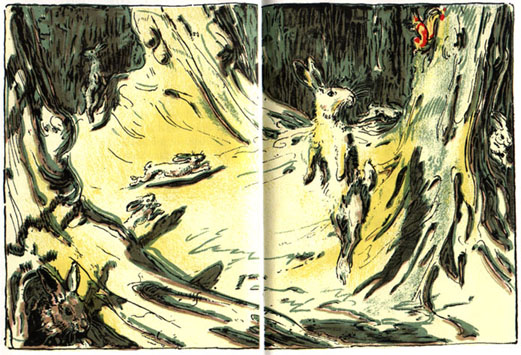
Near the house where they lived there was a wood, and in the long June evenings the Boy liked to go there after tea to play. He took the Velveteen Rabbit with him, and before he wandered off to pick flowers, or play at brigands among the trees, he always made the Rabbit a little nest somewhere among the bracken, where he would be quite cosy, for he was a kind-hearted little boy and he liked Bunny to be comfortable. One evening, while the Rabbit was lying there alone, watching the ants that ran to and fro between his velvet paws in the grass, he saw two strange beings creep out of the tall bracken near him.

They were rabbits like himself, but quite furry and brand-new. They must have been very well made, for their seams didn’t show at all, and they changed shape in a queer way when they moved; one minute they were long and thin and the next minute fat and bunchy, instead of always staying the same like he did. Their feet padded softly on the ground, and they crept quite close to him, twitching their noses, while the Rabbit stared hard to see which side the clockwork stuck out, for he knew that people who jump generally have something to wind them up. But he couldn’t see it. They were evidently a new kind of rabbit altogether.

summer

They stared at him, and the little Rabbit stared back. And all the time their noses twitched.

“Why don’t you get up and play with us?” one of them asked.

“I don’t feel like it,” said the Rabbit, for he didn’t want to explain that he had no clockwork.

“Ho!” said the furry rabbit. “It’s as easy as anything,” And he gave a big hop sideways and stood on his hind legs.

“I don’t believe you can!” he said.

“I can!” said the little Rabbit. “I can jump higher than anything!” He meant when the Boy threw him, but of course he didn’t want to say so.

“Can you hop on your hind legs?” asked the furry rabbit.

That was a dreadful question, for the Velveteen Rabbit had no hind legs at all! The back of him was made all in one piece, like a pincushion. He sat still in the bracken, and hoped that the other rabbits wouldn’t notice.

“I don’t want to!” he said again.

But the wild rabbits have very sharp eyes. And this one stretched out his neck and looked.

“He hasn’t got any hind legs!” he called out. “Fancy a rabbit without any hind legs!” And he began to laugh.

“I have!” cried the little Rabbit. “I have got hind legs! I am sitting on them!”

“Then stretch them out and show me, like this!” said the wild rabbit. And he began to whirl round and dance, till the little Rabbit got quite dizzy.

“I don’t like dancing,” he said. “I’d rather sit still!”

But all the while he was longing to dance, for a funny new tickly feeling ran through him, and he felt he would give anything in the world to be able to jump about like these rabbits did.

The strange rabbit stopped dancing, and came quite close. He came so close this time that his long whiskers brushed the Velveteen Rabbit’s ear, and then he wrinkled his nose suddenly and flattened his ears and jumped backwards.

“He doesn’t smell right!” he exclaimed. “He isn’t a rabbit at all! He isn’t real!”

“I am Real!” said the little Rabbit. “I am Real! The Boy said so!” And he nearly began to cry.

Just then there was a sound of footsteps, and the Boy ran past near them, and with a stamp of feet and a flash of white tails the two strange rabbits disappeared.

“Come back and play with me!” called the little Rabbit. “Oh, do come back! I know I am Real!”

But there was no answer, only the little ants ran to and fro, and the bracken swayed gently where the two strangers had passed. The Velveteen Rabbit was all alone.

“Oh, dear!” he thought. “Why did they run away like that? Why couldn’t they stop and talk to me?”

For a long time he lay very still, watching the bracken, and hoping that they would come back. But they never returned, and presently the sun sank lower and the little white moths fluttered out, and the Boy came and carried him home.

Weeks passed, and the little Rabbit grew very old and shabby, but the Boy loved him just as much. He loved him so hard that he loved all his whiskers off, and the pink lining to his ears turned grey, and his brown spots faded. He even began to lose his shape, and he scarcely looked like a rabbit any more, except to the Boy. To him he was always beautiful, and that was all that the little Rabbit cared about. He didn’t mind how he looked to other people, because the nursery magic had made him Real, and when you are Real shabbiness doesn’t matter.

And then, one day, the Boy was ill.

His face grew very flushed, and he talked in his sleep, and his little body was so hot that it burned the Rabbit when he held him close. Strange people came and went in the nursery, and a light burned all night and through it all the little Velveteen Rabbit lay there, hidden from sight under the bedclothes, and he never stirred, for he was afraid that if they found him some one might take him away, and he knew that the Boy needed him.

It was a long weary time, for the Boy was too ill to play, and the little Rabbit found it rather dull with nothing to do all day long. But he snuggled down patiently, and looked forward to the time when the Boy should be well again, and they would go out in the garden amongst the flowers and the butterflies and play splendid games in the raspberry thicket like they used to. All sorts of delightful things he planned, and while the Boy lay half asleep he crept up close to the pillow and whispered them in his ear. And presently the fever turned, and the Boy got better. He was able to sit up in bed and look at picture-books, while the little Rabbit cuddled close at his side. And one day, they let him get up and dress.

It was a bright, sunny morning, and the windows stood wide open. They had carried the Boy out on to the balcony, wrapped in a shawl, and the little Rabbit lay tangled up among the bedclothes, thinking.

The Boy was going to the seaside to-morrow. Everything was arranged, and now it only remained to carry out the doctor’s orders. They talked about it all, while the little Rabbit lay under the bedclothes, with just his head peeping out, and listened. The room was to be disinfected, and all the books and toys that the Boy had played with in bed must be burnt.

“Hurrah!” thought the little Rabbit. “To-morrow we shall go to the seaside!” For the boy had often talked of the seaside, and he wanted very much to see the big waves coming in, and the tiny crabs, and the sand castles.

Just then Nana caught sight of him.

“How about his old Bunny?” she asked.

That?” said the doctor. “Why, it’s a mass of scarlet fever germs!–Burn it at once. What? Nonsense! Get him a new one. He mustn’t have that any more!”

anxious

And so the little Rabbit was put into a sack with the old picture-books and a lot of rubbish, and carried out to the end of the garden behind the fowl-house. That was a fine place to make a bonfire, only the gardener was too busy just then to attend to it. He had the potatoes to dig and the green peas to gather, but next morning he promised to come quite early and burn the whole lot.

That night the Boy slept in a different bedroom, and he had a new bunny to sleep with him. It was a splendid bunny, all white plush with real glass eyes, but the Boy was too excited to care very much about it. For to-morrow he was going to the seaside, and that in itself was such a wonderful thing that he could think of nothing else.

And while the Boy was asleep, dreaming of the seaside, the little Rabbit lay among the old picture-books in the corner behind the fowl-house, and he felt very lonely. The sack had been left untied, and so by wriggling a bit he was able to get his head through the opening and look out. He was shivering a little, for he had always been used to sleeping in a proper bed, and by this time his coat had worn so thin and threadbare from hugging that it was no longer any protection to him. Near by he could see the thicket of raspberry canes, growing tall and close like a tropical jungle, in whose shadow he had played with the Boy on bygone mornings. He thought of those long sunlit hours in the garden–how happy they were–and a great sadness came over him. He seemed to see them all pass before him, each more beautiful than the other, the fairy huts in the flower-bed, the quiet evenings in the wood when he lay in the bracken and the little ants ran over his paws; the wonderful day when he first knew that he was Real. He thought of the Skin Horse, so wise and gentle, and all that he had told him. Of what use was it to be loved and lose one’s beauty and become Real if it all ended like this? And a tear, a real tear, trickled down his little shabby velvet nose and fell to the ground.

And then a strange thing happened. For where the tear had fallen a flower grew out of the ground, a mysterious flower, not at all like any that grew in the garden. It had slender green leaves the colour of emeralds, and in the centre of the leaves a blossom like a golden cup. It was so beautiful that the little Rabbit forgot to cry, and just lay there watching it. And presently the blossom opened, and out of it there stepped a fairy.

She was quite the loveliest fairy in the whole world. Her dress was of pearl and dew-drops, and there were flowers round her neck and in her hair, and her face was like the most perfect flower of all. And she came close to the little Rabbit and gathered him up in her arms and kissed him on his velveteen nose that was all damp from crying.

“Little Rabbit,” she said, “don’t you know who I am?”

The Rabbit looked up at her, and it seemed to him that he had seen her face before, but he couldn’t think where.

“I am the nursery magic Fairy,” she said. “I take care of all the playthings that the children have loved. When they are old and worn out and the children don’t need them any more, then I come and take them away with me and turn them into Real.”

“Wasn’t I Real before?” asked the little Rabbit.

“You were Real to the Boy,” the Fairy said, “because he loved you. Now you shall be Real to every one.”

fairy

And she held the little Rabbit close in her arms and flew with him into the wood.

It was light now, for the moon had risen. All the forest was beautiful, and the fronds of the bracken shone like frosted silver. In the open glade between the tree-trunks the wild rabbits danced with their shadows on the velvet grass, but when they saw the Fairy they all stopped dancing and stood round in a ring to stare at her.

“I’ve brought you a new playfellow,” the Fairy said. “You must be very kind to him and teach him all he needs to know in Rabbit-land, for he is going to live with you for ever and ever!”

And she kissed the little Rabbit again and put him down on the grass.

“Run and play, little Rabbit!” she said.

But the little Rabbit sat quite still for a moment and never moved. For when he saw all the wild rabbits dancing around him he suddenly remembered about his hind legs, and he didn’t want them to see that he was made all in one piece. He did not know that when the Fairy kissed him that last time she had changed him altogether. And he might have sat there a long time, too shy to move, if just then something hadn’t tickled his nose, and before he thought what he was doing he lifted his hind toe to scratch it.

And he found that he actually had hind legs! Instead of dingy velveteen he had brown fur, soft and shiny, his ears twitched by themselves, and his whiskers were so long that they brushed the grass. He gave one leap and the joy of using those hind legs was so great that he went springing about the turf on them, jumping sideways and whirling round as the others did, and he grew so excited that when at last he did stop to look for the Fairy she had gone.

He was a Real Rabbit at last, at home with the other rabbits.

last

Autumn passed and Winter, and in the Spring, when the days grew warm and sunny, the Boy went out to play in the wood behind the house. And while he was playing, two rabbits crept out from the bracken and peeped at him. One of them was brown all over, but the other had strange markings under his fur, as though long ago he had been spotted, and the spots still showed through. And about his little soft nose and his round black eyes there was something familiar, so that the Boy thought to himself:

“Why, he looks just like my old Bunny that was lost when I had scarlet fever!”

But he never knew that it really was his own Bunny, come back to look at the child who had first helped him to be Real.

 – Margery Williams, 1922

Recordando

OLYMPUS DIGITAL CAMERA

What do I remember?

I remember searching for old bottles at the bottle graveyard in Austin on warm summer days, shaded by mountain laurel and cedar trees. For what seemed like miles lay bottles 6 feet deep, maybe more, and we trundled through them, looking for blue ones and manganese ones, for white milk glass and bottles with writing still legible upon their surfaces. Once, we found an old refrigerator, and a sign for Violet Crown Cola. Each time, we took them back to my house and set up tubs of hot, soapy water on the floor of the old kitchen, set up shop in front of the ancient double-barrel oven, and scrubbed with toothbrushes until the bottles came clean: my favorites were always the ones with rusted metal tops still attached. As I sit here typing, I am looking at many of them sitting on the tops of tables and on the piano.

I remember camping in the Lincoln National Forest in New Mexico, deep in a winter’s night. Camping high above the valley floor, we could see the glowing embers of hunters’ fires that mimicked our own. Up there, we cooked beans and rice at night: oatmeal in the morning. In the dark, you could see the black forest floor below pinpricked with campfires, and up above were innumerable stars. Once, in the morning, we woke up to discover snow 6 inches deep all around our campsite and down the hunting road that we had to walk to return to the car.

I remember telling my parents that I was volunteering at the library one summer, and spending every day at the base of a giant, man-made hill, sometimes in the sun, sometimes in the shade, occasionally sneaking off to read poetry and philosophy books at the Barnes & Noble. In many ways, we fell in love in the aisle of the bookstore that held Kahlil Gibran and Rumi and Hafiz.

I remember rides on Texas highways in a 280ZX with t-tops, glazing brakes coming down a mountain in Death Valley, sitting on the rooftop of a hotel in Mexico, and a kitchen with a brick floor in Ossining, New York. I remember watching eagles fledge in my back garden, listening to the Velvet Underground in a trailer, discovering a sea lion on a beach in Washington, rearing feral kittens behind the washing machine and later, behind the couch in an old house in East Austin. I remember drinking lychee martinis in Manhattan, and trading peaches for special brownies in Oregon. I even remember a wedding, buying a home, planting gardens, raising chickens and cats. I also remember sitting on my back porch, feeling bewildered and lost when it was all dissolving: moving away from me so fast that couldn’t process what, indeed, was happening. I remember ending up in a tiny house in Hyde Park; I loved it despite the fact that it was hotter inside than out on the warmest summer days. I remember opening the door to my life too quickly to one who didn’t deserve entrance, and once he was inside, destroying what I didn’t even know at the time I had to rebuild, I found it very hard to get him to leave. Eventually, of course, I found a path to get him out the door, and lock it behind him so that neither he nor anyone else could come in without knowing the secret password and a set of very complicated keys.

011

But herein lies the problem: I didn’t even understand the secret password, nor did I know to which locks each key belonged. In fact, it is more accurate to say that when I locked that door, I threw away the keys and erased the passwords so that I couldn’t let anyone in. It was an unconscious risk assessment, you see, and I deemed myself too high a risk.

Two weeks ago, it was a warm summer night and in a moment I spoke the words that rebuilt and created a new set of keys, and gave me the secret password that I hadn’t yet discovered. I said that I had realized that the state of mind I had been in for the last two years, of fight and flight, of holding my fists in front of me lest anyone try to get too close, no longer applied. I verbalized that the people in my life are good people, that I care for all of them and they me, and that it was time to shed the past and realize where I am.  In this moment was when I realized that I needed to express more gratitude to those I love, that I needed to bring my fists down and relax my hands, and that I needed to say yes much much more than no.

The Yes is fraught with panic and insecurity. The Yes comes with what if? and maybe? and I don’t know what is happening? and all of these thoughts are mechanisms of trying to control situations that are inherently organic and dynamic, in which control doesn’t really play a role. The Yes is cautious and is dependent on trust, so it involves alot of timidity and dipping ones toes in the waters of life only to pull them out again, but I will say that everyone who I have been lucky enough to surround myself with, now, after a bit of trial and error, loves me, encourages me and laughs with me at myself and allows me to grow and be here. There are hands held out to me here, and after two years, I finally trust that they are really here to catch me, and I am ready to catch them, too.

image003

Otoño y La Gracia

photo 5

This morning, it was autumn. I woke up at sunrise to the sounds of the street sweepers and noticed a copper light cast across the tops of the buildings and caught in the leaves of the trees. Cadillac Mountain, standing so stately at the end of the street, was highlighted by a glimmering sheath of coppery-gold-red-and-yellow very early this morning. The slant, or angle, of the light is so sharp now as the Sun’s light is bending around the curves of Earth! Take heed for soon it shall start to slip away…and away…and away.

photo 1

This is my bedroom, or at least, a part of it. I have spent some hours over the last few weeks decorating its nooks and crannies for winter. I have added tropical plants and candles and nicely smelling things. I have stared out the windows, wondering how it will change. I have thought about my own feelings of this house’s temporary feel: never have I felt that I will stay here for long.

photo 2
I ended up here on Saturday night: a club called the Oak and Ax in Biddeford, Maine. I watched some friends perform beautifully, and I watched a couple in paisley and beige dance. I watched young people dressed like the Beastie Boys sing space trip-hop. I spoke to a girl wearing a white polyester dress she had bought at the Goodwill-by-the-pound in Gorham. I smoked a cigarette with a man who sang like Stevie Wonder backed by synth beats. I danced, and was happy, because, beside my friends who I was attending the show with, I knew no one and was happy in a brief moment of true anonymity.

photo 3

Out beyond ideas

of wrongdoing and right doing,

there is a field.

I’lll meet you there.

Rumi

Fall is a season of overturning: of watching the colors of our landscape change before our eyes. We can feel the energy drain from the surface of the Earth to its undercarriage: the Sun begins to wane and the light disappears, the leaves turn red-orange-yellow-brown, and the wind becomes sharper and colder. We ourselves learn to spend moments feeling the cool wind blow on our faces and the warm sun shining on our backs for just a little while more. We can watch the clouds move in the blustery wind and hear it shake our windowpanes as the cold blows in off the water, and down from the North.

One of the themes of late, for me, is a feeling of letting go, of accepting new beginnings whatever they may be, and to try to say goodbye to a feeling of fighting for fighting’s sake. It is time to transition and to take off the battle garb: to look into your lover’s eyes late at night and see light flash and listen to your souls laughing. It is time to feel one another’s skin between sheets and hold another’s head in your hands: appreciating in moments the beauty of hair and skin and bone. It is time to hold hands while sleeping, and to be tender in whatever moments you are lucky enough to express it.

photo 4

“I do not understand the mystery of grace, only that it meets us where we are and does not leave us where it found us.”

Anne Lamott