Let Everything Happen to You: Beauty and Terror

God speaks to each of us as he makes us,
then walks with us silently out of the night.

These are the words we dimly hear:

You, sent out beyond your recall,
go to the limits of your longing.
Embody me.

Flare up like a flame
and make big shadows I can move in.

Let everything happen to you: beauty and terror.
Just keep going. No feeling is final.
Don’t let yourself lose me.

Nearby is the country they call life.
You will know it by its seriousness.

Give me your hand.

Rainer Maria Rilke, Book of Hours, I 59

Today I reflect on a day. A day that is part of a week, which is part of a long, but short, month. February. February. No month can drag on quite like it; the month that is the bridge between winter and spring. The month that has so few days, but so many of them are grey, cold, and icy.

Life feels interminable in February.

But! Tomorrow is its last day.

Reflections on loss for February:

I felt myself for the first time since October last week. I felt that I was actually a good teacher who was engaged with her students, her curriculum, and her process. I thought of this yesterday as I was driving into Austin, on a flyover between US Highway 290 and I35 North to meet a friend for brunch. I thought of a photo of me and my dad in west Texas in 1983 or so. I am wearing pink corduroy overalls, and he is wearing a cowboy hat. Neither outfit makes sense, and yet it does in this image. I am sitting on a shelf, and he is looking at me. I thought of showing this to the students and telling them about this realization of last week, and I started to cry.

Fort Davis, Texas, 1983 – Two lost English people

These tears were different. These tears are acceptance tears, and tears of peace. These are tears that come with the realization that he is gone and he did a lot of amazing things for me and was a complicated person who made a lot of bad decisions. These tears are also an acknowledgment that my relationship with him was not the relationship I thought we had when he was alive. I was always mad at him, disappointed in him, judgemental of his behavior, questioning why he did all the things he did. In death, I realized how much I talked to him. I would call him, randomly, all the time, and talk for about 5-6 minutes each time. Then he would say something like, “well this must be costing you a fortune!” to get off the phone.

The hardest thing about death, for me, as the obviously loquacious person that I am, is that I can never speak to my lost friends again.

Sometimes, at night, I go outside and sit on a hard surface and talk to my friend Meredith. I have no idea why it has to be a rock or a road or a sidewalk. I look up into the sky, into the stars, and talk to her until I hear her laughing at me. She always laughed at me, with me, she always thought I was the best person, the most knowledgeable about education and school, and she was always one of my best friends. At 52, she counted on me, and I was only in my twenties. She laughed at the absurdity of it all, she wrote me all the time (all of her emails are saved of course). She died back in 2011. When she was dying, she complained about the British being imperialists who tried to take over the world. This was clearly aimed at me. She also told me, over and over again, how much she loved her children.

Today I thought about my Dad, and I visited my friend Patty who is my quilting friend and the mom of one of my best friends, Ann. Patty recently was diagnosed with cancer as well, although they caught it early and everyone is very hopeful. I had to see her today and give her a hug and a kiss and we went through bins of fabric that she had inherited from a friend’s grandmother who just went into a residential home for people with dementia. I went through tubs and tubs of fabric and I watched her and her daughter play fight about her inability to use the Costco website.

Afterward, I drove up the highway, on my way home, to see my friend who tomorrow goes in for the first dose of her last possible chemotherapy. First of the last. We talked and ate cheese and walked and chatted with Sarah, her friend and owner of the big house, and ate spicy Thai food with Marie that made all of our lips burn but was delicious. We laughed and talked about weddings and old friends. She said she thinks tomorrow will be fine and is not worried.

Earlier, I found Marie in the road as she was on the phone with me. We are dealing with a hard situation in this mix which I will enumerate later, but today we drove to the UT Campus and sat on the steps of the Texas Memorial Museum in the sunshine and talked about losing our friend, and what we want for her and for our friendships. Marie is so strong and wise it is daily amazing to me. She was born across from a special star, I am sure, and inherits this wisdom and palpable love from her mother, Ruth. We talked about how maybe we will take care of her in Denton, at Marie’s house, and she will be comfortable. I don’t want her to be in any pain or any worry.

Such a strange time on this Earth. In one place on its surface, there is a war brewing. In another, there is hateful rhetoric spewing from a small man in a wood-paneled office in downtown Austin. In another, my friend is celebrating her 5th anniversary with her sweet boyfriend in New Jersey. In another, my friend is planning her first restaurant. In yet another, I sit at a table, in the dark, typing away, as my husband eats dinner 4 hours north in Grapevine.

We are all part of this world, and yet are alone and floating within it at any given moment. Some of us read poetry, and some of us listen to music. Some of us ride horses, drive trucks, sing, or dance. Some play sports, some walk in the woods. Some watch television. Some sleep. Some watch the sunrise, some the sunset. Every day the sun rises in the east and sets in the west; I see it rise through the boughs of my 200-year-old post oak tree when I walk home from my early morning walk with my dog.

The light changes each day; as I get older, I notice how each day is different. I never noticed that when I was younger.

Tonight, I looked at the lighted windows of my friend’s apartment while I talked to my friend Marie in the street. I looked at the silhouetted branches of trees, the muted colors of the curtains, the outline of lamps. I thought about her sitting up there, facing all of this. I thought of all the things we have done together and all that I have learned from her; I thought of the time she had a steroid reaction and I drove full-speed through tiny Texas coastal towns in our friend Jenny’s brokedown car, and how we had to get out on the side of the road and pee and how I ran into a hospital yelling, “HELP ME MY FRIEND HAS CANCER” only to be looked at strangely by all present. I thought about being on the jetties in the wind, about hearing her story, about going to the Barbican in London, and her chastising me for always having horrible shoes to walk around in. I thought about her laughing, laughing, laughing.

I hear my dad’s voice in my head, but the sound of it is fading. I will always be able to see his face and to remember my memories of him, and I hope I will always recall his distinctive voice. But I don’t know. All I can hear of Meredith now is her laugh, and the one time she told me “it was a really great wedding” after my first wedding, which she paid for.

Hugs to you and yours wherever you are in our strange world. xx P

When People Die, Take Nothing Personally because Things are About to Get Weird

There is a lot of conversation about our culture’s fear around death, and how that fear stops us from actually talking about it in meaningful ways that would, perhaps, make the process that we all go through less scary. I can tell you that this is something I want, and is one of the reasons for the shift in this blog. This desire on my part to write about it, my interactions with the journey of people dying, is critical to my own processing of my grief around my dad’s death and the illness of one of my best friends. BUT, I must admit before starting, that things get REALLY WEIRD when people die. People react from a base, animal level. People get scared. People get angry. The last three sentences get combined into grief bombs. So, if you can, remember the four agreements:

The Four Agreements by Don Miguel Ruiz (get it right now if you don’t have it)

As my dad was dying, my mom transformed quickly into someone strange and foreign to me. Traditionally, my mom is a cool person, and I mean that in a temperature-personality way. She isn’t cold, but also isn’t warm. I think this comes from her years of experiences, and taking care of a sick person for 15 years. When my dad was diagnosed with the word “cancer” in August (it took over a month to get an actual diagnosis due to COVID and the fact that they live in a rural part of a rural state where there are few hospitals), my mom was very caring toward him. She showed him a lot of care and consideration. She thought he was behaving oddly, especially crying all the time, but she seemed to roll with it with more love than perhaps she had had before. Part of her, I suppose, knew or suspected that something was different this time.

Then there was the day they met with the oncologist and received an actual diagnosis of squamous cell carcinoma, the lung cancer you get after a lifetime of smoking. Instead of going home like they thought they would, after the appointment they admitted my dad to the hospital for tests. He never left the hospital. There were days when he was mostly normal. At that time, I had come back to Texas and was here for about a week and a half. I talked to him every day.The first few days he would say, “I don’t know why I am still here! I suppose they have to wait for the results of all these damned tests!”. Then his voice changed and he became extremely breathless and hoarse. He could barely talk, or didn’t want to. It didn’t matter; by then I called him a few times a day and we would talk for about a minute or two at a time.

Then there was the strange day, the one I will never forget or ever understand. At that time, the doctors chose not to tell him he was terminal and there was no treatment. I felt that this was wrong, my brother agreed, and finally our mom did, too. It was Tuesday, and earlier in the day a doctor had told him about the diagnosis, told him straight, no bullshit. I called him that afternoon and he was perfectly clear. He wasn’t wheezing, wasn’t hoarse, and he didn’t want to get off the phone in 1- 2 minutes. He told me a lot. He told me that he knew he was going to die, and that is was all right. He told me that he had had a good life. He kept repeating how we had to take care of our mom. I told him: of course we will take care of her! But remember she is really good at taking care of herself: she will be fine! He said, “no no no you must take care of her”. I told him that we would.

In retrospect, he knew something that day. It is said that sometimes, as people die, they perk up, become super clear, and seem as if nothing is wrong with them: the disease fades. No one knows why. I found this to be true with my father, but not true with Cody’s grandma or my friend Meredith. Meredith was on so much medication by her last few days that perhaps that explains it. Cody’s grandma just stopped talking during the last week of her life and would only nod or shake her head if I asked her something. Dying is a process we know a little bit about, but not alot.

The next morning, I called the hospital and my mom answered. I said, “oh hi! I didn’t expect you to be there.” She told me that something had happened, that my dad was unconscious and on oxygen and machines and tubes, and they did not know exactly why. Later when I talked to his palliative care nurse, she told me that his pain was so severe that she thought once she finally got his levels correct, his body shut down a little bit. At that time, she told me to wait til the next day to decide to come back to Maine, but after talking to my brother that night, I was on a plane the next morning.

I told you that my mom was so caring and considerate of my dad in the 5 weeks before the last week of his life. When I arrived to Maine for that second visit, she felt strange to me. She felt hostile and angry. She took our her hostility and anger on me. Nothing I said would come without a comment. I felt I could not win, and that she only liked my brother. When the three of us were together, she would be closer to him, physically and emotionally, and be mean to me. At first I took this personally as I was grieving, too. I was losing someone as well. I felt that she was acting like she used to act toward my dad when he was healthier. She was famously passive-aggressive and hostile to him almost all the time.

One day the three of us were walking on the Shore Path, one of my favorite walks in Bar Harbor. We were talking about family and old family photos as my brother and I had been going through them. She was telling us about a photo she wanted to find with our cousin as a little boy. At the same time, our cousin and his mom were going through a hard moment in their often difficult relationship, and I made a comment about his mom being a really tough person to have as a mother. I received another harsh comment and I said, “I love you but I cannot win with you! I cannot say anything to you right now!”

And then stuff got weird. My mom started screaming. She was crying. She flailed her arms in the air. She kept saying “I can’t do this right now! This has been 15 bloody years of this!”. She spoke in a way that sounded strange: deep and guttural and pure pain. It was pain pouring out of her, out of her mouth, out of her hands and arms, out of her heart and mind. Screaming, shrieking, flailing. I didn’t know what to do. I said, “it’s ok, it’s ok, I just need you to calm down. Just calm down please”. She walked away from me and left me on the Shore Path. I called my husband who told me to remember that her husband was dying.

As the child, it was very hard for me to remember this in moments. In moments of calm clarity, later in the evening with my friends, in a calm space in which we could talk about it, it all made sense. In those moments of intensity, of loss, fear, powerlessness, mystery, and confusion, it all gets muddied. This is a lesson for all of us.

It took me days to not take the things my mom was saying and doing personally. It took another talk with my husband and one with my brother. It took some reading and researching grief online to understand she had shifted her feelings onto the person next closest to her: me. I am the firstborn, the baby who arrived when they were happy and in love. I am the baby born in England, in their sweet house in Haslemere. I am the daughter. I look like my father, and I am so much like him emotionally and psychologically.

I would love to know why death brings up these feelings of intense, base, emotional madness. I would like to know if women feel it more than men; perhaps it is just felt differently. I wonder if there is a way to not feel these feelings of panicked loss, or if this is part of each of our own understandings of what it means to die ourselves, and to lose our loved ones.

It is a mystery. I know only one thing: I am not afraid of death, either my own or my loved ones’. The loss of death, which for me means I cannot talk to the person anymore, makes me profoundly sad and yet, with time, I can come to accept it. It is a mystery.

My Beach

It’s been a place that, for years, has been the consistent feature, albeit one that is, of course, always changing.

It is the beach; a very specific beach that curves along a small cove. It is made of tiny rocks that are weathered and worn from much larger ones that make up the island and the mainland across the bay. Across the water you can see Lamoine, a small town in Downeast Maine. My beach, as I have called it for years, is thin and is framed by rocks and trees and two small houses: one yellow and one gray. For years, I have walked up and down it, collecting sea glass, throwing skipping stones, and thinking. It is the place that I wish my ashes to be scattered, as it is the place I come back to, over and over, as life changes and keeps moving forward.

My dad is very sick all of a sudden, after a lifetime of being sick. Sick with post-traumatic stress from Vietnam, sick from alcohol addiction, sick from Texas oil man capitalism, sick from diabetes, sick, now, from lung cancer. About a month ago they diagnosed him with “shadows on the lung”, but due the remoteness of where my family lives and the spectre of COVID-19 which, seemingly, will never leave, he has not been able to receive a biopsy or diagnosis yet. This Friday they make the first steps to diagnosing him with something, while, every day, he becomes weaker and says things that don’t quite fit. Sometimes the things he says are thankful and hopeful and reflective, which is excellent. Sometimes they just don’t fit.

Two years ago at this time, we were taking care of Cody’s grandma, Marie, who passed away December 21. It is strange, the timing of it all. I know that it is just a coincidence, but muddling through the memories of it all is intensifying the emotions I think.

My dad and I have never had a good relationship. There are lots of reasons for this, but none of us can prove the past.

Now, I feel that we lost an opportunity, or that we both wasted so much time. I think about how he left his family, leaving England sometime in the 1960s to disappear only to be found in 1984 by a chance encounter. At least we didn’t do that with each other. I wonder if he will ever tell my brother and I what happened. I feel that we have little time to wait and see.

Since I decided to go up to Maine, at my brother’s suggestion, all I can think about is my beach. What will it look like? Will the rocks have changed in the interim three years? It has been that long.

In a Building, on a Mountain, near a Telescope, Hurtling Through Space


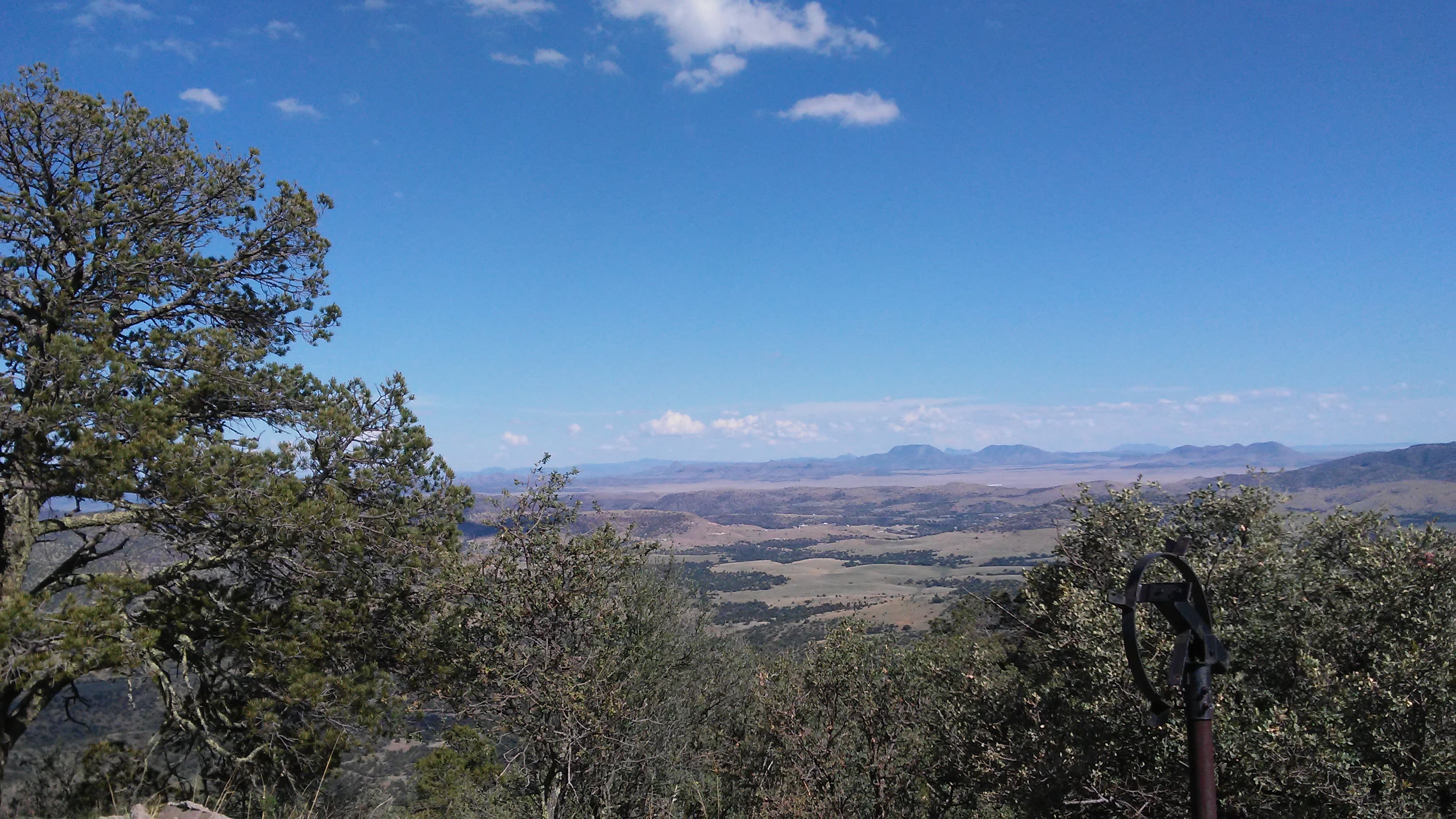
20180619_173034View of the Davis Mountains

Over the last two days, I have spent my time at the McDonald Observatory, touring telescopes, learning about the origins of the universe, and gazing into the cosmos. I have learned about the age of the universe and cosmic microwave background radiation, and how there is a giant telescope with 91 hexagonal mirrors being built to stare into the heavens 10 billion years back.

20180620_131338

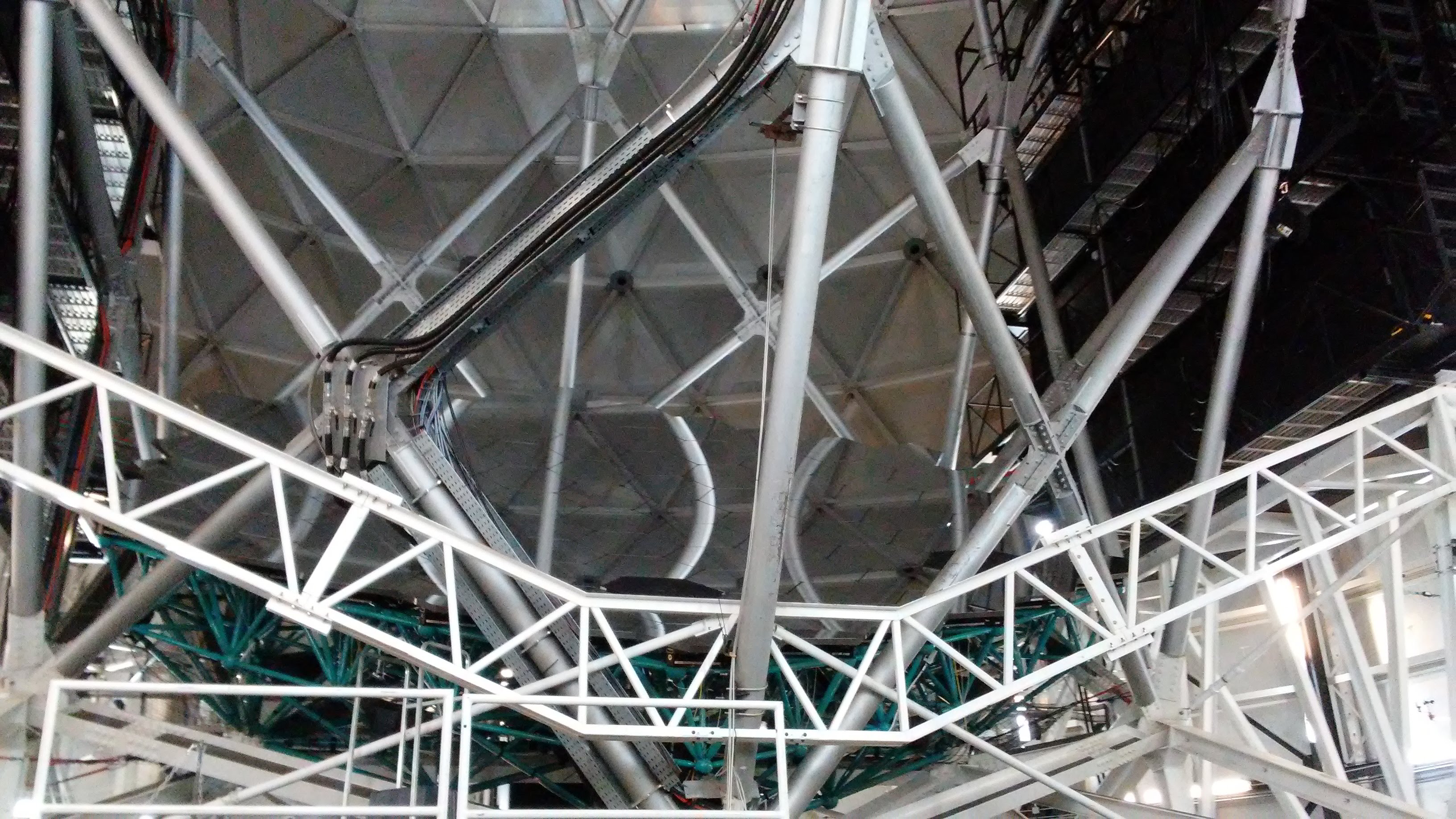
Hobby-Eberly Telescope being prepped for the HEXDET Experiment

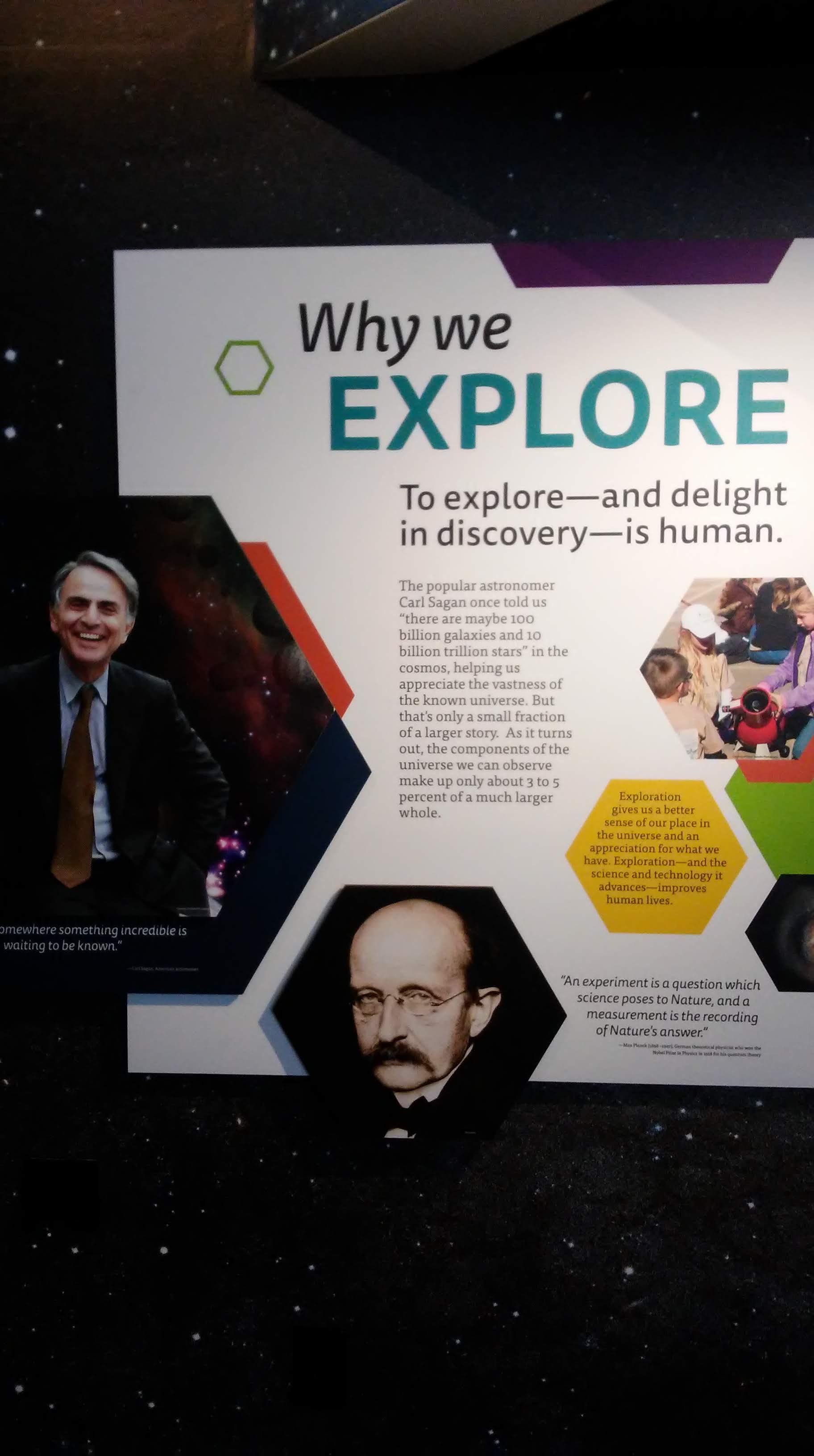
Awe is an understatement when one looks through a tiny eyepiece on a 36cm telescope and sees the Cassini Division, or a group of stars that look like someone just dropped diamond dust on a piece of black velvet. The awe extends to the surface of each of those 91 identical mirrors, as you watch a lithe and agile woman scamper and climb underneath them in order to take dirty ones out to be replaced with perfectly clean copies. Awe continues when you see photos of your heroes, Carl Sagan and Jane Goodall, Galileo and Neil deGrasse Tyson decorating the walls and declaring the power of imagination and the drive to determine the beauty and power of a great idea.

20180620_135720

Carl Sagan!!! 

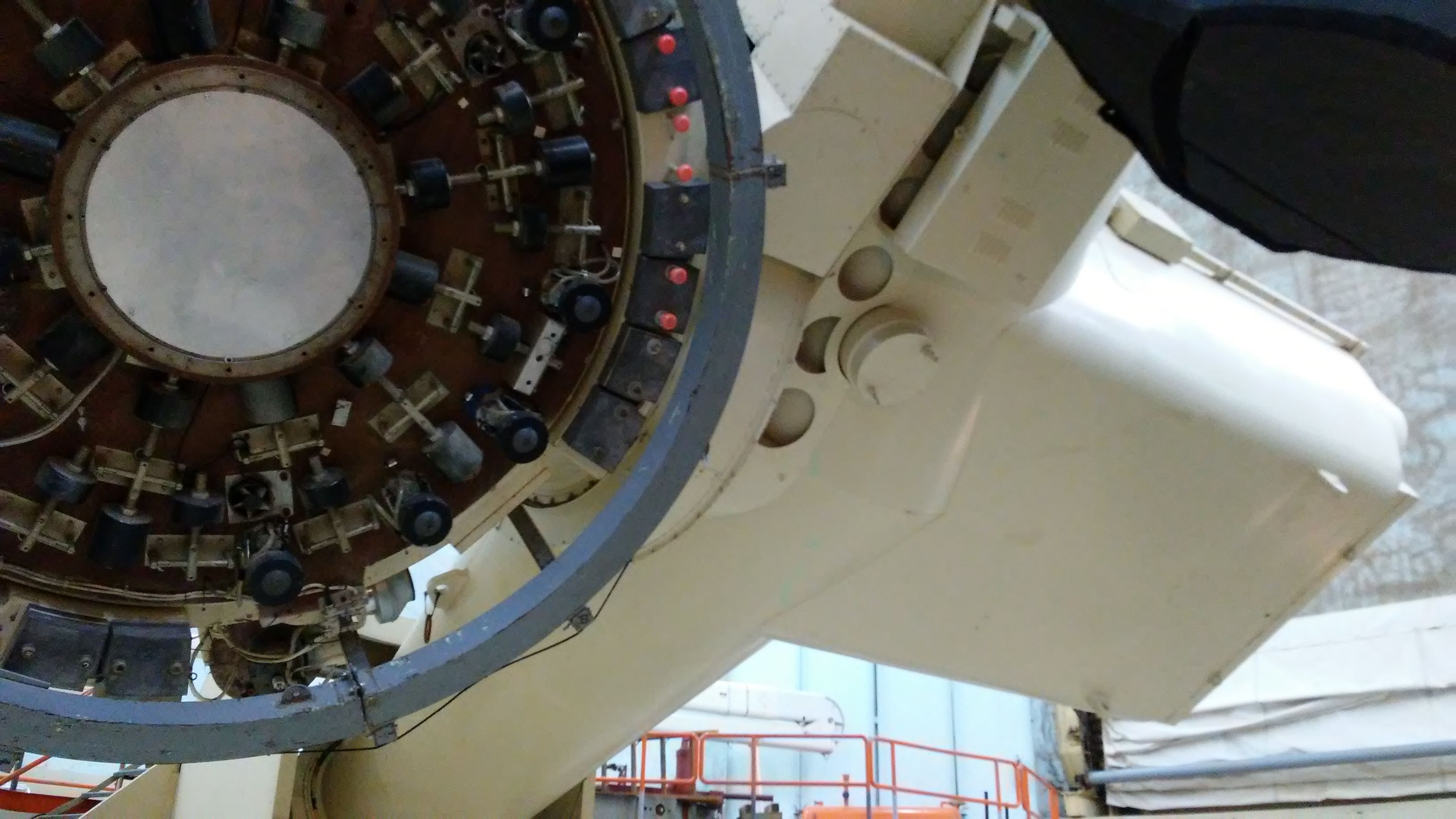
The experience of seeing these giant creations of men and women has been nothing short of stupendous. I have decided, and inwardly declared, that astronomy is this wonderful, magic, perfect-as-is-possible discipline in which people combine science, math, engineering, imagination and art. I have seen a telescope from 1939 paid for by a kindly bachelor banker who owned a car but never drove it, who paid for a beautiful German atomic crystal clock but never saw it, and who bequeathed his books, including “The Social Life of Insects” to an astronomy department that had yet to exist. Today I was able to wander around a larger telescope birthed from the need for better technology and the funding of the space race…it is a giant, a megalith of steel, lead, glass and concrete. In it are 4 or 5 mirrors, depending on what its being used for, that bounce light up and down and back again, into the floor below, to produce spectrographs of distant stars. I listened to two students tell us about how they are looking for evidence of exoplanets using the study of spectroscopy and this giant instrument that literally beams light from distant skies down below their feet.

20180620_192029

Harlan Smith Telescope, McDonald Observatory 

I have learned that there is no center and all positions within the universe are the center, at the same time. I have learned that the universe has some sort of three-dimensional shape but that it exists on a plane of its own creation and has a fourth dimension of time. Is time, then, a construct? Or is it real? What is real?

20180620_200521

The Art in Astronomy is surprising and beautiful 

These last few weeks have been trying, terrible, and emotionally despairing times for many. Seeing, as a part of the 24-hour news cycle, that our civilization is in decline far deeper than perhaps we had thought leaves us feeling fraught and frayed. Seeing our fellow humans in pain and as humans, though, is a powerful driver in helping all of us see our sisters and brothers as just that. I am an optimist, despite the dark that seems all around. I like to think that at least we saw each other in these moments, and we reached out to help, and help we did, though we must continue. I think the power of extending a heart-in-hand, especially to children and their mothers, will never serve us wrong, and perhaps is a step in the journey to what might be right and better for all of us.

20180620_124034

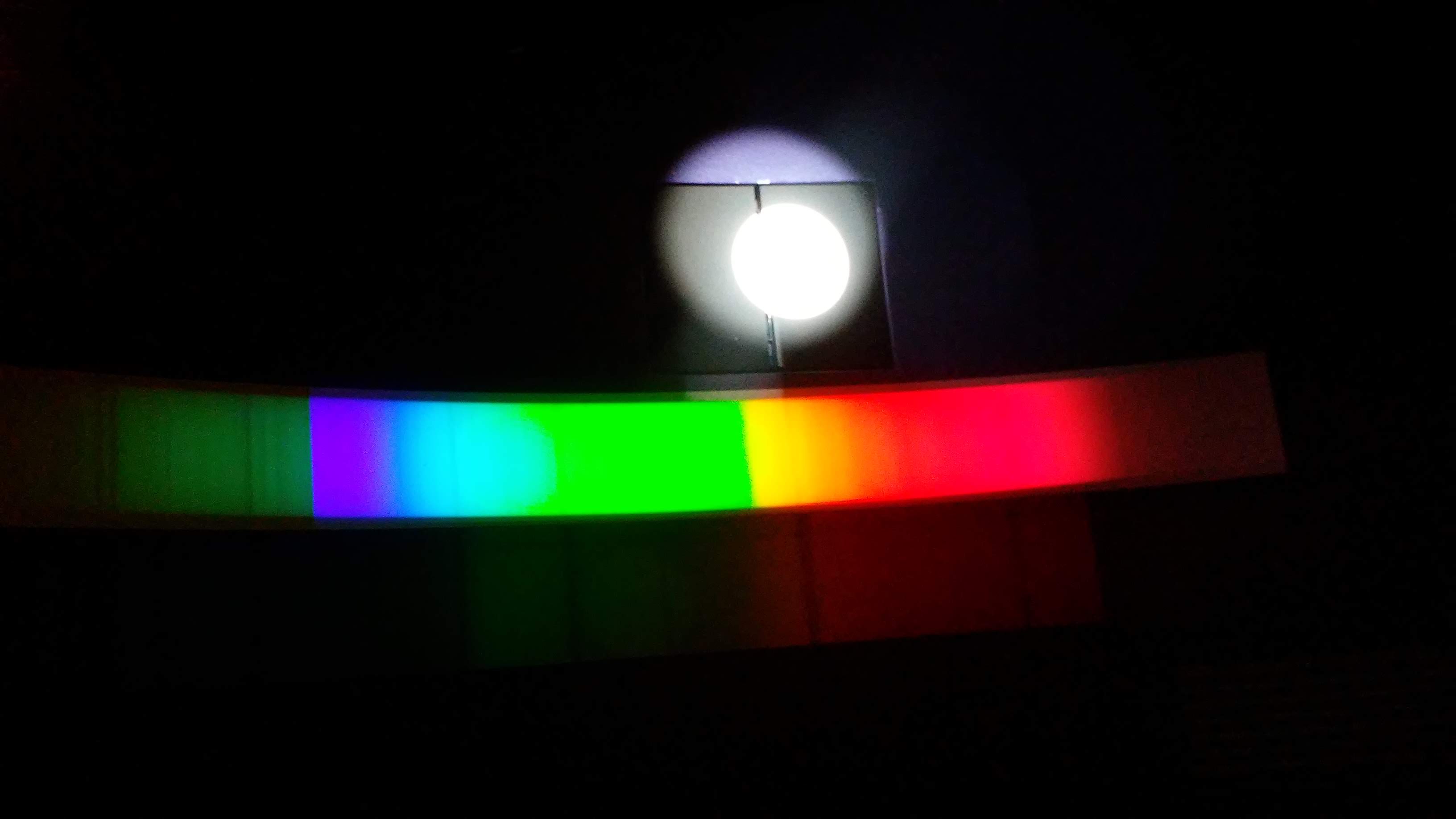
This is our Sun, whose light is passed through and projected on a wall, and refracted using a diffraction grating. Isn’t it gorgeous? 

I generally always feel that I am exactly where I am supposed to be in any given moment. It is a strategy that helps me find gratitude and peace with what is happening. I also have been lucky, thus far, to land on my feet. I have been wondering today, especially tonight, as I sat outside a 36cm telescope and listened to it sing like a humpback whale as it re-calibrated itself, as I stared up at the stars and listened to the funny conversations of colleagues trying to take photos of the moon on their smart phones through the Dobsonian Telescope’s eyepiece, that perhaps I have been here for a few days to remember the greatness of the capacity of human possibility and imagination. There is no greater evidence of that than looking at these telescopes up close and realizing the amount of dedication and dreaming that goes into each one of them. I asked the facilitator what drives the design and fabrication of new telescopes, and she told me, “scientific goals”. I asked her what scientific goals are inspiring the new, almost complete Magellan Telescope and she told me there were so many that it was hard to think of all of them. How wonderful an idea is that? That there are so many dreams that a real expert in her field cannot even think of all of them.

20180619_202308

Struve Telescope, McDonald Observatory 

I love Langston Hughes’ poetry and this one really stands out to me tonight, my last evening in this building, on a mountain, near a telescope, hurtling through space. May it serve you, too. With love and hope, P


Hold fast to dreams
For if dreams die
Life is a broken-winged bird
That cannot fly.

Hold fast to dreams
For when dreams go
Life is a barren field
Frozen with snow.

20180619_172618The McDonald Observatory grounds from my southwest-facing window. 

Heart Shapes

I have been being a snoop today. I like being a snoop, and am one of those people who is guilty of looking in peoples’ medicine cabinets and awkwardly moving around homes at parties gazing intently at curios and especially, photographs.

vulnerability2

“Owning our story can be hard but not nearly as difficult as spending our lives running from it. Embracing our vulnerabilities is risky but not nearly as dangerous as giving up on love and belonging and joy—the experiences that make us the most vulnerable. Only when we are brave enough to explore the darkness will we discover the infinite power of our light.”
Brené Brown


This is what I did today; in the somewhat vain attempt at unpacking, I found myself snooping in one of Cody’s boxes that is full of old photo albums. Two baby books filled with sweet notes from his mother and photos in that classic 1970s sienna tone. The photos are of a blonde baby who looks remarkably like two of his nephews, Paul and Dominic. There is also a scrapbook of his first three years, filled with more photos and birthday cards. Then there are a few more photo albums. Two are of old family photos that range from baby Cody to teenage Cody, photos of his parents and grandparents. His mom had brown hair then, blonde now, cut in that poofy 70s/80s style that I think all of our moms wore. There are photos of his father cradling him as a newborn, in the exact same way that he later cradled his own son when River was born in 2004. In those photos, you actually couldn’t tell but for the age of the photographs that the man in the frame is his father and not Cody, for when River was born, Cody cut his hair short and clean in the same style as his father’s when he was born. Little Cody peeks out of photos, holding fish on fishing lines, dressed up in terrible Halloween costumes, sitting next to his father and mother and grandmother, posing on the trunk of a very old, silver Honda Civic. His father so young, and Cody so small: the family resemblance between the two is so strong. They share brows and shoulders, height and lankiness. Later, Teenage Cody begins to look as he does now: very tall, thin, with long-lashed eyes. Those long lashes show up in one photo from when he must have been about two.

There are also photo albums from later life, from when he moved to Austin in 1998. Cody out with friends, on the road to Albuquerque and Amarillo, and photos of the highways in between. Photos of him in Amsterdam with an old girlfriend who looks very sweet and very 90s in her baggy pants and oversized t-shirts. There is a photo of Cody from when he was building his first tattoo shop, when he was 25, and he looks almost exactly as he does today: glasses, beard and mustache, t-shirt, jeans, tattoos from tip to tail.

iStock_000027670147_vulnerability

Living with someone versus dating them and spending nights at each other’s houses is so different: all the cards are out on the table. All of each other’s strange little behaviors are on full display for each other to eke out over time; learn to tolerate, appreciate, and love. Cody puts a paper towel under the french press every morning while he makes coffee and it makes me crazy because it makes no sense. He apologizes almost constantly, seemingly just for moving around. I keep telling him he doesn’t have to do that. I wonder what things he notices about me that bug him, but he appreciates because they are mine, all the same.

In a set of the photographs, I saw the houses he lived in a tpwn in rural Louisiana, when he was learning to tattoo. There are photos of his first tattoo on an orange. There are photos of his Uncle and Aunt’s house, surrounded by potted plants and 5 gallon buckets of soil. This photo shows me why he collects so many plants and 5-gallon buckets of soil. This behavior of his ties back to the past, gives him some sense of continuity of time, perhaps. There is a photo of him in front of the school bus he lived in during his time in Louisiana, dressed up in the same leather coat he wears when it is cold, in front of a cook-fire. Cody loves cooking on an open fire. There are photos of his grandparents camp house in Center, Texas: an old, white trailer with a deck in the front. There are photos of the back porch with his mom and dad and grandmother. Little did I know that by looking at those photos on a quiet, rainy day in July (thanks be for the rain!) that I would learn so much about the man who I thought I knew the most about: the man who has become my best friend and my companion in this life.

c14cce7a7b40e936620bdeb85332a11f

A few years ago, during the time when I was at the beginning of my “nervy b”, as I like to call it, I culled through hundreds of photos, scanning some and throwing away the rest. I used to have two photo albums but I don’t know where they are anymore. In some ways, during that time, I chose, albeit with a frame of mind that had a distinct lack of clarity, to literally throw out much of my past evidence. Today, I realized the sadness in that is that not that the things are gone, and neither the memories, but the signposts are no longer. Perhaps we hold on to objects not just because they are precious but because they help us re-establish that continuity of time in our own lives. Perhaps if I still had those photographs, I could remember better the times in my young life when I was friends with a boy named Eric, son of my mom’s best friend Pat. We used to do things all the time, dress up, ride horses, be really silly. Eric now has schizophrenia and lives in Florida: I wonder if he remembers anything from that time, at all?

I got rid of almost everything I owned, sold it to strangers and left it on a street in Philadelphia to be combed over by neighbors from countries near and far. I used to have a bag of my great-grandmother’s hand-made lace. Where is it now? Not that it matters much, really. I suppose I am mulling over my own rejection of my continuity of time. At that moment, in the years between 2012-2014, I was so ashamed of myself and my decisions that I threw all evidence of it away. No wedding photos, and all evidence of Steve is gone except a box from China his father once gave to me. Even my wedding ring is gone, and I stuffed my wedding dress into a trash can on the back porch of that house in Philadelphia.

Love-Sky

Here I am, today, in 2016, going through boxes of my own and of Cody’s, as we piece together a new life in a funky house in Dripping Springs, Texas. I grew really sad during my perusal of photographs today, realizing that whatever I had that was like these objects before me, I had destroyed in mad, sad intention. It’s true that my parents have a treasure trove of photographs, so I need not really worry about that specifically, but it’s like I am looking back at these last few years and wondering about putting together the events in a chain that makes sense and represents my memories. I suppose that is what this writing project is all about: a memoir, the establishment of the story after many years have passed.

I love Cody for many reasons, but one of the main ones is his ability to recognize his own painful life events and hold on the positives. He has a very good sense of perspective and being present. He isn’t perfect, and neither am I. This morning I hung a bamboo shade of his on the window in the living room. It has a giant batik of butterflies on it, and it used to hang in the front window of his first tattoo shop on Burleson Road in south Austin. I remember staring at it during the hours of talking and tattooing that were the beginning of our long-standing friendship. And now it hangs in our house: the home we are building together, doing our best, muddling through, baring it all to each other, every day, and every night.

“What happens when people open their hearts?”
“They get better.”
Haruki Murakami, Norwegian Wood

heart-1

Freedom & Forgiveness

Veil_Nebula_-_NGC6960.jpg

Veil Nebula

It has been three months, give or take, since I wrote My Story on this blog and went through the experience of processing that event from twenty years ago. Still, it mystifies me that we can hold memories and experiences in our hearts and minds for so long and not be able to see them clearly until through a process of heart-work and attention, can achieve a moment of clarity, seeing ourselves as we truly are. While it feels like a very heavy weight has been lifted from my perception of myself in my life, it is still a great mystery to me: why do we hold secrets from ourselves and others and why are we afraid of vulnerability?

I may never know the answers to those questions, and it may be that part of my journey on the Earth is to explore those ideas with myself and others. I feel a shift happening in my course of work on the Earth; I still feel that teaching is my purpose, but I am wondering if it is time to start teaching in a different way, forum, or circumstance. I am choosing not to worry too much about it and let it all unfold.

Since I started writing here, almost four years ago, so much has changed and so little has stayed the same: many moves, changes of fortune and circumstance, friends, love, and discoveries. Thinking of the person I was when I wrote that first post from Maine, when I had just ridden the park loop bus around Acadia and had decided to stay and live in Maine, I am happy for her, and happy for me. So much processing over so little time coupled with so many beautiful and sometimes heart-wrenching experiences. I think of ice skating, and watching the first snowstorm of my life fall outside my windows whilst watching every episode of Six Feet Under. I think of drying flowers on my porch, en masse, and later drying so many more flowers in the ante-room of my studio at the Tool Barn, both projects related to sharing beauty with other people. I think of the Halloween parade in Northeast Harbor, and Dan’s barn, Lisa’s cabin on Cranberry Island, and Sam’s small paradise on Islesford. I think of the one room schoolhouse on Islesford that I almost taught within, and the many wonderful girls I met this past year. I think of giant fish made out of paper, and sculptures made out of junk, and the woman I taught at Haystack who built her broken back out of brass and copper. I think of all the people that I met, and how much I miss them. I think of all the people I love here in Austin, and how much I missed them.

Life is like a seesaw in so many ways: most of the time we are aiming toward a peaceful level of equilibrium, but life’s many feathers of fortune fall on either side, shifting us slowly (or quickly) up and down. It is a matter of balance, as it is constantly shifting out of balance. Like the seesaw, it’s all about riding along, moving upwards and downwards, watching the trees and bushes blur, smiling at the person across from you, and trying not to bump your butt too hard if the other one jumps off, or if you push too hard and end up thumping against the ground.

teeter.gif


There Is A Field

“Your task is not to seek for love, but merely to seek and find all the barriers within yourself that you have built against it.”
Rumi


tumblr_lndgl6p0V91qkrirro1_500

Kate Bush – This Woman’s Work

Doors open, and doors close. There is one door in my life that I seemingly have cared about over all others that occasionally peeks open, as if wedged outward upon its tight hinges and overly-secure lock. Light peeks out, love even, if only for a moment. And then, it inevitably closes, tightly, lips pursed, as if the opening never occurred. At this time in my life, it is the first time that I have felt that its closing is not my fault.

“Out beyond ideas of wrongdoing
and rightdoing there is a field.
I’ll meet you there.

When the soul lies down in that grass
the world is too full to talk about.”
Rumi


Reflections in Memory

We took a walk on the beach one day, in the summer. It must have been late summer because I remember the slanting sunshine: the warmth of it. We walked along the beach in Salisbury Cove: the part of the cove that would later be left behind for the quieter end, off Old Bar Harbor Road. My father and I, probably five or six years old, walked the beach.

The beach in that part of the world is gray with shale and rusty with ironstone. The stone forms in thin layers and is cracked into a thousand million pieces with the roots of trees. While they crack the stone, the root hairs also hold its myriad pieces in space, braving winter’s storms and the shrinking-expanding process of freeze and thaw. The beach itself is made of tiny to large pieces of stone, too many to count. There is no sand here; the closet thing is tiny pieces of basalt that have been tumbled and thrashed for eons. Here and there are pieces of kelp, ends of rope, bottles, a jellyfish or two, sea urchin skeletons and so many mussel shells. Mussel shells are demure on top: brown, black and white, but reveal indigo or lavender pearl inside. I have always loved them and they were my brother’s favorites when he was a little boy. I have many memories of Carew carrying mussel shells by the dozen back to our cottage.

On the day of the walk, my father and I sat on the top of what seemed like a very tall rock, out on the edge of the beach. I don’t know how long we sat there, only that it was warm. Over time, the tide came in and separated us from the beach. In reality, the water was probably 2 or 3 feet deep, but I couldn’t cross, and my dad hoisted me onto his shoulders and carried me to the beach, to safety.

My father has many stories. When I was studying for the GRE, which I never used for graduate school, I learned a word, legerdemain. Meaning slight of hand, I always thought it applied very well to my father. He is a gifted storyteller who holds his own cards tight to the chest. He plays no personal hand: very little is divulged. He is like the Wizard of Oz, hidden behind a curtain.

During the process that I related to readers here, I realized that I had held guilt as my definitive characteristic for twenty years. It took hard and heavy realizations to see that I had to let that go in order to be happy and be in my present reality. It took risk and resulted in reward, but the path was frightening and new. I think that guilt such as this is ultimately useless, and a barrier between ourselves and those who would really love us. Nothing anyone has done, save very few barbarous actions, could result in someone not being worthy of love from those who choose to do so.

When I think of my father and his life, I can see a life of a world traveler, an instructor, a bridge jumper, an oil man, a golf player, a Mercedes lover, an eldest son, a highly sensitive person, a Vietnam veteran, an alcoholic, a rage-oholic, and a depressive. But despite all of that, my father is worthy of love. However, it would seem that he believed he was not, and so acted out so intensely as if to prove that fact. My mother, my brother, myself, his friends and his family are here to prove that otherwise, despite his faults.

I gave myself and was given forgiveness by those who love me. Forgiveness, like commitment, is freeing and highly emotional. It is the letting go, of staring off into a space of love and friendship, and stepping out into the mystery. As my father sits in the television room of my parents house, on the quiet side of Salisbury Cove, staring down at a coastline that we once walked, I hope to say to him: “I love you. We all love you. You have done nothing to disappoint anyone. There are no mistakes. This is the time to think about all the stories, all the adventure, all the things you have to be thankful for. Let it go. You are loved.”

From Both Sides Now

It is a strange but comforting memory.

It is made of a wooden door with glass in the front, and squeaky stairs that go up, and then an old jukebox bathed in amber light, and lastly, an ice cream counter. It is a place in Galveston, a town about an hour south of Houston, where my family went together many times when I was a child.

There was a store there that sold imports, I think. It had wooden bins full of little things like beads. It had shelves on the walls with fabrics folded upon them. In this store, just after my grandfather died, I was wandering around and looked up to see a very white haired man in a button up, loose-fitting, short-sleeved shirt, wearing glasses and a camera hanging from his neck. It was my grandfather, and by the time I looked back at him, upon recognition, he had, of course, disappeared.

Galveston has a long, tall, cement wall that stretches along its seashore and was built to protect its citizens from damaging hurricanes, like the one in 1900. Some parts of it are painted with murals. Some parts of it are dotted with seashell shops, which sell lots of seashells not native to Texas at all, and many of those pretty shell chandelier-hanging lamp things. I always wanted one of those.

When we had the dog, Bear was his name, we would take him to the beach and he would run around. Once, my cousin Bruce came to visit from New Jersey, and he took Bear way out into the water. The dog panicked, and clawed Bruce’s back to bits trying to save himself in Bruce’s arms.

We used to stay in a beach house on the Bolivar Peninsula that belonged to our family’s lawyer. It was a brown house, made of wood, on stilts, and, at night, you could go out to the dunes with a flashlight and hunt ghost crabs. One visit, we discovered that the house had been robbed and things tossed about, as if in a storm. The two policemen who came demonstrated to us, flabbergasted, how they thought two people had gotten into a fight and thrown each other around. My parents didn’t agree with the theory, but I don’t remember ever staying there after that.

When I look back at time, and try to piece the story together, as I have been wont to do of late, I have been looking back to see when the family functioned well and when there was evidence of happiness and contentment. I think it ended just before my grandfather died, when my parents lost their house, their car, and many of their possessions. We moved into a small rental house with a duck in stained glass on the door. I lived in a tiny room, which I loved, and I had curtains around my bed. I used to sneak out of the huge window and go and walk in the park, later whilst smoking cigarettes.

Today is the anniversary of the Oklahoma City Bombing, a time I only remember because I was in a Texas History class at Knox Junior High School when it happened. My teacher was not a good teacher, but did have a slight obsession with Dan Fogelberg of Creedence Clearwater Revival. The only three things I remember from her class were Dan Fogelberg, the Oklahoma City Bombing, and learning a computer software that, I think, was some precursor to PowerPoint.

During that time, I have very few memories of my parents together or apart. I remember being alone a lot. I remember my brother playing with all the kids in the street all the time, and that once we had a massive, neighborhood-wide pinecone war. I remember doing my homework on a blanket in the front yard, and waving every day to the same lady in the same car. After a bit of time, she stopped and introduced herself. She was Irish and lived down the road a bit. I went to her house for tea. She became a great friend to me and we would talk and have tea; I remember she had a wonderful tea towel collection. I remember my mom coming to pick me up there one evening.

That time is shrouded, and soon after, we moved into another house, the one in which we lived when I graduated from high school. Come to think of it, that was the house with the large window from which I snuck out. All I remember of that time, in the house with the duck on the door, is darkness (it was a dark house). I remember my dad being in the bedroom all the time, and I remember not understanding why there was no one home and it was hard and dark, scary and confusing. I remember buying groceries for the family at the grocery store, and coming home to put them away. I remember doing laundry, and making sure my brother was all right. I remember getting into wearing vintage corduroy mens’ jackets. I remember catching the bus. I remember that sweet old neighbor, whose name I have forgotten.


No More Leaving

No More Leaving
 
At
Some point
Your relationship
With God
Will
Become like this:
 
Next time you meet Him in the forest
Or on a crowded city street
 
There won’t be anymore
 
“Leaving.”
 
That is,
 
God will climb into
Your pocket.
 
You will simply just take
 
Yourself
 
Along!
– Hafiz


It has been a couple of weeks since my last post and since my discovery of what had been bothering me all these years. I feel as if some dark glasses or horse blinders were torn off my eyes and thrown across the street when that discovery hit me. It is so strange to me that we can tell ourselves these stories about ourselves for so many years without actually being forced, by our minds and hearts and new experiences, to reflect upon them in an active way.

tumblr_nfploslwmM1r41rcao2_250

For the last several years, I have been looking into the effects of traumatic experiences on myself and on others. I have discovered that many of us, especially as we get older, in our mid-thirties for example, have developed elaborate defense mechanisms and intimate pitfalls. So many of these are not obvious to anyone, even ourselves, until, if we are lucky enough, our eyes are opened and we can re-open the Pandora’s box of emotions to see whether what is in there is serving us, anymore.

20090109170810

When I think of the delicacy of the human heart, I like to think of the Egyptian mythology of, when one dies, that one’s heart is measured against the weight of a single feather. I do think that the human heart is just that light, just that easy to shatter. But, the other side of the coin is that we, too, are remarkably resilient, like the trees that I spend so much time gazing upon. Despite the myriad fractures and sometimes breaks in the surface of the heart, we keep on keepin’ on, living from day to day, month to month, year to year. Perhaps the scarification of those fractures are what the defense mechanisms are, the fears, the caginess, the aversion to risking one’s poor, suffering heart.

tumblr_o3t6yg9F3k1rn3m2jo1_500

It is like crystal, like the petals of a poppy: translucent, and easy to bruise.

I think the sadness of being out of touch with one’s emotional pitfalls comes from the realization that most people are genuinely good, and want to love and care and protect and enjoy one another’s company. It’s almost as if adults live in the center of a long, winding labyrinth with doors along the way. All the doors must open, eventually, and whatever obstacle that lays beyond them must be acknowledged and explored. For if not, I would imagine, you end up rather like someone whose fears have become her/himself, and the real person inside is just lost.

img_54f7f6f12aef6

An unexamined life is not worth living” – Socrates