“Yes: I am a dreamer. For a dreamer is one who can only find his way by moonlight, and his punishment is that he sees the dawn before the rest of the world.” – Oscar Wilde
A Japanese puzzle box
When I was a young girl of nineteen, I took a trip with my family to England, to move my Grandmother out of her old house and into an assisted living house. She was so excited because she never had to cook again, and I was so excited to listen to old stories and go through old things with her. Her family: uncles and cousins and a brother, traveled on old steamships across the world from the port of Liverpool, always bringing back magical presents from Asia, Africa and Australia to the women sitting and waiting back home.
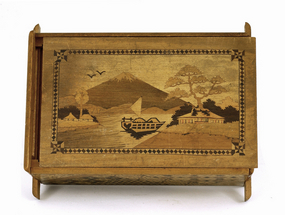
During that trip, my grandma gave me many things: an old porcelain shell-shaped ashtray, a Depression glass vase, a pressed-glass cigarette container, and a Japanese puzzle box. The box has no discernible openings, no drawers, and is inlaid on one side with birds and flowers, and the other with a mountain scene. Only she knew that if you slide the top panel to the right and the bottom to the left, that you discovered a hidden compartment: a drawer with a tiny button handle, in which you could store whatever you wanted.
———————-
Let us think about dreams for a second, a minute, an hour, a day. Dreams are, for me, what guide my decisions. My heart bends in one direction or another, tied fast to dreams of what life could be, what it could look like if I could realize the wishes and hopes in my mind. My gut tells me what feels right; deep in my body come the yeses and the nos that dictate what I know to be right and true for me.
My dreams, since moving to Maine over one year ago, are to realize, finally, my deepest wishes and desires. My dreams involve turning the looking glass inward and looking at myself, deep into my hazel-green eyes, and allowing my happiness and sadness to flow through me. My dreams are to let go of the control, of the planned future, and instead step into a place where I move through life doing the things that I want to do versus what will make others happy.
Realizing dreams is scary, and painful, and involves a hefty dose of selfishness. Realizing dreams also involves the acknowledgement that others may ask of you a justification, an explanation of behaviors or choices that do not make sense because they break with past patterns. Realizing dreams involves sitting down and having tea with yourself, and saying that the little person inside, the child if you will, has many unexpressed desires and missing pieces that must be delicately crafted.
Maybe life is like a puzzle: those long and sometimes dull games you play with old, wizened aunts who love horse-racing and overly-sugared cakes on rainy days when there is nothing else to do. Maybe you seek the four corners, laying them out carefully on the table, oriented correctly, and after that, you find the edge pieces, and build the frame. And maybe you never really finish the puzzle, but have to be content with searching through the pile of pieces for the next section that will come clear: the flowers, or the sky and its clouds. Maybe the puzzle pieces sit on a small table in the dining room for years and years, and every month or so you find a new piece that fits. And maybe you finish the puzzle, but maybe not. Perhaps the goal of the game is to be happy looking at the tiny pieces and wondering how they all fit together. These are the dreams, I think.
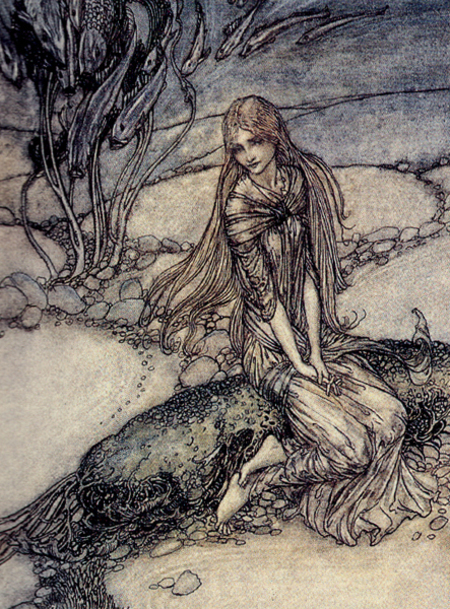
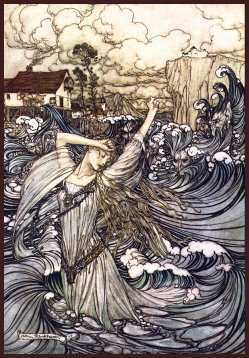
It was late October, and a girl was carried in by the currents and tides through dark blue water; washed ashore on the rocky beach. Eyes opening in the autumn light, she noticed large rocks cracked by glaciers, and tall fir trees growing up like jagged teeth along the horizon.
Naked she was, and alone: scared and not just a bit mystified. Under her pale body and dark hair, flat on the beach, was a grey, furry skin, as if she lay upon a blanket. But of course, this was no blanket but one aspect of her true self: a seal skin, a selkie, she was.
Gathering her skin around her like a shroud, she peered up the hillside and into the town. The fog was curling around the boats, the trees, and herself as she gazed and wondered at where she was, and how she had come to be there, anyway. Above one eye was a large, red mark, as if a tentacle had stung her across the left side of her face, or she had been hit hard by something long and wooden. Her head felt heavy in her hands; holding it just so, the early morning light stung her eyes, and she began to cry, knowing that she was alone there on that beach.
The pebbles dug into her skin and so she stood up after a while, again shrouding herself in her skin against the cold, against the light, against the unknowns that, no doubt, were roaming unchecked in that tiny town of white houses, grey roads, black, sea-striped stones.
Out of nowhere, as she stood, a prince arrived in a strange carriage. Black and silver it was, and he was like a rainbow. He seemed to appear out of nowhere, for all of a sudden, she found herself in a flower garden, and he in the middle. He seemed to grow out of the flowers, as if they were a part of him, but yet he smelled of sawdust and strange Eastern songs echoed around him, in the autumn light. He whisked her into that carriage, taking her on a long drive through windy mountain roads, through trees whose leaves were changing from green to red, orange, yellow and brown. Suddenly, there was a bonfire in a granite fireplace, and people stood around her, everywhere. She was shrouded again, in another costume: this one of a sprite unknown to them, with antlers growing from her now longer hair, a cape of ivory, face sweet, lips parted to drink and eat intoxicating things from a long and dusty table. A small woman out of the crowd stared and asked: “are you real?”
…..
Time passed, and sometimes she found herself in Italy, sitting at an old wooden table eating olives and garlic and drinking red wine through dark cold nights when the Moon hung in the sky, glowing brightly like a frozen pearl. The nights grew colder, crisper, and one morning, as she went walking, she saw hoarfrost upon all the plants by the roadside and she stopped to see the landscape glitter. The day came when it was time to mark time, and the prince whisked her to a beach and told her stories that made her feel disoriented, fascinated, and protected, in a way. In the light of a campfire, she wondered if she saw the real him, as sometimes his eyes would fill with tears, and then away he would run, again. His carriage changed from silver to black and back again, and picked her up and took her from place to place like the princess he told her she was. After a bit of time, so intoxicated she was with his flowers and his scent and the fortress in which he lived, that she almost forgot where she had hidden her shroud. Many months before, she had taken it and folded it ever so thin, like a delicate piece of origami, and tucked it inside a secret pocket. When she became afraid, she made sure she could feel it, touch it, know that it was still there; she was afraid that someone was trying to find it and take it for their own. She knew, but hoped herself unique, that once her skin was taken, she would stay, trapped, forever.
Over time the chariot began to rust, and the flowers faded. The rainbow cast over the prince became thinner, and she began to catch glimpses of someone else, as if an image was held under dark water, as if she was catching the silhouette of a tree in a puddle on a rainy day. She stayed quiet most of the time, watching and listening, and he liked her that way. His rainbow slipped away, but his beautiful hands gave gifts and his icey blue eyes laughed and she was held in their spell.
One early morning, they were driving through Russia and the snowbanks were piled high on the sides of the carriage tracks. The ocean water, teal and tossed about by wind, was pulled into meringue-like peaks as the carriage was pulled forcefully along another windy road. Above their heads flew eagles, dark against the white sky, and more and more snow fell, spinning in huge spirals, buffeted by a strong Eastern wind. That day his colors were orange and grey, set apart from the white, swirling background of an almost Eastern landscape.
Over time, the snow melted and she found herself living in a tiny fishbowl on a ledge. The fishbowl was very small and in fact most people thought she was a doll living in a dollhouse, and still doubted whether she was real: still wondered where she had come from. Safely inside, she stared out the walls of the fishbowl and watched as people found her, and waited outside to see what she would do. Guarding the now hidden mark above her eye, she ventured outside and painted the veranda a deep green, like the color of the water from which she had come. When the ice left, she kissed the wind and flowers appeared below her feet, and suddenly she found herself living not on a ledge, but in a town, alongside others who wished just to know her, wished to laugh with her, eat dinner, and go swimming, which of course, was her favorite thing to do.
The prince, now old and wizened and thin, no longer a rainbow and full of light, for he had betrayed his mask and shown her his true self long ago, one night while they were dancing, would not let her go, and did everything in his power to give her beautiful things and talk with her about wonderful ideas, and in one moment, even tricked her so as to think that he loved her truly. She slipped, and her precious seal skin flew out of its pocket and later, she found it in a pile under the kitchen table, tethered into place by the leg of a blue wooden chair. Promises of love were circling her head and she was drunk on confusion and bewildered at the prince, for she knew him yet he was promising her the world. Gathering her skin around her, for the first time in many months, she stood upon the veranda, and stared out at her ocean, now a lighter green as the summer sun shone down upon her pale skin. The flowers were every color and curled in great vines through the garden, protecting the spaces that she had made whilst alone in the early spring.
The prince arrived and tricked her again, denying that he had ever promised her anything, that she had misheard him, that she was lying, that she was being cruel. In bewilderment, she cried and saw her face in a mirror, saw the damage above her eye reappearing as her tears fell. She lay under a striped blanket in a train car, and could see, finally, his face, his poor, sad, confused, and afraid face, his body, drawn, his wrist hurt from years of steering that carriage against the tides, his throat sore from lying to himself, his light fading, his hope just barely alive. She looked at him, gathered her skin around her and smiled a perfect, understanding smile, as he lay beside her, battling with himself.
On the last evening, he whisked her away to a castle in the woods, a wooden castle painted of blue with gardens of moss and a small path that led to a lake. He took her there, installed her in a room, and went to sleep. As he slept, and he looked so peaceful for one of only a few moments that she could remember, she kissed him upon the lips and silently slipped out of the locked door: escaping locks had always been a skill of hers, for as long as she remembered. Walking softly over moss, she stopped to pay attention to the curved branches of trees, to listen to the calls of the loons on the water. She walked into the woods, and with each step, pulled her skin in closer, moving back into the body she had lost many months before. After what felt like hours, or maybe days, she reached another beach, this one calm and warm in the early summer morning. She slipped into the water, silent as….
A seal.
Swimming through warm, summer water, in the early morning, she began to realize that she was not just one or the other, but both, entire. She reached that beach that had once been so cold, so grey, so uninviting and alien, and pulling herself up onto the land once more, basked in sunshine, folded her shroud away again, touched her face, remembering her past injury with her fingers, as if it was a tattoo of white, hidden from all but her. She stood up, saw the fishbowl above her on the hillside with its gardens and train car, and walked. Walked and walked and walked: home.
“It may be that the satisfaction I need depends on my going away, so that when I’ve gone and come back, I’ll find it at home.”
– Rumi
Taking time to go away is a hugely important facet of my life; I have long been a lover of travel and of the new experiences that come with it. I truly believe that without all the traveling that I have done, I would not be the person I am today. New places and new ideas, new people and new adventures all contribute to the labourious mosaic of who we are and what we are at any given time.
Tomorrow I am off to the Haystack Mountain School of Crafts for a weekend of art-making with fellow Maine artists: jewelers, blacksmiths, wood carvers, fiber artists, and ceramicists. I have never had an experience like this before, and am almost bouncing with excitement. My excitement stems from the traveling aspect of going away from home for four days, meeting new people, learning new skills, but the most important source of excitement is that I really don’t know what will happen, how the next few days will pan out, and how I will feel by the end. This is the joy and beauty of taking a bag or two, or in my case a trunk full of tools, and heading off into the distance for a little while.
I have been ruminating on change a lot lately, being that I feel some fundamental changes have happened within myself, and within many people who are close to me. I have felt these changes incrementally, but didn’t necessarily notice them until confronted with the behaviors and thoughts of those who I haven’t been around in a little while. It is hard, in a place as tiny as this, to notice changes in oneself, because so much time is spent alone, or with a very small group of friends. I find that this metamorphosis, this process that is just in its beginning stages, will catapult me and whoever else is going through the same process, forward into a more present life: a life of trying to accept the past, let it go and move forward. It is hard not to blame your own feelings on the decisions or feelings or behaviors of others.
Today, during a very foggy, almost non-existent sunset, I spent some time drawing out on my deck, at my green picnic table. I haven’t drawn with pastels in years and years. In fact, I haven’t been drawing in so long I cannot remember the last time I sat down and spent time with a large piece of paper and many colors in a small box.
Time to go away, and then experience the joy and beauty that is coming back.
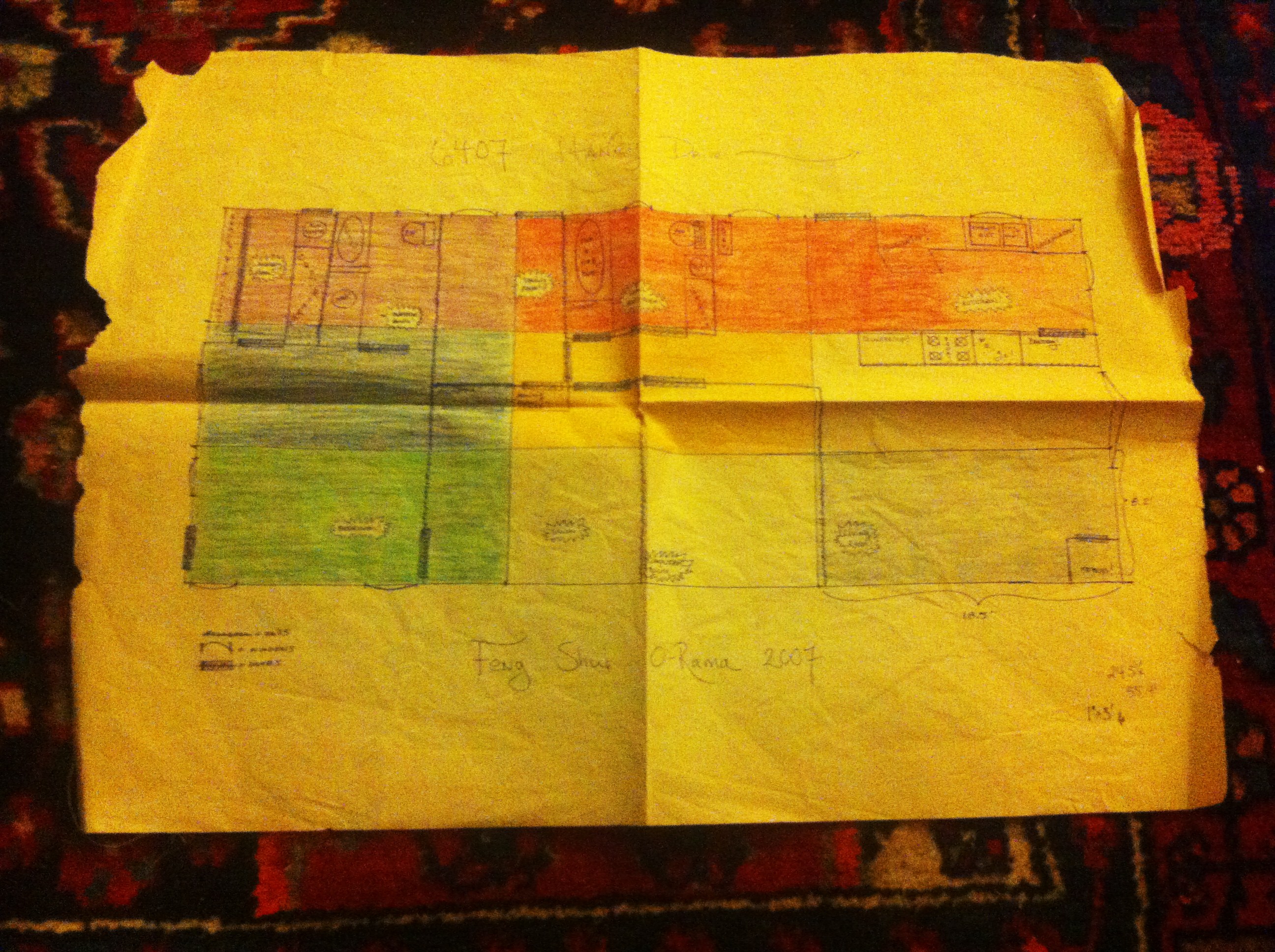
This was my house, until about four years ago. My house, the Haney House, was the last place that I felt home, a place where I didn’t have to run from one thing to the next. It was a house in which I could stay, and paint the walls, and build gardens, and raise chickens.
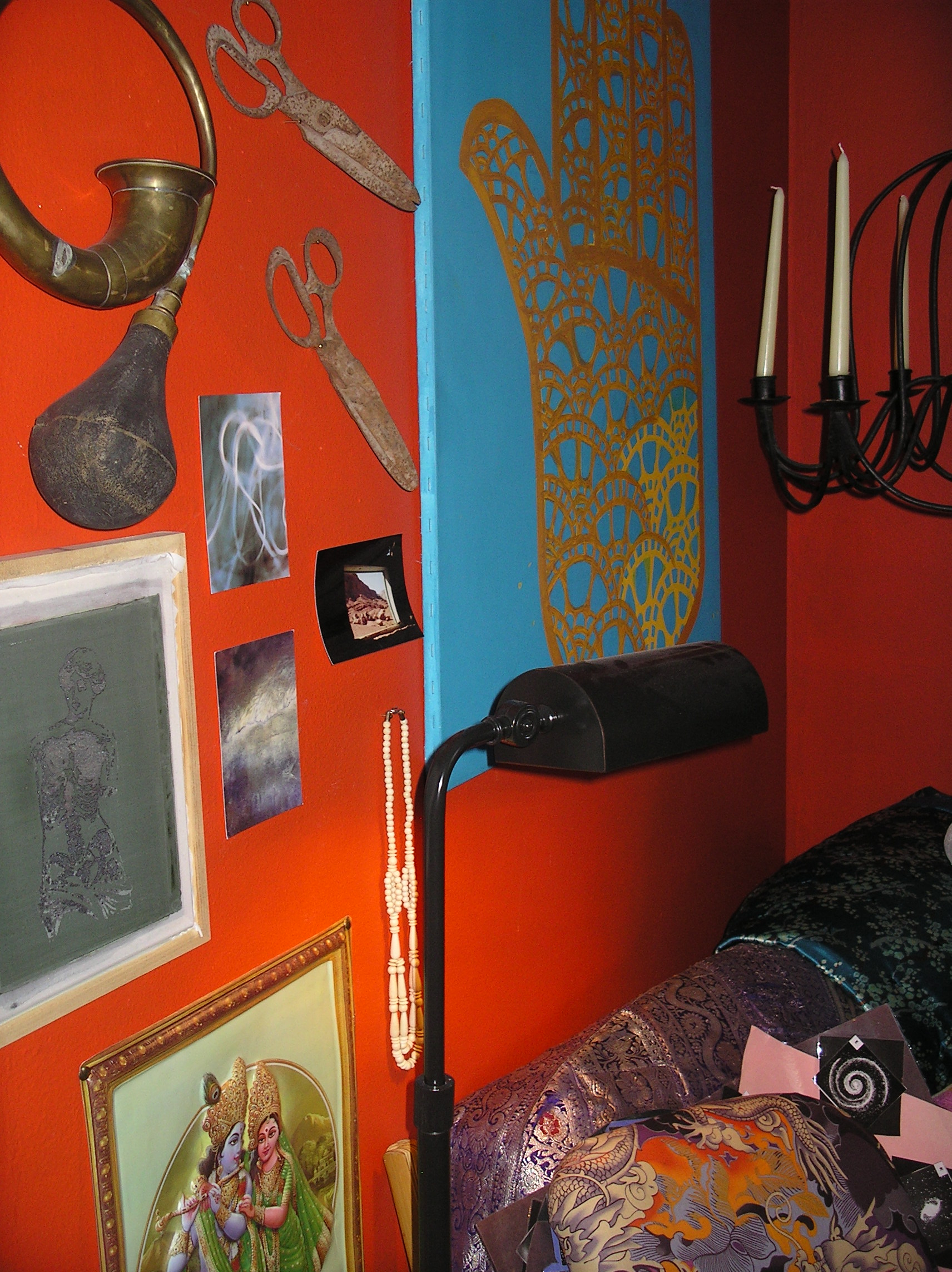
Whilst driving home tonight after dinner with my family, the almost full Moon was shining huge and bright through my windshield, and I realized with the pain that only nostalgia can bring, how much I miss my house. And yes, I miss the brick and mortar of that house, but mostly I miss the feeling I got when I walked inside at the end of long days. I miss waking up on weekends and going outside to work in my gardens. I miss the rustling-squawking of the hens in the mornings, and how they waddled towards me to get cracked corn through the fence. I miss the dark purple walls of the laundry room and the sun I painted in metallic gold paint on the ceiling of the hall bathroom. Although I don’t think I would ever paint another house with each room being a different, deep colour, I loved each room in that house, most especially the craft room with its dark orange walls, blue ceiling, and silver trim.
Four years ago, in the spring of 2009, I was planting more native species in the bed in the front of the house, and building a raised bed in the side yard. I was hanging lights in the old Elm tree, and sitting outside at the blue table with elephants for legs. I was on the back porch with its sagging roof, surfing the Internet for tickets to Mexico and England, rubbing my hands on the old cotton tapestry that covered the plastic table, swinging in the Mexican hammock, building a house for grapevines out of re-bar.
So. Nostalgia: the pain of remembrance. Conveniently, we remember those things we wish to see in our minds eye, and forget much. This is perhaps a function of survival, of resilience, or perseverance. I remember the Haney House as the place in which I was married, in which I worked to make a home for my family; it was the house in which I expected I would have children, or at least, further expand my life from the point at which I found myself when we bought it in 2006. It wasn’t meant to be, because the box of life I found myself within did not make me fulfilled, and I chose to step out of it, into the harsh air, on my own.
Tonight I sit here, in my little house on the ocean in Maine, and all is not perfect, and sometimes I get inconsiderate and impatient with life’s imperfections. Sometimes I wish for that sense of stability again, for a future that could be mapped out. But of course, even when we can see down the road, we cannot predict all of life’s curves and challenges, and even when we have what society calls stability, we have only the things that we can really hold in our hands, and everything else can be taken away in the blink of an eye, the movement of someone out the front door, or names signed on the lines of forms produced by the State of _________.
I have had a beautiful life, and each day, my life becomes more so. It is hard to see oneself through the eyes of others: in fact, it may be almost impossible. I have had so many adventures in such a short amount of time, and sometimes, I judge myself based on the failures, whether actual or just perceived, that I have encountered along the way, even though, to others, those failures are insignificant, or not failures at all.
Maybe I will never settle down again. Maybe I will always be a wild woman. Maybe I will meet someone who is a true partner and find love and companionship and team spirit. Maybe I will always travel. Maybe I will always have a sense of home not tied to physical place, but to friends and experiences. Maybe I will be okay, finally, with who I am, despite the fears or uncertainties of others, including my family, and myself. Maybe I will always relish newness: visiting a perfect replica of the Alamo in central Mexico, listening to the eerie calls of loons on a lake in Maine while sitting on a floating dock, running up and down sand dunes in England, illegally importing cars in Belize, driving a Ford F150 through narrow streets in Canada. Maybe I will always be me, uncertain, changeable, flexible, flighty, loving, loyal, colourful, creative and kind.
“Throw your dreams into space like a kite, and you do not know what it will bring back, a new life, a new friend, a new love, a new country.”
– Anais Nin
Landscape – Egon Schiele 1913
Spring Shadows at Compass Harbor, Acadia National Park
“O thou with dewy locks, who lookest down
Thro’ the clear windows of the morning, turn
Thine angel eyes upon our western isle,
Which in full choir hails thy approach, O Spring!
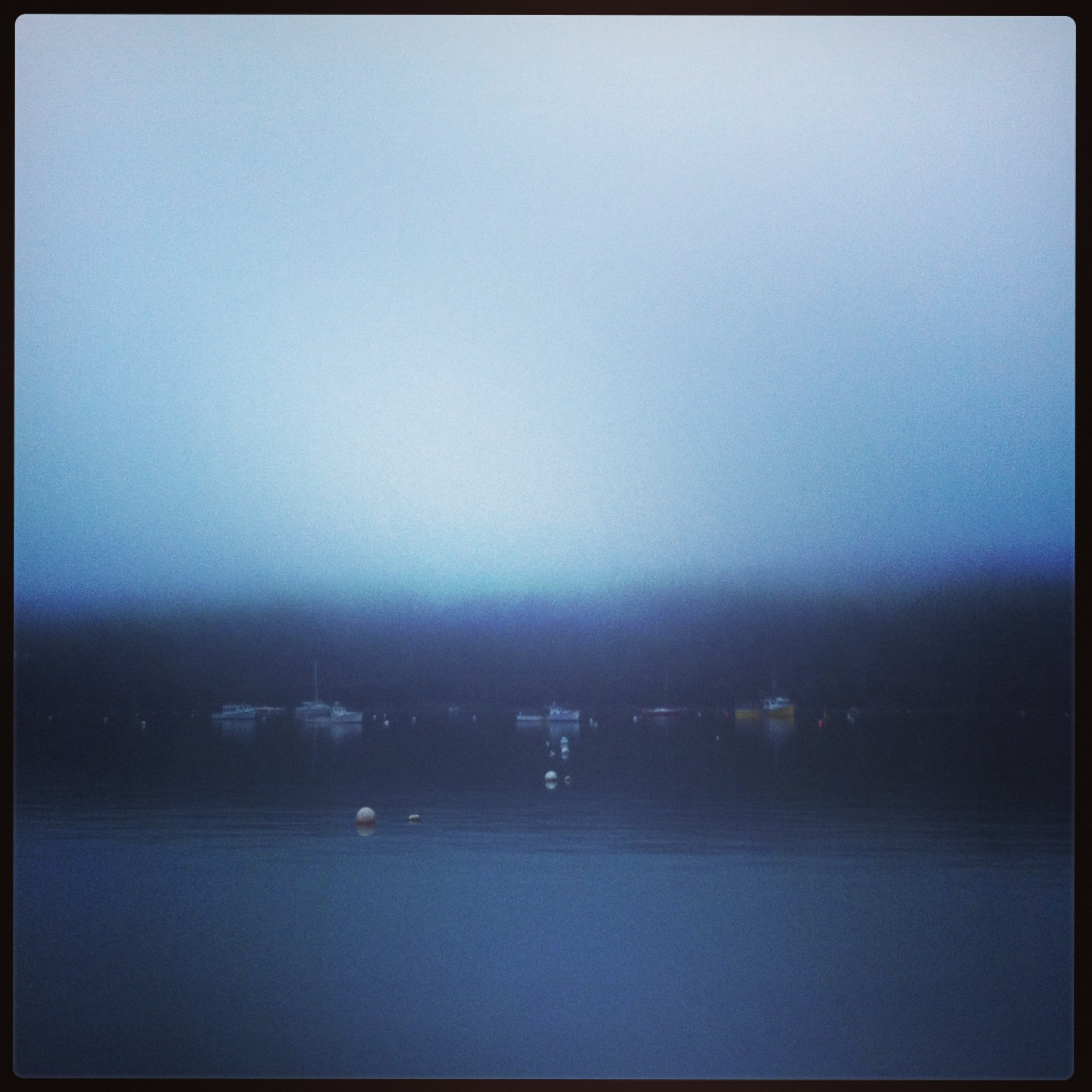
Reflections, Northeast Harbor
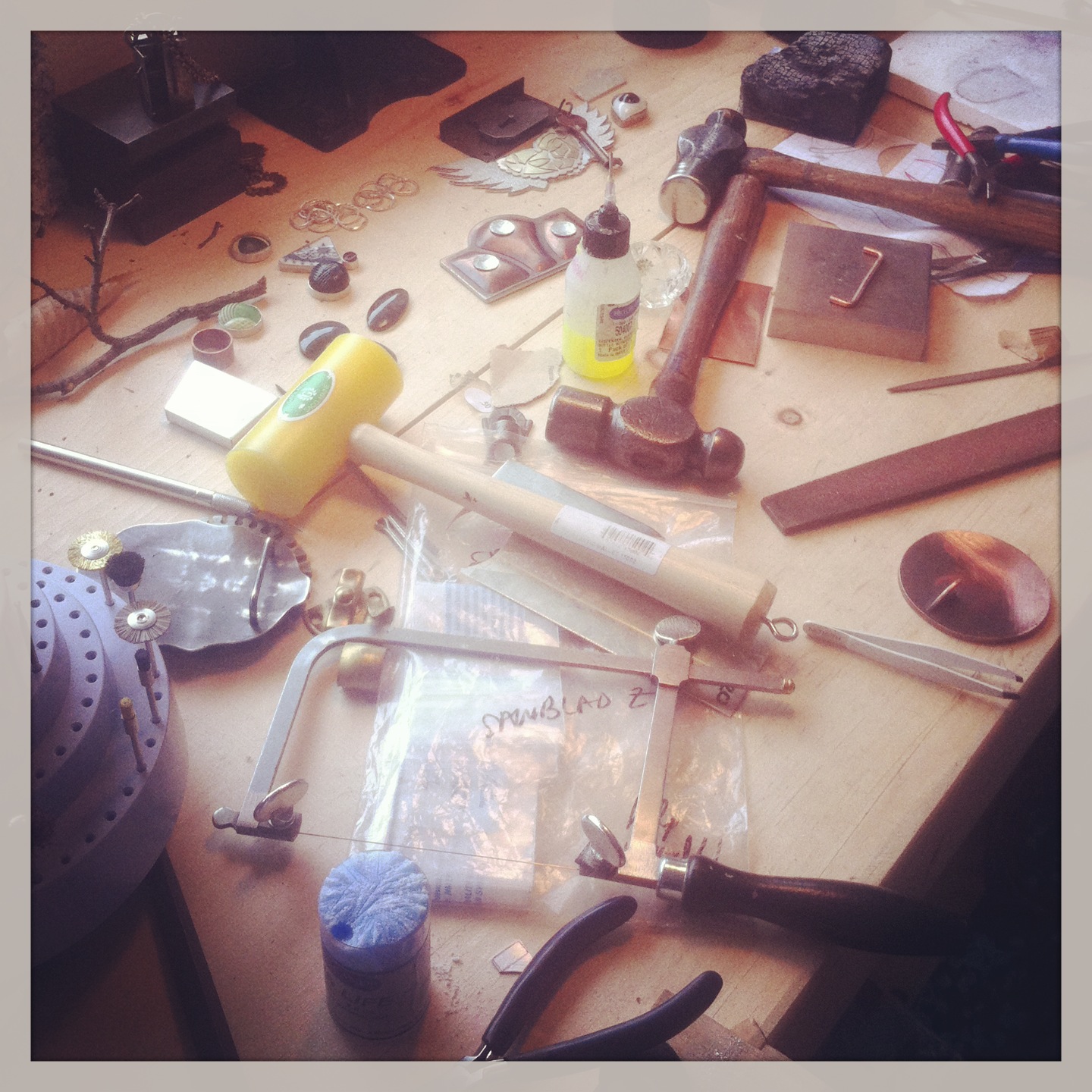
Tools and Toys from the Tool Barn, Hulls Cove
Beech Tree in Early Spring, Compass Harbor
Birch, Box and Block
“The hills tell each other, and the listening
Valleys hear; all our longing eyes are turned
Up to thy bright pavilions: issue forth,
And let thy holy feet visit our clime.
Tools for Creativity
Ideas
Chain, Northeast Harbor
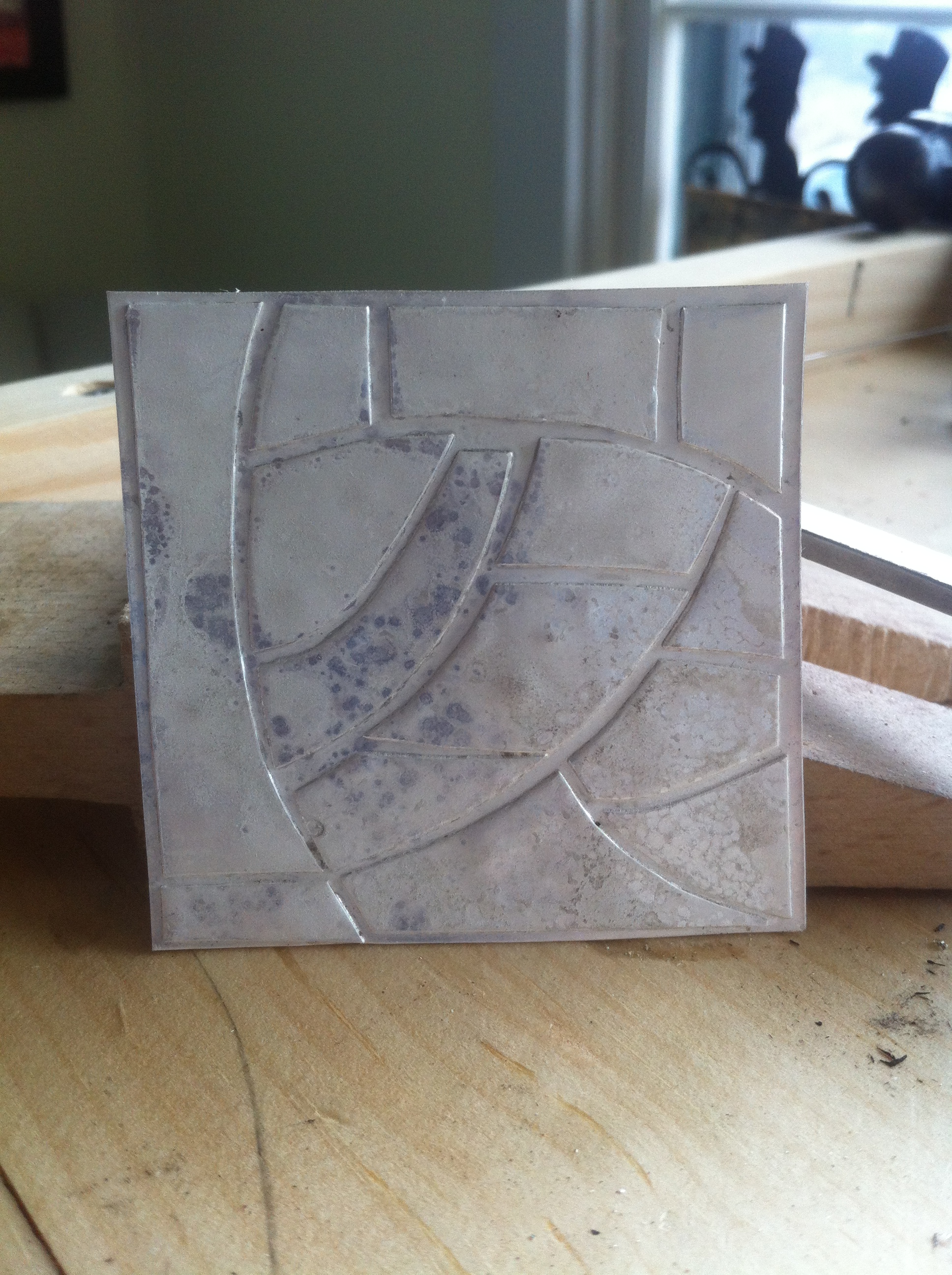
Deconstruction
“Come o’er the eastern hills, and let our winds
Kiss thy perfumed garments; let us taste
Thy morn and evening breath; scatter thy pearls
Upon our love-sick land that mourns for thee.
Northeast Harbor in April
A Dream, disguised
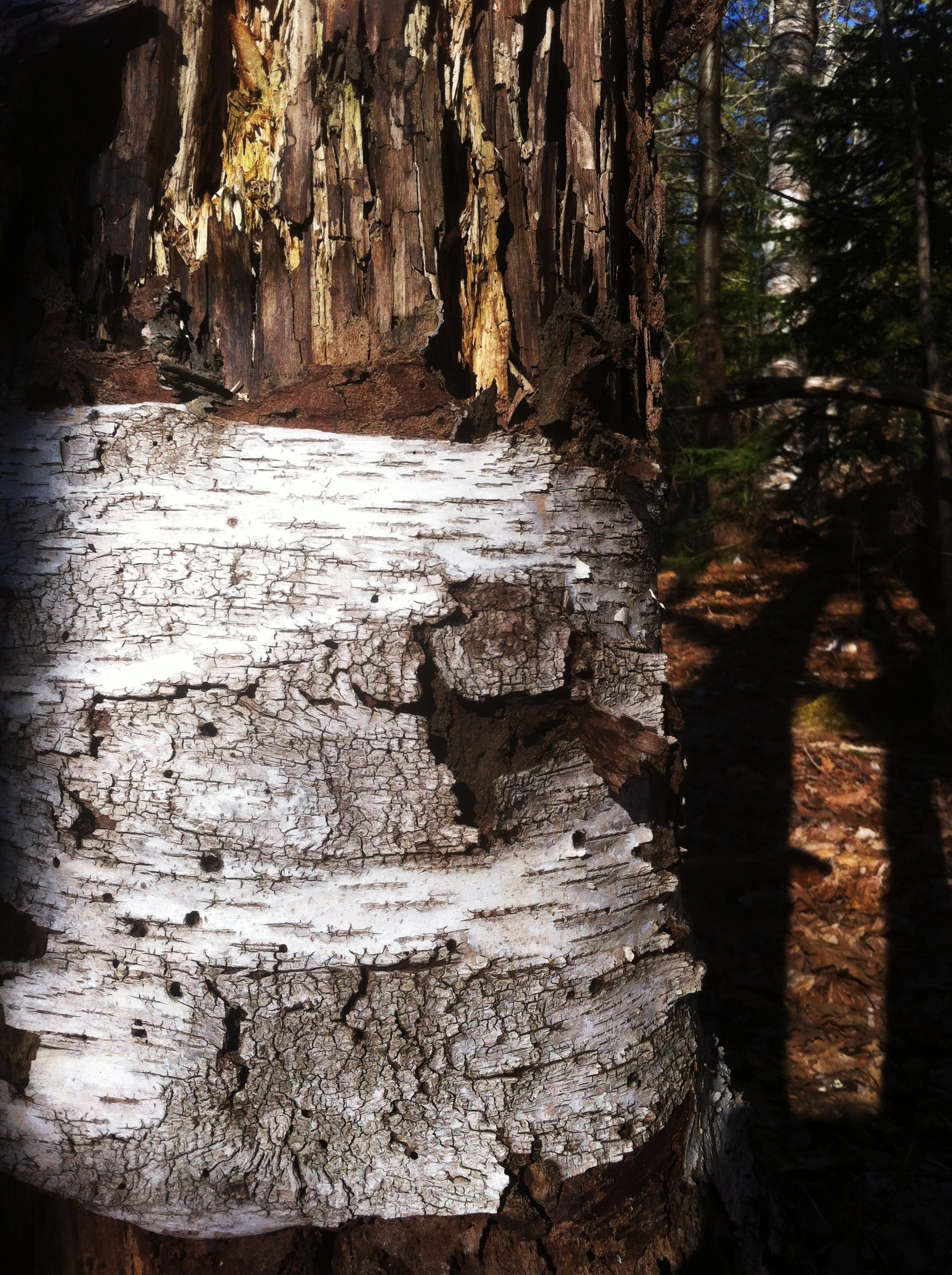
Birch Bark
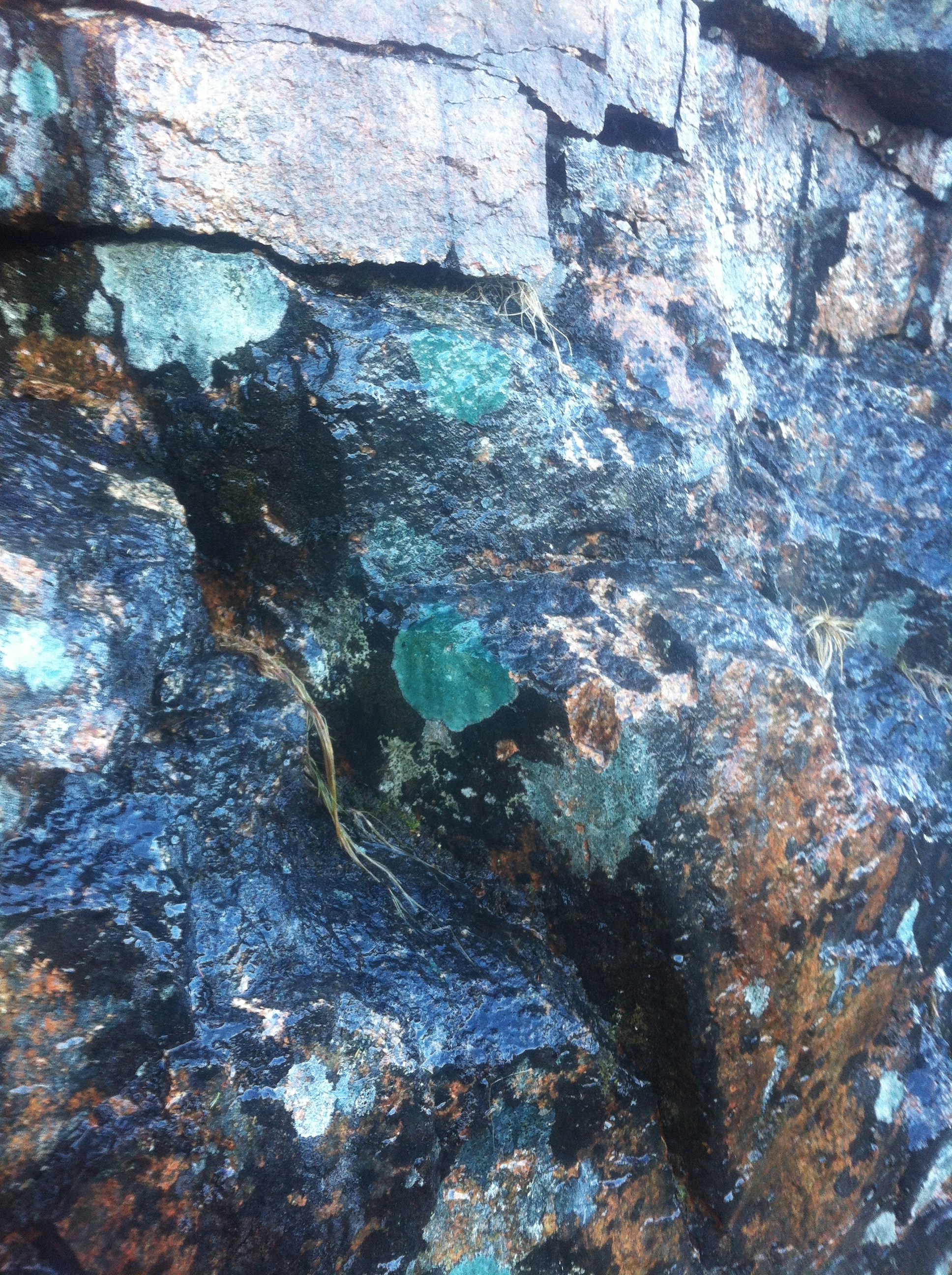
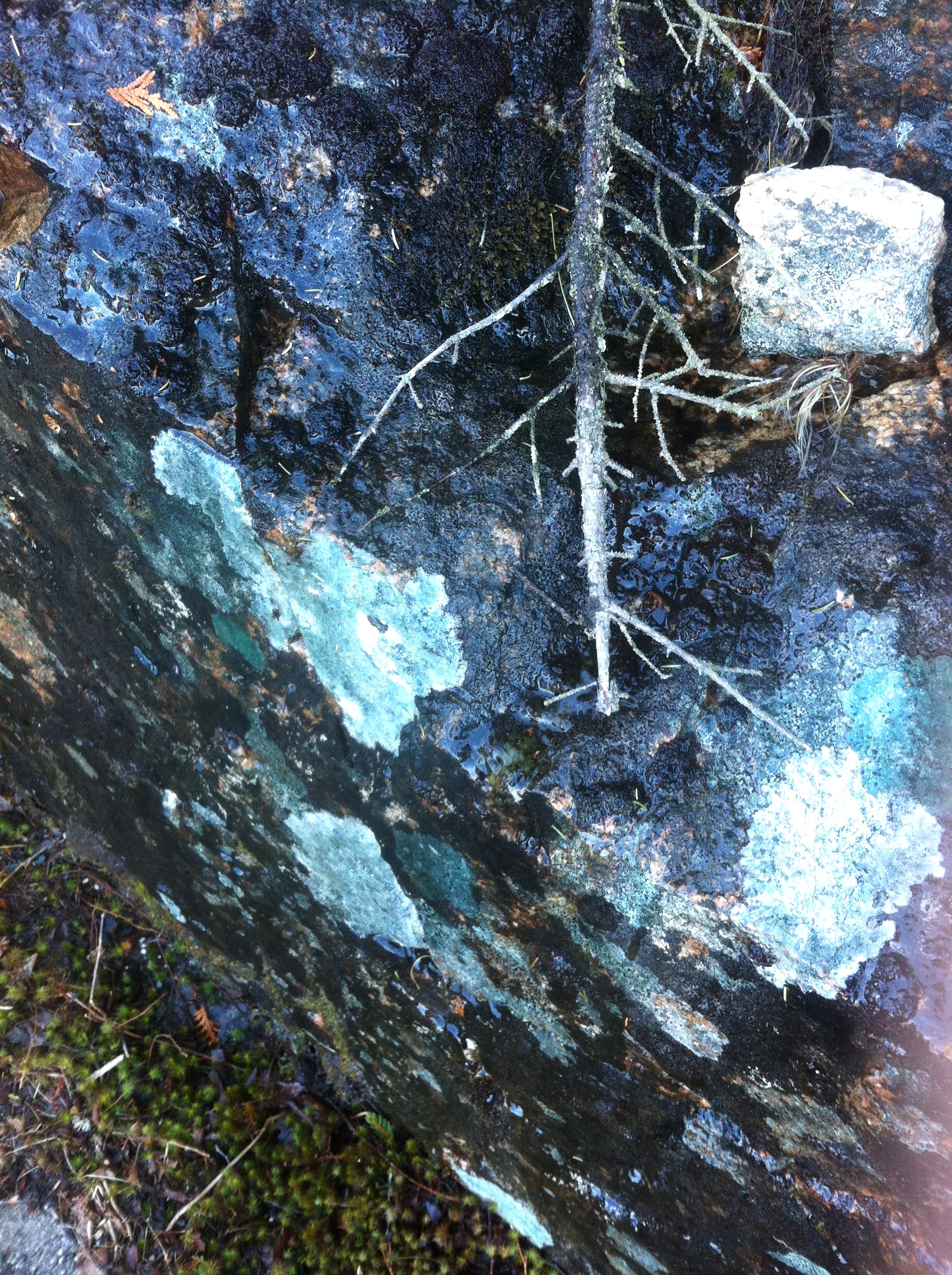
Rocks, Northeast Harbor
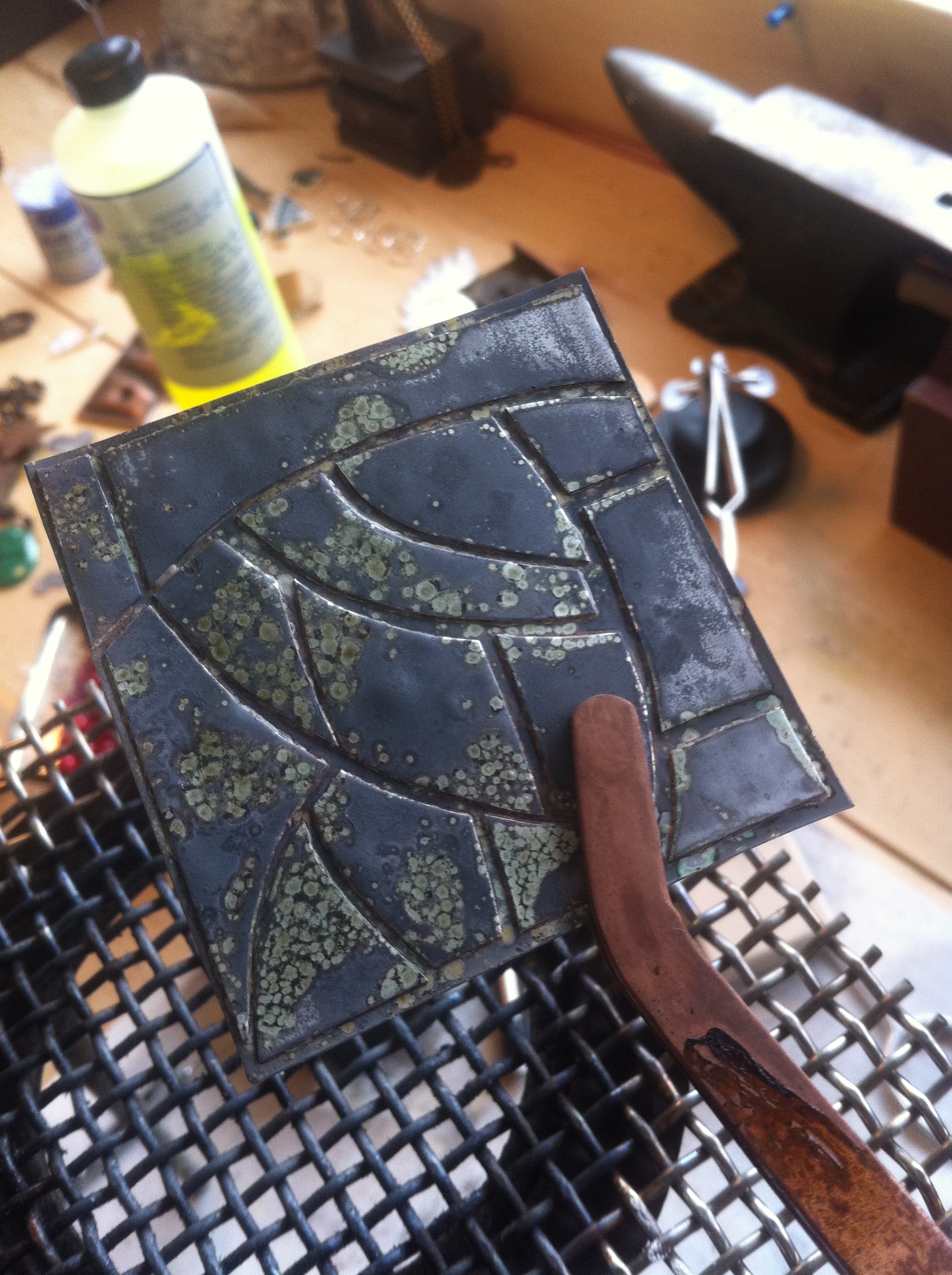
Mosaics
Heat & Oxidation
“O deck her forth with thy fair fingers; pour
Thy soft kisses on her bosom; and put
Thy golden crown upon her languished head,
Whose modest tresses were bound up for thee.”
– To Spring – William Blake
Dusk, Northeast Harbor
Reconstruction
“It is the function of art to renew our perception. What we are familiar with we cease to see. The writer shakes up the familiar scene, and, as if by magic, we see a new meaning in it.”
The Robert Frost poem that discusses paths in the woods, and taking the one less traveled by, is a tried and true trope of our contemporary culture, and represents both a great romantic idea and an understanding of risk and reward.
How do we know anything that lies in front of us in this life? We can take the trodden path, the one we know, and expect at least some results based on past experience, but even experience does not prepare us for life’s pitfalls and surprises. And when we measure the risk of venturing out and down the path that is dark and laden with heavy woods, the fear of the unknowns can be all too overwhelming.
These thoughts were cavorting through my mind the other day when I stopped into our local health food store in Bar Harbor, and there I found a friend who is dealing with this place in life herself. Both of us stand with two paths in front of us: the path of least resistance and more security, and the path of hope and the heart.
Whilst chatting with her over my paper cup of coffee, she behind the register and me standing to its side, two people began to check out with their groceries and eavesdropped on our musings about life. They said, to us both, that you don’t have to choose, that the right course will become illuminated and just to trust that it will. Trust is something I struggle with, being a lady who likes to plan and problem-solve. How does one trust in the unfolding of one’s path in this great universe of ours? How does one trust in the unfurling of opportunities, knowing the risks of being one of spring’s buds, the new leaf growing outward into the coldness of the spring air? How do you know if summer’s warmth and light is here, or if some new frost will come around and stop your growth in its tracks?
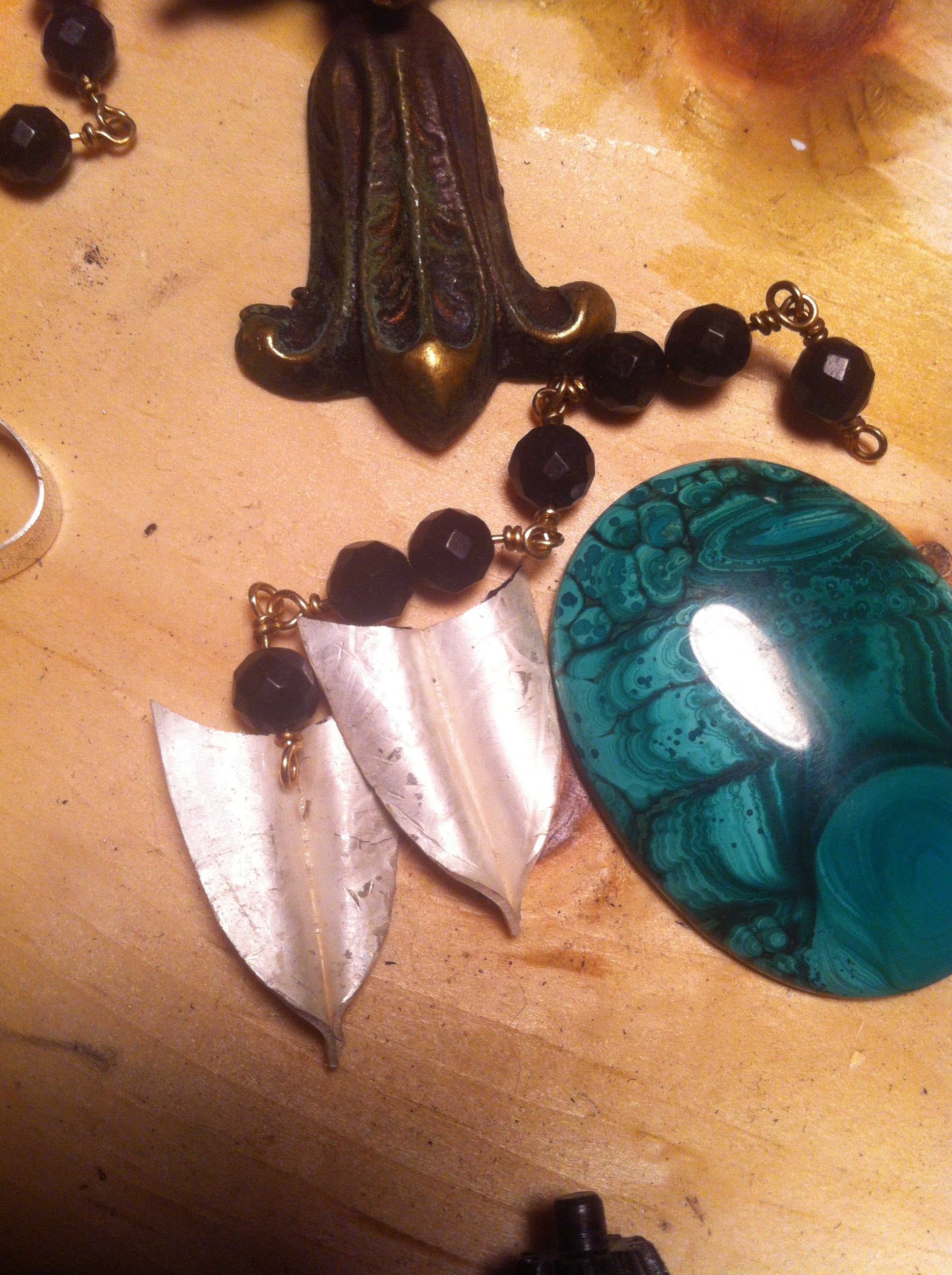
I suppose that you never truly know anything, in this life. You can plan and plan and plan, and still be surprised. Today, in the midst of a spring rain, I noticed tufts of green grass coming out of the ground that, for months, has been beige-brown and lifeless. I heard, again, new birds in the trees, and watched a loon hunt for fish in the harbor. As I worked, piecing together a necklace so many years in the making, I watched two seagulls fly together, playing in the wind. Tonight, I sit here, at my kitchen table-desk, wondering about what lies ahead, and how to remain grateful and surprised at the opportunities opening up before me. Like the receding ice that has covered the rocks for six months, there are surprises hidden underneath: new joys that are uncovered each day.
“Abel lives in the winter and Apolline lives in the summer. Isolated in their “natures”, they never met each other. They are not even supposed to meet. So when Abel crosses the border and discovers Apolline, curiosity is overwhelming. Their encounter soon becomes more complicated than they could imagine. Both of them will have to learn compromise to protect the other…”
Spring is coming here on the Maine coast; you can feel it in the wind, and smell it in the air. Spring, which in Maine means 36 degrees today and 28 yesterday, is full of sunshine. I have discovered my garden to be a very windy place. I believe that my proximity to the harbor, but placement up on the side of its hill, means the wind funnels up as if on a highway, hitting my part of town with some serious force. It’s hard to say whether the wind chimes will ever actually make it up onto their hook.
Compromise, the theme of the short film above, is a great theme for the transition into spring. All the members of my tiny town are gearing up for summer: realizing that our days of ease are numbered. Everyone is keyed up, in a way: thinking about hordes of out of towners, cars on the streets, the opening of restaurants and shops, seeing more than the 300 people who populate our town right now. We all have to compromise, in myriad ways, to live here and to live with each other. We have to compromise in terms of money, of jobs, and of earning potential. Here, you must be creative or you must go somewhere else. We also have to compromise and understand that the peace of fall into winter comes at the price of serving thousands of people for three months in the summer. We have to compromise with each other and understand that each of us experiences this transition in a different way, probably, I suppose, based on the amount of years one has spent riding this tourist economy rollercoaster.
This is my first go-round: my first experience of seasonal living, of seasonal changes, of being a part of tourist-driven small paradise. The seasonal changes have effected me in profound ways; I feel this intense energy of spring bouncing around inside my body and mind. Each day there are new sprigs of grass, new calls of birds who have returned, bulbs are bursting forth from the ground. The pressure is on, as the Earth here in Maine finally exhales its winter breaths, welcoming in the smell of sunshine on chlorophyll-laden leaves.
“We travel, some of us forever, to seek other states, other lives, other souls.”
– Anais Nin
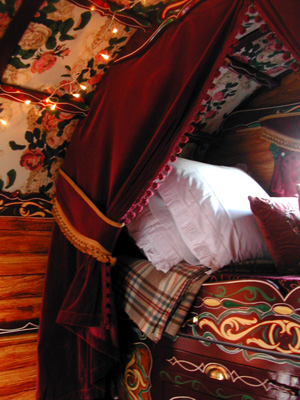
The tiny, less than 350 square foot-ness of my new house is making me think of the interiors of caravans. When I was a little girl, we would drive through the countryside in England and sometimes, I would be lucky enough to catch sight of these in fields. I have always dreamed of making one of my own…
I have lived a vagabond lifestyle over the past year; leaving my row house in South Philly last April started a path of moving every month or two, from house to house.When I move into the new house next week, it will be my sixth home in one year. A year ago, I lived on Rosewood Street, in between Broad Street and Mifflin Street in the Newbold neighborhood of South Philly. About one year ago, my house was broken into and everything I owned was thrown into piles of disarray in the living room, kitchen, and bedrooms. I remember walking through the door that day, into the darkness of the living room, darkness created by heavy velvet curtains on the front windows, and noticed the cushions of the couch, books, decorations were all jumbled on the floor, tumbled into a giant mess. When I walked upstairs into my room, my mattress was tossed in one direction, and everything in my bedroom was torn asunder, cabinets opened, shelves ripped apart, everything on the floor as if a tornado had ripped it all apart.
I remember that night vividly, despite the tequila haze that clouded my vision. I spent the whole night on my leather couch, after putting it back together, calling everyone I knew and trying to figure out how this all happened. I kept walking upstairs to try to deal with my bedroom, only to see it again, and walk back downstairs. It took me 24 hours to be able to even go into that room.
After that day, I never felt safe in the house, and ceased to sleep well. It has taken until the last few weeks to be able to sleep well again. About a month after that, my roommate and I got rid of all but our most important possessions, and moved out: she to her brother’s house, and me to my friend’s. That was house #2, in Germantown. It was a beautiful house filled with a beautiful family and their many pets: I shared a room with a canary who sang. House #3 came about a month or so later, when I drove to Maine and landed in my parent’s basement. I took every sheet I could find and made the basement into a giant tent, in which I lived until August. In August, I moved into House #4 in Seal Harbor, Maine; a house with no cell phone reception. I had to walk one mile to the beach to use my phone, and spent many nights there sitting at the dining room table, facing my demons, writing about them, meeting them halfway. I spent nights sitting on the Seal Harbor beach sketching, and drank tea on the rocks in the waning summer sunlight. In late September, I traveled across the country, and then returned to Maine in late October, moving into house #5, on Lookout Lane in Northeast Harbor. Here I have been, in the house that floats above the street, in this beautiful garage apartment, until now. Next week, I shall gather together the few possessions that I have in bins and boxes, and trundle across town to the new house. The house that I don’t have to leave, because, although I am still a renter, it is mine.
The little house that sleeps on the harbor, up on a hill, next to a day parking lot, and a tree-lined path down to the ocean. Across the street from a few houses, an art studio, a restaurant, and a jewelry gallery, behind a museum and a demolition company with a fleet of red trucks.
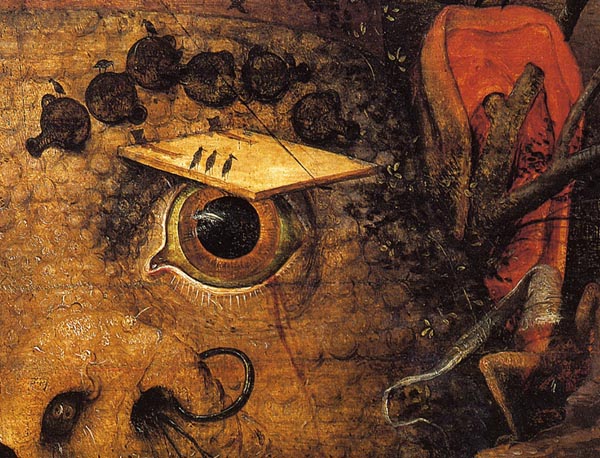
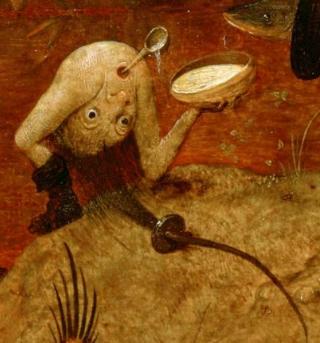
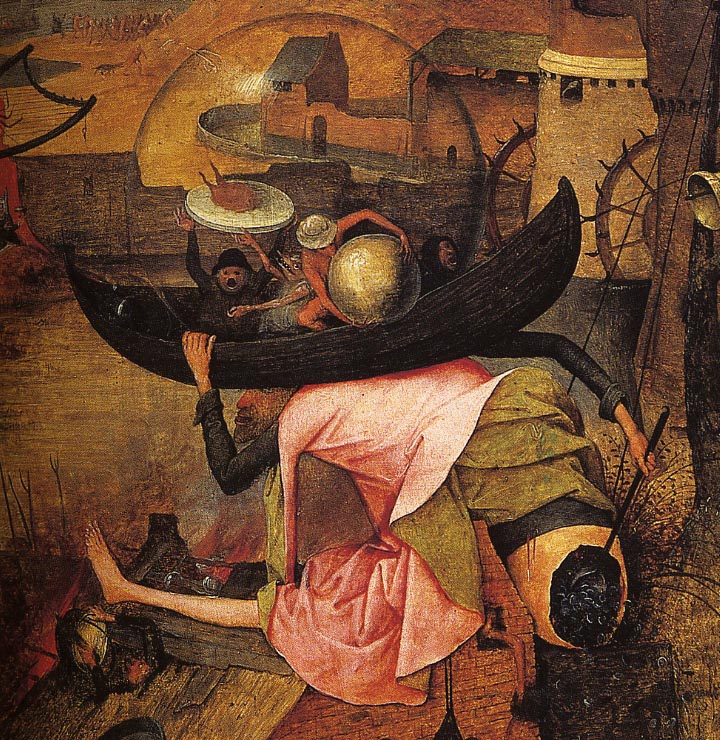
What do I think of when I am lying there?: on my stomach, propped up on my elbows, leafing through art books on Toulouse Lautrec and Pieter Bruegel and Peter Beard; gazing upon the paintings in the collection of the Mauritshuis Museum.
Dulle Griet by Pieter Bruegel the Elder
Pressed into the floor, feeling the coarse plastic fibers of commercial carpet dig into my elbows, through the fabric of my light shirt, I catch myself looking around. Behind me is a pool table, under which stand two polar bears, staring out at me. Above me are deeply pocked marks of pool cues’ chalk, all over the ceiling. To my left are giraffes and hyenas, and up above the window, the skeleton of a sea turtle, many years gone from this world. To my right is my dearest friend here, lost in his own thoughts.
Before me is an off-white enameled Jotul wood stove, with a front window already stained with soot. Through the soot shadow, one can depict the licking of bright orange flames made amber as they filter through the dirty shade. The flames grow and gather, spewing up and across the ceiling of the stove, recirculating.
I am thinking about birds’ wings and the lips of Nepenthes plants. I am thinking about patches of snow on the surface of Little Long Pond, and of playing Pac Man on the table consoles at Pizza Hut in the ’80s. I am thinking about the tea that I am drinking, about artificial, non-dairy creamer: the stuff you can light on fire if you sprinkle it onto a candle’s flame. I am thinking about scent, about wood shavings, about ice melting, about the songs of the birds that just recently reappeared.
I am thinking about change.
We all know that birds’ bones are hollow so that their bodies and wings are lighter than ours: this is one of the reasons that they can fly and we are glued to the Earth. Each morning I watch five crows flit around from tree to tree along my street. They break into peoples’ garbage seeking treasure. They yammer at the the doves and the blue jays yammer back at them. They swoop and dive, and turn their heads to look at each other, and to me, as I stare at them. They pretend to be scared of me, when I know better. They were here before me.
Yesterday I went skating, maybe for the last time, and played an age-old game on ice skates. Pretending that the patches of snow were obstacles, were pools of lava, my friend and I skated round and round them, ever tightening our circles in between and through them, forming curly-cues and slashes and ellipses and circles in skate marks between the snow patches. The snow patches, large and small, close together and far apart, became deadly territory that would turn you into a ghost if you touched them, and provided fodder for chasing each other, not too quickly, between them in a game of ghost tag. Ghost tag, so much like Pac Man, making me think of the way the crust crunched at Pizza Hut when I was a child: how greasy it was, and how all the windows were made of diamond shaped stained glass in clear and red. How we sat at booths together but snuck off to play video games at those strangely stalwart video game tables.
These are the thoughts that cross my mind in mid-winter, in February, as the ice and snow melt outside, again. I learned my lesson last week, when a short February thaw had me convinced I’d be in sundresses in no time, only to be blasted by a fierce winter storm once more.
After the snow came roaring through, again, a few days ago, my friend and I drove down to Jordan Pond to assess the likelihood of skating. As we clambered over a snowbank, carrying skates down the path to the water, we crossed another, larger snowbank and were hit, full force, full frontal with 55 mph gusts of blowing snow. Wind so fierce that it blew ice crystals into your eyes. Wind so strong you couldn’t even look into it. Wind so loud it howled around and through your ears. Wind so tough that we both laughed and walked back to the truck; recognizing when to go home is a skill one learns during winter in Maine.
Winter is drawing to a close: you can feel it in the air. There is a lightness to the sky, as if the sun is coming back. The birds are calling. The days are full of sunshine, when for so long, they have been so dark. There is a sadness in this: a loss. The darker times when all that is before you is you and your work, you and the tiny world that surrounds you, when the sun sets before 4 and all you can think to do is create; well that time is shifting and going away. The light is returning, flooding us with the recognition that soon, buds will burst open on tree limbs, grass will grow, crocus will appear in front of our eyes. Soon, the light will return and the sunsets will change, the water colour will, too, and people will return to this place that has been so quiet and lovely for so long. Flowers will grow, shoulders will be bared, times will change. People will change.
People already are changing: a nervousness is invading every cell of every person, causing each of us angst and anxiety, expressed in unique ways. Peoples’ eyes flit back and forth, as if they are watching for something. Some people draw back, into themselves, away from those that they have held dear during the darker months. Some people are planning, some people are counting down the days, some people are thankful for the retreat of the ice and snow.
Some people are waiting; listening for the ice to crack.
“We take from life one little share, And say that this shall be A space, redeemed from toil and care, From tears and sadness free.”
I came here in June, sick and tired. I came here late at night, with a headache splitting my head in two: it felt as if an axe blade was lodged in the left side of my skull. My car was packed with belongings and I drove, forward, through the black night, past houses and the ocean streamed at my right side. That night I cried, cried, cried, and continued through days and nights as my head hurt and my heart ached at realizing I had made it away from a place of so much pain. After re-decorating that basement space that was mine, for a time, I stayed in bed for weeks, while shingles wracked my body, erupting on my face and eyelids and scalp, causing pain and burning and itching. As it healed and the nerves reconnected, I had a hard time sleeping because it felt like electricity was running through my skin. There were days when I would venture out to swim or to bike ride, and feel as if I almost had to crawl back inside the house, into bed, because I was so tired.
“And, haply, Death unstrings his bow, And Sorrow stands apart, And, for a little while, we know The sunshine of the heart.”
Time passed, and I began to feel better. In time, I ventured out more often, and was able to plant plants in the ground again, and be in the sunshine, take walks, swim across the lakes. Late in the summer, after a confusing but exciting trip to the Yucatan, during which I learned how to make pie crust in the tropics, became a certified scuba diver, watched a hurricane pass by, and learned that a special someone was not who I thought he was, I worked in a large, open barn with wooden sculptures everywhere. I started the day by weeding the granite paths in a flower garden, and passed the day helping children paint boards and wooden fish, and painted my own things, too. There was a moment on the third or fourth day when my head came back — my mind came back to my body and I felt reconnected again. It had been months since I had felt that way.
“Existence seems a summer eve, Warm, soft, and full of peace, Our free, unfettered feelings give The soul its full release.”
Time passed, and the fall began. I continued to work in the garden, weeding cosmos flowers and beets and kale and onions. I watched pumpkin vines grow in compost piles, and planted evergreens on a steep hillside and pondered how quickly lavender will grow in a place with such a short summer. I took drives in a 1970s Porsche into the hills of this island, and looked at fancy houses and ocean views. I housesat in a little house in Seal Harbor, where I had to walk one mile to the beach to use my cell phone and reconnect with those people in my life who felt, at that time, so far away. One afternoon, one of those days of golden light and warmth, I was standing on a roof deck of a beautiful wooden summer house on the top of a hill and looked out at the trees that grew all over the mountaintops, at the water of Somes Sound, and decided to stay.
“A moment, then, it takes the power To call up thoughts that throw Around that charmed and hallowed hour, This life’s divinest glow.”
Staying is hard for me. I am more apt to run: I am the world’s most skilled runner. Adaptable to any situation, a great and hard worker, friendly, I can fit in anywhere. I can come and go, and do, quite often, if I am unhappy. I find ways to escape: I am an artist that way. I am the Queen of leaving. Committing to anything is, well, plainly terrifying to me, and the decision to stay here, while I knew it was the right thing to do (I had originally planned to be in Mexico and had sold everything I owned toward that purpose), was scary. I felt I had to hide a little bit, hole up and re-evaluate, re-group. I rented a beautiful apartment, and then left on a huge trip across the country to see everyone that I loved. I documented that trip here, detailing all the themes that appeared in my mind and my life along the way.
“But Time, though viewlessly it flies, And slowly, will not stay; Alike, through clear and clouded skies, It cleaves its silent way.”
I came back, and fall passed quickly. The light changed, and faded away. It became dark, and cold. I spent much time walking and looking, looking and listening, writing and sitting. I made a lot of jewelry and tried to stay quiet. Christmas came and went, as did the New Year. Emotions ran the rainbow of possibilities: I felt happy, then sad, then elated, then scared, then passionate. Then suddenly, the miasma of the holidays, the painful memories and the excitement at that season, passed, and it was winter.
“Alike the bitter cup of grief, Alike the draught of bliss, Its progress leaves but moment brief For baffled lips to kiss”
Winter is a new experience for me. I have no frame of reference for this season. Yes, we all have experienced “winter” wherever we live as a cooling of temperatures and changes in light, but Maine winter is different. Maine winter is quiet. Maine winter is empty: you know the people are here, but you don’t see them. You see evidence of them in the glow of windows, and the sounds of snow plow trucks trundling past your house. Maine winter is three feet of snow that sits for weeks. Maine winter is going ice skating on a lake that a month ago was liquid water; now you can skate across the surface almost silently, watching ice fishermen wait for their orange flags to bob down letting them know they have caught a fish. Maine winter is watching people in canvas tents in the woods, nestled around woodstoves, escaping their daily lives for a day or so. Maine winter is cold, and the cold is biting. It freezes your toes and feet, and your hands. The wind whips around your face and stings your eyes and lips and nose. Maine winter steals heat from your body as you walk, sucking it out of the top of your head if you, stupidly, go without a hat. Maine winter is long, and it just began in earnest.
“The sparkling draught is dried away, The hour of rest is gone, And urgent voices, round us, say, “’Ho, lingerer, hasten on!””
For the last week or so, I have been taking an informal survey on “What Winter Means”. I have asked everyone that I know who has lived here for a while the same few questions: Why is it so different? Why do people go kooky after New Years? and Is it true that everyone will go nuts in February?
“And has the soul, then, only gained, From this brief time of ease, A moment’s rest, when overstrained, One hurried glimpse of peace?”
I can tell you that winter is a lonely time, if one is alone. It is cold, and you want to cozy up next to someone to get warm. Winter’s coldness is felt inside your body, down to your bones and further inside. Winter is scary because, in January, you realize that it will be like this until March or April, but most likely, April. Winter draws out before you with the promise of ice and snow and bright sunny days and deep cloudy ones. Winter causes you to question yourself, and realize that you do not know exactly what will happen to you in a place of this much cold, this few people, this slow of a pace.
“No; while the sun shone kindly o’er us, And flowers bloomed round our feet,— While many a bud of joy before us Unclosed its petals sweet,—”
On Monday, I rode in a small steel boat to the outer islands to interview to become a substitute teacher in a two-room schoolhouse for 9 students. The ride out was cold, but it had the hopefulness of morning, and the water was deep blue and turquoise green and the smell of diesel is comforting, in its own way. People kept busy reading their mail, playing games; I spent the time knitting and chatting when I could. First we stopped at Great Cranberry, and I looked at the pileons all covered with bronze seaweed and barnacles. We pulled away and across the straight to Islesford, where I embarked and walked up a narrow road, perfectly snowplowed. Snow two feet deep was on either side of me, and most of the houses, summer places, were empty. The field that, last summer, I used to play volleyball with two friends from Philly lay vacant, vast, white and empty. Everything was silent with the empty echo of winter: the sound of silence and of hunkering down. This is survival time. I spent the day in the school, visiting with children and adults and a dog named Ruby, and then took the same steel boat back to Northeast Harbor. The sun set over the mountains as we rode in, all orange and red and salmon pink over deep blue mountains. It was cold, colder than cold on that boat, and everyone seemed to be adjusting to it well but me. I walked up the gangplank to the harbor area and felt colder than I have ever felt. Walking into town, I began to panic thinking I would never get warm, or I would get sick again, or both. I slipped on ice and sank into snow, feeling colder by the minute. In that cold, your head hurts with the cold air, your eyes water, your hands and feet ache despite boots and gloves.
“An unseen work within was plying; Like honey-seeking bee, From flower to flower, unwearied, flying, Laboured one faculty,—”
I went to a friend’s house then and bemoaned the cold and he laughed and said he was at least happy that I understood that he wasn’t kidding when he said the cold was serious. I sat, practically hugged, the woodstove, took off my shoes and socks and he handed me steaming hot coffee and eventually, my warmth came back and I stopped panicking about the winter, about the cold.
“Thoughtful for Winter’s future sorrow, Its gloom and scarcity; Prescient to-day, of want to-morrow, Toiled quiet Memory.”
And just like that, the deep cold left us that very next day. The next day, the sun shone on our town and the snow began to melt and temperatures that were in single digits and teens all of a sudden were almost to 40. The snow melted into water and dripped off the eaves of buildings into the street, making slick patches of clear ice, impossible to see but easy to slip on, and catch yourself before a fall.
“’Tis she that from each transient pleasure Extracts a lasting good; ’Tis she that finds, in summer, treasure To serve for winter’s food.”
Despite our warmer week, the winter’s chill has taken hold and taken effect on people. People are changing. I wish to record these feelings here so that I remember them in a month, when winter is really in full swing, and in its depth of experience. People are spending less and less time out, more and more time in their homes. I, too, feel the desire to curl up inside and surround myself with blankets and fabrics and sewing projects, and other creations of comfort. I seek to design and build things that reflect those aspects of life that I miss: warmth, light, plants, flowers. I dreamt the other day of a place where the plants are still growing, where leaves are unfurling and flowers are in bloom. I remembered the pink oleander in front of my old house in Austin that still grew and even bloomed, sometimes, in the winter of central Texas.
“And when Youth’s summer day is vanished, And Age brings Winter’s stress, Her stores, with hoarded sweets replenished, Life’s evening hours will bless.”
So what will Winter bring? I have no idea what is coming toward me, except a distinct sense that my perception and interaction with my environment will become even smaller than it is now. It is hard to imagine that a year ago I was living in a large American city, and now my world has shrunken so. In the cold, even though the light is returning to us, I envision a time of watching, and waiting. My new motto is “don’t think, don’t feel, any more than you can help, don’t conclude or decide — don’t do anything but wait.” Henry James must have spent a winter in Maine as an outsider, and spent much of his time just watching how people’s restlessness magnified, how all people turned inward to the coziness of houses and hearths.























 Paciencia, Paciencia