Free Weight

For awhile, I looked in the mirror and I didn’t recognize myself; who was that, staring back at me with little wrinkles everywhere, eyelids that are changing, a worried brow, gray hair? For a while, I knew that it was, indeed me, but a me that somehow had changed. Now, they have come together and I see the same old face in my current new face.

This blog has existed for about ten years, and so much has happened in those interim ten years. For a long time, I was good at writing regularly, at night, by myself, in my house. But then ten years ago I got together with the man I am now married to, and my evening behaviors changed. To me, writing is a solitary act. I really don’t like to do it when anyone is home, even with the door closed. I somehow feel that it is important not to be interrupted when channeling whatever this is.

Here I am today, writing stream of consciousness style, so please bear with me. Today is my friend Mary Ann’s birthday and she would have been 46. She died two years ago. She visits a lot, but we can’t talk anymore, and that is what I miss the most. I also miss talking to my dad, as we did during his last few years of life. We had had a lifetime of fights (since I was a teenager, so half a lifetime I guess), that we gave up sometime after I got married and we moved Maw Maw into our house after she had a stroke. Taking care of her made me realize that our lives are very finite and we can leave the planet oh so quickly. I vowed to never talk to my dad about anything important ever again, and we began talking all the time.

Today I am thinking about his first, secret-to-us family in England. What is weird about this iteration of thinking, after now knowing for about 2 months, is that I feel the most compassion for him that I have ever felt. I never could feel this compassion for him in life because he never told us about this thing, this majorly big issue in his life that explains so much. When I asked my aunts about him in 2017 and they told me they wouldn’t tell me, I thought all kinds of things.

I thought he had gotten someone pregnant and his parents were really mad. (Partially true)

I thought maybe he had gotten drunk and wrecked a car and his parents were really mad. (No)

I thought he had fought in Vietnam and had PTSD. (Not true; now we aren’t sure if he was ever over there, but he said he was, so……)

Basically all of the things I thought it could be were way more colorful and interesting than a breakup of a marriage in its infancy, and leaving the infants that came along with the young marriage behind, never to see them again. It’s just so damn sad.

Lately, sometimes, I get so sad. It’s like something is literally hanging around my neck with a weight. What’s in the weight? I don’t even know. Is it just me? Am I a melancholy baby after all? It would seem so. I used to be more fun though, I think. Why is this weight so heavy and how do I lift it? I don’t want to feel this sad and anxious all the time; emotions so overwhelming and a general feeling of no one liking me. And coupled with that, a crazy desire to keep everyone happy so that I don’t say things when I am angry or sad or irritated or when I need to. Those two things must be intertwined; some ouroboros that is.

Earlier I was talking to a friend of mine who lives in Texas and we were talking about how reflective the 40s is. This decade is wild and whack. I don’t understand how the shift is perhaps a bit more money in the bank, or perhaps an investment (house) or something, and then people start to die? Right now, I think this trade off, this change, this phase, level-up, or whatever you want to call it, is bullshit.

I also accept that everyone dies and literally they have to die at some point. It just seems that it is weirdly becoming a regular part of life, and I am having to adjust to it and “deal” with it, and try to understand it and be at peace with it. One of the things I learned when Maw Maw lived with us is that death doesn’t scare me. I think I knew this, as I when I got very sick in high school and didn’t die, I think I chose to no longer be frightened of it and be open to it all the time. When Maw Maw was dying, a day that I haven’t written about yet, it was very weird and mysterious. Watching someone leave the planet “is NOT like in the movies” (I said this over and over at that time).

Why can I not seem to get out of thinking about Maw Maw, my Dad, Mary Ann, and my friend Kate (who died this past summer). I am shaken by Kate’s death; I always thought she’d end up working for the federal government and be interviewed on 60 Minutes or something. Mary Ann I just miss. My Dad I just miss. Those two were my phone people; I spoke to them almost every day. I haven’t had my phone people in over 2 years, and I miss them. Maw Maw I miss, but she makes me smile and laugh. She was old and she was ready to roll out. I just miss her, again, because it would be fun if she was here and we could watch a movie. They just seem to live in my mind right now; I am not sure what to do about that.

When I think of my Dad right now I just wish I could tell him that it’s ok, we know, and we just wish he would have told us because everything is fine. It happened so long ago, before he had even met my mom, and I know that no matter what happened, it was not an easy decision and I am sure he didn’t want to make it. My Aunt Margaret told me about his white wedding, and how beautiful it was, everyone in white dresses and my Aunt Helen was the flower girl. She told me she has photos somewhere and I so hope she can find them. I have a hard time imagining my dad as a 26 year old person. How was he ever that young?

I wish I could tell him that it’s ok because it is. It explains so much, almost everything. It explains why we came to the US, and why his family didn’t know that. It explains, perhaps, why we fought so much. Did he feel guilty every time he looked at me? Did he feel guilty all the time, ashamed, anxious, afraid, and did he transform those feelings into rage and anger? (Seems so). It seems so sad, what a waste of time and energy. My mom said that she would have welcomed the boys into the family, but who knows if they would have wanted that, or their mom. I know that with Cody’s situation with his baby mama, she was (metaphorically) driving the bus and made it extremely hard for him to see or have partial custody of his son. It took many thousands of dollars and hours of time to secure those rights. But, he did it, he chose to fight for them. Why didn’t my dad fight for his boys?

I can only imagine how sad he must have been, and that is how I have compassion for him. I wonder if he knew it wasn’t working when they were living in Scotland and found out they were pregnant. I wonder where they moved after that. Did they own their house or rent it? Was it near my grandparents or her parents or neither? How much was he working then, and doing what? I know that he was a cigarette salesman at one point down in Devon/Cornwall, but was that before when he first got back from Australia, or between Outward Bound and Noble Denton?

It is such a drag that I probably won’t know the answers to many of these questions. The tragedy of this story, or at least one of the big ones, is that the boys’ mum died the same year that he did. She died still with his last name, after all that time.

I feel better after writing a bit. Please bear with me as this all comes pouring out. I am so scared to let it, but it feels like a weight lifted when I do.

Grief, again. Grabbing hold of my heart and squeezing it in a vice. Some people describe grief as being shaken by a wild animal, but mine is a cold squeeze and I feel like I can’t scream out even though I want to. If I scream, someone might get mad at me for being too dramatic or sensitive or overly-emotional. If I scream, people might know and worry or be mad at me for making noises in quiet places. I said this to my therapist two weeks ago and just remembered it:

“If I look at it, then I may be sad forever.” Where does that come from? When I say it outloud or read it, I know that it is some part of my brain trying to trick me. I can’t be sad forever, and how would letting this out make me sadder? Perhaps it’s the weight? It doesn’t want to let go?


Ridikkulus ! Or, Why No Lie Is Worth Telling

It is not everyday that you have a major life revelation, something that stitches some theories into the facts column of your memories, forever cementing but also altering your life. Last night, my mom sat myself, my brother, and my husband down to “talk about something for an hour” she said. Three hours later, we had learned that:

  • My father was married a very long time ago to a first wife, sometime around 1965
  • My father and his wife had twin boys who were born on 7 January 1967
  • My father’s first wife “couldn’t cope” with raising twins (on her own? with an unhelpful husband who “worked alot”? with perhaps post-partum depression that was undiagnosed?), so she moved back in with her mother and
  • They never spoke again

My dad’s family, who knew his first wife, who had been to his wedding, and who knew his twin sons, were asked to honor the request of no contact, which they did for 54 years, until a few weeks ago when my aunt told my mom she knew something but she also knew it would be hurtful. My mom asked her to tell her, regardless, and here we are.

For years I have wondered what precipitating event caused my father to lose contact with his family, for after this, he barely spoke to them for 15 years. In fact, my aunt didn’t even know that I was born in England, one hour or less away from where she had her second daughter, born one month before me.

In 2017, I went to England for my cousin Sally’s wedding in the Lake District. It was beautiful and I can’t wait to go there again. Whilst driving through London with Aunt #1, I asked her, “did something happen between my dad and his parents? Like an argument? Did he do something to disappoint them or something? And that’s why you all stopped talking?” She said, “It is not my story to tell. You have to ask your father.” Whilst walking through a town in the Lakes with Aunt #2, I asked her the same question, and she gave me the same answer.

In 2009, when I was getting divorced from my first husband, my parents came to see me. I was confused as we weren’t especially close at the time. Now, looking back on it, I suspect my dad felt that me going through a divorce would be very difficult. I know my mom was worried about me, but she said that they felt I was handling everything very well (later writings will go into how good of an actress I am – Oscar caliber). In my laundry room, my mom let slip that my dad had been married before and that “divorce isn’t that hard, eh Michael?”. This is when I learned he had been married before for about 5-6 years. When I asked him why he had never said this before, he said he didn’t think it was important. I asked him, “what, are you going to tell me that we have half brothers or sisters somewhere?” he said a definite “No.” He lied.

Why did he lie? To me? To my mom? To my brother? What happened and why?

Tragically, his first wife (first and second wives were both named Susan, oddly), died about one year after he did, in 2022. He was born in 1939, she in 1943. He died in 2021, she in 2022. He had his twins when he was 28 years old. I cannot even imagine what my dad was like/looked like/acted like when he was 28. My husband had his son when he was 26 and I remember what he looked like: an adultish person.

Thankfully, all of my dad’s siblings have told us we can ask them anything now that the cat is out of the bag. But sadly, both people involved are dead. Strangely, she kept Blythe as her last name all these years, as have done the boys. Why? If it was such a split, wouldn’t it make sense to change names or……….something.

Did he ever pay her any money to help raise them? Were they ever in contact? Why did the split even happen in the first place? Apparently my grandmother took care of the twins when she could. She always loved babies and was great with children. She also had to live with this condition of giving up her first two grandchildren, and, her daughters say, fought it until my granddad insisted. I cannot imagine how painful that must have been for her, for him, for his first wife. It just seems like so much pain, and I will never know the reason why, probably.

When I asked my dear Uncle Denys why this happened, why we left the UK and our entire family, when we were having tea after Sally’s wedding, he said, “it was a different time”. Maybe it was? What does that mean? Did he know?

This opens up so many questions. Is this the reason that we moved to the States, so that he would never have to deal with it? It seems so. Why did he never tell my mom? Why did she never insist on meeting his family before they were married?

Because, oh yes, my mom never pushed on meeting his family. He said they didn’t want to meet her, and she accepted that, despite that his 5 brothers and sisters would have loved to meet her, and did, about 15 years after his first divorce, when he was married to his third wife and living in Houston, Texas.

I have written about this here before, but sometime around 1970 my dad lost touch with his family and regained contact with them around 1985, after we had emigrated to the United States. My granddad was ill with progressive health problems, and we came to England and met the family for the first time. The aunt who orchestrated this meeting is the same that spilled the beans to my mom two weeks ago, She is truly amazing and a creature of love and acceptance. I love her so much. After the first English meeting, my grandparents came to Texas and saw us there. My granddad died very soon thereafter, in 1989, of cancer and heart problems. He had been a nuclear chemist and the exposure to chemicals damaged his body. My grandmother was diagnosed with cancer in the 1960s, looked around at her 6 children and her scientist husband who didn’t pay bills but knew how to (mostly) build an atom bomb, and said to her doctor, “I can’t die!” and didn’t until 1994.

What is bothering me so much about this story is the lie at the center of it; a lie that, to me, is wholly unnecessary. Why would he leave behind his children? What about his wife? Did he love her? Did she break his heart? Did he break hers? Yes, yes, and yes? We could have had two older brothers. (We think we have found them. One looks just like him, with eyes just like me and my brother’s. The other looks like my granddad, to a T. Round, bald head, round nose, nice smile.)

28. When I was 28, I was getting divorced from my first husband. I owned a house in Austin. Did he own a house in England? He always told me he sold his boat to buy his first house with my mom. Is that true? The trick of this lie is that the two people who were really involved are now dead.

This experience, which right now is only 24 hours old, has taught me that is never worth it to lie. Never. What would have happened if he had just told my mom about all of this, like we would all expect to have happen between two people committing to each other in marriage? Would anything have changed? Only one, to be certain. The lie wouldn’t have been there. My uncle used to stay with them, he says. My grandmother helped with the babies. My aunt was living with my grandparents when they split and she remembers everything.

My dad was always best in a group, at a party. In person, he was very challenging. He was avoidant, afraid of commitment, and angry. When he was confronted, he became so angry that he was scary. I suppose that guaranteed that no one would get close. He drank to excess, creating health problems for himself and his family. He died three years ago, and during the last year of his life, became very emotional. He cried alot. He said to me once, “I used to be a great man” or something similar. I told him, “you ARE a great man, Daddy”. Despite talking to my brother and I a lot over those last two months especially, and we did talk, a lot, he never told us about this. Was this his wound? Was it the reason that everything else happened? It seems so. By avoiding three people, or perhaps four (apparently my dad’s first wife’s mom did not like him and did not want them to get married), he dragged in 5 brothers and sisters and their partners, his second wife, friends(?), my mom, my brother and me. All drawn into a web of sadness that was never soothed or understood, just forgiven, because that is what you do when people die.

This is just the first time I will write about this. I had to get something down, some sort of recording of how it feels to know an answer, perhaps the answer, to the question that I have been asking about my father for years. I knew something had happened. I thought it was something in Vietnam. Right now I don’t even know if he was ever there. I don’t know very much about him at all. Today, I feel like I know more and less, good and bad. My takeaway from 43 years on the planet is that it is both/and yes/no good/bad all the time, together. They are mixed, hand-in-hand, like dough, chocolate, or clay.

In some ways, it feels like a circle has been closed, soldered shut with fire and time and communication, finally. I wish I could hug my dad and tell him I am so sorry that he felt that this was the best decision he could make at that time, and I also feel like shaking my dad by the shoulders and shouting, “WHAT IN THE ACTUAL FUCK?”. It is both. I understand the sadness and shame, but the lie? The behavior? My brother and I hope to reach our brothers and we hope that they want to speak with us. Beyond that, no expectations. Goddammit, Daddy.

p.s. I hope you know the reference in the title today. I think it is the appropriate spell for today. I wish I could shout it at my dad.

The Grasping Hands of Primates are an Adaptation to Life in the Trees

There was the first spring, when the roses bloomed in February – or perhaps it was even January – I have forgotten. In the front of the garden lay the double pink and the yellow roses, standing stalwart against the North wind. A late February ice storm beat them back to the ground; I almost thought they were lost, but no, roses are strong.

The second spring came similarly; why were all the storms so strong now, as if sending us a message from on high, something we were supposed to notice? There was the hail storm that felt as if someone was pouring golf-ball size hail from the roof amidst a green sky like one of a tornado. The tornado came later, and we all learned that the scariest parts of tornados is that they are invisibly powerful as they tear off your roof.

My roof remained unscathed; my friend sent me a photo of the tornado traveling just above our house on its way out of town where it wrecked a fine line of homes and barns in a path of destruction.

The changes happen slowly; perhaps we should have known this. I should have known this, as an armchair scientist and teacher of critical thinking, discernment. How could it be fast like in so many stories? It was slow.

I often wonder about princesses in carriages; gazing out the windows at the landscape. What did they think about? Were they in conflict with their material possessions in contrast with the lives of their people? My doctor said to me two weeks ago: we all had gotten way too used to all the Amazon, click-a-button and have it shit, it was time for a change.

A change is here; I feel it settling around me and I am trying to choose how to respond. I keep planting trees. I have planted six so far. My husband said last night, “I will be working in the garden on the day they blow the world apart”.

Could it be? Every day I go into a classroom and turn on lights, log into the internet, kids come in and go and get breakfast and later, lunch. We walk up a green hillside dotted with dandelions and if we have time, go into the woods to walk the trails. Children are friends, get mad at each other, stare into their phone screens, cry, laugh, and make fun of me. I love it. The children everywhere are the best part of the gig. I think every day about children in Israel, Gaza, Yemen, Ukraine, Russia, the Congo, the Sudan, etc. and I wonder do they get to walk into a classroom?

I remember teaching in Philly 12 years ago and how surprised I was at the world within the world I was then a part of. The other day there was an article about that same neighborhood in the New York Times and it made me so sad. Why? I think because I know now that it is worse than it was when I was there, and that fact is so shocking to me. I remember walking to the Dominican restaurant down the block to get lunch or to the little shops under the El to get candy or cookies for kids. There were no homeless people sick from drugs then; there were simply drug markets selling the drugs that would then populate all the blocks, all the corners. I remember taking a photo of a vacant lot with a hurricane fence, overgrown with weeds and wondering why there were no trees there.

For me, peace is coming in tiny moments and I have to actively pursue them. Dusting furniture, looking at the ocean, cooking dinner, planting a tree, refilling a bird feeder; all are tiny moments that are expanding into a greater peace. I look at the pine boughs in late afternoon sun and the way clouds look early in the morning and remember that we are all so tiny in this cosmos, and it will continue long after we are gone, whether through simple mortality or grave human error.

During the eclipse, I watched with awe the power of the Sun, and thought, without that one thing, all is lost! How amazing. We used to think that we were so powerful, before. Now we understand that nothing is certain, clear, or real. Perhaps it is time to jump into the unknown? Perhaps it is time to recognize that our hands are empty, but when we reach out to grasp another, the grasp and the hand are real.

Good night.

In the Dark

In the dark, I sit in my room; lamps glowing on the newly white walls. This week I will sell my house to someone new. I love this house; it has been a wonderful 5.5 years here and I will miss it.

In the dark, I sit in my room and reflect on this year of growth, learning, and heartache. I think about how heart broken I am on the one hand, and grateful on the other. How is it possible to have both?

The other day I had to send a child to the mental hospital. She became so upset that she cut herself and made herself bleed and she rubbed blood all over her face and hands and she looked like a doll or as if she was wearing a mask. She required sedation three times before she left campus and two more times in the ambulance on the way to the hospital. Someone asked me afterward what I was thinking about when it was happening and I didn’t know the answer.

After that happened I went on a walk to the park that is down the street from the school. It was a beautiful spring day and, as I walked, I began to notice flowers and spring leaves: neon green baby spring leaves. I arrived at the park and smiled and felt the wind flow around me; it was almost saying to me, “don’t worry as you are on your way away from here, I am carrying you away”. I could see the ocean in my mind’s eye and smell the salt air. I smiled and realized how much I love that park and all of its trees and the way its gravel always gets into my shoes somehow. When Oscar was a little puppy this was where I trained him to walk on a leash. This is where I ran into Paola the custodian who retired (she walks each day).

On Friday I had a meeting with the director of Special Education and she was very angry with us and criticized us and told us we would get used to these things and disassociate with time and experience. She mentioned the importance of running through scenarios with the team so that we could know what better to do next time. I looked at her as if she was insane, remembering my morning the day before and thinking there was no way in hell I would ever run through that scenario with anyone except the people who happened to be there at that one, specific moment. She mentioned that when she was lifeguarding this is what she would do with the other guards to anticipate things happening. I sat there, in my mind saying “lifeguarding?” and asked, over and over, for help, training, ideas, solutions. I was batting zero.

I love this beautiful place. I have loved it every day for 5.5 years and now it is on its way to becoming someone else’s and I can just sit here, remembering, feeling the heartbreak and hearing the song and understanding it is two sides to the same coin of life. There is pain and gratitude: bewilderment and truth all at the same time.

Griefburst

“It is only by selection, by elimination, and by emphasis that we get at the real meaning of things.”
― Georgia O’Keeffe

Life is beautiful and life is painful.

Anger is a foreign feeling to me; I am uncomfortable with it, and it makes me feel fear. The fear stems, I think, from the concern that my anger may become uncontrollable, like my dad’s was.

Lately, I have been feeling a lot of anger. I now understand why people smash up their apartments when they get upset, yell, scream, and cry. I understand the 5 year olds in my care who tear up their classrooms. I am frustrated.

For years, for ages, for my whole life almost, I blamed my dad for everything wrong that happened. When he was dying, my brother and I thought my mom would get better somehow, after he died. But she didn’t. And I didn’t (this is most important). I realized that the problems came from both of them, not from just one.

Last night I realized that one of the reasons I am so angry with my mom is that she didn’t take care of herself, didn’t protect herself, let alone her kids. I had a grief attack Monday that started innocuously enough; I thought that Cody wasn’t listening to me and I became steadily afraid of him taking advantage of me financially (this happened in my first marriage), and devolved into me not really knowing what I was saying but refusing to end an argument that wasn’t based on anything real. At 11:30, I became scared and sad. I went into the front yard and cried. The dog looked at me with a worried expression. I came inside and cried some more.

The next morning, I realized that I had been acting like my Dad; after all, we are very similar. I lost control over my emotions, and what I was saying, and let it all come out in a way that made no sense. The next afternoon, I apologized to Cody and asked him to help me stay grounded.

My grief is stemming from the loss of my father, realizations about my mother, my relationships with both my parents, the recent loss of my friend Mary Ann, and my experiences at my job. I have never hated a job before, and, in reality, I quit this job that day when the 5-year-old brought a gun to school. That was the third week of school. We are almost at Week 16. In other words, I am overloaded and I exploded. I asked Cody to help me stay grounded, stay focused, to re-align myself by asking me to come back to conversations later, and to refocus by taking time to make something. I am finding that only when I am making things do I feel almost ok.

My grief is overwhelming. Little Patience is sad and tired. Little Patience feels that my parents tried their best, but they did a lousy job. Adult Patience hates the job I worked really hard to get, not knowing what the job really was in the present state of education in Texas. Present Patience, strong though I am, is incredibly sad that I was the person who brought Mary Ann to the doctor the day she was told she was dying, the person who arrived first the morning she died and watched waves of people awkwardly enter and leave that space and witnessed my friend Von be so sad and there was nothing I could do for her. I was also the person who packed up the apartment with and for her sister Pearl when all the other friends couldn’t see past themselves enough to help. I say that I am incredibly sad because I am, not that I regret being there in any of those moments; those moments just were and are incredibly, soul-shakingly sad.

Tonight I looked up the world’s strongest animal; it is the dung beetle, the scarab. When I was weeping with the grief counselor a few days ago, she said she felt my strength in all my stories. I am trying to get there; trying to cross that bridge from sorrow to accepting that God only gives us what we can handle. I have learned that when things are really hard, that is very difficult to remember.

A Sinister Blur

A few weeks ago, a 5-year-old child brought a loaded handgun to school to show to his friends. It was loaded with 14 bullets. It never made it out of his backpack; no one save his teachers saw the gun. Thankfully, children talk and a little boy came up to a teacher on the playground and shared what his friend had told him about bringing a gun to school. The teachers sprang into action. The gun was removed from campus within 30 minutes.

That day is burned into my memory as a sinister blur; it is much more a memory of feelings than of actual events. I was tasked with staying with the little boy who brought the gun and keeping him calm. I had to interview him about the gun and why he brought it, and where he had found it in his parents’ house. This interview process was the hardest, lowest, worst experience of all of my 17 years of being an educator. The feeling of that day is akin to the feeling I felt the night that my father died: I was falling into a bottomless dark space, somewhere I didn’t know, and didn’t understand. He described it as “Batman” at first and then acknowledged that he knew it was also called a gun. He told us he played video games with his dad that were “shoot me games” and that his dad had many guns, even “big ones” all in the same spot in his bedroom. He took the gun when it was still dark outside and his dad didn’t know that his little boy slipped into his room, opened the unlocked cabinet, took a gun, and put it in his superhero backpack, under his lunchbox.

It has taken me a long time to begin to write about this new job. I am not sure where to write about it, or how. I am sure that I am not supposed to write this story here, but I am filled with the fear that schools are not acknowledging the scope of the gun problem. Gun incidents are still being regarded as isolated moments in time, rather than a web of overlapping misunderstandings that lead to injury and sometimes death. There is no conversation about how gun possession, gun safety, and gun violence are family and community issues that require discussion and listening, and acceptance that there is one thing that we all can agree on, which is: guns don’t belong in schools.

My new job as an assistant principal in an elementary school in a small but rapidly growing town is incredibly hard for so many reasons. I expected it to be stressful; there was no way this transition wasn’t going to be hard because I am learning a whole new aspect of the school system, but I am surprised at how limited the tools the schools have to respond to behavioral and mental health challenges are. To me, it seems that either you behave and you are normal, or you go to the counselor for 20 minutes and then go to class, or you go to ISS, or you are suspended. We can’t suspend children younger than 3rd grade. That is it.

Feels limited and limiting, doesn’t it? In this current mental health crisis that we are in, we have 2 counselors for 750 students. We have 1 district social worker for 7 campuses. We have almost 1000 new students that our district has gained since the beginning of the year when demographers thought we would have 250. So many of those new students are exhibiting signs of stress, anxiety, depression, violent tendencies, failure to adapt, learning disabilites, and lack of motivation.

In this ocean of limited resources and so many high needs, it feels overwhelming. Sometimes I get incredibly sad. Sometimes I feel that I can’t do the work and I need to quit like my principal did two weeks ago. I think I will make it, but I do wonder how effective I will feel in another few weeks. It seems like I am getting very little sleep because I wake up worrying almost every night. I feel that my school district-level directors and assistant superintendents don’t know what to do, and even though I can accept that, I feel angry about it.

Who does know what to do? Where are those people? Are they out there?

Time Traveling

It all started with Mr. Yousef on Thursday.

Or perhaps, it had been percolating for a few weeks, and Mr. Yousef crystallized it in my Principal’s office, on that Thursday.

I sat at the conference table with him, talking about attendance and truancy and COVID, and I realized how many years I have been serving students in schools like my current one. I thought, in an instant, about how confusing and terrifying being new can be: you have no idea what the schools really do, or what they are like, or how the beauty at the core of them, the children, MUST be our core commitment, despite all the pitfalls and policy changes.

The thoughts led me back to Gus Garcia Middle School, in the fall of 2007: 15 years ago.

Gus Garcia has been popping up lately as it has come to my attention that a large number of those of us who taught there and who opened that school are now administrators in Austin ISD and Elgin ISD. It is definitely true that the difficult experiences at Garcia led us to leadership.

Let’s do a roll call….Dr. Melvin Bedford, once AP, is now Principal at Austin High School. Chara Harris, once a math teacher, is now Principal of Murchison Middle School. Brandy Gratten, once an English teacher, is the Principal of Martin Middle School. Ben McCormack, once an English teacher, is the Principal of St Elmo Elementary. De’Sean Roby, once Instructional Coach, is Principal of Bertha Sadler Means Middle School. Tasha Bedford, once an English teacher, is Assistant Principal of Bertha Sadler Means Middle School. Kalandra Williams, once a math teacher, is Assistant Principal of Neidig Elementary School. And me, Patience Blythe, once a science teacher, is Assistant Principal of Booker T Washington Elementary School.

As I sat in that room with Mr. Yousef, talking about attendance policy and telling him that I am known for being very, very, very aware of student attendance, I thought about those years, and why so many of us became administrators.

For many years, I have shied away from writing about the experiences I had at Gus Garcia. My issues with understanding life-work balance while working there were definitely contributing factors to my divorce in 2009. although I do believe that our marriage wouldn’t have worked no matter where either of us was working. I have shied away from it because the experiences were so intense, and so of their moment. We went through the financial crisis at that school and the election of Barack Obama; these events fundamentally changed public schools. They perhaps felt too close for real examination; I also didn’t want to upset anyone in the retelling.

But here we are, 15 years later, and schools have changed so much. In many ways they are better, and yet, the results for poor children remain the same. I wonder why that is. I have some ideas, which I will share here as the year progresses. This is my first year as an Assistant Principal, and my mentor has asked me to remember to write about it. I will.

But to go back to that meeting on Thursday afternoon with Mr. Yousef; it was one of those meetings that sends you back in time, and through time, and provides you a deep reflection on the present: that everything you have done has brought you to that exact moment in time. At that moment, we talked about truancy and withdrawing students, and I sat in that beautiful office, in that school building, and again realized that I am so lucky to have so many years of experience with which to refer.

On the day before, I was in a training for SAMA, which for those of you who are not in schools or institutional settings, is a practice of de-escalating crises that works very well. I mentioned to Wednesday’s instructor that, at Garcia, all of the teachers were trained in SAMA due to the level of need at that campus.

In other words, all roads in my mind are leading to Garcia at this moment.

It is time.

When I returned to Austin ISD in 2015 after a four-year absence, the gentleman looking at my paperwork said, “Oh. You were at Garcia. There were a lot of problems there.” I said, “Yes, there were. Whose fault do you think that was?”

Let’s dive in.

Garcia Middle School was built up on a hill, in East Austin, on the east side of 183 off Loyola Lane. It is a beautiful building that looks like a community college. The first time I went into the building, it was just a shell, and we wandered through it being told where this would be, and that. We had planning meetings in the construction trailer out front. Most of the staff had come over from Porter Middle School, which had recently been closed in South Austin.

When the school opened, it was beautiful. Huge windows let the light shine in on the east and west side. Each grade level section was painted a different color: orange, blue, and yellow. Each classroom had a plasma screen television (these were the days before Promethean boards). Each area had its own workroom with its own copier and its own computer lab (these were also the days before Chromebooks). There was a patio off the cafeteria that was planted with native plants. I was the most experienced science teacher with one year of teaching experience.

When I think about Garcia, I don’t want to enumerate its flaws and faults or describe all the things that went wrong there. To me, there is little point in dwelling on those things, and I don’t want people to feel I am pointing fingers or blaming anyone for what happened. I find it comforting and inspiring that so many of us who were young teachers there are now administrators at high-needs campuses in this area; this shows that we all learned a lot in those years, and decided to take a path that would make sure the things that happened at Garcia would never happen again under our watch.

But despite the desire to not talk about the problems, the formative aspects of my three years at Garcia keep popping up. Why is that? Is it because my time at Garcia was my first experience of true leadership? Conversely, my first experience at understanding what lack of leadership can do? Perhaps.

At Garcia, we went through three principals in one year. The first one left us in December. Before she left, she held an assembly in the gym and yelled at everyone in a voice I will never forget: it was a voice of desperation, sadness, defeat, and acknowledgment that what she had done had not worked. She was replaced by an amazing changemaker who came into that school with his giant gold rings, announcements on the PA, reward systems for students and teachers, and songs in the cafeteria. He changed everything in mere weeks. The third was a principal that no one liked; she divided the cliques and friend groups. She was challenging. She broke the staff apart to rebuild it. She was the only person in my three years there who could get the students to listen to her and only her simply by asking. She could talk to them. When I decided to leave, she asked me, “So….how is Bedichek Middle School?”. I told her that I had to learn how to teach; that all I knew was how to control classes but I needed to learn the other aspects of teaching. She and other administrators there told me that there are kids who need help everywhere. They were, of course, right.

One of my takeaways from being in Title 1 public schools for so long is that people with years of experience have opinions and observations that are priceless; they are diamonds. You may not agree with everything, but there is a truth that resonates and is useful to apply to your own situation. Ultimately, experience gives us perspective so that when big changes occur, like what is happening now, we remember and know that we will make it through this, too. Younger teachers don’t know this. I didn’t know this back in 2007 at Garcia Middle School.

I had two rooms at Garcia: first one without a window, and later, one with two gorgeous windows on the second floor that I often opened each morning because the fog would roll into the classroom and I loved it. It was a very foggy place; a hilltop that was covered in cloud in the early mornings and backed up to a greenbelt that was never named as such due to where it was in the city. In the back of the room, I had a coffee maker that some other teachers used. When I wasn’t at school, which was rare, students would open the windows and throw textbooks onto the roof of the first floor.

During transitions, why do we drift backward into memory? Does it ground us somehow? Remind us that if we survived then, we will survive now? Do the memories help us interpret the realities of this moment? It is hard to say.

I don’t know what stories from Garcia will pop up here. Will it be the time we made cricket houses in the science elective and I didn’t realize that crickets eat cardboard and all the crickets escaped to be found by the custodians? Will it be how the 8th graders self-segregated in class every time you turned your back on them? Will it be the city gang truce meeting in the library? Will it be the time that student brought a giant knife in a Jordans box to kill me? Will it be the time the two boys got in a fight and one shot the other one in the face (both survived)? Will it be how the kids stashed drugs in the upstairs 7th-grade boys’ bathroom ceiling tiles and sold them at lunch? Will it be the time I was observed by the district and a boy was walking across the tops of lab tables while another was hiding in a cabinet, and others were making and sending darts into the ceiling tiles and yet, I still received a positive evaluation? Will it be the time that I wrote a blog post about advisory that somehow was picked up by a national publication and ended up on the front page of the Austin American Statesman? Or will it be completely different memories? We shall see.

If I could share one truth about serving students in Title 1 schools with anyone who would listen at this exact moment in time, it would be this; if you are not in the schools, you have no idea what happens within them, and you do not understand their importance. The importance of the schools is critical; it is key to the future of the country as a whole. The more they get broken down, under-funded, criticized, or have unfunded mandates applied to them (I am looking at you, HB 4545), the impacts on the children and adults in the schools are massive.

I remember when President Obama was elected, when Dr. Helen Johnson became principal, when TEA came in to audit our campus, and we began to talk about this new test called STAAR. It all happened there, at that campus. So many things happened there, and I can remember so many of them vividly; they were that intense and meaningful.

At that school, I wore striped knee socks every day; I had probably 10 or so pairs. The students asked me why I wore them every day, and I told them it was because I had prison tattoos on my legs and I couldn’t show them. Would I say this today? Definitely not. But the kids loved it and thought it was hilarious. They called me “Colorful” there, not Ms. Blythe, and never once questioned how someone who had been in prison could be their teacher, let alone this tall, weird, white lady. In fact, those students *insisted* that I was not white. At the time, I didn’t understand what they meant.

What is happening in the schools this year is heartbreaking: how can there be so many openings? One of the biggest things I learned at Garcia is how I cannot solve the world’s problems; I can only hope to influence a small group of people in front of me. I learned about the importance of the students in my care, and the teachers that I could help. As our year begins, my current campus has the lowest turnover rate in our district and only has one open position. That tells me a lot about our school. That tells me we can grow; we have a whole crew of caring people who chose to stay after the hardest year I have ever experienced as a public school educator.

I wish I could take you all, the general public, the Texas state legislature, the US Congress and Senate, and bring you into the schools. You would see the needs; you would meet the students and you would see how much they need access to a high-quality education delivered by caring adults. School is another form of nutrition; anyone who tells you it isn’t critical to every child has some hidden agenda that I am not interested in understanding. I wish I could bring you into these classrooms; like the time at Garcia, when I had the most bonkers class I had ever had up to that point. The students never stopped talking: I didn’t know how to help them calm down then, and I randomly, in desperation, put on a video of Charlie Chaplin. Almost instantly, they asked, “why is no one talking?” They then completely calmed down, and from then on, Charlie Chaplin videos were rewards in that class. To that end, one day I told the students that I had lost my voice and could not speak, and they had to find ways to help me communicate. All of a sudden, everyone could raise their hands before speaking.

Schools are magical and majestic. But mostly, they are critically important to the lives of children. Throughout the pandemic, the lives of children have been an afterthought. They have not been our priority. Government leaders seemed to think they would just bounce back and be fine after all of the time away from school. Those of us in the schools understand that this concept is a false assumption; the time away was damaging to so many of them, in many ways that we, as adults, will probably never truly understand.

I thank you for joining me here and reading my ramblings about grief, life, schools, and our country. I do love it so. I love its children most of all. I hope you do, too, even if you don’t have any of your own. And I do hope you think about how important school was for you, and act in kind.

Charity

Today, a friend told me that her sister’s name was Charity. I laughed a bit and said, “oh! She is a fellow virtue!” My friend agreed, and I started telling her a story from where I grew up, in Salisbury Cove, about the graveyard.

The graveyard sits at the top of the hill, and we “discovered” it as small children, crouching and crawling up the hillside that felt as big as a mountain in those days. At the top of the hill was a large pile of old timbers which we had to scramble over and were always afraid of falling between. Beyond the gravel drive was the small glen in which the graveyard lies.

All the old residents of Salisbury Cove are buried there, from the 1700s to two present-day people. My friend’s mention of her sister reminded me of Charity, one of the old citizens of the Cove, as well as Thankful and Eben, her husband. There are small gravestones and large ones. There are tiny ones for the babes that passed before they were even named. There are gravestones for men who fought in the Civil War, many miles away from this island in Maine.

The graveyard is always quiet, and the light is always dappled. If you go there at night, the quiet is amplified, somehow, as if the only sounds reverberate between the lichens on the stones, muffling them into a soft whisper that, I think, is mostly the movement of the needles of fir trees.

I have spent so much time there, tracing the names with my fingers, clandestinely smoking and thinking about my friends there buried, some for over two-hundred years! Someone comes and cleans the site, mows it, keeps it maintained and beautiful, although it always seems untouched and trapped in time.

It wasn’t until we were in college that all four of us realized that each of us had heard the people talking at the top of the hill. Each of us thought we were mad, or tired, or making something up, until all four were talking one evening about how, when you walk at the base of the hill at night, you can hear their whispers on the wind, rushing down the hill into your ears. You never hear what they are saying, just that they are saying it. Who is it to say that those that speak are they who are buried: perhaps it is their friends, visiting. Either way, it is a strange comfort to feel so many people around you, knowing that they walked where you are walking now. My favorite epitaph that I have ever found lies in the graveyard, and goes like this:

Behold, you strangers passing by

As you are now, so once was I

As I am now, so you may be

Prepare for death and follow me.

Let Me Tell You About My Day

815+1vWgLrL._SR500,500_

Today I was given a task: something new and novel after 7 days of nothing, of stewing, of worrying and brooding. Here we were: back to work. I was asked to call every student in my 2nd period and try to talk to them and their parents. I started off the day in my seemingly neverending quest for flour, but that is another story. Flourless, I began the phone calls at about 10am.

I have this theory about education; the theory is that public education, but K-12 education in general, gets a bad rap in the press, but in reality, people love their local schools. I spent hours today talking to kids and their parents. I spent time laughing and listening and commiserating and checking that they were all mostly ok. I listened to moms so worried their kids were going to miss out, to a dad who said his son was very sad to miss school (a revelation since I didn’t know he liked it at all), to a student who told me, in his typically friendly and nonchalant way, that everything was all right and he understood what he needs to do next week.

The calls took hours: much longer than I thought they would. Even though at times I became tired, I was thankful to reach out and talk to each and every one of those people. Sometimes, I took the calls outside on the patio when I needed some sunshine, and sometimes I just sat at my kitchen table and laughed and laughed with fellow moms of teenagers. One mom told me that I am the first teacher who has ever given her child a B and she likes me for it because it taught him to work harder. One mom said she was so worried about her three girls that she felt panicked but would do her best to make sure they walked over to pick up free breakfast and lunch and did their work for school. Her daughter, fellow nervous spirit, is so worried that she doesn’t have enough hours for NJHS (she has 46 out of the required 10) and that we wouldn’t be able to host the fundraiser for the cafeteria manager who has breast cancer.  I asked a dad of a student who wants to be in Early College High School that he talk to his extremely gifted child about the importance of being flexible and open in the face of uncertainty. As I write, another child’s father just called because he received my message earlier and wanted to check about the plans for next week.

I teach in a district with 87% poverty. Let that roll around in your brain a bit. There are all sorts of assumptions about students who come from under-resourced environments. Data says they don’t achieve, that they don’t have the grit of their wealthier peers, and some folks even say that they are un-teachable. With these attitudes come years of classist and racist prejudice that are unfounded; I have done this for 14 years and I have very rarely found a parent who does not want the best for their child. Even those two moms I can remember saying so were only speaking out of their own pain, anxiety, and fear.

I started today by looking at news that said we are facing 30% unemployment. This afternoon, I spoke to a dad who clearly was very worried about getting food for his wife and himself, and was relieved to hear that there are free meals available for his children. When I listen to parts of the daily press briefings, it is abundantly clear to me that the people in government have no idea what a dollar costs. They don’t know the price of a gallon of milk, or the choices parents have to make between eating themselves and getting food for their children. When I think about these things a lot, I become very angry.

I ended today by speaking to so many parents and students; the majority of my students said they missed being in school. The majority of their parents were very carefully listening to exactly what they needed to do to connect their child with the academic expectations of their teachers. All the people I spoke with were kind and said they were doing fine and that it was important that resources went to people who really need them.

In other words, I had a very positive, human experience. No matter how angry our government’s response (or rather, lack of response) makes me, I have to remember that in order to move through this experience, whatever it will be when we get to a place of reflection upon it, will depend on the actions of each other. We will listen and laugh, and cry, and find solutions, together. We will remember that each of us is trying her or his best and that each person cares so much it is incomprehensible and indescribable.

With love and appreciation tonight, I am going to go and eat chicken and rice, and not worry about the fact that I still can’t find flour.

Date: 23 March 2020

Cases – 378,679

Deaths – 16,508

Mortality Rate – 4.359%

Uncertainty

This morning, as most of the school was walking to morning assembly, two 8th graders bounced up to me and said: “Ms Blythe!!!! It’s been SO long!” These two were my students when they were 6th and 7th graders, and I came to know them from when they were very small to when they were very awkward to when they were almost teenagers, and now, they are on their way to high school. It is amazing to bear witness to the growth of children, and to be a person they trust with their feelings: both fears and joys.

Lovestamp

Robert Indiana, first day of issue January 26, 1973

One told me about a drama about a friend, a fight, and head lice: the fare of middle school experience and friendship. As we were walking into the gym together, the other one said: “Ms Blythe? If we go to war, will it be like World War III?” I said, “Well. I need you to look at me while I say this.” She said, “ok” and looked directly at me. I put my arm around her and said, “I have absolutely no idea. But if it is, we will go through it together.”

30711_575260117283_33206124_33638130_1081662_n

Ali Cat Leeds of EntangledRoots.com

It’s been ages since I wrote here, and really ages since I documented my last public school teaching experience in inner city Philadelphia. This school year is so trying: the students are dealing with so much stress, and so are the teachers. What is funny (the type of funny that is tragic, not laugh-out-loud) is that, in the public education sphere, or at least my public education sphere, no one is speaking out or with each other about the stress that the outer world is causing in our hearts and minds.

800px-Assistants_and_George_Frederic_Watts_-_Hope_-_Google_Art_Project

Hope by George Frederic Watts, 1886

I taught a professional development yesterday on how to teach good quality projects. At the beginning, I asked teachers to play by working 6 feet of wire into something that represented what was going on with them yesterday morning. Most jumped into the task, a few fought it at first, one point-blank refused and left. After a few minutes, it was fascinating to watch a group of 30 adults playing with wire, bending it, shaping it, talking to their friends, laughing, wondering: bemused at their own inner-workings. A few spoke about their sculptures, but most just left them on a large table, much like children do. I realized during the second session that the vast majority of my adult students were overwhelmed, tired, sad, confused, stressed-out and hollow-eyed. They didn’t know what to do in terms of developing a project. I realized at the end of the first session that we really should have canned it all and done something else, but it was too late, and there was no Plan B.

1

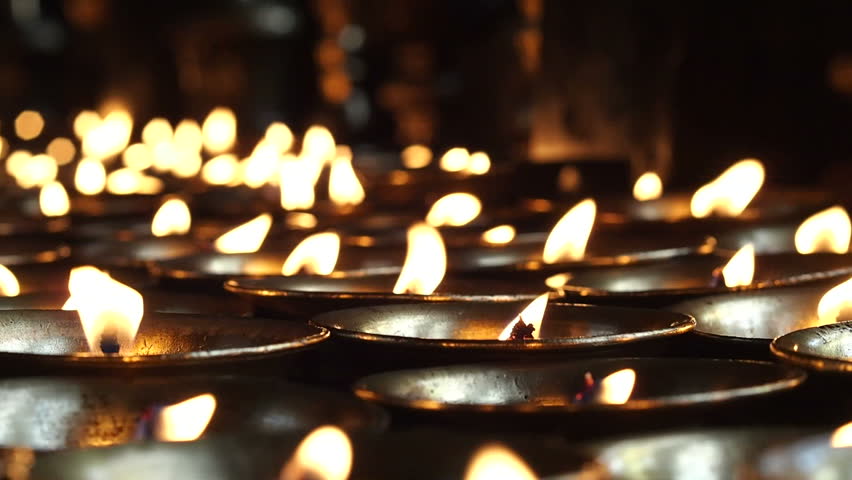
Candles burning in a Buddhist temple: photographer unknown

When that student asked me about World War III earlier today, I almost cried then and there. Later, we had a tornado drill and I envisioned my portable being picked up and carried by a giant tornado that would drop us on our side somewhere down the road.

21415005_10155714624670859_5024672988562878978_o

Teachr, Teach Peace – his Facebook is here

I watched a video by Robert Reich the other day in which he explained that stress, feelings of trauma, dread, despair, are all common-place in our current state of affairs. I think we can see evidence of that from before this president was elected in the opioid epidemic: we are the only country in the world who is dying in huge numbers of hopelessness, sadness, and desperation, however, I will say that those feelings may be experienced currently by more people than pre-election day 2016.

America, poor America! You sick culture of racism and of classism, and of feelings of not being good enough, smart enough, rich enough. As adults, we can try to dismiss those fears or at least cloud them with exercise, working in the garden, cooking, drinking wine,  and eating too much dessert. But our children: my question is, what can they do?

My students are in 7th grade. They were born in the year 2005, four years after 9/11, and after the beginning of what is now America’s longest war. They have never known their country in peace-time. During their lives, America has increased its prison population, and the awareness of the murder of African-Americans by police has become commonplace thanks to social media. Their media life is one of Sandy Hook, Virginia Tech, Paris bombings, Orlando and now Las Vegas shootings. Their governmental life was one of hope with President Obama, shot down by the election of Donald Trump, and colored by his rants about North Korea, Puerto Rico, Mexico, and Iran.

DLELERUW0AA7y9I

Unknown, brilliant Twitter cartoonist

Most of my students are immigrants or children of immigrants. Most of my children are economically classed as “poor”. Most of my children have parents who are working so hard just to give them what society demands is necessary: tiny mega-computers that broadcast this information-propaganda-fear into their pockets, into their living rooms, into their eyes, into their minds at night when they are alone. How frightening is this? How more frightening is it that we, the adults, are so scared that we do not know how to discuss it in a pro-active, assertive, and hopeful way?

rsz_almond-antique-botanical-illustration-from-flora-of-germany-circa-1903

Almond botanical drawing: in the language of flowers, Almond is for Promise

Hugs do a lot, but they do not do enough. As a teacher, as a step-parent to a 7th grade child, it is up to me to shield where I can, but be willing to talk when the questions come up, because the shield that my parents had for me no longer exists. The courage lies in looking into the dark and understanding that we know very little more than we did when we were 7th graders, and the courage comes from the very thing itself: courage to believe, courage to speak, courage to love, courage to hope.

I hope to write more here. I hope to hear from you. With love, P

14516549_332981537048063_1526785607969530251_n

Ali Cat Leeds from EntangledRoots.com