Rainy Monday

Today the students worked on puzzle cubes and, mysteriously, more capybaras appeared on the drawing wall. Students right now are really into capybaras.

My friend who is in the hospital is doing all right and finally getting some dots connected in terms of care. It seems to me that if you were to have to navigate the US health system on your own, you would just tear your hair out.

I was thinking about one of my favorite times with my friend, when she and our another old friend stayed at an aunt’s house in Port O Connor. The house was just beautiful; up on stilts, you were at eye level with palm trees. The wind whipped perfectly, and one night we made dinner in the kitchen, mushrooms with pasta I think, and we told stories and we heard my friend’s whole story for the first time. It is not my story to tell without permission, but it involves all kinds of things that should be written in a book.

That night we had a fire in the fireplace, and if I remember rightly, it was cold in POC, which sometimes it was. I miss going down there although the last time I was there was only last summer. We should have stayed longer, me and my two friends and the dog.

This morning just as I was waking up, I had a dream. I was outside on a lawn somewhere in England, and my cousins were all around on the grass. I was sitting and they were standing but I was child high and all their kids were moving around. I realized it was at a pub so I went inside and my Dad, young with dark hair, was sitting at a small table and he smiled at me. He asked me if I was all right, if everything was all right. I couldn’t talk to him: the words wouldn’t come out and were completely hushed as if their air had been compressed right out of them. He smiled and then he was outside the window with a rolling suitcase. He waved at me and walked out of the windowframe.

My Odes to Grief

“I used to be a great and powerful man”, my father said to me the third-to-last time I saw him, in October of 2021. I walked into his room and he looked so old: white as a sheet, with slightly pink skin, hair all akimbo, eyes wet with tears. He spent those last few weeks crying so much of the time.

I said, “you ARE a great and powerful man, and you know as well as I do that strength comes from here” (pointing to his heart) “and here” (pointing to his head). He apologized for crying and I said, “well you know me, I am the most emotional person in the world and I cry all the time“.

He would die about 6 weeks later, about one week after speaking to me oh-so-clearly on the phone from his hospital bed in Bar Harbor, Maine for the last time.

I have had a hard time writing lately. I am not sure if it is the pandemic, the death of Cody’s grandmother who lived with us, teaching during the pandemic, graduate school, the nonstop droning length of COVID19, or my father’s death. But now, I am faced with two immediacies. I am gripped by grief: it is holding on to me something fierce and fast. It will not let go. People keep telling me just to “let it all out” but I am afraid to let it all out lest it consumes me and renders me a puddle of tears on the floor.

Those people who know me or my father, Michael Blythe, know that we had a very difficult relationship. He was a difficult person; he was highly intelligent in all areas except for emotions and communication. He was afraid of emotions and so diluted them, and he was afraid of communicating his emotions so he covered them with anger and rage. Ask his friends, the breakfast crew, about how much they loved him while recognizing the fierceness inside.

At the same time that my dad died and I came to understand the grief of a child for her parent, specifically the grief of a daughter for her father, especially a daughter who is so like her father minus the rage and anger, one of my best friends, my sister, really, has taken a turn in her cancer journey and now is in the hospital, breathing with the aid of oxygen, and worrying us all very much.

Death comes a-knocking. We must welcome it as an old friend, as one of the only guarantees of this life, and yet, we don’t talk about it because it is so frightening and so utterly sad.

I was speaking to a friend last night about my feelings of grief. She said, “you aren’t writing”. I said, “I know. I am afraid”. She encouraged me to start again.

I feel I am of two minds. One of them is rational and logical and understands that everyone dies and that it is ok. That brain says: everything in life is fine, and it is just sad that you can’t talk to your father anymore. The other mind is a tiny animal with gnashed teeth and sharp claws whose heart is outside her body. I had an internal analogy at first that I was a reverse pincushion; instead of the pearly ends facing out to protect hands and fingers, my sharp ends were facing out to catch me, gouge me deep, and feel the horrific bottomless pain that is losing your father.

The night that he died I stayed up so late, drinking a whole bottle of wine by myself over the course of a long evening (this was when I thought that alcohol would help: turns out, it makes everything much worse). I spent the evening looking at photos of me and my dad, especially of photos when I was little. I looked at photo after photo and I began to ask myself: what did we even fight about? I could not answer the question; I still do not know. I think it was that I was a headstrong teenager, and he was going through a crisis after losing his job, and those two storms met head-on and became thunderclouds that brewed for twenty years. I am so blessed that we smoothed those clouds out the last three years, he attended my wedding to Cody, and we talked all the time. I am so thankful to Cody for showing me the importance of healing my relationship with my dad, because he had lost his many years before, and was, like me now, always wishing he could call him.

The night he died I cried and cried. I felt like I was drowning under a heavy wave of water that would not let me up. I felt I was on a cliff’s edge about to fall. I felt a huge weight, like a stone, on my heart. It pushed deeper and deeper down and in, like what I imagine a black hole does to matter: I was collapsing. I went to bed at 2:30 and my mom woke me up at 4 to go to the hospital. I went downstairs and sat on her couch and said, “pull yourself together, kid. You have to drive your mother to the hospital where her husband has just died”. I said, “I am driving you to the hospital”. She said no. I said, “yes, I am” and she handed me the keys. We arrived at 4:25 and he had passed just a few minutes earlier at 4:19.

In that room, he was so peaceful, laying slightly to his side. His face was pink, pinker than it had been anytime over the last few months. When he finally was medicated for pain, he received so much medication that the nurses told us he must have been suffering for a long time. This was no surprise: he was always a pain in the ass about admitting anything was wrong. The nurses had cracked the window to let his soul slip out into the air, up to the mountains, out to the sea. He was so peaceful. He never had been so in his life. I sat next to him and smiled. In my mind, I said, “Daddy? Where are you? Are you on a plane? A ship? Traveling somewhere first class on an adventure?” I suspected so, and still do.

Grief is grabbing hold of me and won’t let go, and one of the only ways I have ever found to discover what I really feel and am thinking about is through writing. I also know that writing about death is hard for others to read, but perhaps that can change. Another friend and I were talking today about our friend in the hospital, and she told me that she envisions me as someone who writes and gardens, gardens and writes. In other words, she was the second angel to appear with the same message: write, Patience, write.

As I walk through the stages of grieving my father, experiencing an immense, tangible, and tragic shift in the public schools in which I have worked for 16 years, and support my friend who is also, perhaps, transitioning away from this reality into another one, I will write it all down. I hope you will join me.

Thanks for your patience.

My Beach

It’s been a place that, for years, has been the consistent feature, albeit one that is, of course, always changing.

It is the beach; a very specific beach that curves along a small cove. It is made of tiny rocks that are weathered and worn from much larger ones that make up the island and the mainland across the bay. Across the water you can see Lamoine, a small town in Downeast Maine. My beach, as I have called it for years, is thin and is framed by rocks and trees and two small houses: one yellow and one gray. For years, I have walked up and down it, collecting sea glass, throwing skipping stones, and thinking. It is the place that I wish my ashes to be scattered, as it is the place I come back to, over and over, as life changes and keeps moving forward.

My dad is very sick all of a sudden, after a lifetime of being sick. Sick with post-traumatic stress from Vietnam, sick from alcohol addiction, sick from Texas oil man capitalism, sick from diabetes, sick, now, from lung cancer. About a month ago they diagnosed him with “shadows on the lung”, but due the remoteness of where my family lives and the spectre of COVID-19 which, seemingly, will never leave, he has not been able to receive a biopsy or diagnosis yet. This Friday they make the first steps to diagnosing him with something, while, every day, he becomes weaker and says things that don’t quite fit. Sometimes the things he says are thankful and hopeful and reflective, which is excellent. Sometimes they just don’t fit.

Two years ago at this time, we were taking care of Cody’s grandma, Marie, who passed away December 21. It is strange, the timing of it all. I know that it is just a coincidence, but muddling through the memories of it all is intensifying the emotions I think.

My dad and I have never had a good relationship. There are lots of reasons for this, but none of us can prove the past.

Now, I feel that we lost an opportunity, or that we both wasted so much time. I think about how he left his family, leaving England sometime in the 1960s to disappear only to be found in 1984 by a chance encounter. At least we didn’t do that with each other. I wonder if he will ever tell my brother and I what happened. I feel that we have little time to wait and see.

Since I decided to go up to Maine, at my brother’s suggestion, all I can think about is my beach. What will it look like? Will the rocks have changed in the interim three years? It has been that long.

Meredith Drew, 10 Years Later

My friend Meredith died in 2011. It has been ten years since she graced me with her words, her observations, and her sense of humor. I was cleaning up my inbox today and found this email. I almost wrote her an email back, even though I know that she won’t be able to read it. Or maybe she can? I often think she is around, on the edges of my life, watching, smiling, and occasionally laughing. It is her laugh that I hear on the wind, and in the still darkness of starry nights.

[names have been changed]

My best thoughts are Sunday morning when i first wake
up. Short sentence insights given to me from myself.

This morning:
If it hadn’t been for Patience ….

You were the one who saved him. I brought him to you
and you said, and then, no matter what anyone else
said, I held to what you said.
You were right about the school. When Alan destroyed
that, he showed his willingness to destroy his only
son.
I know you wondered why I stayed. I was waiting. I can
see it now, his pushing me to stand up so that he
could smash me. “Sebastian is not really mine because I
have to share him with you.”
Only one strike then. One chance, and my aim had to be
dead on.
So. Based on what you said, and only on what you said,
I made a move. (literally) Defying the court, the
experts and all of those carefully orchestrated lies.
YOu saved my son that day, you know. You’d meant to
spend the day with your husband and your new house.
I doubt you remember where you stood, where I stood
when I said, “Tell me Patience about Sebastian,” and you
answered. Sam was in the background keeping Sebastian’s
attention on other than us.
It’s like a photograph in my head, all bent up and
worn now from my taking it out and looking at it so
many times, just to check, “No, no. That’s not what
Patience said. Don’t listen to them.”
I was just a mom, and you were just a first year
teacher, emergencied in no less with your funny degree
and a quick summer course. There were no letters after
our names.
Valentina, the Russian seer and healer told me, “You
have great power. It is in your love for your
children. Stay in that place.”
The photograph in my head is of just that. The 4 of us
feeling powerless. Loving powerfully, not knowing the
importance of that moment, what would come of it.
You called yesterday, to check, worried that you are
not doing enough for Sebastian, worried as you are that
you are not doing enough for your own students, I
think.
I have a picture in my head, of your not doing much of
anything, just standing there, saying a few words. It
was all that you could do, of course. To you it must
have seemed like so little, hardly a “kodak moment.”

The picture shows You, however, standing in that place
of love, speaking so powerfully that in that moment
Sebastian’s life was changed.
The power did not come from your doing. It came from
your being.
You said you told your students in the bathroom that
it was because you love them.
Well, yes and no. Yes, because you love them, you have
power beyond human comprehension. No, because that is
not why you were crying. YOu were crying because you’d
momentarily and inadvertently fallen from that place
into fear.
Anyway, I have this crumpled worn picture that I
wanted to show you of you being You in that space of
love and power. Amazing, how the more I look at it,
the more clearly the Grace comes into focus.
Your Grace.
Amazing
Trust that.
Like I said. Do not be afraid. Just believe.
In you.
I have a picture of my doing just that. In the middle
of a breakdown myself, desperate, loading Sebastian and
myself in the car driving to Austin, unable to explain
to myself why it seemed so very important. Amazing,
the Grace of my knowing to turn to you.
Your words and a picture of your saying them burned
into my brain. You were that quietly powerful.

I have been listening to Oprah’s Super Soul Conversations lately. My two recent favorites are: Cicely Tyson and Grace and Gratitude.

A Fitful, Furtive Poem

So much sleep.

Sleep like puppies sleep; fitful, furtive, with frowns.

Strange noises come and tiny movements are constant.

Picking at clothes, slurred speech, the tiny rivulets of her hands formed by 88 years of experience.

When I look at her hands, I am reminded of another grandma’s hands: so deeply carved in sinew, bone and vein.

Drawn across the skeleton, skin so thin like an onion’s wrapper.

Tonight she wouldn’t respond to me, and I had to roll her little body over and do my checks, all the while letting her sleep.

No more medicine, no more doctors, no food for two days, hardly any water.

Today I spoke to her husband’s photo and told him it is time for him to come get her.

Taking Care of a Dying Person

I remember when I first met MawMaw, she told me to keep Cody on the straight and narrow. To be honest, she kind of scared me: this tiny, old person with a perm was clearly no woman to challenge. Over the years, though, I learned that tough exterior covered an extremely sweet person who felt herself to be much worse than ever could be a reality. She has given me and Cody so much, and so, when the time was right, we moved her in to our tiny, old house, and here she remains, in the slow and strange process of leaving the planet.

Last week was hard; it started with conversations with her dead sister Tootsie about Steve (her also dead husband) going out to the chicken coop in Bossier City only to discover a snake, would you imagine? We advanced to an admission of being afraid and a night of nightmares and everyone being awake trying to coax MawMaw back to our reality from one of her own. She sleeps with a little boy but doesn’t know who he is because she has never seen him. But, the last two days have been clear and almost normal. Her “symptoms” if you can call them that follow the pattern written out in the hospice folder. Perhaps we are within days, or weeks, perhaps not. No one seems to know anything specific about this mystery we call dying.

Taking care of a dying woman who cannot walk and who is bedridden while teaching 8th graders and trying to complete my first semester of grad school is very hard, and everything is suffering. I try to not take it all so personally: I feel defeated and grumpy all the time. I feel overwhelmed and sad and worried and anxious; I have a short temper with my students. I hope that will change, for their sake and mine. It is not their fault, after all, that they are teenagers.

She tells me funny stories sometimes, and sometimes I do nice things like give her a facial with lovely oils to soothe her “onion-skin” as her nurse calls it; paper-thin, almost translucent, and apt to dry out and tear if we aren’t careful. She still has her sense of humor and she winks at me when she is being wicked. I appreciate that very much. When she gets upset I ask her to tell me things about her children when they were little and about Bill (her husband) and when they got married, and how he built their house for $6000. Many times now, she doesn’t remember the details.

I have been watching her sleep and she reminds me of a puppy right now: moving, twitching, frowning and smiling as she remembers…something. I feel she is reckoning with her life at the moment, when both awake and asleep. She said the other day she wished she had been a better mother.

This process is slow, and it is also fast. Sometimes it feels like longer than 4 months, and then I realize how short 4 months actually is. So much has changed for us; our marriage is better for this experience as we actually have learned both to communicate and to take care of/appreciate the other one. We say “thank you” more and give each other breaks when things are hard: walk away even, or just kiss one another or hold each other’s hand rather than trying to prove something. These are good things.

As I type this, the north wind is blowing around the house, as it likes to do on some winter nights. I wonder how much longer she is with us, and if the wind will take her away one evening. I know the wind is a woman, and she a harbinger of change, especially in winter. We all talked about death the other day; we are all on the same page. We will be all right when it happens. Like she says, she has to get to heaven to be with her mama again, and her sisters, her brother, and her husband.

Such a mystery this life.

Do not stand at my grave and weep,
I am not there, I do not sleep.
I am in a thousand winds that blow,
I am the softly falling snow.
I am the gentle showers of rain,
I am the fields of ripening grain.
I am in the morning hush,
I am in the graceful rush
Of beautiful birds in circling flight,
I am the starshine of the night.
I am in the flowers that bloom,
I am in a quiet room.
I am in the birds that sing,
I am in each lovely thing.
Do not stand at my grave and cry,
I am not there. I do not die.

– Mary Elizabeth Frye

The Year of Magical Thinking

I just started reading this book, by Joan Didion. She physically (and, as I read, emotionally/spiritually/whatever) reminds me of my friend Meredith, who I lost almost nine years ago. I was inspired to write to her, as I do often talk to her, in the garden, on the patio, gazing up at the stars and the clouds of Milky Way on dark, dark nights. Please bear with me as I write to her here, and no doubt jettison us off somewhere.

I was thinking about you just now, as I was reading the second chapter of “The Year of Magical Thinking”; have you read it? When I think of you, and of Joan Didion, I think of women very physically similar: tiny, thin like birds, blonde hair, great style, strong wit, indefatigable intelligence. But you were you and she is Joan Didion: after all, there is a Netflix biography on her, when, sadly, there is not one on Meredith Farmer. If I were to see Joan Didion at the supermarket, if I didn’t already know who she was, I would see someone like you: a middle-aged lady with simple elegance, beautifully-colored hair, probably looking with disdain at something in produce, ever in judgement of all the “normal” things.

You’ve been gone almost nine years, and life has ebbed and flowed and changed, moved around, wiggled, metamorphosized a wee bit (as my grandma would have said: she now gone 15 years, and that, another story). Ultimately, though, life is still the same: I am just more skilled at handling its curve balls due to experience and therapy and probably, my friendship with you.

There was a night about  6 years ago when I chatted with you off my front porch in Northeast Harbor, Maine, when I lived in the Dollhouse (or the Fishbowl, depending on who you asked) : the tiny house on the town parking lot in which my comings and goings were very public knowledge and everything in the house was so small. My closet was a pole that hung at the end of the bed, and the shower felt like I was hosing myself off on a dock somewhere with hot water. But, it was $650 a month and the landlords were dolls and I walked to work and to get breakfast sandwiches at Ben’s, and I had a wonderful, small garden of unruly morning glories that threatened to take over the house! I had many memorable conversations on that porch, on the picnic table that I stole from someone’s trash and Dan Bondo‘d so that it would survive, and I painted Seal Harbor Green after JRa and I put in the new path up to the front door, made from stone dust that we bought mostly drunk one day from the quarry in Trenton. That was where you and I talked, formally, the last time. Informally in between, many times. I don’t know what we talked about, but I am sure that I asked you questions and you laughed at me, in a loving way.

I remember, at your funeral, there was a slideshow of pictures of you. My favorite was a photo of you in college, cigarette in your right hand and an ERA button on your left lapel. Your hair was strawberry blonde and you looked so damned engaged. I feel, I wonder, do we lose those feelings as we get older? Do we blame husbands/partners/kids and is that bullshit? Is it just projecting like everything else: an excuse to disengage, to check out? What do you think?

I see you smiling. I feel like you are at the pool right now, but perhaps that’s just because I read a chapter in which Joan Didion describes her newly dead husband as having a daily routine of reading in the pool (reading “Sophie’s Choice“, no less) while she gardened, and of course that made me think of my small 8 foot cattle waterer pool that I bought after doing some work for the old lady next door and now I share with Cody almost every day, sometimes several times a day, despite his almost constant chagrin with me about how I let the leaves and flowers and bugs in, and he doesn’t.

Such is married life, to someone I am actually married to, rather than the first one, that you bore witness to, or to your 2nd, as I bore witness to. Marriages, men, children, time: rental houses and the houses we “own”. All the stuff within those houses, the boxes, the moving, the priority of sorting out the kitchen, the living room, the bedrooms. The conversations about Mama and Daddy and who built Mansfield Dam, what the role of all the boyfriends and husbands actually were. I look at your Carnival Glass dish, blue with a sheen of multi-color on it, as if it is coated with oil, all the time: I think of you wryly smiling at me, or of that day we went fishing on the dock of my neighbor’s house on the Croton River, when Steve and I lived with Brien and you came to visit and told me I was a witch because my garden grew so well!

I think, in the end, that the boyfriends and husbands are not as important as the memories of people as unique entities in and of themselves. I remember you as such: and think of you this way often. I find it funny, sweet, sad and ultimately, joyful, that you still are such a part of me: that we still talk. I wish you could see where I am now, as it is a very nice place (and the pool is pretty nice, too) and you would like Cody a lot. You would laugh at both of us, in a loving way.

Rest in peace: I miss you. Love, Patience

Viva La Vida

Frida Kahlo and Pet Hawk

I have been in radio silence now for quite a while; there are various reason for this, but mostly life just keeps getting in the way of delivering my musings to you here. I have a slew of stories to tell about sailing the Caribbean in Panama, as well as reflections on the ending of my second winter in Maine, as well as new developments in the art-sphere, namely a new studio in a magical place that has been a stomping ground of mine since I was a little girl.

But, for today, for all we have is today….some musings and ideas from two of my favorite artists, that will propel us all forth this second week in April, in the year 2014, my thirtieth year of spending time on this small island that I know call home.

fridabrush.19

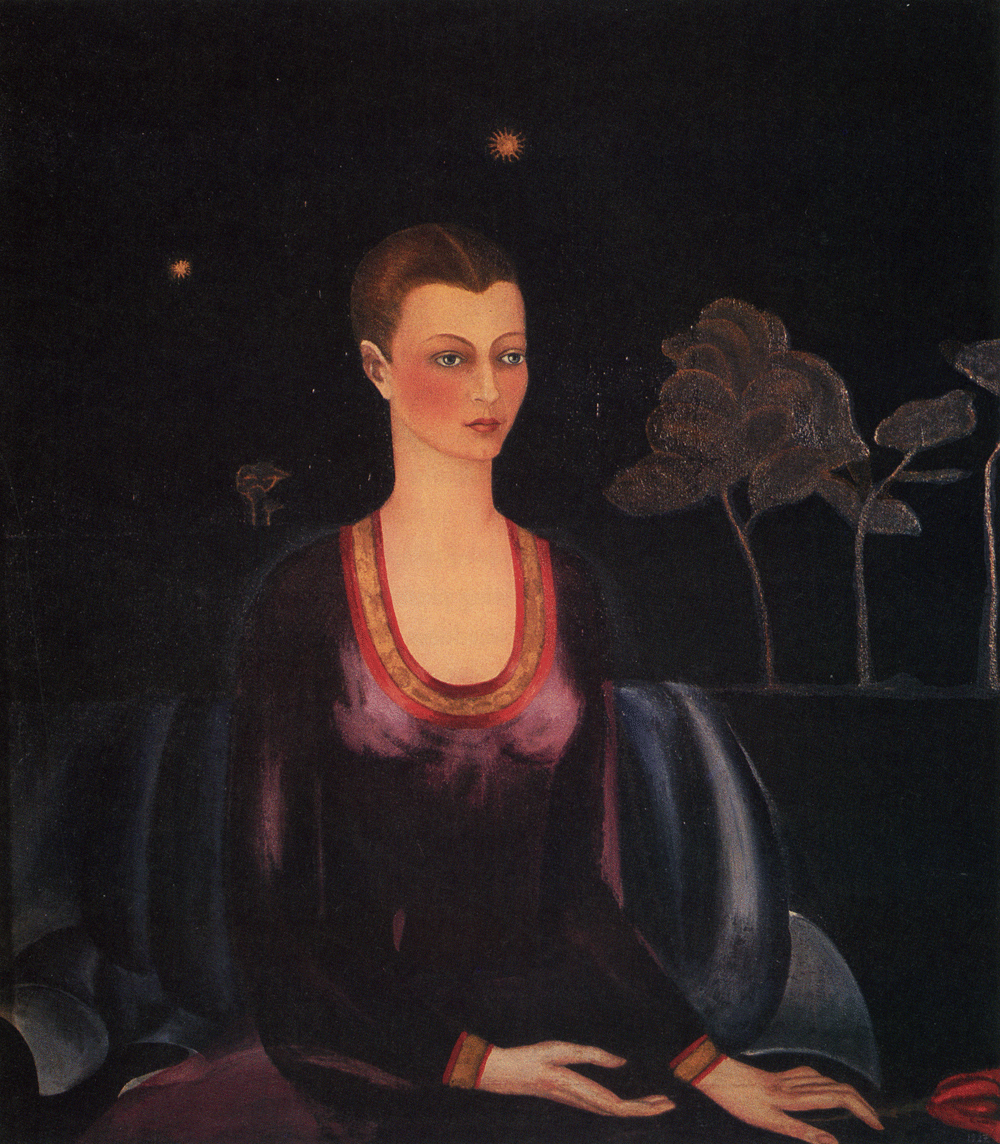
The Portrait of Alicia Galant (1927) was the first painting of Frida Kahlo’s that made me pause. I was a very young girl of maybe 10 when my best friend’s mom dragged she and I to the Houston Museum of Fine Arts to see the exhibit of a painter who, before that moment, was unknown to me. I remember spending many minutes gazing at this painting because it felt, to me, as if it was alive and glimmering: velvety and viscous, dark and deep set in the night.

tengo alas

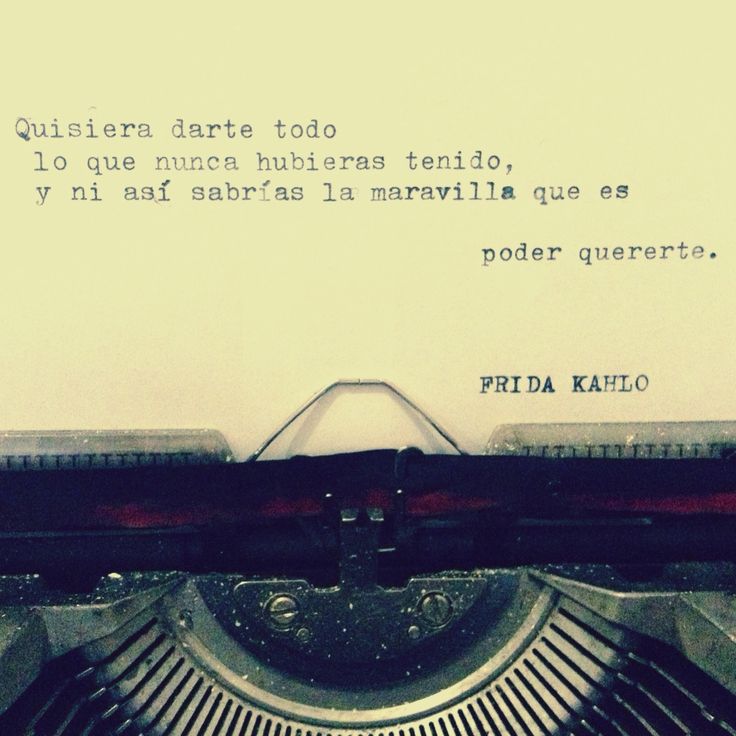
“Feet, for what do I need you, for I have wings to fly?” has been a motto of mine, especially during the metamorphosis of the last two years. I find that holding on to dreams, and trusting that when you  leap, you will land somewhere far better than where you started, and of course, just keeping going, one foot in front of the other, is what will propel you forward to a happier life that is full of intentional actions versus reactions to simple circumstance.

Today, I read this quote from another of my inspirations, Anais Nin, and thought to include it here as a musing on the doubtful part of the creative life: those dark corners of the psyche or even your apartment, when the doubts or fears or seeming impossibilities of what you are doing seem overwhelming. It seems to me that anyone embarking on the creative path will discover these dark corners of themselves; the trick, I think, is to channel those into more making, more artwork, more writing, more pause to understand the temporary nature of each passing moment, so that the creativity can continue, rather than be stifled by the “shoulds” and “should nots” of our cultural world.

“You must not fear, hold back, count or be a miser with your thoughts and feelings. It is also true that creation comes from an overflow, so you have to learn to intake, to imbibe, to nourish yourself and not be afraid of fullness. The fullness is like a tidal wave which then carries you, sweeps you into experience and into writing. Permit yourself to flow and overflow, allow for the rise in temperature, all the expansions and intensifications. Something is always born of excess: great art was born of great terrors, great loneliness, great inhibitions, instabilities, and it always balances them. If it seems to you that I move in a world of certitudes, you, par contre, must benefit from the great privilege of youth, which is that you move in a world of mysteries. But both must be ruled by faith.”

Lastly this morning, as I wrap up this scattershot of musings on a Wednesday, gazing outside the window at an early spring day, daydreaming of this afternoon’s visit to the new studio, and thinking about planting pear and black walnut trees on a 5 acre swathe of land on the Breakneck Road, my feelings keep coming back to the idea, that without the sense of love for yourself and others, that no dreams or beauty or art or peace or sense of tranquility is truly possible. May we all be lucky enough to have people that encourage us to find this feeling each day, in those temporary, fleeting moments. They are, after all, what ties us to our earth-bound experiences, and to each other.

frida quote


Taking a Tumble or Two…

dice

It was on a dark Sunday night: winter, February, in Maine. We skidded on black ice, shot to the left, then to the right, hitting a guardrail head on. We launched into the air, spinning and flipping, skidded along the guardrail, landing on the driver’s side, stopping, hanging half off and half on the road. I remember a moment of silence, and then the sight of the windshield shattering into a thousand pieces, and landing, quiet, and we stopped.

I remember asking my friend if he was ok and he asking our other friend if she was ok. Our driver, our fourth friend, stayed quiet for a minute and we worried, but then she too spoke to us. Somehow that first friend opened a car door, pushing himself upward. He unhooked our second friend from her seatbelt, she fell, and he helped her climb out. Our fourth friend climbed out, too, and then I stood up from my crumpled position, fell once, and clambered out onto the road. We all looked back at the truck, on its side, hanging, and all said something to the effect of: “Look at the truck!”

Standing there in the cold we were accompanied by two strangers who had stopped to help us. They called 911 as we stood, dumbstruck. A policeman and an ambulance arrived, and both skidded to a stop in the ice. We were asked if we were all okay, and we said,”yes.” “How are you all okay?” asked the EMTs, random strangers, our kind policeman, the firemen. One of them said to my friend who had been driving, “Here you’ve been having a go of it.” She nodded.

My friend and I who had been sitting in the backseat were not wearing our seatbelts, and were surrounded by the tools of a long-standing landscaping and stone business: wrenches, saws, a chainsaw sharpener. None of them had flown and hit us, and even the careening of the truck had not shaken us too badly. Somehow we made it out onto highway 198 with not even a scratch, despite the glass that we kept shaking out of our clothes.

I have had a bit of a go of it in terms of driving in winter this year: this was my second accident in two weeks, both due to icy roads. I now consider my first wreck a fender bender, and not serious at all, despite my hitting two trees at low speed. This crash, this tumble, was a big one.

For the last two or three days, we have been talking about it a lot together. It seems as if we were given a new lease on life, or at least an illustration of how it can all be taken away so fast. The accident took, probably, less than ten seconds to happen.

As an ex-science teacher and avid lifelong lover of anything science-related, I can explain a couple of things that happened in terms of survival and physics. I believe that the spinning action of the truck kept enough centrifugal force (the spinning force that keeps our planets in orbit, and our bodies in place on that crazy carnival ride with no floor or ceiling) to glue myself and my backseat companion almost still, and also held the tools that could have hurt us against the walls of the truck. This “sticky” force was probably what kept us from hurtling all over the inside of the truck and becoming seriously injured. The moment of silence is explained by our fight-or-flight survival response that causes us, in times of serious threat, to feel as if time slows down or stops. This is because our brain is seeking any and all possible escape route and our awareness is heightened to recognize a way to survive. There is a wonderful Radiolab episode on falling that explains this much better than I can here. I believe we were all silent at that time because we were attempting to process what was happening, not knowing the outcome, and preparing ourselves for all those potential results.

This huge, intimidating, frightening, and death-defying tumble was the scariest experience of my life, and I think my friends would agree with that. It is hard to imagine a large truck like the Tundra being launched into the air, spinning and flipping, by something as simple as a patch of ice, but that is what happened.

When events like this happen to us, traumatic ones, they often cause us to re-evaluate our lives at the moment and what we are doing with life at any given time. For myself, this accident made me think about things that I have put off, problems I am ignoring, goals that I am not 100% engaged with. I have, unfortunately or fortunately, had quite a few traumatic events over the past couple of years. I have had my house broken into, wrecked my car, and then a horrific accident with three of my closest friends here. We are neighbors and friends in a very small town: we have been, for a time, each other’s close social group due to living in this very tiny and quiet place. This drive was our last drive back to the Northeasy, our neighborhood, because three of the four are moving out in the next few days. When we left the party, it felt warm and as if everything was melting in the short thaw of a few days previous. Never did we think that it was cold enough to freeze all the water on the road, but, it was.

I have spent three days wondering what this accident means to me, what the other accident also meant, and then remembering my home invasion. I find that all three events make me very tired when I think of them too much, and that they make me feel confused as far as what they “mean” in terms of my life. I know that the events themselves mean nothing in and of themselves, but the effect on my life has been profound. When my house was broken into, almost two years ago, I decided to sell most of my possessions, my houseful of furniture and accoutrements, and move to Maine. The last two are too recent to really understand what the effects will be, but all I can say, as I have discovered during times of duress before, that the only thing that crossed my mind was how much I care for the people in my life, and that love is the strongest human emotion. Everyone that helped us was so kind, and so delicate with us on that roadside. There was nothing but smiles and care and quiet jokes. I remember thinking, in Philadelphia after the break-in, how thankful I was for my friends and coworkers at that time, who simply came over and helped and brought pizza and tried to be understanding and giving my roommate and I time to mull it all over. She chose to sell everything and go to South America, where she is still is, somewhere, living an amazing and colorful and educated life. I chose to move to my childhood summer home, went through some hardships, and now, also live an amazing and colorful and educated life. Clearly, the benefits of the break-in greatly outweighed the costs.

I am choosing to try to look at trauma as an opportunity to live the attempts at a realized life that I have been cultivating since moving here. Trauma is physically and mentally painful to us all, and can take quite a while to process, digest, and release. But holding on to it like a crutch is the wrong way to deal with it, and I know I have been guilty of that in the past. The reality, to me, is that I am quite a sensitive person who is highly emotive. I can choose to let things affect me personally quite deeply, but am beginning to discover that if you make it out in one piece, with just a few bruises for the experience, trauma is like a window into the universe, and it can help you hone your thoughts, sharpen the blade of your approach to living in a highly beneficial way.

I wonder, oh readers, whether any of you have had experiences like this one and how those experiences changed you? Did a “new lease on life” inspire you to greatness? How did you manage the upheaval of it all?

If we choose to see them this way, do all of our tumbles manifest great and good changes in our lives, or do we just recognize them as moments passing in time?

tumbling jack

Meredith Drew, Three Years Later

dans garden end of august 2013 024I met Meredith eleven years ago, when she lived in a renovated Arts and Crafts era bungalow in The Heights, a splendid Houston neighborhood. The house had a front porch, and a very small boy inside. The small boy played with everything, but had a true passion for living things, especially insects. In that house, the small boy hatched an egg of hundreds of Praying Mantises, who, of course, escaped their cage and exploded all over the walls, the bed, the floor, the jambs of doors: all surfaces of that small room were covered in tiny mantids.

My memories of that house were of how much I loved its dark wood, the kitchen with its funky tiles, and the artwork that was everywhere. There was an old leather sofa, paintings, drawings, an African mask, a sword or two, books, papers: everything that was in that house reflected the complicated personalities within it. Meredith and her son lived there with her husband, the man behind its renovation and its steady march to monotony. The colors disappeared, the landscaping was typical, and there was only one tiny blotch of color to distinguish the way the house was when they first arrived.

Meredith was my soon-to-be husband’s best friend’s mother. Meredith was disorganized, irreverent, opinionated, sarcastic, and she cursed a blue streak most of the time. She also had a fierce glint in her eye, and when she thought something was particularly funny or insightful, the glint combined with an upturned motion of her jaw, and she would nod as if what she believed was common sense to all, and hilarious.

I cannot count the number of times I cleaned Meredith’s kitchen, or tried to get her papers in order: she was inherently a creature of disorder, of mess, of clutter. Meredith had lived many lives before I met her; she had been married, divorced, raise two sons on her own, was an accountant for a huge accounting firm that later lost their influence during the Enron scandal, was remarried, and had a very young son who was about fifteen years younger than her eldest. Meredith loved history and families, she had a huge respect for her father, had a great Texas accent, knew many stories of the way life was when she was growing up outside of Austin, kept lists of good books with descriptions of why they were great, had amazing collections of everything you could want to peruse on a slow weekend day, and she had an open-ear policy for listening.

Last Sunday, I went with a friend to a friend’s mother’s funeral, and many people whose life she had impacted spoke up. There were stories about skiing and vacations and puzzles and dinners, but the common theme was that this woman had taken in all the lost children she had encountered along her path. Meredith was similar, and our friendship was a back-and-forth of giving and taking of what we knew the other one needed to know.

dans garden end of august 2013 031At the beginning, I saw Meredith as a tough as nails woman who had almost literally fought her way through life and was left standing. As the years went by, though, I began to realize that her tough exterior was a mask covering a very sensitive and uncertain soul. Sometimes I feel like one of the reasons that I am on the Earth is to be a friend to those people who are locked within themselves, and to bring them out. Just as old houses sit for years, asleep, before the right family moves in and fixes the porch and plants some flowers, many people sit, alone and closed off from those around them, even if their surface exterior would show you different.

Over the years of our friendship, Meredith helped me and mine a lot. She helped pay for and plan my wedding. She gave us gold to melt down for our wedding rings, and made sure the baseboards of our house were vacuumed before the wedding, much to the consternation of my mother and my soon-to-be husband’s mother, who wanted to stake their own claim as dominant women of the day. When we moved to New York somewhat on a whim in the early spring of 2005, she helped us pay our rent to our roommate, her son. When she visited, she laughed at the huge vegetable garden and how invested both my husband and her son were in it, a project they did not want to participate in during its inception, when I spent hours tilling the soil at the top of a giant hill in Croton on Hudson, New York. When we returned to Texas, she and her husband and their young son were living in a new, larger house, now in San Antonio, and I spent many hours drinking wine out of tiny wine bottles, the ones that come in four packs at the grocery store, sitting on the edge of their pool, under a canopy of wisteria vines.

dans garden end of august 2013 032Time passed, and my marriage fell apart due to many things, mostly a lack of an ability to talk to one another. We went separate directions but stayed in the same physical space, I think hoping that with time, we would find our way back, but we never did. In the early fall of 2009, we were divorced, our house had been sold, as had most of our furniture. I left the house I loved so well, with its native plant garden in the front, and huge vegetable garden with chicken coop in the back. At that time, I thought that Meredith belonged to my ex-husband’s friends, and although we emailed sporadically, we lost touch.

Later in 2010, sometime around May, my friend Angel told me the news that Meredith was very sick and had cancer and was living alone with her young son in an apartment in South Austin. With phone number in hand, I called her up and went to see her.

When I first saw Meredith, after all that time, almost two years at that point, I was shocked and afraid. She couldn’t use one arm and was very thin, and her house, of course, was a mess. Her young son was struggling in school and was barely leaving his room, and when he did, he would go on long walks in the woods wearing all black clothing, long sleeves even in summer. She had no doctor, no insurance, and no path to healing. She was stuck.

The first words she said to me were: “it is so good to see you.” And it was.

Luckily for me, it was almost the beginning of summer, and I was able to spend every day with her, sometimes for a few minutes, and sometimes for hours. Somehow I managed to find some care for her: an oncologist sometimes, a visit to the emergency room other times, a spiritual healer at others. I tried to clean the apartment, clean the kitchen, get her to eat a little bit. Sometimes, her eldest son and I would fight, like we always do, about what should happen. She became more and more ill as time went past, the cancer spread from her throat to her lungs and her stomach, to her esophagus and eventually to her brain.

During that time, I saw many scary things happen to Meredith and to her family as a result of being a 52 year old woman with cancer and no insurance. I discovered that there are no programs for truly poor women of non-childbearing age. Once, during a crisis, I took her to the ER for a blood transfusion, because her form of cancer seemed to leave her bloodless from time to time, and when we were about to be released, I asked a nurse what on Earth I was supposed to do with her. She said, “move to France?”.

Meredith wanted test after test, scanning for any information she could glean that would make her feel better. She laughed about many things, she fought with her family and friends. She grew angry quickly, because she was so tired. She didn’t want her sons to know how ill she really was, and how she was really feeling. One day, I asked her if she wanted to go to the emergency room, and she said no. I asked her if I called her nurse and the nurse said it was a good idea, would she go and she said yes. A minute later, when her middle son arrived, she changed her mind and said she was fine, so that he wouldn’t know how awful she felt. We took her anyway, into the hospital, where he became paralyzed in speech, and I had to tell the doctors and nurses what they already knew, which was that she was dying of cancer very, very quickly.

My memories of that time are hazy due to the intervening years and the intensity of the experience. I cared for Meredith to the best of my ability, and I know that I failed a thousand times where maybe someone else would have succeeded, but I also know that I tried my very best and so did her middle son who moved to Austin midway through the summer to live with her and her youngest son. He and I started sneaking marijuana into her food since she couldn’t smoke anything and would lie about it because she would actually eat when her avocados were spiked. He was quiet, stoic, calm, like a rock during those times. I will never forget his solitude, his way of clearly experiencing grief in his own, very individual way.

Close to the end, Meredith and I had a phone conversation in which she said she was trying to figure out how to “pierce the veil”. When I asked her what she meant, she said that she was trying to figure out how to send us signs so that when she died, if she needed to get in touch, we’d know it was her. She also requested that we get her stuffed, taxidermy style, so that she could still come to Christmas. The closer we got to the end, the clearer were her meditations on the meanings of life, and her most vivid, most intense belief was most certainly that the the individuality of the soul of a person was the most beautiful, mystical, and wonderful aspect of life on Earth. Over time, her conversations about where we came from, in the universal belt of souls, or somewhere in space, or astrology, wherever it is, became clearer and clearer to a point when I knew she wasn’t afraid to die, but she really wanted the people in her life to know how much she cherished them.

When she was moved into the hospital, during the last week of her life, she retained her wit and her spunk and her vigor and her downright mean streak. She asked us to rearrange her room so that she could look at pretty things and nothing that was informational or had to do with being sick. During those last few days, thanks to morphine and the loss of her functions due to the cancer expanding in her brain cells, she began to travel through time and across the world on a seemingly magic invisible carpet. Sometimes she was in Asia, Africa, Australia, America during the revolution, in the air, on the water, on the land. Over and over again, though, she repeated how much she loved her boys. Three of them, each so different and yet connected to the Earth by Meredith, sat beside her and listened to her ramblings, her stories, as she slipped away from us, beyond the veil about which she had spoken earlier.

When she died, I was teaching in my classroom, and was lucky enough to leave and sit with her middle son, his girlfriend, and Meredith’s sister, with whom I had become quite close. Later, only Margaret and I remained in that tiny room with what remained of Meredith: her body, not her at all.

Once, a friend of mine told me that Meredith was scary, in a way. Meredith never was on the Earth, in a grounded sense. Meredith was of the Earth, a powerful, difficult, and dynamic lady who struggled, perhaps more so than most people, but who made her way through with stories to tell and curios to share. Meredith was straight up and had no filters; Meredith made mistakes, sometimes huge and sometimes small. I say this because, in her final moments, her feelings of love were all that were coming out of her, and that shows me that she really was a creature of love, after all.

Three years and two days ago, I lost my friend Meredith Drew to cancer. During her memorial service, I saw photo after photo of my beautiful friend, and learned many things about her life that, sadly, I never had the time to ask her about. So life goes; it moves so fast, and just sweeps us along with it. I was just sitting on my porch, staring at the stars, wondering what now, and I had to laugh, because I realized that if I called her to ask her that, she would just laugh at me and I would be able to see that glint in her eye clear as a bell through the telephone. So, I see it in the stars instead.

dans garden end of august 2013 037