Meredith Drew, Three Years Later

dans garden end of august 2013 024I met Meredith eleven years ago, when she lived in a renovated Arts and Crafts era bungalow in The Heights, a splendid Houston neighborhood. The house had a front porch, and a very small boy inside. The small boy played with everything, but had a true passion for living things, especially insects. In that house, the small boy hatched an egg of hundreds of Praying Mantises, who, of course, escaped their cage and exploded all over the walls, the bed, the floor, the jambs of doors: all surfaces of that small room were covered in tiny mantids.

My memories of that house were of how much I loved its dark wood, the kitchen with its funky tiles, and the artwork that was everywhere. There was an old leather sofa, paintings, drawings, an African mask, a sword or two, books, papers: everything that was in that house reflected the complicated personalities within it. Meredith and her son lived there with her husband, the man behind its renovation and its steady march to monotony. The colors disappeared, the landscaping was typical, and there was only one tiny blotch of color to distinguish the way the house was when they first arrived.

Meredith was my soon-to-be husband’s best friend’s mother. Meredith was disorganized, irreverent, opinionated, sarcastic, and she cursed a blue streak most of the time. She also had a fierce glint in her eye, and when she thought something was particularly funny or insightful, the glint combined with an upturned motion of her jaw, and she would nod as if what she believed was common sense to all, and hilarious.

I cannot count the number of times I cleaned Meredith’s kitchen, or tried to get her papers in order: she was inherently a creature of disorder, of mess, of clutter. Meredith had lived many lives before I met her; she had been married, divorced, raise two sons on her own, was an accountant for a huge accounting firm that later lost their influence during the Enron scandal, was remarried, and had a very young son who was about fifteen years younger than her eldest. Meredith loved history and families, she had a huge respect for her father, had a great Texas accent, knew many stories of the way life was when she was growing up outside of Austin, kept lists of good books with descriptions of why they were great, had amazing collections of everything you could want to peruse on a slow weekend day, and she had an open-ear policy for listening.

Last Sunday, I went with a friend to a friend’s mother’s funeral, and many people whose life she had impacted spoke up. There were stories about skiing and vacations and puzzles and dinners, but the common theme was that this woman had taken in all the lost children she had encountered along her path. Meredith was similar, and our friendship was a back-and-forth of giving and taking of what we knew the other one needed to know.

dans garden end of august 2013 031At the beginning, I saw Meredith as a tough as nails woman who had almost literally fought her way through life and was left standing. As the years went by, though, I began to realize that her tough exterior was a mask covering a very sensitive and uncertain soul. Sometimes I feel like one of the reasons that I am on the Earth is to be a friend to those people who are locked within themselves, and to bring them out. Just as old houses sit for years, asleep, before the right family moves in and fixes the porch and plants some flowers, many people sit, alone and closed off from those around them, even if their surface exterior would show you different.

Over the years of our friendship, Meredith helped me and mine a lot. She helped pay for and plan my wedding. She gave us gold to melt down for our wedding rings, and made sure the baseboards of our house were vacuumed before the wedding, much to the consternation of my mother and my soon-to-be husband’s mother, who wanted to stake their own claim as dominant women of the day. When we moved to New York somewhat on a whim in the early spring of 2005, she helped us pay our rent to our roommate, her son. When she visited, she laughed at the huge vegetable garden and how invested both my husband and her son were in it, a project they did not want to participate in during its inception, when I spent hours tilling the soil at the top of a giant hill in Croton on Hudson, New York. When we returned to Texas, she and her husband and their young son were living in a new, larger house, now in San Antonio, and I spent many hours drinking wine out of tiny wine bottles, the ones that come in four packs at the grocery store, sitting on the edge of their pool, under a canopy of wisteria vines.

dans garden end of august 2013 032Time passed, and my marriage fell apart due to many things, mostly a lack of an ability to talk to one another. We went separate directions but stayed in the same physical space, I think hoping that with time, we would find our way back, but we never did. In the early fall of 2009, we were divorced, our house had been sold, as had most of our furniture. I left the house I loved so well, with its native plant garden in the front, and huge vegetable garden with chicken coop in the back. At that time, I thought that Meredith belonged to my ex-husband’s friends, and although we emailed sporadically, we lost touch.

Later in 2010, sometime around May, my friend Angel told me the news that Meredith was very sick and had cancer and was living alone with her young son in an apartment in South Austin. With phone number in hand, I called her up and went to see her.

When I first saw Meredith, after all that time, almost two years at that point, I was shocked and afraid. She couldn’t use one arm and was very thin, and her house, of course, was a mess. Her young son was struggling in school and was barely leaving his room, and when he did, he would go on long walks in the woods wearing all black clothing, long sleeves even in summer. She had no doctor, no insurance, and no path to healing. She was stuck.

The first words she said to me were: “it is so good to see you.” And it was.

Luckily for me, it was almost the beginning of summer, and I was able to spend every day with her, sometimes for a few minutes, and sometimes for hours. Somehow I managed to find some care for her: an oncologist sometimes, a visit to the emergency room other times, a spiritual healer at others. I tried to clean the apartment, clean the kitchen, get her to eat a little bit. Sometimes, her eldest son and I would fight, like we always do, about what should happen. She became more and more ill as time went past, the cancer spread from her throat to her lungs and her stomach, to her esophagus and eventually to her brain.

During that time, I saw many scary things happen to Meredith and to her family as a result of being a 52 year old woman with cancer and no insurance. I discovered that there are no programs for truly poor women of non-childbearing age. Once, during a crisis, I took her to the ER for a blood transfusion, because her form of cancer seemed to leave her bloodless from time to time, and when we were about to be released, I asked a nurse what on Earth I was supposed to do with her. She said, “move to France?”.

Meredith wanted test after test, scanning for any information she could glean that would make her feel better. She laughed about many things, she fought with her family and friends. She grew angry quickly, because she was so tired. She didn’t want her sons to know how ill she really was, and how she was really feeling. One day, I asked her if she wanted to go to the emergency room, and she said no. I asked her if I called her nurse and the nurse said it was a good idea, would she go and she said yes. A minute later, when her middle son arrived, she changed her mind and said she was fine, so that he wouldn’t know how awful she felt. We took her anyway, into the hospital, where he became paralyzed in speech, and I had to tell the doctors and nurses what they already knew, which was that she was dying of cancer very, very quickly.

My memories of that time are hazy due to the intervening years and the intensity of the experience. I cared for Meredith to the best of my ability, and I know that I failed a thousand times where maybe someone else would have succeeded, but I also know that I tried my very best and so did her middle son who moved to Austin midway through the summer to live with her and her youngest son. He and I started sneaking marijuana into her food since she couldn’t smoke anything and would lie about it because she would actually eat when her avocados were spiked. He was quiet, stoic, calm, like a rock during those times. I will never forget his solitude, his way of clearly experiencing grief in his own, very individual way.

Close to the end, Meredith and I had a phone conversation in which she said she was trying to figure out how to “pierce the veil”. When I asked her what she meant, she said that she was trying to figure out how to send us signs so that when she died, if she needed to get in touch, we’d know it was her. She also requested that we get her stuffed, taxidermy style, so that she could still come to Christmas. The closer we got to the end, the clearer were her meditations on the meanings of life, and her most vivid, most intense belief was most certainly that the the individuality of the soul of a person was the most beautiful, mystical, and wonderful aspect of life on Earth. Over time, her conversations about where we came from, in the universal belt of souls, or somewhere in space, or astrology, wherever it is, became clearer and clearer to a point when I knew she wasn’t afraid to die, but she really wanted the people in her life to know how much she cherished them.

When she was moved into the hospital, during the last week of her life, she retained her wit and her spunk and her vigor and her downright mean streak. She asked us to rearrange her room so that she could look at pretty things and nothing that was informational or had to do with being sick. During those last few days, thanks to morphine and the loss of her functions due to the cancer expanding in her brain cells, she began to travel through time and across the world on a seemingly magic invisible carpet. Sometimes she was in Asia, Africa, Australia, America during the revolution, in the air, on the water, on the land. Over and over again, though, she repeated how much she loved her boys. Three of them, each so different and yet connected to the Earth by Meredith, sat beside her and listened to her ramblings, her stories, as she slipped away from us, beyond the veil about which she had spoken earlier.

When she died, I was teaching in my classroom, and was lucky enough to leave and sit with her middle son, his girlfriend, and Meredith’s sister, with whom I had become quite close. Later, only Margaret and I remained in that tiny room with what remained of Meredith: her body, not her at all.

Once, a friend of mine told me that Meredith was scary, in a way. Meredith never was on the Earth, in a grounded sense. Meredith was of the Earth, a powerful, difficult, and dynamic lady who struggled, perhaps more so than most people, but who made her way through with stories to tell and curios to share. Meredith was straight up and had no filters; Meredith made mistakes, sometimes huge and sometimes small. I say this because, in her final moments, her feelings of love were all that were coming out of her, and that shows me that she really was a creature of love, after all.

Three years and two days ago, I lost my friend Meredith Drew to cancer. During her memorial service, I saw photo after photo of my beautiful friend, and learned many things about her life that, sadly, I never had the time to ask her about. So life goes; it moves so fast, and just sweeps us along with it. I was just sitting on my porch, staring at the stars, wondering what now, and I had to laugh, because I realized that if I called her to ask her that, she would just laugh at me and I would be able to see that glint in her eye clear as a bell through the telephone. So, I see it in the stars instead.

dans garden end of august 2013 037

A Japanese Puzzle Box

“Yes: I am a dreamer. For a dreamer is one who can only find his way by moonlight, and his punishment is that he sees the dawn before the rest of the world.” – Oscar Wilde

catphoto


A Japanese puzzle box

When I was a young girl of nineteen, I took a trip with my family to England, to move my Grandmother out of her old house and into an assisted living house. She was so excited because she never had to cook again, and I was so excited to listen to old stories and go through old things with her. Her family: uncles and cousins and a brother, traveled on old steamships across the world from the port of Liverpool, always bringing back magical presents from Asia, Africa and Australia to the women sitting and waiting back home.

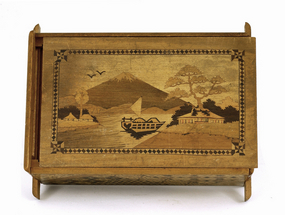
During that trip, my grandma gave me many things: an old porcelain shell-shaped ashtray, a Depression glass vase, a pressed-glass cigarette container, and a Japanese puzzle box. The box has no discernible openings, no drawers, and is inlaid on one side with birds and flowers, and the other with a mountain scene. Only she knew that if you slide the top panel to the right and the bottom to the left, that you discovered a hidden compartment: a drawer with a tiny button handle, in which you could store whatever you wanted.

———————-

Let us think about dreams for a second, a minute, an hour, a day. Dreams are, for me, what guide my decisions. My heart bends in one direction or another, tied fast to dreams of what life could be, what it could look like if I could realize the wishes and hopes in my mind. My gut tells me what feels right; deep in my body come the yeses and the nos that dictate what I know to be right and true for me.

My dreams, since moving to Maine over one year ago, are to realize, finally, my deepest wishes and desires. My dreams involve turning the looking glass inward and looking at myself, deep into my hazel-green eyes, and allowing my happiness and sadness to flow through me. My dreams are to let go of the control, of the planned future, and instead step into a place where I move through life doing the things that I want to do versus what will make others happy.

Realizing dreams is scary, and painful, and involves a hefty dose of selfishness. Realizing dreams also involves the acknowledgement that others may ask of you a justification, an explanation of behaviors or choices that do not make sense because they break with past patterns. Realizing dreams involves sitting down and having tea with yourself, and saying that the little person inside, the child if you will, has many unexpressed desires and missing pieces that must be delicately crafted.

Maybe life is like a puzzle: those long and sometimes dull games you play with old, wizened aunts who love horse-racing and overly-sugared cakes on rainy days when there is nothing else to do. Maybe you seek the four corners, laying them out carefully on the table, oriented correctly, and after that, you find the edge pieces, and build the frame. And maybe you never really finish the puzzle, but have to be content with searching through the pile of pieces for the next section that will come clear: the flowers, or the sky and its clouds. Maybe the puzzle pieces sit on a small table in the dining room for years and years, and every month or so you find a new piece that fits. And maybe you finish the puzzle, but maybe not. Perhaps the goal of the game is to be happy looking at the tiny pieces and wondering how they all fit together. These are the dreams, I think.

Sweet dreams.

puzzle purse 8x8 front


Carousel

“I can only note that the past is beautiful because one never realises an emotion at the time. It expands later, and thus we don’t have complete emotions about the present, only about the past.”

– Virginia Woolf

carousel 6

I recognize them by their trucks: the men of the town. Very few women drive trucks, but almost all the men do. Silver F-150s, blue striped GMCs, black and bright green Chevy’s, red construction and demolition Peterbilts. In fact, I live behind a demolition company and walk past their fleet of oversized red trucks every day.

Yesterday, I walked down to the harbor to have lunch and conversation in a truck. It was the blue striped GMC. Its interior was dusty and reflected the country life of its owner: green shotgun shell on the dash, Old Crow Medicine Show music playing from the tape deck, a pack of Marlboros shoved into a cubby hole, an iPhone, a can of Monster, old coats, older boots. The interior was that heavy carpeting of 1980s American cars: the stuff that binds upon itself over time and becomes softer but tangled, stands up from the floors and walls of the truck. As I sat there, I was struck by the memory of my mom’s Oldsmobile station wagon: our childhood car that had the same carpeting all over its interior, and velveteen and vinyl seats.

When we were kids, my brother and I would sit in the trunk of the car because there was a rear-facing seat in there and we could stare out the back window of the wagon and pretend we were driving backwards. I don’t think they make those seats anymore; I have a strong attachment to that memory. Houston, Texas, blue Oldsmobile station wagon, my brother giggling, my mother managing us, moving us across that landscape that was so alien to her. Streets of white asphalt that crunched under wheels and feet, dust, pine trees, humidity, intense heat. Pine needles turned golden as they fell off in the summer and fall, pine cone wars with neighbor kids, swimming, popsicles, Jello eggs.

carousel 5

In high school, I spent much time in a town called Porter, Texas, which was about 45 minutes away from where I lived. Porter was home to my boyfriend’s grandmother, which is also where he lived most of the time. She lived on a few acres surrounded by a hurricane fence in an old, stationary trailer with an ornament of an eagle that hung off the pitched front window. In that kitchen I was served mashed potatoes and fried chicken and Kool-Aid and all kinds of other delicious things over about three years. There was a barn, too, and many, many rose bushes everywhere. She loved roses. There was also a large tree with a swing, a dirt road leading to the trailer, and whole lot of nothing else.

Porter, a town outside of Conroe and near Cut-n-Shoot, was in the piney woods of East Texas, on your way to Huntsville. The trees were tall and skinny, and shady. Despite the heat that seems to pervade all those memories, there was a calm in that shade, and I remember them moving in the wind. When it was very rainy, during the monsoons, sometimes, they would pop: literally explode from over-watering. They seemed to pop at different intervals, as if there were places in the trees naturally designed to expand into a large bubble of water and wood pulp. The smell of East Texas was strong, too: pine, and soil, and heat, and sweat. The sounds of trucks driving along the roads, lawnmowers, tractors, dogs barking, chainsaws. Raccoons lived there, in the woods, as well as copperheads and water moccasins in the rivers and streams. The sun streamed everywhere: I have so many patchworked memories of sitting in a patch of sun, on the dirt, on the ground, stirring it into designs with a stick, watching ants, playing with earthworms, drawing spirals and other shapes in the earth. I still do that, today.

carousel 3

I am experiencing a feeling of returning and it is very disorienting to me, as if I have been spinning on a carousel for a long, long time, and it is finally stopping; as if the blur of pictures that you see whilst riding a hobby horse on a carousel are slowing down and coming into focus. This place, the country of coastal Maine, not my town exactly, but the places around it, remind me so much of those country towns of East Texas. The people are similar, they drive the same trucks, they do the same things with their time. There are fir trees here, not pine, but the smells and sights are so similar. Of course, in East Texas there are no beautiful granite formations or islands or the ocean, but the feel is there. It’s as if I have returned after a very, very long time. And I suppose, in some ways, I have. Thirteen years away from your family makes returning scary and challenging: starting anew, again, for the third time in a few years, living in small towns in a place with such a long, long winter. Exploring options, trying to forge a path.

I was speaking with a friend about his new bathtub the other day, and how, when he took his inaugural soak, he was transported back to the bathtub in his parents’ house, a series of memories about forty years old. He said he remembered how it felt to be in the bath, how the walls in the bathroom looked, and the sensation of holding your breath under the water as long as possible. We all did that, didn’t we?

And yesterday’s lunch in the blue GMC, with its carpeting and velveteen-vinyl seats, transported me back to a childhood outside of Houston that, at many moments, I plain forget. I thought I had forgotten so many sights and smells and sounds and memories of growing up in the almost-country of east Texas, and yesterday all these things flooded back: the train track behind my high school where a friend of mine got drunk and passed out on the tracks and was run over, my best friend’s almost El Camino and racing boys in cars in it while smoking cigarettes and jamming to the Rolling Stones, my boyfriend’s 280ZX and sitting on his driveway in the afternoons after school. Driving to Huntsville to sit in the sunken rose gardens at Sam Houston State University, time spent at a strange lake house in Cold Spring when I was weeks away from graduation from high school. Camping in the woods in Nacogdoches, making forts in the woods with neighborhood kids, reading books on a blanket in the front yard and waving to the elderly lady who drove past me in her Cadillac each day.

carousel 2

My parents left Houston about six months after I graduated, and so I never returned there as an adult to have these memories cemented into my mind. Funny how things come flooding back, as you sit talking about nothing in particular, on a cold spring April day, looking at the water move against the dock, in a 1980s beat up pickup truck.

digging in the dirt 2Houston, 1987

Time Capsules

cowboy boots

I have been many things in my short life. I have been a camp counselor for young students at the Museum of Natural History in Houston, as well as a genetics lab research assistant (I mostly did what I was told and spent a lot of time inside a giant freezer cataloguing little vials). I have been a bead- and oddities-seller in Austin, as well as a middle school science teacher. I have been a gallery girl in central Mexico, as well as a governess who conducted class on the brick patio of a beautiful hotel. I have been a gardener in New York City, as well as the personal assistant and later business manager of an art dealer. I have been a cross-country-traveling event planner. I have been a middle school teacher in Philadelphia. I have been a gallery girl in Maine, and now a jeweler, seamstress, drawing model, dog- and house-sitter, tutor, teacher, and writer.

ice melting 3

The ice is melting: winter is slowly coming to an end. Water is seeping and sometimes rushing out into the landscape. Little Long Pond, scene of so many early morning ice skates, is now covered with sheets of ice and water all around the edges. Gone is the deep cold, replaced by mud and water, by slush and a landscape that seems to spit up onto your clothes, your car, your everything. There were no deafening cracks or booms as the ice cracked and melted, as I had hoped, just a slow process of light returning, the path of sunlight expanding onto our landscape as if the beam of light was being pulled back, further away, its path widening as each day passed. The sunlight breathed life back into the wilderness, as if finally, after many months, the land began to exhale and inhale again, no longer holding its breath, steeling itself against winter.

grandpa

I received quite a gift today.

In my bedroom for as long as I can remember, I have hung a picture embroidered by my great Grandmother. It depicts two owls, one smiling sweetly at the other, in the tops of grapefruit trees. The colours are green and yellow and brown, and it is something that makes my bedroom feel complete: without it, something is missing. When I moved to Maine last June, the glass in the picture broke due to the overwhelming amount of stuff I had packed into my VW station wagon. My mom took it to the frame shop a few weeks ago to replace the glass, and hidden inside the frame was a note written to me by my Grandpa, for my 1st birthday:

“Canvas done by Mrs McDowell (Grandmother’s mother) between 1940 1942 during the air raids on Liverpool. For P.M. Blythe With Love 1st Birthday” (Also inscribed is 1981 and his name, to the right)

Neither I nor my mother knew this note was hidden inside the frame, and had the glass never broken, we would have never known. Discovering time capsules, like this one, is a bittersweet gift that comes around not often. My Grandpa died in 1994, when I was in 7th grade, the year my parents lost all their money and our family life significantly changed. I remember being a latch-key kid for the first time that year; our front door had a terrible stained glass design of a duck flying through cattails on it. The entryway was linoleum, beige in colour, and the rest of the house was carpeted in drab brown. I remember, when Grandpa died, when we all couldn’t go to England because we couldn’t afford it, and I think were probably limping along quite a bit in those days, being so sad because he was one of my favorite people in the world, if not the favorite. I hadn’t seen him, at that time, in four or five years, and had missed the ending of his life. Those days were hard days for many reasons, and I remember sitting on the linoleum floor by the front door, after school, alone in the house as my brother was outside playing, crying desperately with the knowledge that I would never see him again.

salisbury cove

Once, when my grandparents visited, we went to Galveston as a family and walked around The Strand. I think that my Grandpa really liked the States; he always found humour in our culture here no matter where we took him. After he died, my mom and brother and I went to Galveston one day, and I was walking around my favorite store there: a junk and antique shop full of curiousities. I looked up and saw an old man with bright white hair, a button down shirt and glasses, with a camera around his neck. It was him! I turned to tell my mom, couldn’t find her, turned back around, and of course, he was gone.

ice melting 2

Later, I had a dream that we were all together at the church yard where he is buried, where also my grandparents were married. It is a tiny church, built of old mossy stone, with a yard of graves around three sides. In my dream, our whole family was together: grandma, aunt, cousins, parents, children. We were walking through a churchyard and Grandpa appeared to us, only he was very young: as he was in photos of him during the war. He was smiling and happy, with his strong jaw and bright eyes. We spent time together: the time you can only spend in dreams, when you are not exactly sure how much time has passed, whether it is mere moments, or days, or months. We were all so happy just to be together: my Grandma especially (he died months before their 50th wedding anniversary). Then, suddenly, an array of white stones, set out in the pattern of an English cross, the St George’s cross with its even arms, began to hop up and down, tapping onto the flagstones but keeping their arrangement. He turned to us all and told us he loved us, but that he had to go. We all said goodbye. I haven’t seen him since, haven’t heard from him either.

That is, until yesterday. Love survives: I shall never doubt that again.

breakfast with grandpaBreakfast with Grandpa in 1987 in Formby, Liverpool, England…I would sneak downstairs to have breakfast with him before anyone else was awake.

In Fertile Fields of Long Ago..

sieur de monts1

“If you do not breathe through writing, if you do not cry out in writing, or sing in writing, then don’t write, because our culture has no use for it.”

Anais Nin

Tonight is a night of clear skies and twinkling stars, of descending temperatures and the promise of snow.

sieur de monts7

In fertile fields of long ago
I’m sure I had a mistress though
Her face fleet footed flees recall
And aught remains save winter’s pall

In fertile fields of long ago
When I knew all there was to know
I set my hopes on happy days
And borrowed joy which time repays

In fertile fields of long ago
Where fruits once ripened gloom does grow
In fertile fields of yesteryear
I lost the ones that I held dear

In fertile fields of long ago
When summer lulled and days were slow
Youth concealed the freeze and frost
That settle in when all is lost

Author Unknown — it was sent to me in a letter long ago

sieur de monts2

I have kept diaries consistently since I was eleven years old, since 1992. My first diary is The Dahl Diary, and is one of my all time favorites since it has pictures from Roald Dahl books and snippets and quotes from him sprinkled throughout. I have journals with fancy covers and simple ones, journals that are tall and some that are short. My favorite journals are Moleskines with gridded pages. I have a shelf on my bookshelf dedicated to four things: my flower press, my Prismacolors, my Grandpa’s old Minolta camera that he used to photograph my parents’ wedding with the lens cap still on, and my diaries. The diaries take up over half the shelf.

My diaries tell me stories from my past, and without them, I would forget all the things that have happened. When I got divorced and immediately afterward got into an abusive relationship with someone with a mental illness, I stopped journaling, and when I discovered this at the end of that relationship,  I made a promise to myself to not do that again. I said to myself that I would always keep writing, if not every day, then almost every day, so that I would never again lose great chunks of time.

Time passes so fast: I blink and six months have passed. I blink again and it’s the middle of January in 2013. I realized tonight that I met my best friends 11 years ago and how it feels like I have known them forever but that the intervening years are a blip: they passed us by so quickly.

sieur de monts6

Self determination is a quality of life that we all possess, especially here in the United States, a place where we are so lucky to be able, within limits, to do whatever we want to do whenever we want to do it. This is a powerful aspect of our culture, and one that can create a sense of being crippled by choices. As a woman in 2013, especially a woman who has an almost 10 year career behind her and who was married for almost that length of time, those choices are even further complicated by the questions of children and marriage and partners and the social pressures still placed upon us despite our abilities to forge career paths and live by ourselves, out of our parents’ houses.

sieur de monts5

I grew up in a house probably similar to yours: my father worked and my mom stayed at home until I was in seventh grade when my father lost his job and our family collapsed around what I recognize now was a very tenuous existence based on materialism and status in 1980s Houston. My father suffered an emotional crisis, my mom went to work for the first time, and my brother and I continued living our suburban life. My parents worked hard to keep our life as much the same as they could. We always had a roof over our heads and the power was always on, we had clothes and food. My father never really recovered from this time and steadily has passed his time (this was 1994) growing more and more angry at something or someone outside himself that doesn’t really exist.

sieur de monts3

For the last several years, I have been adjusting to the fact that life is full of tragedies; as is said sometimes, Life is Suffering. I realized the other day that this year is the 10 year anniversary of the death of a man who was very, very important to me for a time. Love,  I have learned, is rather uncontrollable and inconvenient and sometimes you don’t even recognize it, and sometimes, when you do, it can be so scary that you run away from it as fast as humanly possible. It is hard for me to believe that it has been ten years since I last spoke to this friend and since he left us in the way he had nightmared about for months before his actual death. One of the things I loved about him was that he was always open and honest; speaking from his heart, he was brash and eloquent and challenging.

you and i have not the strength,
compassion, or centered-ness to shake other humans
loose.  the delusion is just too strong.  for the most
part, penetrating the oceans of bullshit in which we
swim requires WILLINGNESS–the unprepared, the
unwilling just don’t get it.  you know, you tell
someone, yo.  yer living in a nightmare.  please, WAKE
UP!  and they say, huh?  like that.”

I have come to realize that our faults are a factor of our daily lives. Our faults are yes, what make us “human”, but they are also the things that make us ashamed of ourselves, and less likely to be honest with others. I believe this is what makes it hard to sustain meaningful relationships. For my whole life, I have been afraid to be honest lest I disappoint someone, hurt someone, or make someone feel that I am not “good enough” or perfect. This is real, this is me. This is hard to admit because it means that others will know that I am not perfectly capable in any given situation, even though I may appear to be.

sieur de monts4

“The moving finger writes, and having writ
Moves on.  Nor all your piety and wit
Can call it back to cancel half a line
Nor all your tears wash out a word of it.”

from the Rubaiyat of Omar Khayam

“Now all the truth is out
Be secret and take defeat
From any brazen throat…
Bred to a harder thing
Than Triumph, turn away
And like a laughing string
Whereon mad fingers play
Amid a place of stone
Be secret and exult,
Because of all things known
That is most difficult.

W.B.Yeats


The passages above, as well as many others, were things written to me over the course of a very intense time of communication and mutual love. These writings and their intensity I recognized as love, I knew that we were in love, that we loved each other, but the danger of the other person’s decisions at the time made that love not a realistic possibility. His intensity too much, I, as I am wont to do, ran away and into the arms of someone safe but great, in his own way: the man I married. Of course he wasn’t the right person, and of course the marriage dissolved, and here I am, ten years later, re-reading the letters of one who loved me as I loved him, but he was not the man for me. It is hard to recognize love when it is flat in front of your face, when it is complicated and scary and one person is too young and the other too…something that I do not have a name for.

Tonight, as I enter my 33rd year on the planet, and am able to look backward very far and forward just a few steps, and am beginning to turn a corner on this life that I have been stuck on for years now, I have to remember that love is the spirit of the universe, and that understanding the place of others in this life, and that they may be fucked up, or confused, or upset, or perfect or seeming to be, or strong, or weak, or whatever it is that they are, that our loved ones are what create meaning for us in the daily stew of this confusing life, this rolling, pitching ship on which we all find ourselves. This is the sentiment I get from this letter, received well over ten years ago now, but apropos at this exact moment:

“i see you in my mind with that sly grin on your face,
that flash in your eyes, and i hear you laughing.

which is not to say that you are always happy, rather,
that you make ME happy when i find you again after
long and hazy journeys of many months, wiping the dust
and sweat of all that horseshit striving and yearning
from my eyes and thinking how TIRED i am of this
cycle, this dance that goes on and on and on and i’ll
probably be reborn as a cockroach, and there YOU are
and i hear that brilliant laugh of yours that starts
as an amused giggle and soars, lifting me with it, and
i feel better for a time, knowing that you are in the
world.

you know, i feel this way about you, and i’ve the
sneaking suspicion that i always will.  it makes me
happy to know that my feelings are not the result of
delusions and striving.  you don’t have to BE
anything, if you know what i mean.  you’re just you
and that’s special enough.  ah, P…if you could see
yourself with my eyes, you wouldn’t worry about
anything pretty much ever.”

“and in my mind you are poking shit at the patent
absurdity of the world and laughing like the
mischief-crazed madwoman you in fact are.”

But What About My Runny Nose?

rooster vintage image graphicsfairy008sm

Theirs was a very small town in New Hampshire: typical of the New England countryside, they lived in an old farmhouse with a barn out back. In many homes in New England, the barns and the houses are connected by a long, draughty hallway meant to keep you safe and dry during snowstorms, so you can feed your animals: count your chickens, so to speak.

On the top floor of their barn was a large, open, circular pen. Pigs? No. Sheep? Nope. Trick ponies?

Cock fighting.

Designed as a ring to train roosters, John’s father painstakingly dedicated himself to training the best fighting cocks this side of Vermont. John and his brothers, all of whom did not share their father’s love for cock fighting, watched and helped their dad as he brought up the roosters and watched them in action.

A rooster’s natural temperament is one of fighting, domination and violence: ruling the roost as we all know comes from a rooster’s predilection to hurt other roosters and his hens. But, John told me last week in the parking lot of the local gas station, over coffee, there are ways to get them to be even more vicious.

“You cut off their spurs, you know, and you put a sharpened razor blade up against their leg and tape it down til the flesh just grows right over it.”

After what one assumes is a bit of time to train up your fighting roosters in the circular pen on the top floor of the barn, John’s dad would take the roosters and his sons to fighting matches elsewhere in town.

John’s dad suffered from chronic allergies and was never to be found without 4 or 5 cotton handkerchiefs stuffed into all his pockets. His nose constantly ran, winter or summer, especially so when he was excited about the day’s cockfight. Fighting to the death, the roosters would set upon each other in a ring not so dissimilar to the one on the top floor of the barn. Farmers young and old would bet money and cheer on their favorite fighting creature until one lay dead, and the other, bloody, stood victorious.

Of course, cockfighting is discouraged in American society, even thirty or forty years ago the cops just didn’t like it. At the beginning of each cockfight, John’s dad would come to him and say,

“Ok, son. Now, if we get raided, I want you to hide here, under the floorboards, see? And after I get out of jail, I’ll come and get you. Now don’t you leave now, you just wait right here. I’ll be back for you.”

John’s dad was arrested multiple times for cockfighting, but of course, never stopped. He had a passion for the sport. Once, after a raid and subsequent arrest, when we can assume that little John was hiding under the floorboards of a stranger’s barn until he felt safe enough to run home, John’s dad ended up in jail with the cops who knew him and his family and his strong love for cockfighting. They took away all his handkerchiefs, saying that he might tie them all together and try to hang himself in the jail cell.

He said, “But what about my runny nose?”

They said, “Use your sleeve!”

He said, “But can’t I just take off my shirt and tie it up and try to hang myself?”

Despite their father’s love for cockfighting, neither John nor his brothers took up the pastime, seeing it as savage and cruel and not liking the death of so many beautiful, albeit bloodthirsty, birds. I asked him if he thought there were still cockfights around Maine and New Hampshire, and he said, “oh yeah…bound to be. They’re just hidden is all.”

petersens barn