Unknown's avatar

About pacienciapaciencia

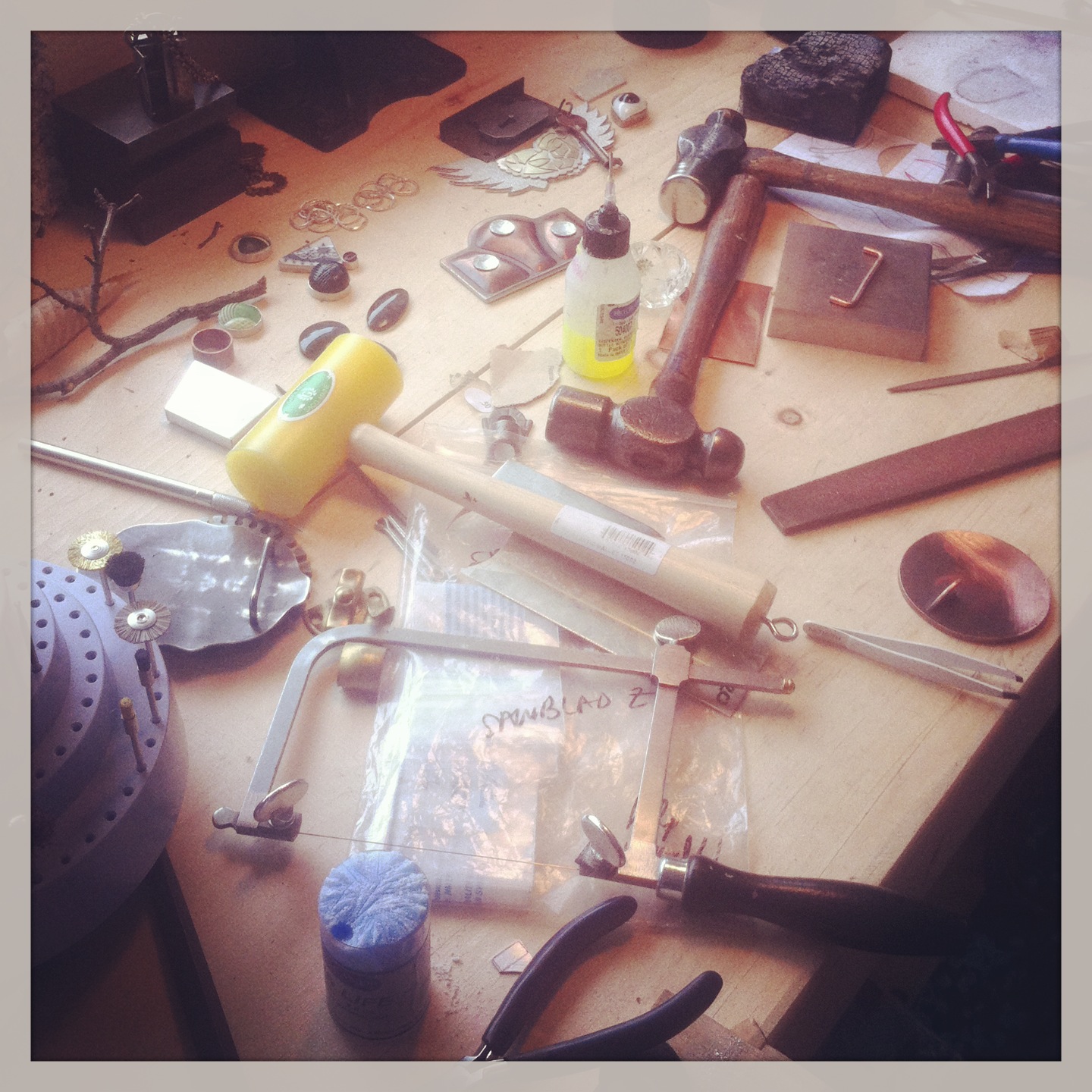
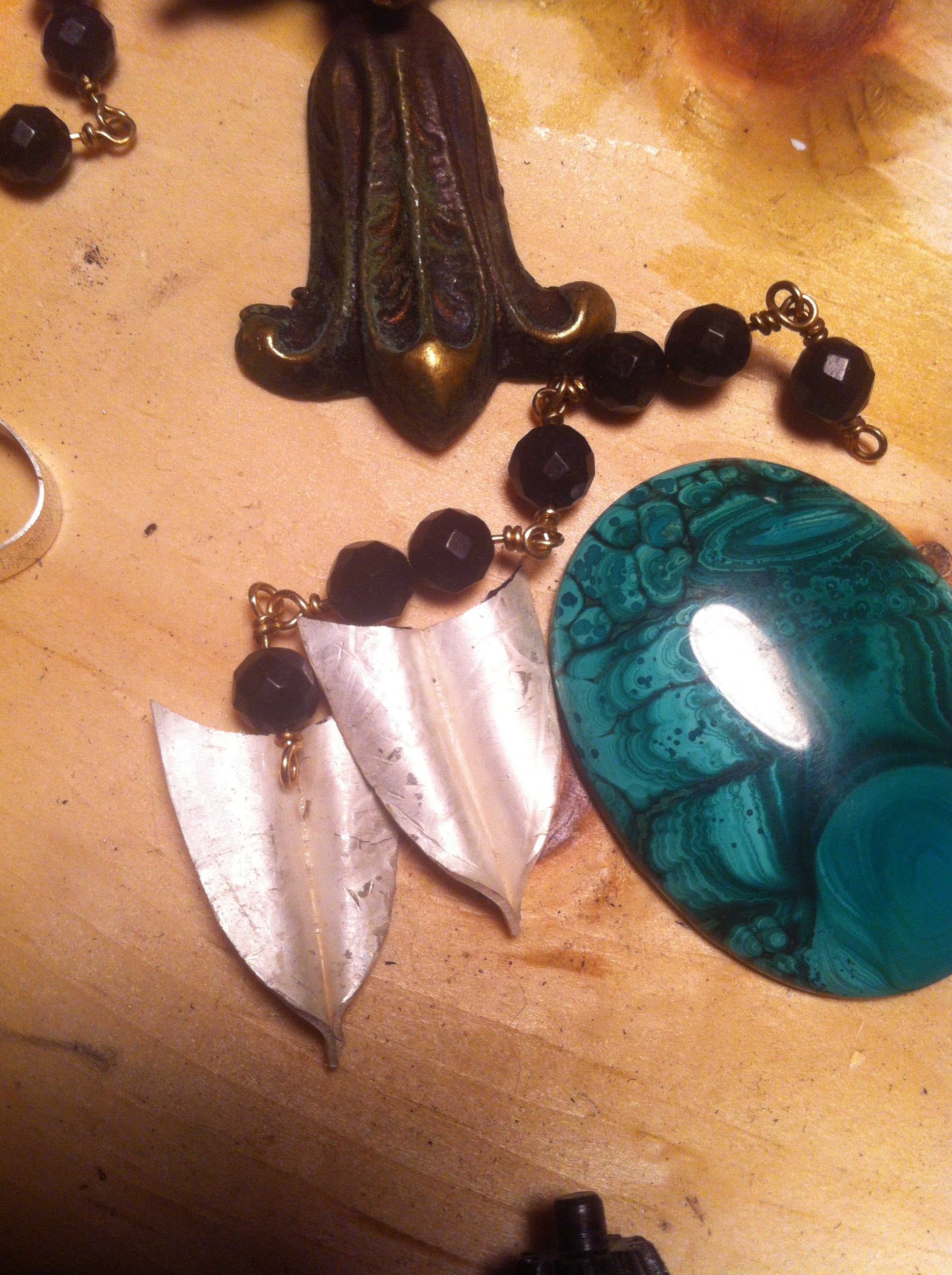
For seven years, I have taught science in inner city schools. Four Mays ago, I quit my job, sold most of my possessions and moved to Downeast Maine. Originally from England, I have lived in Texas, Mexico, New York, Pennsylvania and Maine. I love listening to music, taking photographs and cooking for friends and family. I also custom design and fabricate silver, gold, bronze and copper jewelry. Recently, I moved back to Texas after realizing that the snow and darkness of Maine winters were not for me! Now I plan to be a snowbird of a sort: spending the school year in Texas, teaching at a public girls school in South Austin, and summers in Maine. Recently, I purchased an old farm on 5 acres in Elgin, Texas. Could I be so lucky? Thanks for accompanying me on this meandering journey in the blog-o-sphere.

A Japanese Puzzle Box

“Yes: I am a dreamer. For a dreamer is one who can only find his way by moonlight, and his punishment is that he sees the dawn before the rest of the world.” – Oscar Wilde

catphoto


A Japanese puzzle box

When I was a young girl of nineteen, I took a trip with my family to England, to move my Grandmother out of her old house and into an assisted living house. She was so excited because she never had to cook again, and I was so excited to listen to old stories and go through old things with her. Her family: uncles and cousins and a brother, traveled on old steamships across the world from the port of Liverpool, always bringing back magical presents from Asia, Africa and Australia to the women sitting and waiting back home.

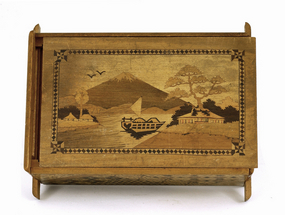
During that trip, my grandma gave me many things: an old porcelain shell-shaped ashtray, a Depression glass vase, a pressed-glass cigarette container, and a Japanese puzzle box. The box has no discernible openings, no drawers, and is inlaid on one side with birds and flowers, and the other with a mountain scene. Only she knew that if you slide the top panel to the right and the bottom to the left, that you discovered a hidden compartment: a drawer with a tiny button handle, in which you could store whatever you wanted.

———————-

Let us think about dreams for a second, a minute, an hour, a day. Dreams are, for me, what guide my decisions. My heart bends in one direction or another, tied fast to dreams of what life could be, what it could look like if I could realize the wishes and hopes in my mind. My gut tells me what feels right; deep in my body come the yeses and the nos that dictate what I know to be right and true for me.

My dreams, since moving to Maine over one year ago, are to realize, finally, my deepest wishes and desires. My dreams involve turning the looking glass inward and looking at myself, deep into my hazel-green eyes, and allowing my happiness and sadness to flow through me. My dreams are to let go of the control, of the planned future, and instead step into a place where I move through life doing the things that I want to do versus what will make others happy.

Realizing dreams is scary, and painful, and involves a hefty dose of selfishness. Realizing dreams also involves the acknowledgement that others may ask of you a justification, an explanation of behaviors or choices that do not make sense because they break with past patterns. Realizing dreams involves sitting down and having tea with yourself, and saying that the little person inside, the child if you will, has many unexpressed desires and missing pieces that must be delicately crafted.

Maybe life is like a puzzle: those long and sometimes dull games you play with old, wizened aunts who love horse-racing and overly-sugared cakes on rainy days when there is nothing else to do. Maybe you seek the four corners, laying them out carefully on the table, oriented correctly, and after that, you find the edge pieces, and build the frame. And maybe you never really finish the puzzle, but have to be content with searching through the pile of pieces for the next section that will come clear: the flowers, or the sky and its clouds. Maybe the puzzle pieces sit on a small table in the dining room for years and years, and every month or so you find a new piece that fits. And maybe you finish the puzzle, but maybe not. Perhaps the goal of the game is to be happy looking at the tiny pieces and wondering how they all fit together. These are the dreams, I think.

Sweet dreams.

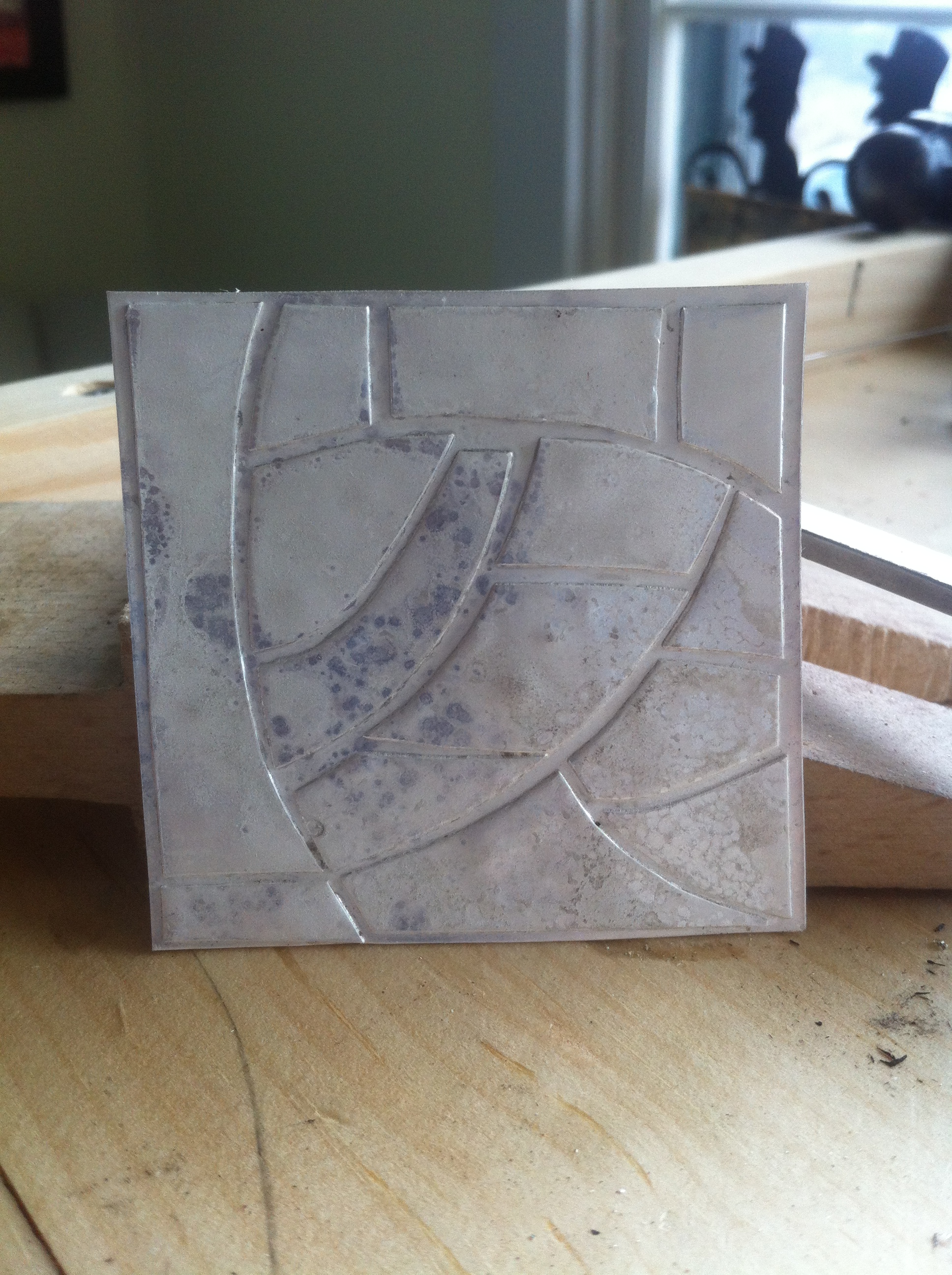
puzzle purse 8x8 front


The Duke of Gems

sign_fortune_teller_thmb

“Go outside, clench both hands into fists and holdig your arms straight at your sides, come back inside and show me your left palm.”

I followed instructions to the letter, walking back into the studio on an early summer afternoon, after a long boat ride, a visit to a messy school building, and a conversation with a master puppeteer and stained glass artist. I had spent my morning eating gingerbread and staring at deep purple iris, gazing at the dark blue water and watching the land and the ocean pass by.

In the studio that day were piles of gemstones, both precious and semi-so, laid out on our cases, packed inside plastic bags, stored inside black cases.

The Duke of Gems grasped my left hand and rubbed it with the fingers and thumbs of both hands, and said,

“Who is this guy?”

I said, “excuse me?”

“Who is this guy? Do not commit to this! You don’t know him, he is not here yet. Do not commit to this, for marriage for the sake of it, for the paper, is not right.”

I stood, bewildered. My coworker said, “Do mine!”, and he proceeded to ask if someone was bleeding, sick. She, looking shocked, said, “I am a midwife, what do you mean?” He also mentioned that there was no threat to her father but that he must behave during recovery.

Next he turned to another coworker and asked, “why are you holding on to this? This weight is on your shoulders; it is as if you are diving into the deep water, and are doing it by choice!” She looked sad, explaining her situation, and he told her to stop.

Lastly, he said to our fourth at the studio, “sometimes when you help people this much, you are actually hurting them.”

Then he said, nonchalantly, that sometimes people tell him he is in the wrong profession.

We four, bewildered, continued to siphon through stones, picking out treasures as he continued. He and I spoke in Spanish, he told us about his family, and about the trade in stones. He showed us a $10,000 mystery stone and told us about buying and selling, winning and losing money.

Just before he left, he said to me, “Patience, what are you doing here?” I said that I had been offered a teaching position out on an island and he shook his head. “No,” he said. Then, “you can try it. You can go ahead and try it but it is not what you will do. You need open space, this place is too small, you need the open spaces. I would love to see what you will be doing next time I come, but you will not be here.”

The feeling of mystery continued until he left us almost four hours after he had arrived unannounced, and unknown to any of us. I had an idea to whom he was referring in my case, my coworker continued to counsel her patients and told her father he must behave, and our other two friends made moves to reconcile the emotions that he had voiced for them, too.

The next day he called us said he had been up all night praying for one of us.

3-film-still-fortune-telling-granger

A Tale…A Tail

owl by arthur rackhamIt was late October, and a girl was carried in by the currents and tides through dark blue water; washed ashore on the rocky beach. Eyes opening in the autumn light, she noticed large rocks cracked by glaciers, and tall fir trees growing up like jagged teeth along the horizon.

Naked she was, and alone: scared and not just a bit mystified. Under her pale body and dark hair, flat on the beach, was a grey, furry skin, as if she lay upon a blanket. But of course, this was no blanket but one aspect of her true self: a seal skin, a selkie, she was.

Gathering her skin around her like a shroud, she peered up the hillside and into the town. The fog was curling around the boats, the trees, and herself as she gazed and wondered at where she was, and how she had come to be there, anyway. Above one eye was a large, red mark, as if a tentacle had stung her across the left side of her face, or she had been hit hard by something long and wooden. Her head felt heavy in her hands; holding it just so, the early morning light stung her eyes, and she began to cry, knowing that she was alone there on that beach.
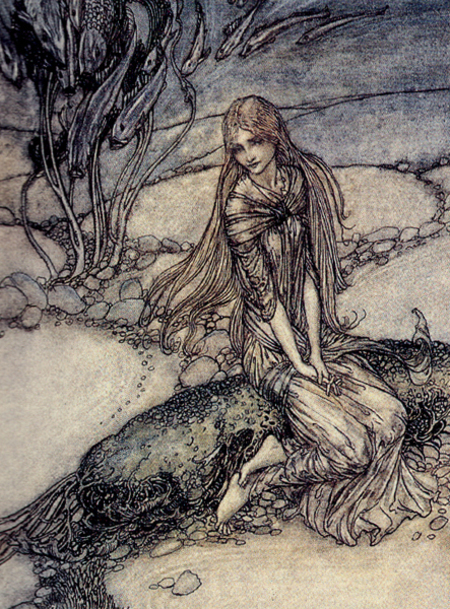
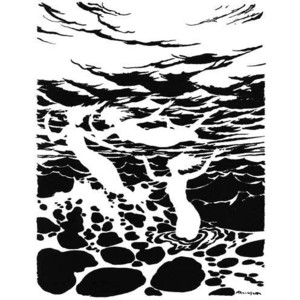
undine_by_rackhamThe pebbles dug into her skin and so she stood up after a while, again shrouding herself in her skin against the cold, against the light, against the unknowns that, no doubt, were roaming unchecked in that tiny town of white houses, grey roads, black, sea-striped stones.

Out of nowhere, as she stood, a prince arrived in a strange carriage. Black and silver it was, and he was like a rainbow. He seemed to appear out of nowhere, for all of a sudden, she found herself in a flower garden, and he in the middle. He seemed to grow out of the flowers, as if they were a part of him, but yet he smelled of sawdust and strange Eastern songs echoed around him, in the autumn light. He whisked her into that carriage, taking her on a long drive through windy mountain roads, through trees whose leaves were changing from green to red, orange, yellow and brown. Suddenly, there was a bonfire in a granite fireplace, and people stood around her, everywhere. She was shrouded again, in another costume: this one of a sprite unknown to them, with antlers growing from her now longer hair, a cape of ivory, face sweet, lips parted to drink and eat intoxicating things from a long and dusty table. A small woman out of the crowd stared and asked: “are you real?”

…..

Time passed, and sometimes she found herself in Italy, sitting at an old wooden table eating olives and garlic and drinking red wine through dark cold nights when the Moon hung in the sky, glowing brightly like a frozen pearl. The nights grew colder, crisper, and one morning, as she went walking, she saw hoarfrost upon all the plants by the roadside and she stopped to see the landscape glitter. The day came when it was time to mark time, and the prince whisked her to a beach and told her stories that made her feel disoriented, fascinated, and protected, in a way. In the light of a campfire, she wondered if she saw the real him, as sometimes his eyes would fill with tears, and then away he would run, again. His carriage changed from silver to black and back again, and picked her up and took her from place to place like the princess he told her she was. After a bit of time, so intoxicated she was with his flowers and his scent and the fortress in which he lived, that she almost forgot where she had hidden her shroud. Many months before, she had taken it and folded it ever so thin, like a delicate piece of origami, and tucked it inside a secret pocket. When she became afraid, she made sure she could feel it, touch it, know that it was still there; she was afraid that someone was trying to find it and take it for their own. She knew, but hoped herself unique, that once her skin was taken, she would stay, trapped, forever.
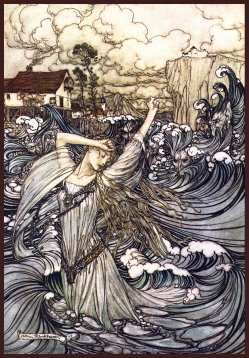
selkie2

Over time the chariot began to rust, and the flowers faded. The rainbow cast over the prince became thinner, and she began to catch glimpses of someone else, as if an image was held under dark water, as if she was catching the silhouette of a tree in a puddle on a rainy day. She stayed quiet most of the time, watching and listening, and he liked her that way. His rainbow slipped away, but his beautiful hands gave gifts and his icey blue eyes laughed and she was held in their spell.

One early morning, they were driving through Russia and the snowbanks were piled high on the sides of the carriage tracks. The ocean water, teal and tossed about by wind, was pulled into meringue-like peaks as the carriage was pulled forcefully along another windy road. Above their heads flew eagles, dark against the white sky, and more and more snow fell, spinning in huge spirals, buffeted by a strong Eastern wind. That day his colors were orange and grey, set apart from the white, swirling background of an almost Eastern landscape.

girl_beside_a_stream_sm

Over time, the snow melted and she found herself living in a tiny fishbowl on a ledge. The fishbowl was very small and in fact most people thought she was a doll living in a dollhouse, and still doubted whether she was real: still wondered where she had come from. Safely inside, she stared out the walls of the fishbowl and watched as people found her, and waited outside to see what she would do. Guarding the now hidden mark above her eye, she ventured outside and painted the veranda a deep green, like the color of the water from which she had come. When the ice left, she kissed the wind and flowers appeared below her feet, and suddenly she found herself living not on a ledge, but in a town, alongside others who wished just to know her, wished to laugh with her, eat dinner, and go swimming, which of course, was her favorite thing to do.

The prince, now old and wizened and thin, no longer a rainbow and full of light, for he had betrayed his mask and shown her his true self long ago, one night while they were dancing, would not let her go, and did everything in his power to give her beautiful things and talk with her about wonderful ideas, and in one moment, even tricked her so as to think that he loved her truly. She slipped, and her precious seal skin flew out of its pocket and later, she found it in a pile under the kitchen table, tethered into place by the leg of a blue wooden chair. Promises of love were circling her head and she was drunk on confusion and bewildered at the prince, for she knew him yet he was promising her the world. Gathering her skin around her, for the first time in many months, she stood upon the veranda, and stared out at her ocean, now a lighter green as the summer sun shone down upon her pale skin. The flowers were every color and curled in great vines through the garden, protecting the spaces that she had made whilst alone in the early spring.
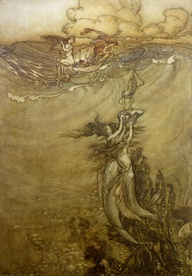
rackham mermaids

The prince arrived and tricked her again, denying that he had ever promised her anything, that she had misheard him, that she was lying, that she was being cruel. In bewilderment, she cried and saw her face in a mirror, saw the damage above her eye reappearing as her tears fell. She lay under a striped blanket in a train car, and could see, finally, his face, his poor, sad, confused, and afraid face, his body, drawn, his wrist hurt from years of steering that carriage against the tides, his throat sore from lying to himself, his light fading, his hope just barely alive. She looked at him, gathered her skin around her and smiled a perfect, understanding smile, as he lay beside her, battling with himself.

On the last evening, he whisked her away to a castle in the woods, a wooden castle painted of blue with gardens of moss and a small path that led to a lake. He took her there, installed her in a room, and went to sleep. As he slept, and he looked so peaceful for one of only a few moments that she could remember, she kissed him upon the lips and silently slipped out of the locked door: escaping locks had always been a skill of hers, for as long as she remembered. Walking softly over moss, she stopped to pay attention to the curved branches of trees, to listen to the calls of the loons on the water. She walked into the woods, and with each step, pulled her skin in closer, moving back into the body she had lost many months before. After what felt like hours, or maybe days, she reached another beach, this one calm and warm in the early summer morning. She slipped into the water, silent as….

A seal.
2adf6f232cc145973fd211204f499687Swimming through warm, summer water, in the early morning, she began to realize that she was not just one or the other, but both, entire. She reached that beach that had once been so cold, so grey, so uninviting and alien, and pulling herself up onto the land once more, basked in sunshine, folded her shroud away again, touched her face, remembering her past injury with her fingers, as if it was a tattoo of white, hidden from all but her. She stood up, saw the fishbowl above her on the hillside with its gardens and train car, and walked. Walked and walked and walked: home.

Another Rainy Day…

IMG_1155

“If only there could be an invention that bottled up a memory, like scent. And it never faded, and it never got stale. And then, when one wanted it, the bottle could be uncorked, and it would be like living the moment all over again.”

Daphne du Maurier in Rebecca

Let’s talk about rain; Maine is truly a rainy state. After spending most of my adult life in Austin, Texas, land of almost desert-like plants and a serious lack of rain due to a ten year drought, when I moved away from Texas and to Philadelphia I had forgotten that these things called umbrellas existed. The first few times it rained, I was trapped outside sans-protection, and became soaked. Since living in Philly, I’ve adjusted and now have my own umbrella, striped with color, naturally, that, hopefully, travels with me on rainy days, protecting my head.

IMG_1258

I moved to Maine almost a year ago, in the midst of a bold and warm and sunny summer. I lived in a giant tent built in the basement of my parents’ house and spent most of my days there as I was very ill with shingles. Sometimes, I ventured out into the garden or down the road to the lake to swim. The summer was golden and light and even the breeze off the ocean was warm.

This year, however, is a rather wet year. As I sit here, at this moment, in the morning, having finished one cup of coffee and needing to get to work, I am listening to the rain fall, again, on the deck, off the picnic table, off the eaves. I am wondering if my plants will ever grow big and bushy with all this rain, all this lack of sunshine. I have to say that the consistent rain, interrupted here and there by sun, is rather similar to the wintertime darkness and absence of my favorite star.

IMG_1348

People say here that you must take Vitamin D to deal with the lack of light, and I think they are right. It is hard for me to understand how the sun can come out so few and far between; this is a place in which you feel so lucky and excited about sunny days that it’s as if everyone is outside all day long, soaking in sunshine with the knowledge that tomorrow, it may be grey and windy, rainy and cool again. Like today.

Yesterday was one of those days and I spent the whole day outside building a fence of peabrush. I am in the midst of a garden transformation, taking the blank slate which is the yard of my little house, and building an outdoor sitting space and green screens and veggie patches and flowerbeds. After all day in the sunshine, my shoulders and back were bright red and warm, I felt the strange chill of sunburn, I sat outside on the deck at night and looked at the few stars peeking through the thin, wispy nighttime clouds.

The parking lot next to my house is large and full of spaces demarcated by white lines. There is a yellow painted path, newly dubbed the Yellow Brick Road, that shows you how to walk down the steps to the water. At night, there are no streetlights and if you stand in the middle of the lot, staring upward through the power lines and beyond the trees, a whole world, a patchwork quilt of stars opens up before your eyes, each and every night. To the Northeast are mountains, silhouetted slightly against the nighttime sky, and everywhere you turn your head are more stars, clustered together and far apart, shining, twinkling brightly. Over the ocean rises the Moon, when we are lucky enough to have her, and she sits happily in the eastern sky as the nighttime passes.

IMG_1225

Last night, I lay about in my bed, curled up under a down comforter, flannel sheets and a woolen blanket, reading Daphne du Maurier’s Rebecca, and imagining the scene set in the book, the scene of Manderley and its grounds and its epic loneliness, emptiness, romantic desolation, as set here, in Northeast Harbor, amidst the mansions of old wealthy families, the cold hallways set with beautiful artworks and conservative wooden furniture upholstered in salmon and off white silk, the kitchens larger than most houses I have lived in, empty for months, populated only for weeks. In the winter, I can pretend they are mine, or partly mine, anyway, and now have to realize that, just as the de Winters in the book, in the summer, the houses, and their ghosts, must awake. Are there creatures like Mrs Danvers in the houses in Northeast Harbor? Are there skeletons in closets and banshees wailing at the gates? As old rock walls begin to pitch and break apart, as pink paint peels off walls and old sinks rust, what happens to the families within? The people…who knows all the stories?

Such a spookiness and a subtle fascination, this rainy place full, now, almost, of its summer population, its summer people, summer not residents. Soon, the streets will be filled with people, Billionaire’s Island in full swing, mostly hidden behind heavy wooden doors, and behind leaded glass windows. Sometimes, I can see a glimpse of this old-fashioned life out of a mid-century novel, by catering parties in those beautiful kitchens, holding delicate antique china, staring out at the ocean from the patio, but most of the time, the wonder comes at night, under the covers, thinking about what it would be like to really live in a house like Manderley.

IMG_1243

The Enormity of Spaces

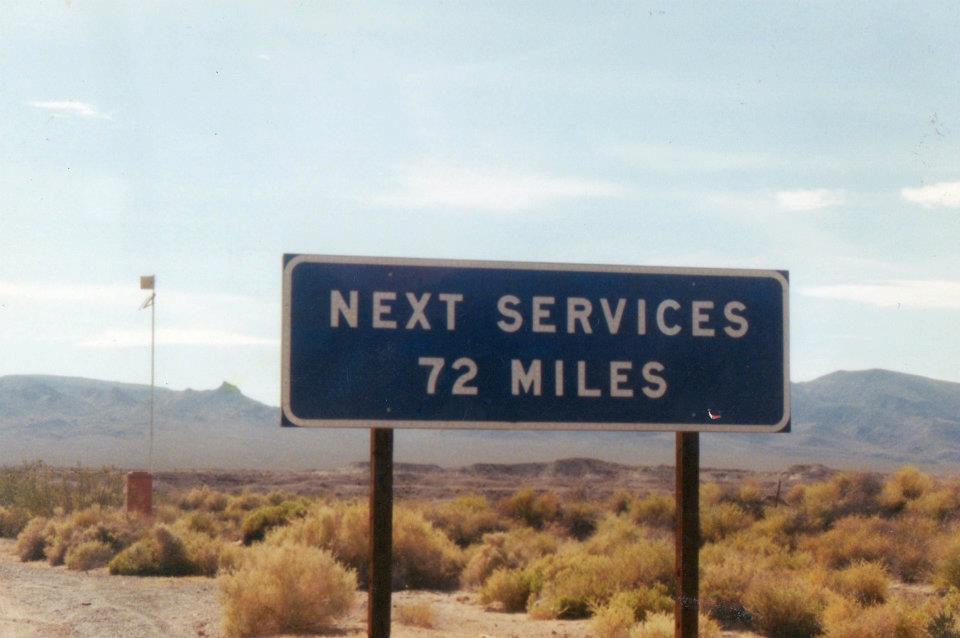
next servicesWhen I was 19 or 20, I have forgotten which, I went on a long road trip with a college boyfriend out west, from Austin all the way to Washington state and back. We traveled through New Mexico, Arizona, Utah, Nevada, California, Oregon, Washington, Wyoming, Montana, Idaho, and Colorado all in a blue Ford Taurus that looked a little more worse for wear when we returned two months after we had left.

A highlight of this trip was our stop at the Grand Canyon. Previous to a random stop in Pecos, Arizona, town of art and college students, we were, like everyone else, going to stop at the South Rim of the Grand Canyon, walk along the plexiglass bridge and marvel at the sights alongside throngs of other tourists. In Pecos, we stopped in a cooperative art gallery and I started chatting with the man working the gallery that day and he told us we should go to the Toruweap entrance instead, and so, we did.

painted desertThe Painted Desert, on the way to Toruweap

Toruweap is a hidden entrance to the Grand Canyon, one accessed by driving up into Mormon country and knowing where you are going because no one will give you directions. After a few turns here and there, you end up at the bottom of a valley with a very large sign at your right telling you the road ahead is 65 miles long and only suitable for all wheel drive vehicles. We pressed on in the Taurus, and two and a half hours later, arrived at a ranger station. We were allowed in and proceeded to drive along huge, flat slabs of limestone on our way to the rim of the canyon, at which point we parked and set up our tent, and walked to the edge of the canyon, realizing that we were the only ones there.

One of my first memories of the Grand Canyon campsite was looking around and noticing the largeness of that place. Later in the day, I walked through rattlesnake infested terrain, over rocks, and sat on the edge of the Grand Canyon, looking down. At that time, only the two of us were there and we were able to experience the Canyon in a way that most people do not: it was immense, many-layered, radiating with heat in the summer sunshine. I sat there a long while pondering how deep it really was, and how I could get down there, and what would happen if I were to fall?

That night we lit a campfire and stared at the stars, thinking about the monstrously huge cliff’s edge only a few feet from where we sat. In the morning, we woke up and went walking around, looking for strange rocks and plants, narrowly missing a rattlesnake, until we saw a small, white Toyota truck with a Utah license plate parked next to one of the picnic tables.

Walking up to the truck (we had already learned to just say hello to other folks on similar journeys to ours), we saw an old man with a long white beard, eating cantaloupe and drinking black coffee, reading Harry Potter and the Sorcerer’s Stone. Now here was an interesting character, who we learned had driven in late last night for the evening and was about to head home. We sat and shared cantaloupe and coffee, and talked about the world, and traveling, and quickly said goodbye to take off to our next stop: Arches National Park in Utah.

barn windowSalsbury Cove Barn Window

That trip was many years ago now, in fact it was something like twelve summers ago. If I look outside my window today, I see fog and dreariness: the markers of Maine spring. When I was a child, we would arrive in Maine every May and every time we pulled up the driveway of our camp house, with a grocery bag of chicken pot pies, tea, and who knows what else, it was always raining. My memories of Maine in late spring always involve fog, cold, and greyness.

sculptureSculpture and steps outside the jewelry studio at Haystack

It was been awhile since I have written here: too long, as life is passing me by quickly and the events that necessitate recording are piling up inside my mind. I haven’t written since just before leaving for my Haystack weekend, and suffice it to say, I am more than thrilled that I went and had that experience. I met many incredible people, made many things, learned how to be a baby blacksmith, drank a lot of bourbon, and didn’t really sleep for three days. Not sleeping turned out to be a bad decision as it left my body quite empty and shaken up for almost two weeks!!! No longer am I a woman who can party all night and stay up all day the next day…

early morning coffee cupsEarly morning light, many coffee cups…

At Haystack, also, the Maine spring was in full force and it was foggy and cold and clammy almost every day, culminating with our last day being downright soggy, slippery, and windy-cold. There are two bridges to Deer Isle: one is a green metal suspension bridge reminiscent of something you’d find in New York, and the other is a low stone bridge made of white stones that stand out in stark contrast to the grey and brown pebble beaches, the amber and golden seaweed, the green fir trees, the blue water, the white boats.

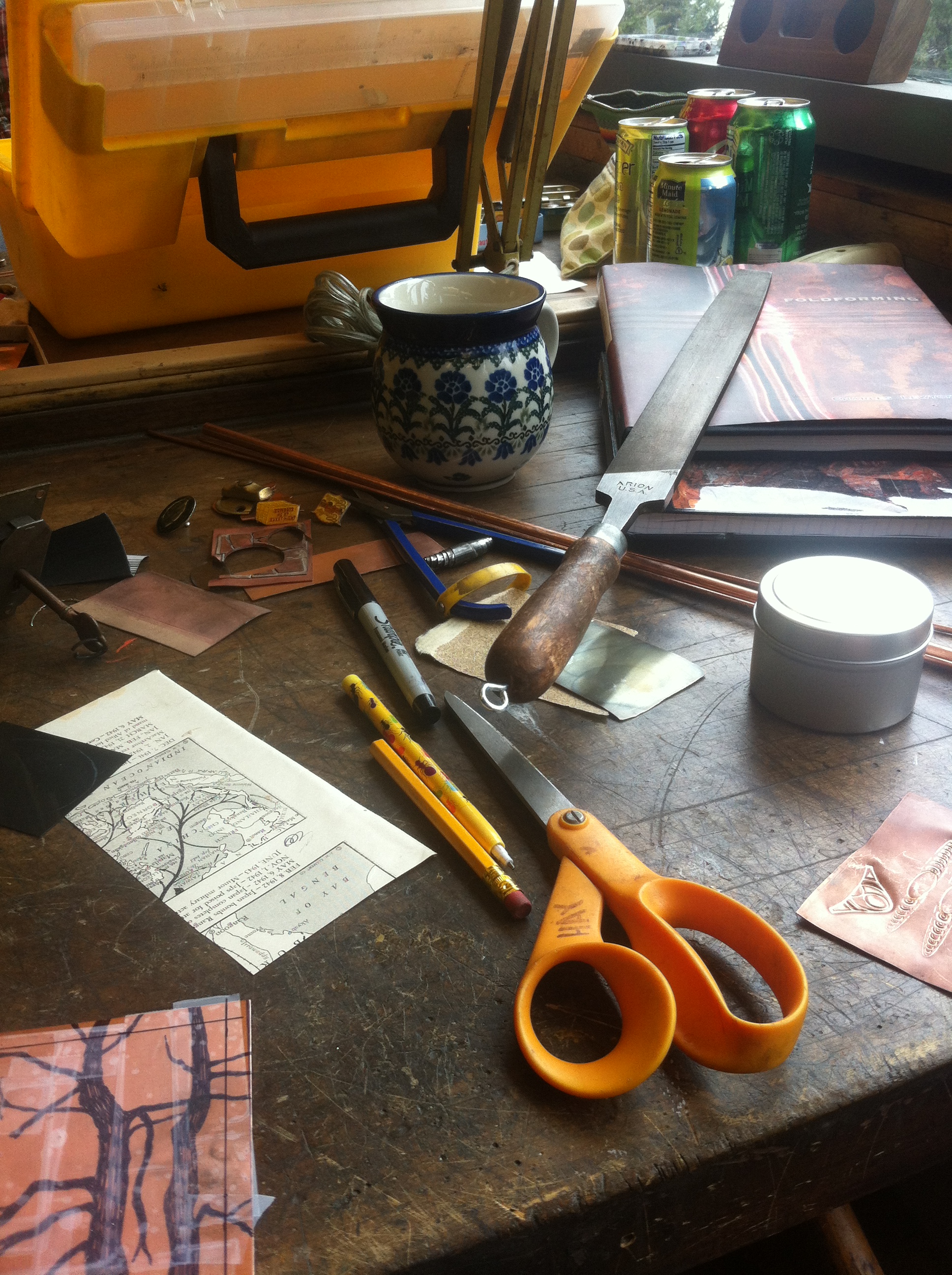
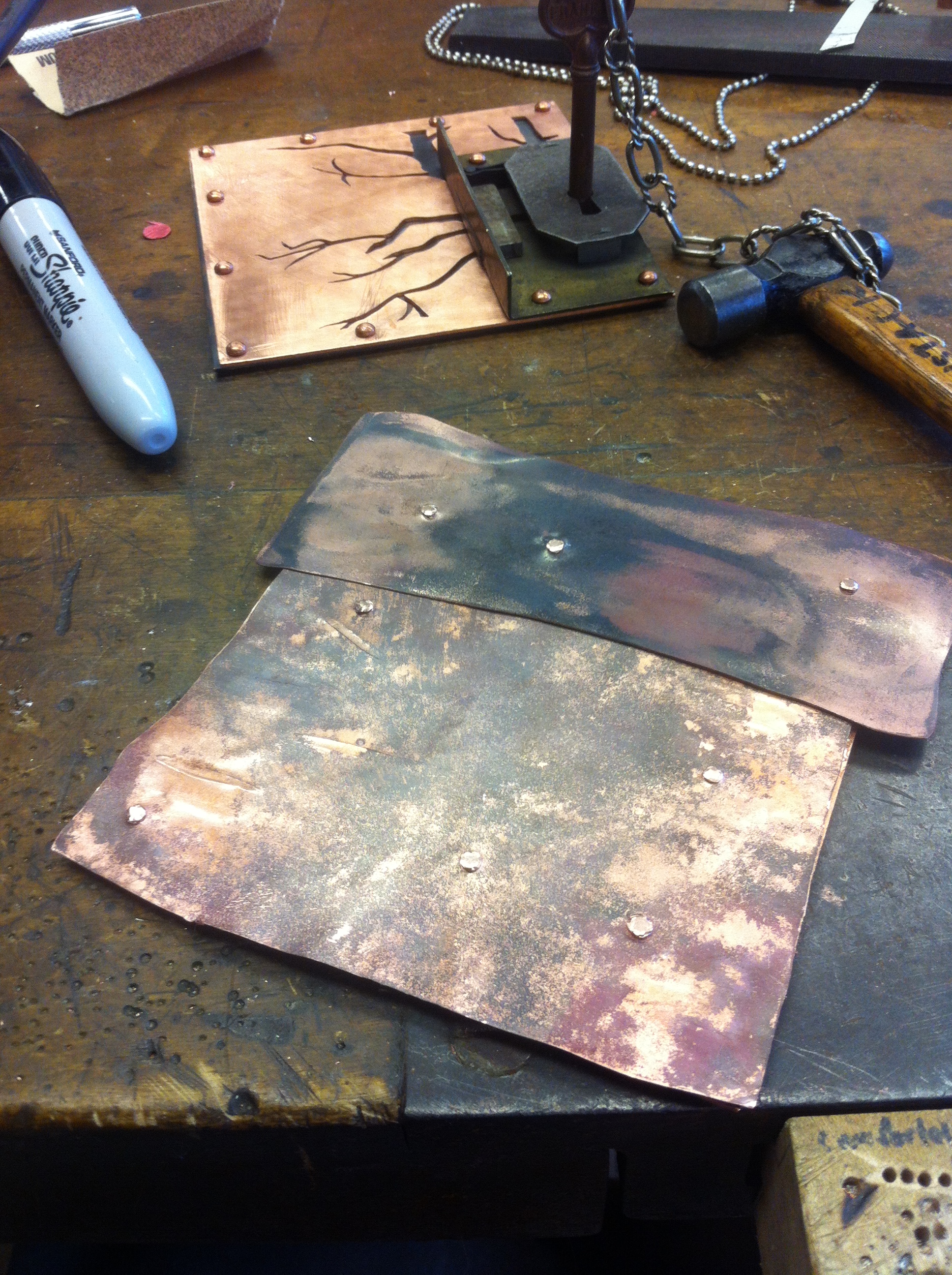
Haystack is a crafts school that was build in 1961 outside the village of Deer Isle, Maine, and sits on the edge of the ocean, on a small bay that is dotted with the fir covered islands so common to Downeast Maine. If you walk down to the bottom of the steps that run the length of the studios, and lean against the railing, you will see birds fishing and swimming in the water before you, some moorings, some lobster buoys, a large island draped with golden and amber seaweed, and many smaller islands laying long and flat along the horizon. If you sit down there at night when the wind is blowing, you will hear the banging of the cleats of the flag against the metal flagpole, and hear loons call their eerie song to you. You will see the nightlights passing through the wooden slats that make up the deck and stairs, and perfectly frame a pair of windy, Arthur Rackham trees that grow up out of the beach and against the bottom railing of the deck. These are the trees that became part of the top of the box that I worked on most of the weekend. The box is made of copper and bronze and a 100 year old lockset with key, copper rivets, and epoxy that covers a piece of paper from an old newspaper, asking the question: what shall we do with our daughters? What shall we, indeed?

treesInspirational Trees

box topDo you see them?

Haystack helped me understand something about myself: that I crave the night spaces, the dark times, and that I like to work uninterrupted by others. I can work with others, as long as do not have to interact with them very much. The first night at Haystack I experimented with tools like the hydraulic press and their very fancy rolling mill and their many daps and dapping stumps and made a really beautiful, tiny vessel that looks, almost, like an autumn leaf.

vesselLate night fold forming experiment

The night spaces at Haystack are what are special: the coolness of nighttime, the sounds of the wind rustling the trees, the glow of orange and white lights out of studio windows. The sound that the sliding door made when I opened and shut it, knowing no one else was there, was immeasurably gratifying. Opening the studio door early in the morning and seeing the blue morning light cascading through large windows, casting the anvils, the tables, the lights, the walls in an eerie, silvery light. The smell of that studio reminded me of my old studio in Austin, but much, much colder, as if the environment that surrounded us on all four sides penetrated the walls, becoming part of the building itself.

studio instagramLate night, empty studio

haystack benchWork space

heat patinasExperimental heat patinas on paper-thin copper

heat patinas 2Detail

etchingsExperimenting with salt water etching

And that is, of course, my experience of life in Maine, that we are literally drawn into and become part of the landscape, and it of us. It is impossible to not be affected by and to effect the landscape, whether it be your footprints on old leaves whilst walking in the woods on a rainy day, or whether it simply be the memory of the way the birch trees with their white and black trunks look in contrast to their lime green new leaves. The landscape is burned into your mind, your heart, your soul, and becomes tied to its ever changing daily face, no two days the same, just like us.

When Haystack Weekend was over, and I was left completely exhausted after not sleeping the last night at all: I was blacksmithing til dawn and then just powered through to work on the box until crashing for about ten minutes at 9:30, my friend and I drove home along the windy roads of Downeast Maine, in the rain, talking about people, laughing about the weekend: making a wrong turn at one point, we ended up almost in Penobscot. The roads from Blue Hill to Deer Isle wind and wind, twist and turn around houses old and new, showing bushes bursting forth with spring color, lobster traps, old cars, hidden in the woods sometimes are even older houses, stone walls, and other mysteries that stay half hidden as the seasons keep rolling by.

It is hard for me to understand that in a few short days it will be the 1st of June, and that I have lived in Maine now for almost one year. I started writing here at the end of August of last year, and have watched the seasons change from summer to fall to winter to spring and soon, it will be summer again. Time keeps marching by, keeping its own pace, and we are simply swimming through, bearing witness to all the changes, small and large, planned and surprising.

boxThe box

A Long Weekend

It may be that the satisfaction I need depends on my going away, so that when I’ve gone and come back, I’ll find it at home.”

– Rumi

harbor sunset

Taking time to go away is a hugely important facet of my life; I have long been a lover of travel and of the new experiences that come with it. I truly believe that without all the traveling that I have done, I would not be the person I am today. New places and new ideas, new people and new adventures all contribute to the labourious mosaic of who we are and what we are at any given time.

Tomorrow I am off to the Haystack Mountain School of Crafts for a weekend of art-making with fellow Maine artists: jewelers, blacksmiths, wood carvers, fiber artists, and ceramicists. I have never had an experience like this before, and am almost bouncing with excitement. My excitement stems from the traveling aspect of going away from home for four days, meeting new people, learning new skills, but the most important source of excitement is that I really don’t know what will happen, how the next few days will pan out, and how I will feel by the end. This is the joy and beauty of taking a bag or two, or in my case a trunk full of tools, and heading off into the distance for a little while.

I have been ruminating on change a lot lately, being that I feel some fundamental changes have happened within myself, and within many people who are close to me. I have felt these changes incrementally, but didn’t necessarily notice them until confronted with the behaviors and thoughts of those who I haven’t been around in a little while. It is hard, in a place as tiny as this, to notice changes in oneself, because so much time is spent alone, or with a very small group of friends. I find that this metamorphosis, this process that is just in its beginning stages, will catapult me and whoever else is going through the same process, forward into a more present life: a life of trying to accept the past, let it go and move forward. It is hard not to blame your own feelings on the decisions or feelings or behaviors of others.

Today, during a very foggy, almost non-existent sunset, I spent some time drawing out on my deck, at my green picnic table. I haven’t drawn with pastels in years and years. In fact, I haven’t been drawing in so long I cannot remember the last time I sat down and spent time with a large piece of paper and many colors in a small box.

harbor sunset 2

Time to go away, and then experience the joy and beauty that is coming back.

A Sense of Place in Time

Haney House

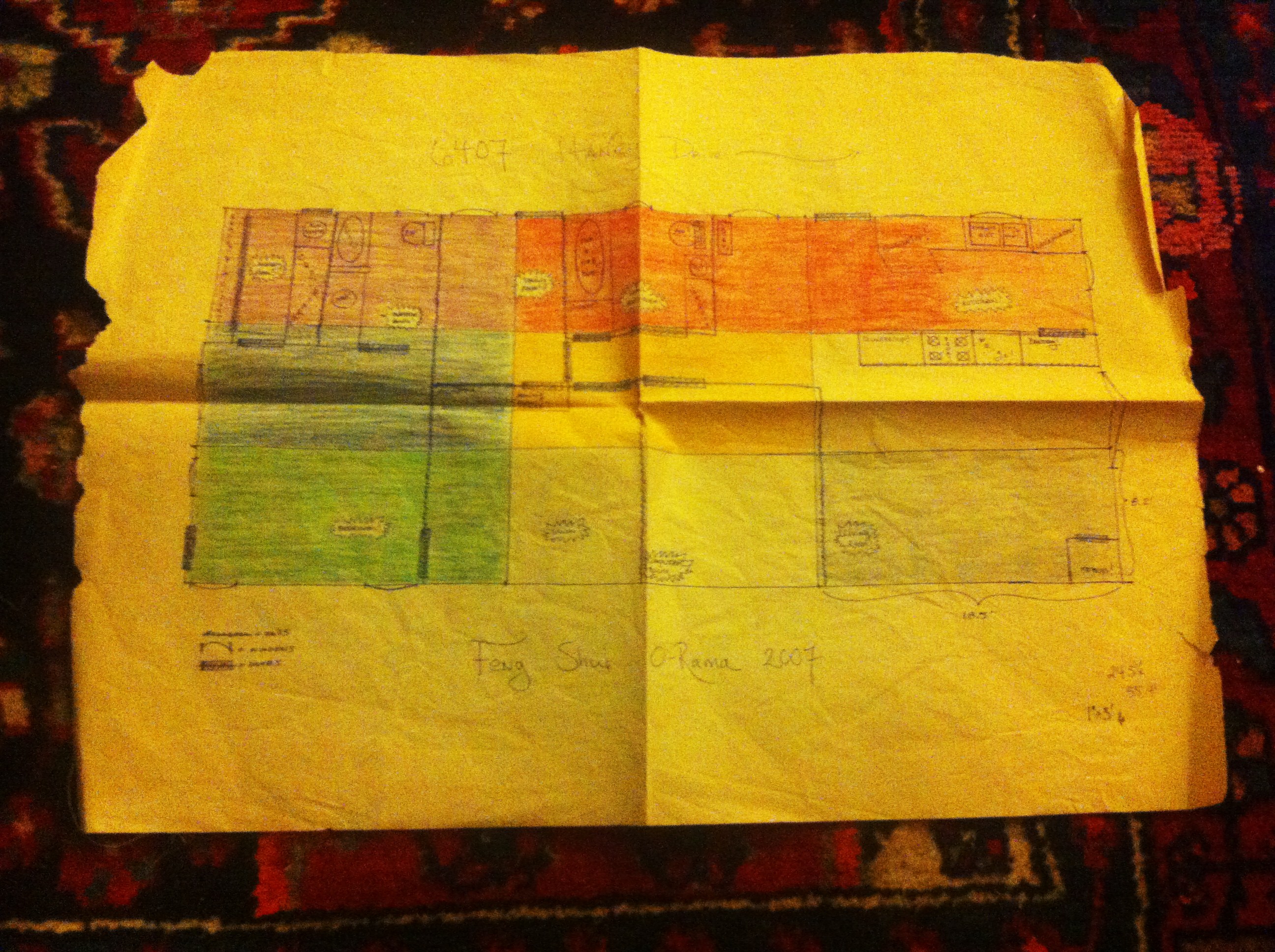
This was my house, until about four years ago. My house, the Haney House,  was the last place that I felt home, a place where I didn’t have to run from one thing to the next. It was a house in which I could stay, and paint the walls, and build gardens, and raise chickens.

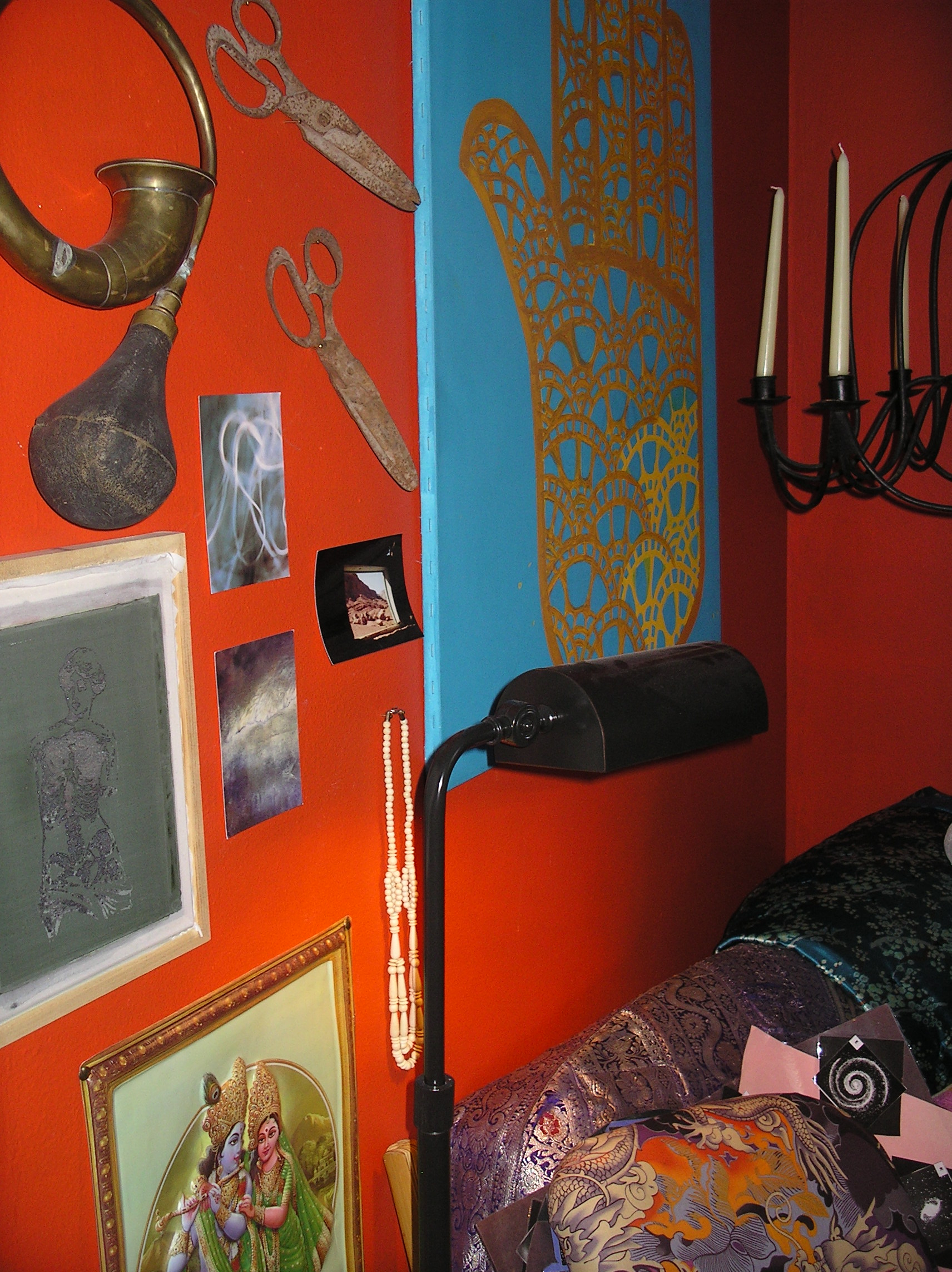
Whilst driving home tonight after dinner with my family, the almost full Moon was shining huge and bright through my windshield, and I realized with the pain that only nostalgia can bring, how much I miss my house. And yes, I miss the brick and mortar of that house, but mostly I miss the feeling I got when I walked inside at the end of long days. I miss waking up on weekends and going outside to work in my gardens. I miss the rustling-squawking of the hens in the mornings, and how they waddled towards me to get cracked corn through the fence. I miss the dark purple walls of the laundry room and the sun I painted in metallic gold paint on the ceiling of the hall bathroom. Although I don’t think I would ever paint another house with each room being a different, deep colour, I loved each room in that house, most especially the craft room with its dark orange walls, blue ceiling, and silver trim.

random july 15th too 001

Four years ago, in the spring of 2009, I was planting more native species in the bed in the front of the house, and building a raised bed in the side yard. I was hanging lights in the old Elm tree, and sitting outside at the blue table with elephants for legs. I was on the back porch with its sagging roof, surfing the Internet for tickets to Mexico and England, rubbing my hands on the old cotton tapestry that covered the plastic table, swinging in the Mexican hammock, building a house for grapevines out of re-bar.

So. Nostalgia: the pain of remembrance. Conveniently, we remember those things we wish to see in our minds eye, and forget much. This is perhaps a function of survival, of resilience, or perseverance. I remember the Haney House as the place in which I was married, in which I worked to make a home for my family; it was the house in which I expected I would have children, or at least, further expand my life from the point at which I found myself when we bought it in 2006. It wasn’t meant to be, because the box of life I found myself within did not make me fulfilled, and I chose to step out of it, into the harsh air, on my own.

2667_1127641190368_4480202_n

Tonight I sit here, in my little house on the ocean in Maine, and all is not perfect, and sometimes I get inconsiderate and impatient with life’s imperfections. Sometimes I wish for that sense of stability again, for a future that could be mapped out. But of course, even when we can see down the road, we cannot predict all of life’s curves and challenges, and even when we have what society calls stability, we have only the things that we can really hold in our hands, and everything else can be taken away in the blink of an eye, the movement of someone out the front door, or names signed on the lines of forms produced by the State of _________.

I have had a beautiful life, and each day, my life becomes more so. It is hard to see oneself through the eyes of others: in fact, it may be almost impossible. I have had so many adventures in such a short amount of time, and sometimes, I judge myself based on the failures, whether actual or just perceived, that I have encountered along the way, even though, to others, those failures are insignificant, or not failures at all.

2667_1127644710456_1297271_n

Maybe I will never settle down again. Maybe I will always be a wild woman. Maybe I will meet someone who is a true partner and find love and companionship and team spirit. Maybe I will always travel. Maybe I will always have a sense of home not tied to physical place, but to friends and experiences. Maybe I will be okay, finally, with who I am, despite the fears or uncertainties of others, including my family, and myself. Maybe I will always relish newness: visiting a perfect replica of the Alamo in central Mexico, listening to the eerie calls of loons on a lake in Maine while sitting on a floating dock, running up and down sand dunes in England, illegally importing cars in Belize, driving a Ford F150 through narrow streets in Canada. Maybe I will always be me, uncertain, changeable, flexible, flighty, loving, loyal, colourful, creative and kind.

2667_1127641390373_3508751_n

An Exhalation…

“Throw your dreams into space like a kite, and you do not know what it will bring back, a new life, a new friend, a new love, a new country.”

– Anais Nin

schieleLandscape – Egon Schiele 1913

IMG_2342Spring Shadows at Compass Harbor, Acadia National Park

“O thou with dewy locks, who lookest down
Thro’ the clear windows of the morning, turn
Thine angel eyes upon our western isle,
Which in full choir hails thy approach, O Spring!

reflectionReflections, Northeast Harbor

IMG_2330Tools and Toys from the Tool Barn, Hulls Cove

IMG_2336Beech Tree in Early Spring, Compass Harbor

IMG_2347Birch, Box and Block

“The hills tell each other, and the listening
Valleys hear; all our longing eyes are turned
Up to thy bright pavilions: issue forth,
And let thy holy feet visit our clime.

benchTools for Creativity

ideasIdeas

chainChain, Northeast Harbor

deconDeconstruction

“Come o’er the eastern hills, and let our winds
Kiss thy perfumed garments; let us taste
Thy morn and evening breath; scatter thy pearls
Upon our love-sick land that mourns for thee.

harborNortheast Harbor in April

IMG_2334A Dream, disguised

IMG_2337Birch Bark

rocksRocks, Northeast Harbor

mosaicsMosaics

solderingHeat & Oxidation

“O deck her forth with thy fair fingers; pour
Thy soft kisses on her bosom; and put
Thy golden crown upon her languished head,
Whose modest tresses were bound up for thee.”

– To Spring – William Blake

duskDusk, Northeast Harbor

reconReconstruction

“It is the function of art to renew our perception. What we are familiar with we cease to see. The writer shakes up the familiar scene, and, as if by magic, we see a new meaning in it.”

– Anais Nin

Oh Loulou!

“Loulou can’t remember exactly how she got mixed up with the poets. It wasn’t that she had any special thing for poets as such: it just happened that way. After the first one, the others just seemed to follow along naturally, almost as if they were tied to each other in a long line with a piece of string. They were always around, and she was so busy most of the time that she didn’t go out much to look for other types of men. Now that her business is doing so well you’d think she’d have more leisure time, but that just isn’t the case. And any leisure time she does have, she spends with the poets. They’re always nagging her about working too hard.

Bob was the first one, and also her first husband. He was in art school at the same time she was, until he decided he wasn’t suited for it. He wasn’t practical enough, he let things dry out: paint, clay, even the leftovers in his tiny refrigerator, as Loulou discovered the first night that she’d slept with him…

What he’d…said was that he’d fallen in love with her name. All the poets have done this, one after the other. The first symptom is that they ask her whether Loulou is short for something – Louise maybe? When she says no, they look at her in that slightly glazed way she recognizes instantly, as if they’ve never paid proper attention to her or even seen her before. This look is her favourite part of any new relationship with a man. It’s even better than the sex, although Loulou likes sex well enough and all the poets have been good in bed. But then, Loulou has never slept with a man she did not consider good in bed. She’s beginning to think this is because she has low standards.

At first Loulou was intrigued by this obsession with her name, mistaking it for an obsession with her, but it turned out to be no such thing. It was the gap that interested them, one of them had explained….

“The gap between the word and the thing signified,” Phil said.”

from Loulou; or, the Domestic Life of the Language by Margaret Atwood

Carousel

“I can only note that the past is beautiful because one never realises an emotion at the time. It expands later, and thus we don’t have complete emotions about the present, only about the past.”

– Virginia Woolf

carousel 6

I recognize them by their trucks: the men of the town. Very few women drive trucks, but almost all the men do. Silver F-150s, blue striped GMCs, black and bright green Chevy’s, red construction and demolition Peterbilts. In fact, I live behind a demolition company and walk past their fleet of oversized red trucks every day.

Yesterday, I walked down to the harbor to have lunch and conversation in a truck. It was the blue striped GMC. Its interior was dusty and reflected the country life of its owner: green shotgun shell on the dash, Old Crow Medicine Show music playing from the tape deck, a pack of Marlboros shoved into a cubby hole, an iPhone, a can of Monster, old coats, older boots. The interior was that heavy carpeting of 1980s American cars: the stuff that binds upon itself over time and becomes softer but tangled, stands up from the floors and walls of the truck. As I sat there, I was struck by the memory of my mom’s Oldsmobile station wagon: our childhood car that had the same carpeting all over its interior, and velveteen and vinyl seats.

When we were kids, my brother and I would sit in the trunk of the car because there was a rear-facing seat in there and we could stare out the back window of the wagon and pretend we were driving backwards. I don’t think they make those seats anymore; I have a strong attachment to that memory. Houston, Texas, blue Oldsmobile station wagon, my brother giggling, my mother managing us, moving us across that landscape that was so alien to her. Streets of white asphalt that crunched under wheels and feet, dust, pine trees, humidity, intense heat. Pine needles turned golden as they fell off in the summer and fall, pine cone wars with neighbor kids, swimming, popsicles, Jello eggs.

carousel 5

In high school, I spent much time in a town called Porter, Texas, which was about 45 minutes away from where I lived. Porter was home to my boyfriend’s grandmother, which is also where he lived most of the time. She lived on a few acres surrounded by a hurricane fence in an old, stationary trailer with an ornament of an eagle that hung off the pitched front window. In that kitchen I was served mashed potatoes and fried chicken and Kool-Aid and all kinds of other delicious things over about three years. There was a barn, too, and many, many rose bushes everywhere. She loved roses. There was also a large tree with a swing, a dirt road leading to the trailer, and whole lot of nothing else.

Porter, a town outside of Conroe and near Cut-n-Shoot, was in the piney woods of East Texas, on your way to Huntsville. The trees were tall and skinny, and shady. Despite the heat that seems to pervade all those memories, there was a calm in that shade, and I remember them moving in the wind. When it was very rainy, during the monsoons, sometimes, they would pop: literally explode from over-watering. They seemed to pop at different intervals, as if there were places in the trees naturally designed to expand into a large bubble of water and wood pulp. The smell of East Texas was strong, too: pine, and soil, and heat, and sweat. The sounds of trucks driving along the roads, lawnmowers, tractors, dogs barking, chainsaws. Raccoons lived there, in the woods, as well as copperheads and water moccasins in the rivers and streams. The sun streamed everywhere: I have so many patchworked memories of sitting in a patch of sun, on the dirt, on the ground, stirring it into designs with a stick, watching ants, playing with earthworms, drawing spirals and other shapes in the earth. I still do that, today.

carousel 3

I am experiencing a feeling of returning and it is very disorienting to me, as if I have been spinning on a carousel for a long, long time, and it is finally stopping; as if the blur of pictures that you see whilst riding a hobby horse on a carousel are slowing down and coming into focus. This place, the country of coastal Maine, not my town exactly, but the places around it, remind me so much of those country towns of East Texas. The people are similar, they drive the same trucks, they do the same things with their time. There are fir trees here, not pine, but the smells and sights are so similar. Of course, in East Texas there are no beautiful granite formations or islands or the ocean, but the feel is there. It’s as if I have returned after a very, very long time. And I suppose, in some ways, I have. Thirteen years away from your family makes returning scary and challenging: starting anew, again, for the third time in a few years, living in small towns in a place with such a long, long winter. Exploring options, trying to forge a path.

I was speaking with a friend about his new bathtub the other day, and how, when he took his inaugural soak, he was transported back to the bathtub in his parents’ house, a series of memories about forty years old. He said he remembered how it felt to be in the bath, how the walls in the bathroom looked, and the sensation of holding your breath under the water as long as possible. We all did that, didn’t we?

And yesterday’s lunch in the blue GMC, with its carpeting and velveteen-vinyl seats, transported me back to a childhood outside of Houston that, at many moments, I plain forget. I thought I had forgotten so many sights and smells and sounds and memories of growing up in the almost-country of east Texas, and yesterday all these things flooded back: the train track behind my high school where a friend of mine got drunk and passed out on the tracks and was run over, my best friend’s almost El Camino and racing boys in cars in it while smoking cigarettes and jamming to the Rolling Stones, my boyfriend’s 280ZX and sitting on his driveway in the afternoons after school. Driving to Huntsville to sit in the sunken rose gardens at Sam Houston State University, time spent at a strange lake house in Cold Spring when I was weeks away from graduation from high school. Camping in the woods in Nacogdoches, making forts in the woods with neighborhood kids, reading books on a blanket in the front yard and waving to the elderly lady who drove past me in her Cadillac each day.

carousel 2

My parents left Houston about six months after I graduated, and so I never returned there as an adult to have these memories cemented into my mind. Funny how things come flooding back, as you sit talking about nothing in particular, on a cold spring April day, looking at the water move against the dock, in a 1980s beat up pickup truck.

digging in the dirt 2Houston, 1987