A Japanese Puzzle Box

“Yes: I am a dreamer. For a dreamer is one who can only find his way by moonlight, and his punishment is that he sees the dawn before the rest of the world.” – Oscar Wilde

catphoto


A Japanese puzzle box

When I was a young girl of nineteen, I took a trip with my family to England, to move my Grandmother out of her old house and into an assisted living house. She was so excited because she never had to cook again, and I was so excited to listen to old stories and go through old things with her. Her family: uncles and cousins and a brother, traveled on old steamships across the world from the port of Liverpool, always bringing back magical presents from Asia, Africa and Australia to the women sitting and waiting back home.

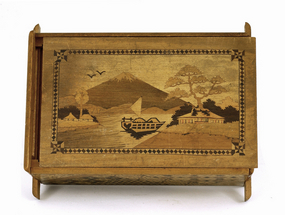
During that trip, my grandma gave me many things: an old porcelain shell-shaped ashtray, a Depression glass vase, a pressed-glass cigarette container, and a Japanese puzzle box. The box has no discernible openings, no drawers, and is inlaid on one side with birds and flowers, and the other with a mountain scene. Only she knew that if you slide the top panel to the right and the bottom to the left, that you discovered a hidden compartment: a drawer with a tiny button handle, in which you could store whatever you wanted.

———————-

Let us think about dreams for a second, a minute, an hour, a day. Dreams are, for me, what guide my decisions. My heart bends in one direction or another, tied fast to dreams of what life could be, what it could look like if I could realize the wishes and hopes in my mind. My gut tells me what feels right; deep in my body come the yeses and the nos that dictate what I know to be right and true for me.

My dreams, since moving to Maine over one year ago, are to realize, finally, my deepest wishes and desires. My dreams involve turning the looking glass inward and looking at myself, deep into my hazel-green eyes, and allowing my happiness and sadness to flow through me. My dreams are to let go of the control, of the planned future, and instead step into a place where I move through life doing the things that I want to do versus what will make others happy.

Realizing dreams is scary, and painful, and involves a hefty dose of selfishness. Realizing dreams also involves the acknowledgement that others may ask of you a justification, an explanation of behaviors or choices that do not make sense because they break with past patterns. Realizing dreams involves sitting down and having tea with yourself, and saying that the little person inside, the child if you will, has many unexpressed desires and missing pieces that must be delicately crafted.

Maybe life is like a puzzle: those long and sometimes dull games you play with old, wizened aunts who love horse-racing and overly-sugared cakes on rainy days when there is nothing else to do. Maybe you seek the four corners, laying them out carefully on the table, oriented correctly, and after that, you find the edge pieces, and build the frame. And maybe you never really finish the puzzle, but have to be content with searching through the pile of pieces for the next section that will come clear: the flowers, or the sky and its clouds. Maybe the puzzle pieces sit on a small table in the dining room for years and years, and every month or so you find a new piece that fits. And maybe you finish the puzzle, but maybe not. Perhaps the goal of the game is to be happy looking at the tiny pieces and wondering how they all fit together. These are the dreams, I think.

Sweet dreams.

puzzle purse 8x8 front


The Enormity of Spaces

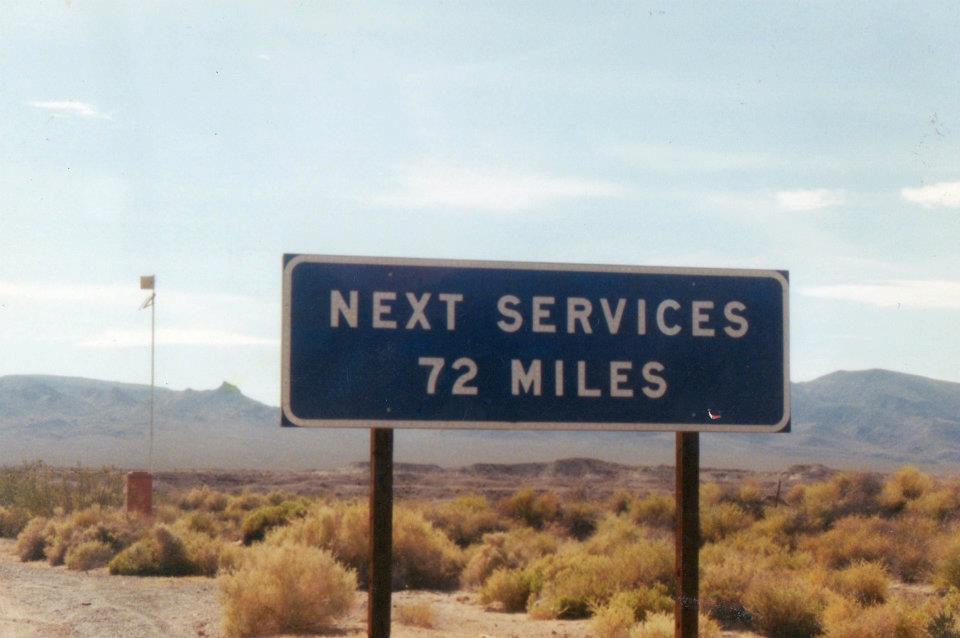
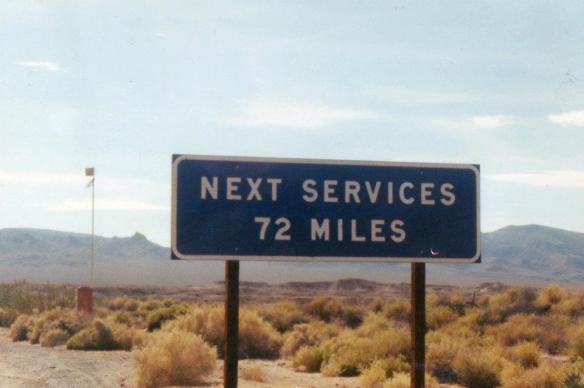
next servicesWhen I was 19 or 20, I have forgotten which, I went on a long road trip with a college boyfriend out west, from Austin all the way to Washington state and back. We traveled through New Mexico, Arizona, Utah, Nevada, California, Oregon, Washington, Wyoming, Montana, Idaho, and Colorado all in a blue Ford Taurus that looked a little more worse for wear when we returned two months after we had left.

A highlight of this trip was our stop at the Grand Canyon. Previous to a random stop in Pecos, Arizona, town of art and college students, we were, like everyone else, going to stop at the South Rim of the Grand Canyon, walk along the plexiglass bridge and marvel at the sights alongside throngs of other tourists. In Pecos, we stopped in a cooperative art gallery and I started chatting with the man working the gallery that day and he told us we should go to the Toruweap entrance instead, and so, we did.

painted desertThe Painted Desert, on the way to Toruweap

Toruweap is a hidden entrance to the Grand Canyon, one accessed by driving up into Mormon country and knowing where you are going because no one will give you directions. After a few turns here and there, you end up at the bottom of a valley with a very large sign at your right telling you the road ahead is 65 miles long and only suitable for all wheel drive vehicles. We pressed on in the Taurus, and two and a half hours later, arrived at a ranger station. We were allowed in and proceeded to drive along huge, flat slabs of limestone on our way to the rim of the canyon, at which point we parked and set up our tent, and walked to the edge of the canyon, realizing that we were the only ones there.

One of my first memories of the Grand Canyon campsite was looking around and noticing the largeness of that place. Later in the day, I walked through rattlesnake infested terrain, over rocks, and sat on the edge of the Grand Canyon, looking down. At that time, only the two of us were there and we were able to experience the Canyon in a way that most people do not: it was immense, many-layered, radiating with heat in the summer sunshine. I sat there a long while pondering how deep it really was, and how I could get down there, and what would happen if I were to fall?

That night we lit a campfire and stared at the stars, thinking about the monstrously huge cliff’s edge only a few feet from where we sat. In the morning, we woke up and went walking around, looking for strange rocks and plants, narrowly missing a rattlesnake, until we saw a small, white Toyota truck with a Utah license plate parked next to one of the picnic tables.

Walking up to the truck (we had already learned to just say hello to other folks on similar journeys to ours), we saw an old man with a long white beard, eating cantaloupe and drinking black coffee, reading Harry Potter and the Sorcerer’s Stone. Now here was an interesting character, who we learned had driven in late last night for the evening and was about to head home. We sat and shared cantaloupe and coffee, and talked about the world, and traveling, and quickly said goodbye to take off to our next stop: Arches National Park in Utah.
barn windowSalsbury Cove Barn Window

That trip was many years ago now, in fact it was something like twelve summers ago. If I look outside my window today, I see fog and dreariness: the markers of Maine spring. When I was a child, we would arrive in Maine every May and every time we pulled up the driveway of our camp house, with a grocery bag of chicken pot pies, tea, and who knows what else, it was always raining. My memories of Maine in late spring always involve fog, cold, and greyness.

sculptureSculpture and steps outside the jewelry studio at Haystack

It was been awhile since I have written here: too long, as life is passing me by quickly and the events that necessitate recording are piling up inside my mind. I haven’t written since just before leaving for my Haystack weekend, and suffice it to say, I am more than thrilled that I went and had that experience. I met many incredible people, made many things, learned how to be a baby blacksmith, drank a lot of bourbon, and didn’t really sleep for three days. Not sleeping turned out to be a bad decision as it left my body quite empty and shaken up for almost two weeks!!! No longer am I a woman who can party all night and stay up all day the next day…

early morning coffee cupsEarly morning light, many coffee cups…

At Haystack, also, the Maine spring was in full force and it was foggy and cold and clammy almost every day, culminating with our last day being downright soggy, slippery, and windy-cold. There are two bridges to Deer Isle: one is a green metal suspension bridge reminiscent of something you’d find in New York, and the other is a low stone bridge made of white stones that stand out in stark contrast to the grey and brown pebble beaches, the amber and golden seaweed, the green fir trees, the blue water, the white boats.

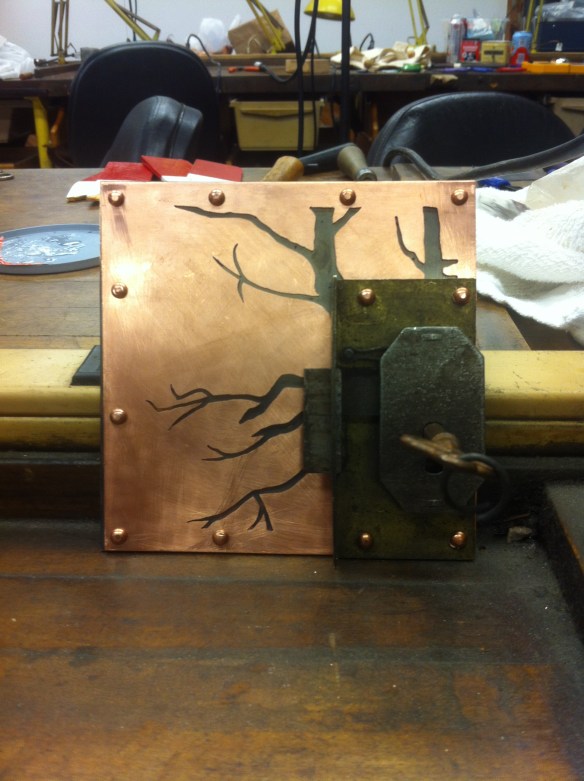
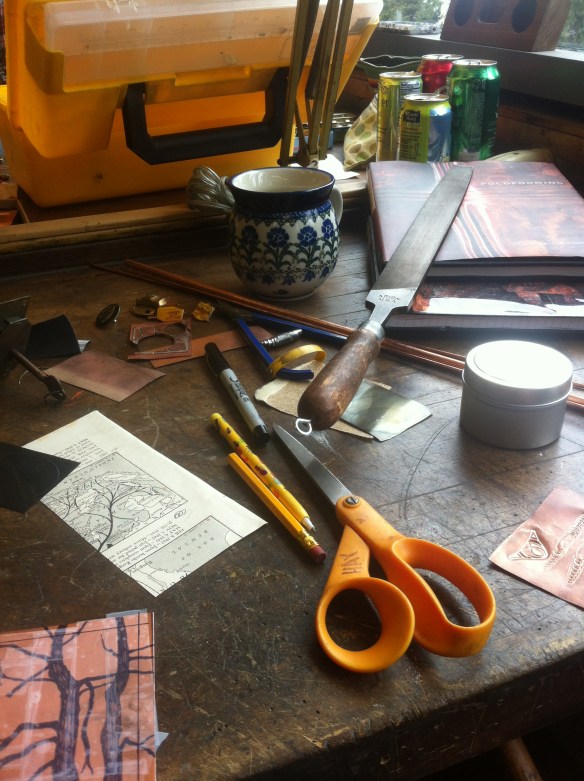
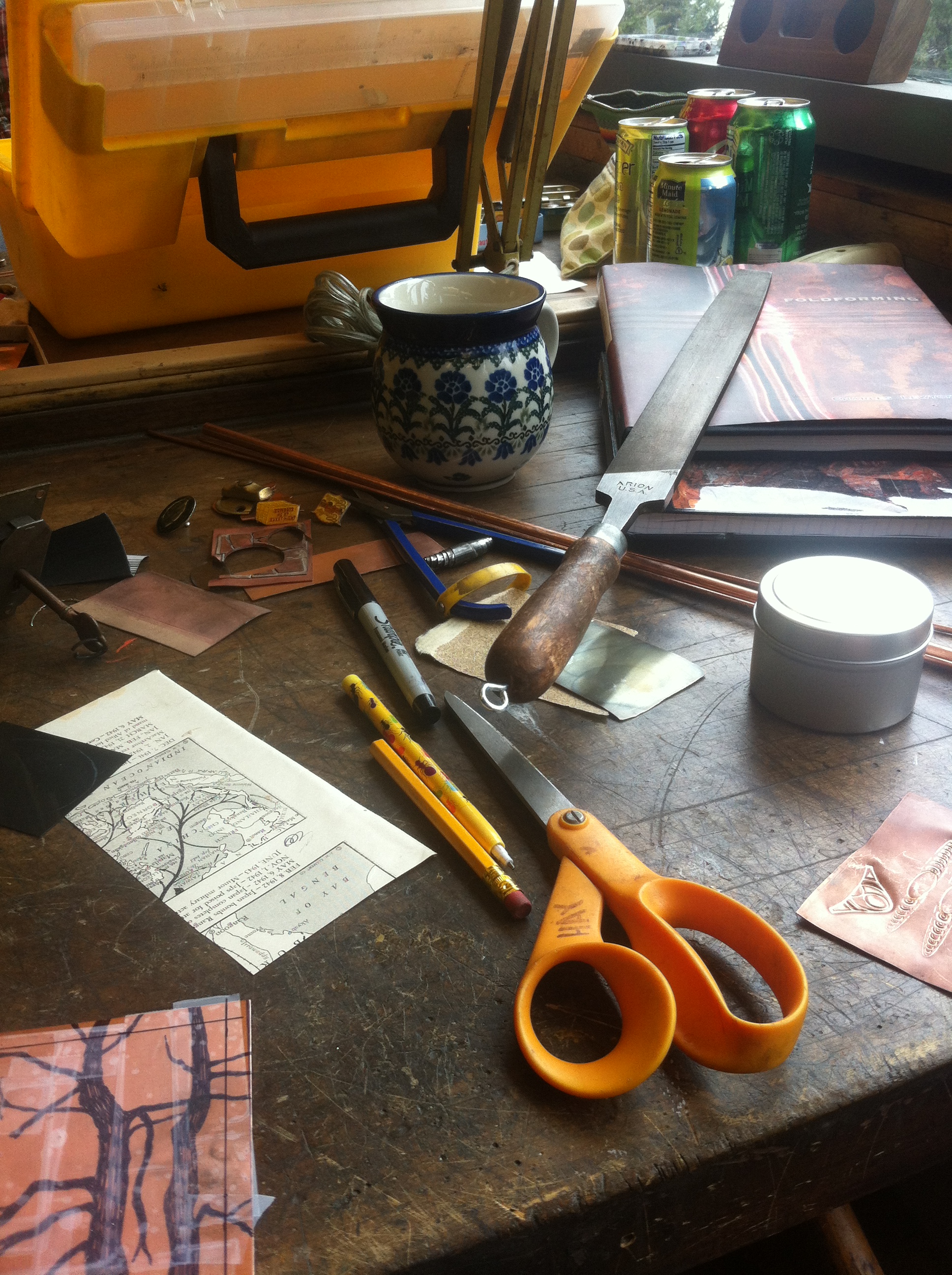
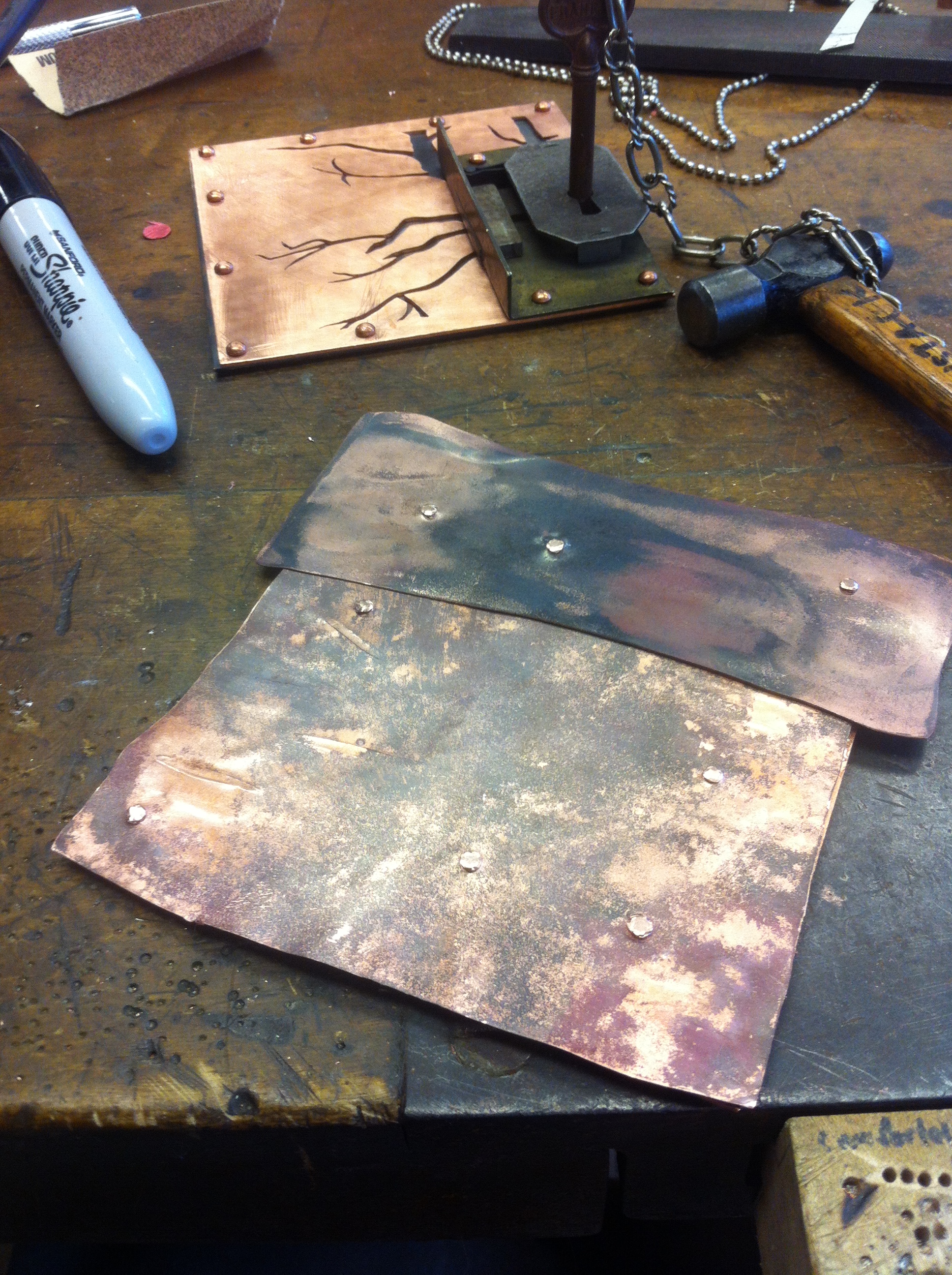
Haystack is a crafts school that was build in 1961 outside the village of Deer Isle, Maine, and sits on the edge of the ocean, on a small bay that is dotted with the fir covered islands so common to Downeast Maine. If you walk down to the bottom of the steps that run the length of the studios, and lean against the railing, you will see birds fishing and swimming in the water before you, some moorings, some lobster buoys, a large island draped with golden and amber seaweed, and many smaller islands laying long and flat along the horizon. If you sit down there at night when the wind is blowing, you will hear the banging of the cleats of the flag against the metal flagpole, and hear loons call their eerie song to you. You will see the nightlights passing through the wooden slats that make up the deck and stairs, and perfectly frame a pair of windy, Arthur Rackham trees that grow up out of the beach and against the bottom railing of the deck. These are the trees that became part of the top of the box that I worked on most of the weekend. The box is made of copper and bronze and a 100 year old lockset with key, copper rivets, and epoxy that covers a piece of paper from an old newspaper, asking the question: what shall we do with our daughters? What shall we, indeed?
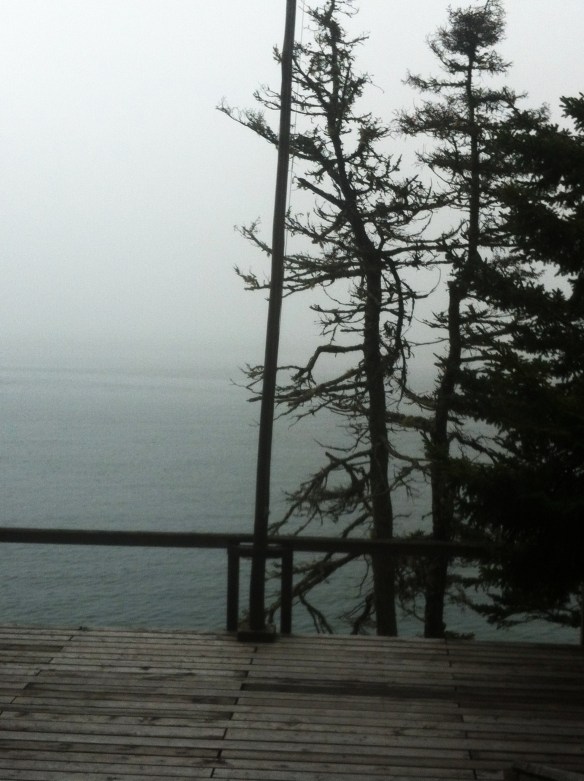
treesInspirational Trees

box topDo you see them?

Haystack helped me understand something about myself: that I crave the night spaces, the dark times, and that I like to work uninterrupted by others. I can work with others, as long as do not have to interact with them very much. The first night at Haystack I experimented with tools like the hydraulic press and their very fancy rolling mill and their many daps and dapping stumps and made a really beautiful, tiny vessel that looks, almost, like an autumn leaf.

vesselLate night fold forming experiment

The night spaces at Haystack are what are special: the coolness of nighttime, the sounds of the wind rustling the trees, the glow of orange and white lights out of studio windows. The sound that the sliding door made when I opened and shut it, knowing no one else was there, was immeasurably gratifying. Opening the studio door early in the morning and seeing the blue morning light cascading through large windows, casting the anvils, the tables, the lights, the walls in an eerie, silvery light. The smell of that studio reminded me of my old studio in Austin, but much, much colder, as if the environment that surrounded us on all four sides penetrated the walls, becoming part of the building itself.

studio instagramLate night, empty studio

haystack benchWork space

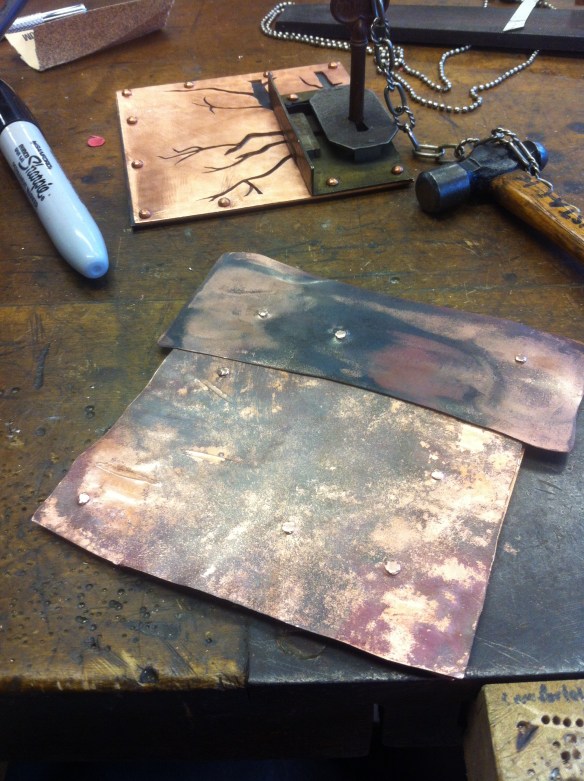
heat patinasExperimental heat patinas on paper-thin copper

heat patinas 2Detail

etchingsExperimenting with salt water etching

And that is, of course, my experience of life in Maine, that we are literally drawn into and become part of the landscape, and it of us. It is impossible to not be affected by and to effect the landscape, whether it be your footprints on old leaves whilst walking in the woods on a rainy day, or whether it simply be the memory of the way the birch trees with their white and black trunks look in contrast to their lime green new leaves. The landscape is burned into your mind, your heart, your soul, and becomes tied to its ever changing daily face, no two days the same, just like us.

When Haystack Weekend was over, and I was left completely exhausted after not sleeping the last night at all: I was blacksmithing til dawn and then just powered through to work on the box until crashing for about ten minutes at 9:30, my friend and I drove home along the windy roads of Downeast Maine, in the rain, talking about people, laughing about the weekend: making a wrong turn at one point, we ended up almost in Penobscot. The roads from Blue Hill to Deer Isle wind and wind, twist and turn around houses old and new, showing bushes bursting forth with spring color, lobster traps, old cars, hidden in the woods sometimes are even older houses, stone walls, and other mysteries that stay half hidden as the seasons keep rolling by.

It is hard for me to understand that in a few short days it will be the 1st of June, and that I have lived in Maine now for almost one year. I started writing here at the end of August of last year, and have watched the seasons change from summer to fall to winter to spring and soon, it will be summer again. Time keeps marching by, keeping its own pace, and we are simply swimming through, bearing witness to all the changes, small and large, planned and surprising.
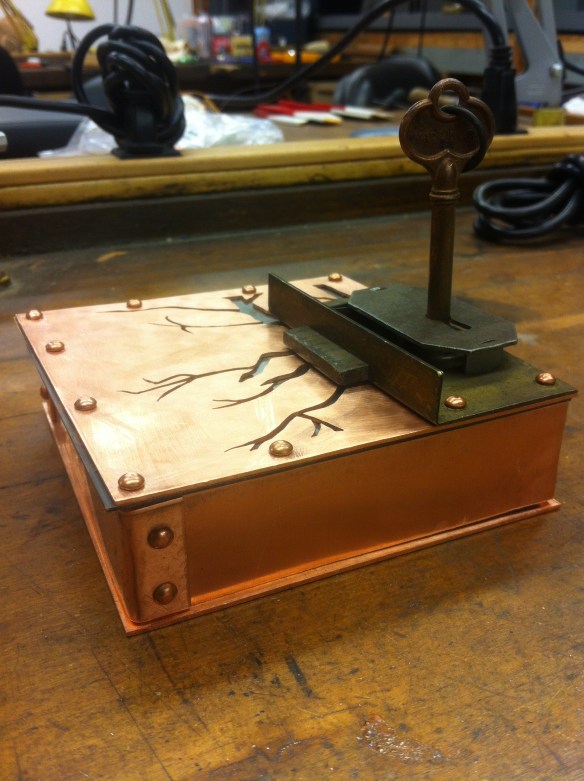
boxThe box

A Sense of Place in Time

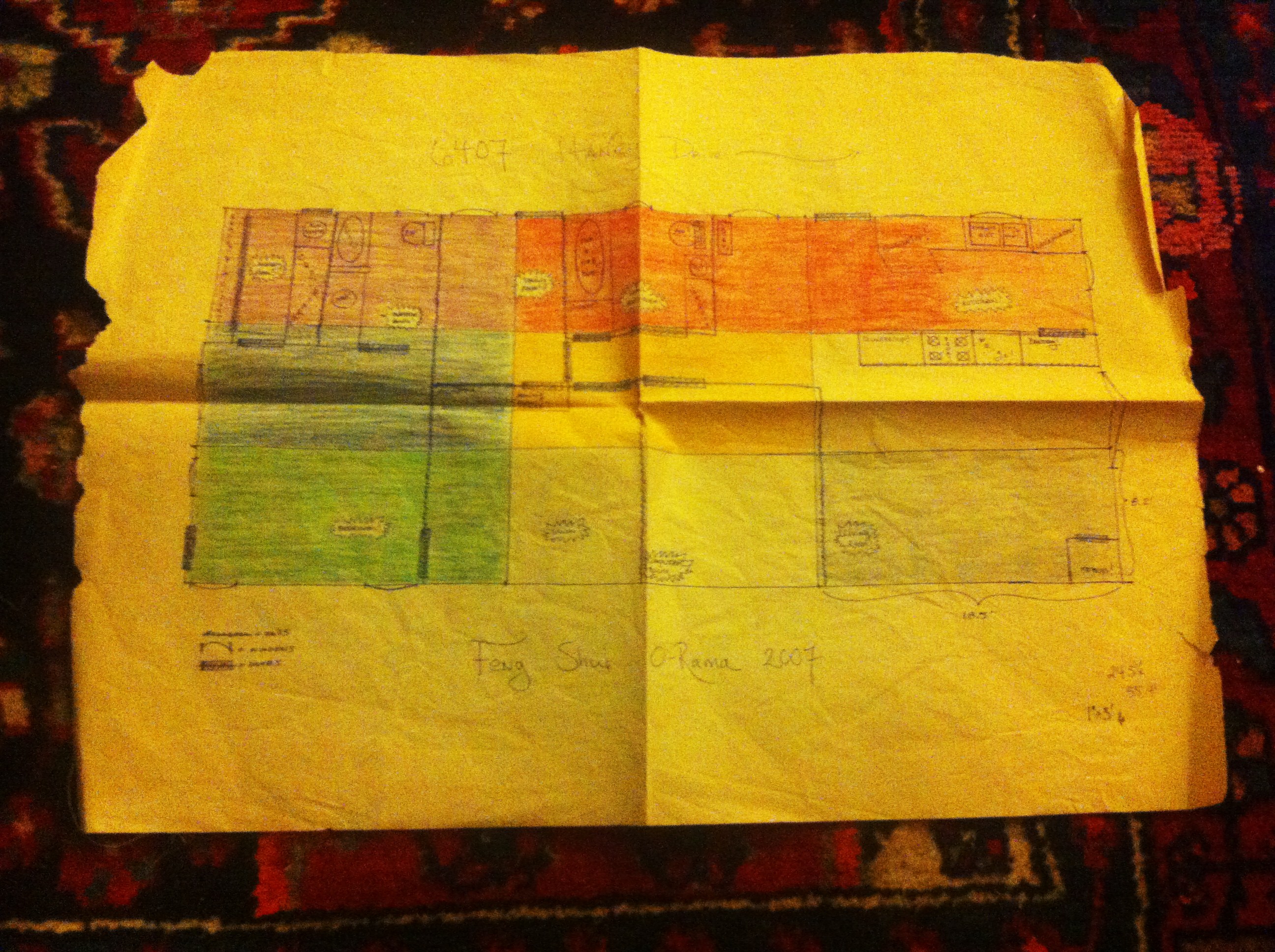
Haney House

This was my house, until about four years ago. My house, the Haney House,  was the last place that I felt home, a place where I didn’t have to run from one thing to the next. It was a house in which I could stay, and paint the walls, and build gardens, and raise chickens.

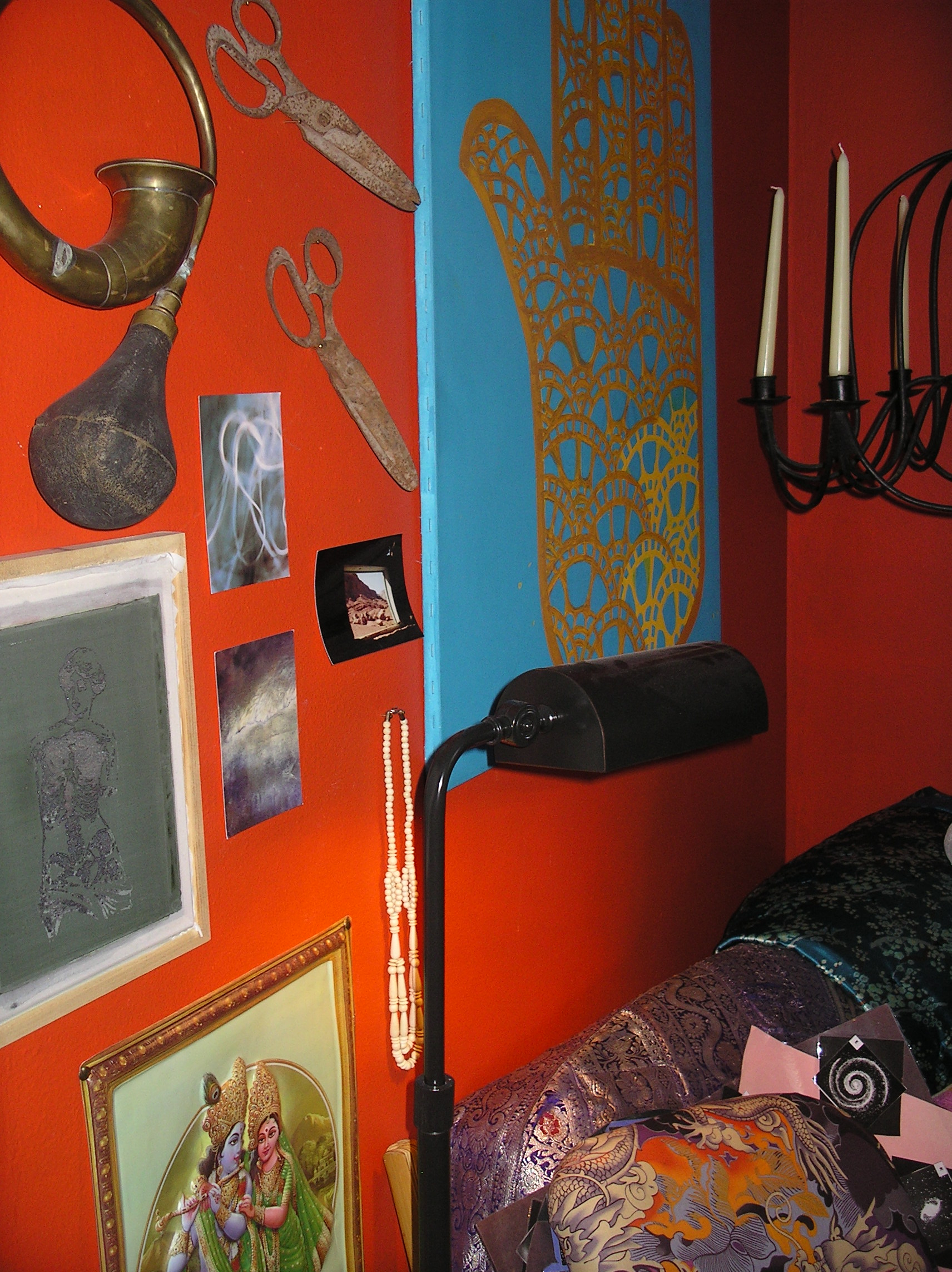
Whilst driving home tonight after dinner with my family, the almost full Moon was shining huge and bright through my windshield, and I realized with the pain that only nostalgia can bring, how much I miss my house. And yes, I miss the brick and mortar of that house, but mostly I miss the feeling I got when I walked inside at the end of long days. I miss waking up on weekends and going outside to work in my gardens. I miss the rustling-squawking of the hens in the mornings, and how they waddled towards me to get cracked corn through the fence. I miss the dark purple walls of the laundry room and the sun I painted in metallic gold paint on the ceiling of the hall bathroom. Although I don’t think I would ever paint another house with each room being a different, deep colour, I loved each room in that house, most especially the craft room with its dark orange walls, blue ceiling, and silver trim.

random july 15th too 001

Four years ago, in the spring of 2009, I was planting more native species in the bed in the front of the house, and building a raised bed in the side yard. I was hanging lights in the old Elm tree, and sitting outside at the blue table with elephants for legs. I was on the back porch with its sagging roof, surfing the Internet for tickets to Mexico and England, rubbing my hands on the old cotton tapestry that covered the plastic table, swinging in the Mexican hammock, building a house for grapevines out of re-bar.

So. Nostalgia: the pain of remembrance. Conveniently, we remember those things we wish to see in our minds eye, and forget much. This is perhaps a function of survival, of resilience, or perseverance. I remember the Haney House as the place in which I was married, in which I worked to make a home for my family; it was the house in which I expected I would have children, or at least, further expand my life from the point at which I found myself when we bought it in 2006. It wasn’t meant to be, because the box of life I found myself within did not make me fulfilled, and I chose to step out of it, into the harsh air, on my own.

2667_1127641190368_4480202_n

Tonight I sit here, in my little house on the ocean in Maine, and all is not perfect, and sometimes I get inconsiderate and impatient with life’s imperfections. Sometimes I wish for that sense of stability again, for a future that could be mapped out. But of course, even when we can see down the road, we cannot predict all of life’s curves and challenges, and even when we have what society calls stability, we have only the things that we can really hold in our hands, and everything else can be taken away in the blink of an eye, the movement of someone out the front door, or names signed on the lines of forms produced by the State of _________.

I have had a beautiful life, and each day, my life becomes more so. It is hard to see oneself through the eyes of others: in fact, it may be almost impossible. I have had so many adventures in such a short amount of time, and sometimes, I judge myself based on the failures, whether actual or just perceived, that I have encountered along the way, even though, to others, those failures are insignificant, or not failures at all.

2667_1127644710456_1297271_n

Maybe I will never settle down again. Maybe I will always be a wild woman. Maybe I will meet someone who is a true partner and find love and companionship and team spirit. Maybe I will always travel. Maybe I will always have a sense of home not tied to physical place, but to friends and experiences. Maybe I will be okay, finally, with who I am, despite the fears or uncertainties of others, including my family, and myself. Maybe I will always relish newness: visiting a perfect replica of the Alamo in central Mexico, listening to the eerie calls of loons on a lake in Maine while sitting on a floating dock, running up and down sand dunes in England, illegally importing cars in Belize, driving a Ford F150 through narrow streets in Canada. Maybe I will always be me, uncertain, changeable, flexible, flighty, loving, loyal, colourful, creative and kind.

2667_1127641390373_3508751_n

Carousel

“I can only note that the past is beautiful because one never realises an emotion at the time. It expands later, and thus we don’t have complete emotions about the present, only about the past.”

– Virginia Woolf

carousel 6

I recognize them by their trucks: the men of the town. Very few women drive trucks, but almost all the men do. Silver F-150s, blue striped GMCs, black and bright green Chevy’s, red construction and demolition Peterbilts. In fact, I live behind a demolition company and walk past their fleet of oversized red trucks every day.

Yesterday, I walked down to the harbor to have lunch and conversation in a truck. It was the blue striped GMC. Its interior was dusty and reflected the country life of its owner: green shotgun shell on the dash, Old Crow Medicine Show music playing from the tape deck, a pack of Marlboros shoved into a cubby hole, an iPhone, a can of Monster, old coats, older boots. The interior was that heavy carpeting of 1980s American cars: the stuff that binds upon itself over time and becomes softer but tangled, stands up from the floors and walls of the truck. As I sat there, I was struck by the memory of my mom’s Oldsmobile station wagon: our childhood car that had the same carpeting all over its interior, and velveteen and vinyl seats.

When we were kids, my brother and I would sit in the trunk of the car because there was a rear-facing seat in there and we could stare out the back window of the wagon and pretend we were driving backwards. I don’t think they make those seats anymore; I have a strong attachment to that memory. Houston, Texas, blue Oldsmobile station wagon, my brother giggling, my mother managing us, moving us across that landscape that was so alien to her. Streets of white asphalt that crunched under wheels and feet, dust, pine trees, humidity, intense heat. Pine needles turned golden as they fell off in the summer and fall, pine cone wars with neighbor kids, swimming, popsicles, Jello eggs.

carousel 5

In high school, I spent much time in a town called Porter, Texas, which was about 45 minutes away from where I lived. Porter was home to my boyfriend’s grandmother, which is also where he lived most of the time. She lived on a few acres surrounded by a hurricane fence in an old, stationary trailer with an ornament of an eagle that hung off the pitched front window. In that kitchen I was served mashed potatoes and fried chicken and Kool-Aid and all kinds of other delicious things over about three years. There was a barn, too, and many, many rose bushes everywhere. She loved roses. There was also a large tree with a swing, a dirt road leading to the trailer, and whole lot of nothing else.

Porter, a town outside of Conroe and near Cut-n-Shoot, was in the piney woods of East Texas, on your way to Huntsville. The trees were tall and skinny, and shady. Despite the heat that seems to pervade all those memories, there was a calm in that shade, and I remember them moving in the wind. When it was very rainy, during the monsoons, sometimes, they would pop: literally explode from over-watering. They seemed to pop at different intervals, as if there were places in the trees naturally designed to expand into a large bubble of water and wood pulp. The smell of East Texas was strong, too: pine, and soil, and heat, and sweat. The sounds of trucks driving along the roads, lawnmowers, tractors, dogs barking, chainsaws. Raccoons lived there, in the woods, as well as copperheads and water moccasins in the rivers and streams. The sun streamed everywhere: I have so many patchworked memories of sitting in a patch of sun, on the dirt, on the ground, stirring it into designs with a stick, watching ants, playing with earthworms, drawing spirals and other shapes in the earth. I still do that, today.

carousel 3

I am experiencing a feeling of returning and it is very disorienting to me, as if I have been spinning on a carousel for a long, long time, and it is finally stopping; as if the blur of pictures that you see whilst riding a hobby horse on a carousel are slowing down and coming into focus. This place, the country of coastal Maine, not my town exactly, but the places around it, remind me so much of those country towns of East Texas. The people are similar, they drive the same trucks, they do the same things with their time. There are fir trees here, not pine, but the smells and sights are so similar. Of course, in East Texas there are no beautiful granite formations or islands or the ocean, but the feel is there. It’s as if I have returned after a very, very long time. And I suppose, in some ways, I have. Thirteen years away from your family makes returning scary and challenging: starting anew, again, for the third time in a few years, living in small towns in a place with such a long, long winter. Exploring options, trying to forge a path.

I was speaking with a friend about his new bathtub the other day, and how, when he took his inaugural soak, he was transported back to the bathtub in his parents’ house, a series of memories about forty years old. He said he remembered how it felt to be in the bath, how the walls in the bathroom looked, and the sensation of holding your breath under the water as long as possible. We all did that, didn’t we?

And yesterday’s lunch in the blue GMC, with its carpeting and velveteen-vinyl seats, transported me back to a childhood outside of Houston that, at many moments, I plain forget. I thought I had forgotten so many sights and smells and sounds and memories of growing up in the almost-country of east Texas, and yesterday all these things flooded back: the train track behind my high school where a friend of mine got drunk and passed out on the tracks and was run over, my best friend’s almost El Camino and racing boys in cars in it while smoking cigarettes and jamming to the Rolling Stones, my boyfriend’s 280ZX and sitting on his driveway in the afternoons after school. Driving to Huntsville to sit in the sunken rose gardens at Sam Houston State University, time spent at a strange lake house in Cold Spring when I was weeks away from graduation from high school. Camping in the woods in Nacogdoches, making forts in the woods with neighborhood kids, reading books on a blanket in the front yard and waving to the elderly lady who drove past me in her Cadillac each day.

carousel 2

My parents left Houston about six months after I graduated, and so I never returned there as an adult to have these memories cemented into my mind. Funny how things come flooding back, as you sit talking about nothing in particular, on a cold spring April day, looking at the water move against the dock, in a 1980s beat up pickup truck.

digging in the dirt 2Houston, 1987

I Wake to Sleep, and Take My Waking Slow

“Reflection must be reserved for solitary hours; whenever she was alone, she gave way to it as the greatest relief; and not a day went by without a solitary walk, in which she might indulge in all the delight of unpleasant recollections.”

Jane Austen

path

On Sunday, I begin housesitting at a beautiful post-and-beam house in the woods. This house is made of wood and windows, and is populated by ten cats who perch on shelves and beams and chairs and stairs. Outside are twelve large chickens who live in a henhouse with a red light, and two giant angora bunnies with tufted ears. Inside, in a black cage that hangs from the ceiling are two lady canaries who, I was informed, occasionally lay tiny eggs which, when cooked, have whites that stay clear, not turning to white as chicken eggs do.

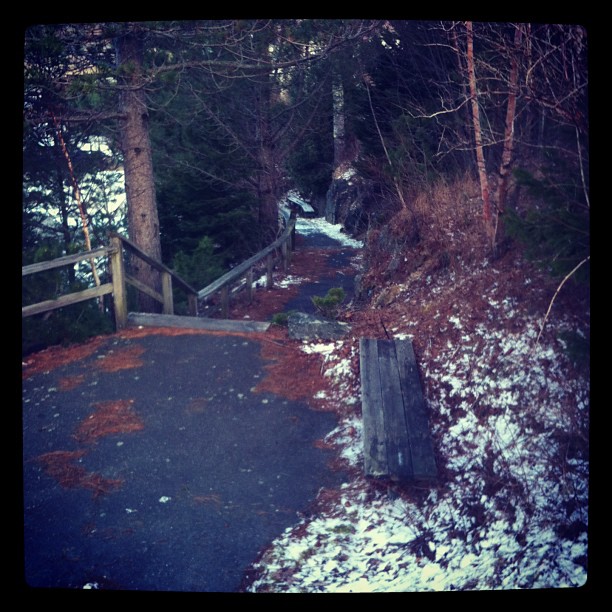
During this housesit, this time in the woods, this time away from town, I am embarking on a daily writing and photography project, which will, of course, begin and end here. A photograph of the day, at least, and a prompt will frame the course of the day. Almost two weeks of time alone, to reflect on all that has happened, to prepare for the coming spring, to think about what lies ahead. The steps, still, are a bit murky, are still covered with snow and ice. The path’s end isn’t clear, as has been the case now for many months. I am beginning to be comfortable with the unknowns, with the trust that I will be borne by the universe, carried by my community, and spurred forth by love and faith in myself, by friends, by putting one foot in front of the other. I am looking forward to this small vacation in a home away from home.

I wake to sleep, and take my waking slow.
I feel my fate in what I cannot fear.
I learn by going where I have to go.

We think by feeling. What is there to know?
I hear my being dance from ear to ear.
I wake to sleep, and take my waking slow.

Of those so close beside me, which are you?
God bless the Ground! I shall walk softly there,
And learn by going where I have to go.

Light takes the Tree; but who can tell us how?
The lowly worm climbs up a winding stair;
I wake to sleep, and take my waking slow.

Great Nature has another thing to do
To you and me, so take the lively air,
And, lovely, learn by going where to go.

This shaking keeps me steady. I should know.
What falls away is always. And is near.
I wake to sleep, and take my waking slow.
I learn by going where I have to go.

Theodore Roethke

Time Capsules

cowboy boots

I have been many things in my short life. I have been a camp counselor for young students at the Museum of Natural History in Houston, as well as a genetics lab research assistant (I mostly did what I was told and spent a lot of time inside a giant freezer cataloguing little vials). I have been a bead- and oddities-seller in Austin, as well as a middle school science teacher. I have been a gallery girl in central Mexico, as well as a governess who conducted class on the brick patio of a beautiful hotel. I have been a gardener in New York City, as well as the personal assistant and later business manager of an art dealer. I have been a cross-country-traveling event planner. I have been a middle school teacher in Philadelphia. I have been a gallery girl in Maine, and now a jeweler, seamstress, drawing model, dog- and house-sitter, tutor, teacher, and writer.

ice melting 3

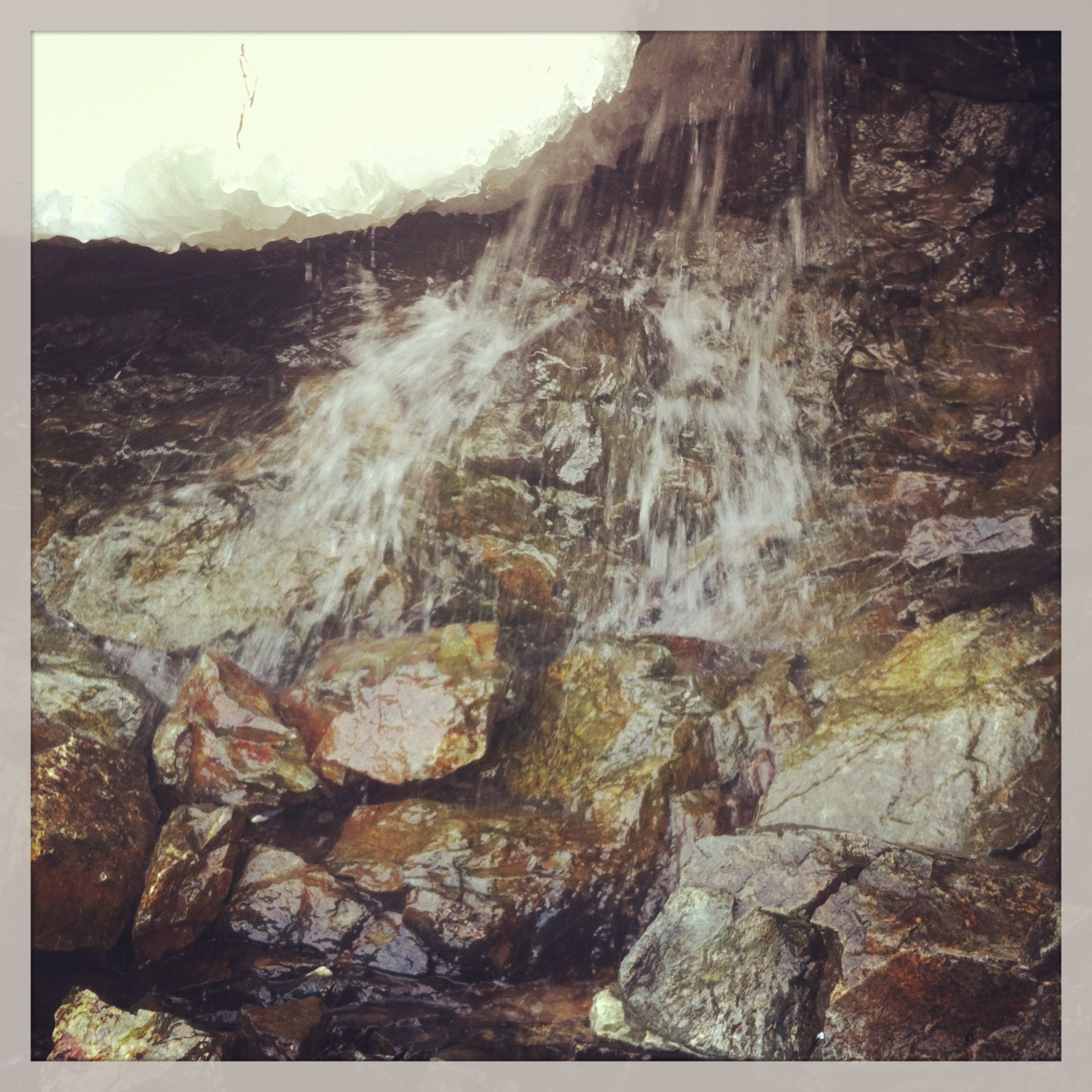
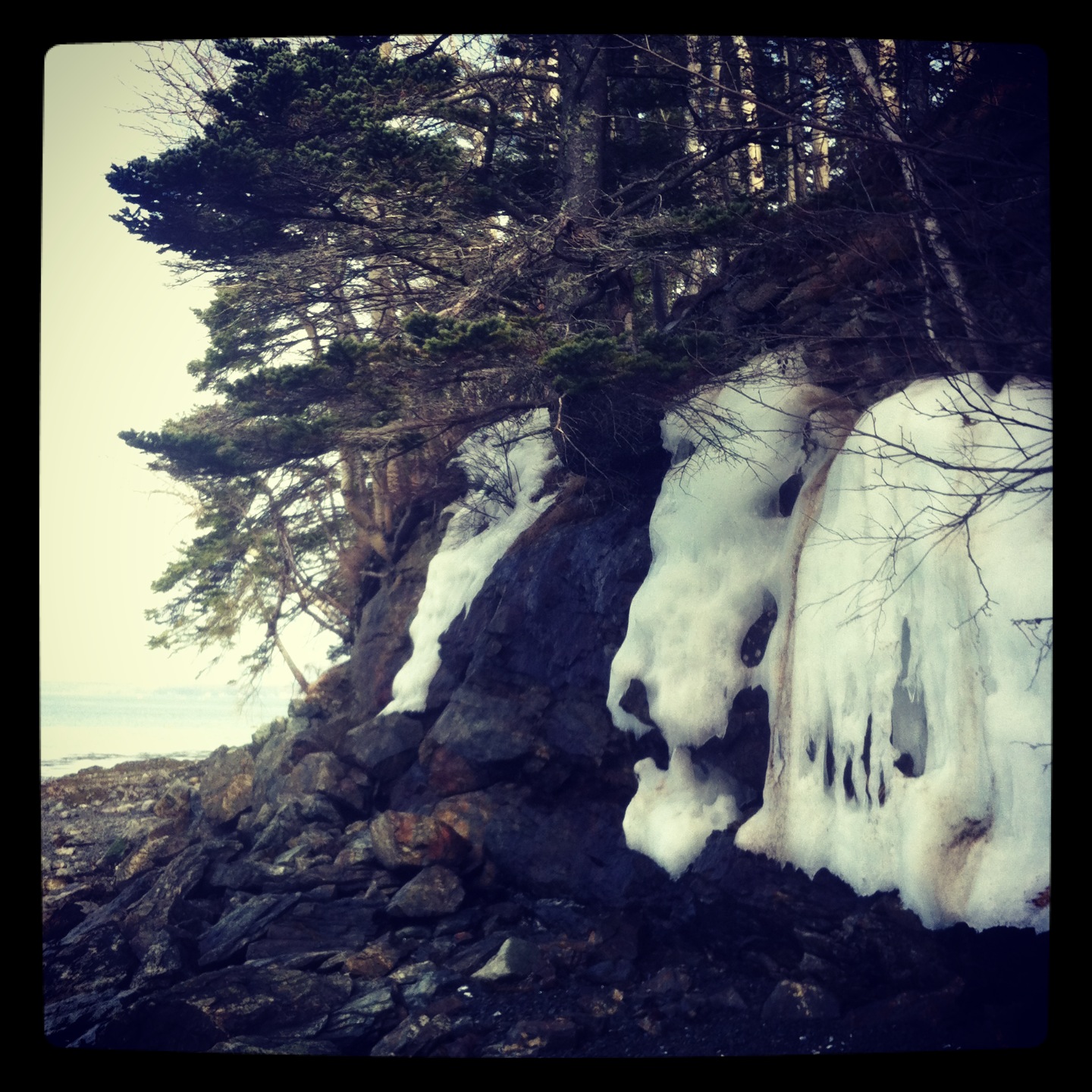
The ice is melting: winter is slowly coming to an end. Water is seeping and sometimes rushing out into the landscape. Little Long Pond, scene of so many early morning ice skates, is now covered with sheets of ice and water all around the edges. Gone is the deep cold, replaced by mud and water, by slush and a landscape that seems to spit up onto your clothes, your car, your everything. There were no deafening cracks or booms as the ice cracked and melted, as I had hoped, just a slow process of light returning, the path of sunlight expanding onto our landscape as if the beam of light was being pulled back, further away, its path widening as each day passed. The sunlight breathed life back into the wilderness, as if finally, after many months, the land began to exhale and inhale again, no longer holding its breath, steeling itself against winter.

grandpa

I received quite a gift today.

In my bedroom for as long as I can remember, I have hung a picture embroidered by my great Grandmother. It depicts two owls, one smiling sweetly at the other, in the tops of grapefruit trees. The colours are green and yellow and brown, and it is something that makes my bedroom feel complete: without it, something is missing. When I moved to Maine last June, the glass in the picture broke due to the overwhelming amount of stuff I had packed into my VW station wagon. My mom took it to the frame shop a few weeks ago to replace the glass, and hidden inside the frame was a note written to me by my Grandpa, for my 1st birthday:

“Canvas done by Mrs McDowell (Grandmother’s mother) between 1940 1942 during the air raids on Liverpool. For P.M. Blythe With Love 1st Birthday” (Also inscribed is 1981 and his name, to the right)

Neither I nor my mother knew this note was hidden inside the frame, and had the glass never broken, we would have never known. Discovering time capsules, like this one, is a bittersweet gift that comes around not often. My Grandpa died in 1994, when I was in 7th grade, the year my parents lost all their money and our family life significantly changed. I remember being a latch-key kid for the first time that year; our front door had a terrible stained glass design of a duck flying through cattails on it. The entryway was linoleum, beige in colour, and the rest of the house was carpeted in drab brown. I remember, when Grandpa died, when we all couldn’t go to England because we couldn’t afford it, and I think were probably limping along quite a bit in those days, being so sad because he was one of my favorite people in the world, if not the favorite. I hadn’t seen him, at that time, in four or five years, and had missed the ending of his life. Those days were hard days for many reasons, and I remember sitting on the linoleum floor by the front door, after school, alone in the house as my brother was outside playing, crying desperately with the knowledge that I would never see him again.

salisbury cove

Once, when my grandparents visited, we went to Galveston as a family and walked around The Strand. I think that my Grandpa really liked the States; he always found humour in our culture here no matter where we took him. After he died, my mom and brother and I went to Galveston one day, and I was walking around my favorite store there: a junk and antique shop full of curiousities. I looked up and saw an old man with bright white hair, a button down shirt and glasses, with a camera around his neck. It was him! I turned to tell my mom, couldn’t find her, turned back around, and of course, he was gone.

ice melting 2

Later, I had a dream that we were all together at the church yard where he is buried, where also my grandparents were married. It is a tiny church, built of old mossy stone, with a yard of graves around three sides. In my dream, our whole family was together: grandma, aunt, cousins, parents, children. We were walking through a churchyard and Grandpa appeared to us, only he was very young: as he was in photos of him during the war. He was smiling and happy, with his strong jaw and bright eyes. We spent time together: the time you can only spend in dreams, when you are not exactly sure how much time has passed, whether it is mere moments, or days, or months. We were all so happy just to be together: my Grandma especially (he died months before their 50th wedding anniversary). Then, suddenly, an array of white stones, set out in the pattern of an English cross, the St George’s cross with its even arms, began to hop up and down, tapping onto the flagstones but keeping their arrangement. He turned to us all and told us he loved us, but that he had to go. We all said goodbye. I haven’t seen him since, haven’t heard from him either.

That is, until yesterday. Love survives: I shall never doubt that again.

breakfast with grandpaBreakfast with Grandpa in 1987 in Formby, Liverpool, England…I would sneak downstairs to have breakfast with him before anyone else was awake.

I’m Not Young Enough To Know Everything

“All the world is made of faith, and trust, and pixie dust.”

J.M. Barrie, Peter Pan


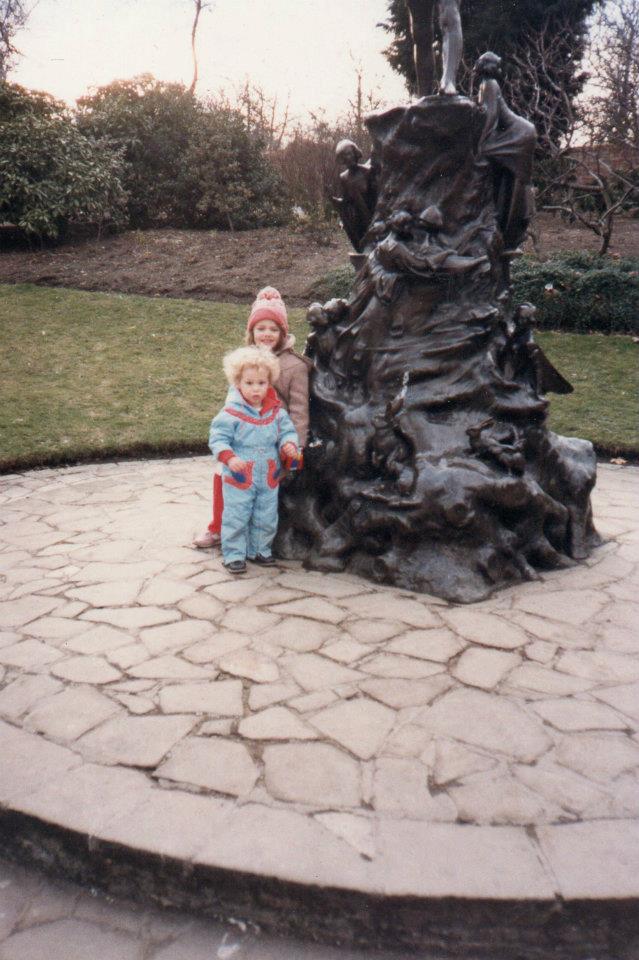
426299_3462935531267_2111031890_nMy brother and I at the Peter Pan statue in Kensington Gardens, London…in 1986…

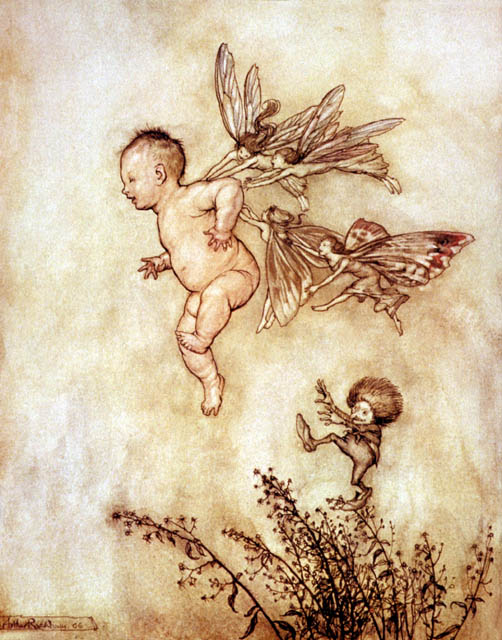
My first tattoo is quite terrible, and in a terribly predictable spot on my body. My “Tramp Stamp” is of one of the faeries from the book “Peter Pan in Kensington Gardens” by J.M. Barrie. This specific faerie was drawn by Arthur Rackham, my favorite children’s book illustrator, and is a depiction of one of the faeries who carry lonely, orphaned and abandoned Peter to safety. The tattoo was made many years ago, when I was all of nineteen, at a tattoo shop on 6th Street in Austin, before I knew anything about getting tattoos. It fades with each passing year, and needs to be retouched very much. But, the sentiment of it remains.

peter_with_fairies

Today, I am reminded, from the advice of my wonderful friend Julie, to be grateful everyday for all the things that are happening. To keep the faith, so to speak. I wrote the following in my journal the other night. I typically don’t combine my journals with the blog, but will today…

“Always remember each lesson, each truth as it is revealed, and be grateful for each, even if in hindsight.

Always remember the power of being true to myself, and that boundaries don’t have to be walls.

Always remember the raw beauty of love, of being in love, even if I fall in love with not the right people…be able to love, and to really understand love as accepting the differences between myself and other people and being able to see the beauty of others through seeing the world through their eyes: to accept others, to really forgive.

To let people teach me, even if their way is confusing or difficult or different from the way I would like.

Remember to be grateful just to have this time to make these realizations. To understand unconditional love and do my best to let go of fear. To be peaceful and loving and happy. To accept people’s faults and my own. To believe people’s compliments.

For more on the Snow Moon, you can read Angel’s more detailed interpretation of the impact of February on the psyche here…..

02 arthur.rackham.imagina.1914.frontispiece.

Six Houses in One Year

“We travel, some of us forever, to seek other states, other lives, other souls.”

– Anais Nin

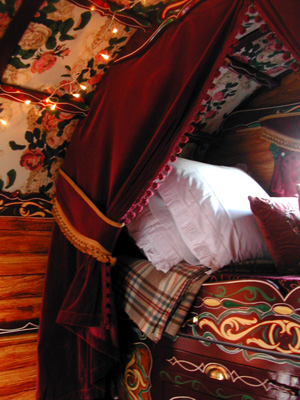
Gypsy Caravan Simple Sue 2The tiny, less than 350 square foot-ness of my new house is making me think of the interiors of caravans. When I was a little girl, we would drive through the countryside in England and sometimes, I would be lucky enough to catch sight of these in fields. I have always dreamed of making one of my own…

I have lived a vagabond lifestyle over the past year; leaving my row house in South Philly last April started a path of moving every month or two, from house to house.When I move into the new house next week, it will be my sixth home in one year. A year ago, I lived on Rosewood Street, in between Broad Street and Mifflin Street in the Newbold neighborhood of South Philly. About one year ago, my house was broken into and everything I owned was thrown into piles of disarray in the living room, kitchen, and bedrooms. I remember walking through the door that day, into the darkness of the living room, darkness created by heavy velvet curtains on the front windows, and noticed the cushions of the couch, books, decorations were all jumbled on the floor, tumbled into a giant mess. When I walked upstairs into my room, my mattress was tossed in one direction, and everything in my bedroom was torn asunder, cabinets opened, shelves ripped apart, everything on the floor as if a tornado had ripped it all apart.

tumblr_m4x9jp6UsE1r1qrlfo1_400

I remember that night vividly, despite the tequila haze that clouded my vision. I spent the whole night on my leather couch, after putting it back together, calling everyone I knew and trying to figure out how this all happened. I kept walking upstairs to try to deal with my bedroom, only to see it again, and walk back downstairs. It took me 24 hours to be able to even go into that room.

After that day, I never felt safe in the house, and ceased to sleep well. It has taken until the last few weeks to be able to sleep well again. About a month after that, my roommate and I got rid of all but our most important possessions, and moved out: she to her brother’s house, and me to my friend’s. That was house #2, in Germantown. It was a beautiful house filled with a beautiful family and their many pets: I shared a room with a canary who sang. House #3 came about a month or so later, when I drove to Maine and landed in my parent’s basement. I took every sheet I could find and made the basement into a giant tent, in which I lived until August. In August, I moved into House #4 in Seal Harbor, Maine; a house with no cell phone reception. I had to walk one mile to the beach to use my phone, and spent many nights there sitting at the dining room table, facing my demons, writing about them, meeting them halfway. I spent nights sitting on the Seal Harbor beach sketching, and drank tea on the rocks in the waning summer sunlight.  In late September, I traveled across the country, and then returned to Maine in late October, moving into house #5, on Lookout Lane in Northeast Harbor. Here I have been, in the house that floats above the street, in this beautiful garage apartment, until now. Next week, I shall gather together the few possessions that I have in bins and boxes, and trundle across town to the new house. The house that I don’t have to leave, because, although I am still a renter, it is mine.

The little house that sleeps on the harbor, up on a hill, next to a day parking lot, and a tree-lined path down to the ocean. Across the street from a few houses, an art studio, a restaurant, and a jewelry gallery, behind a museum and a demolition company with a fleet of red trucks.

Winter Storm Advisory

blizzard 6

View from my living room window

I thought I would take a walk today, but nature had other plans: the first blizzard of this season, pouring down snow, blowing fiercely through trees and around houses in this tiny town. The snow has been falling now for several hours, and the wind is fierce, loud, tearing. It sounds as if it will rip the roof, or at least the shingles, off the house and open up my little home to the elements. It is cold, and wet and harsh: a real Maine winter’s day.

blizzard

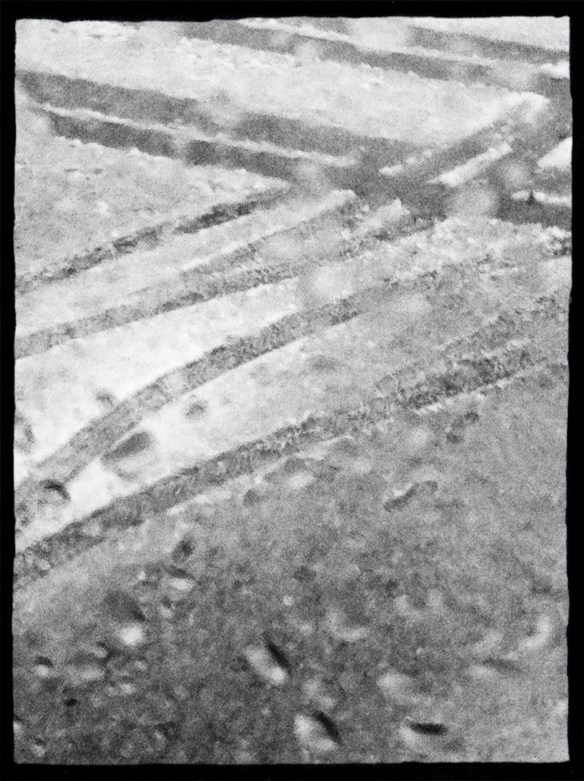
Tire tracks in snow

As I sit here, writing, listening to the icy wind, the sounds of pieces of ice being thrown down my street, through tree branches, decorating the wood of trees and the steps of houses with squishy-squashy piles of snowy mush, the darkness of a winter’s day hangs at the edges. Today is a day where it will never really get light, despite our steady march toward the light again, now that the solstice is passed.

blizzard 4

Trees

Last night was a cold, clear night in which the moon hung like a small, round beacon, tall in the sky. My friend came to my studio last night to tell me to come outside and look at the moon. We stood on the porch and gazed at our satellite – perfect and white-grey in the nighttime, framed by the glimmering glow of two planets. Later, after an amazing Italian-Greek-Maine style pasta dinner, after mouthfuls of anchovies and olives and raw garlic and American Parmesan cheese (the only type we could find in the Pine Tree Market last night), we went outside again, bundled up in jackets and hats against the cold, and held high-powered binoculars in steady hands to look at the man in the moon. He disappears when you look too closely at him: then all you can see are the waterless seas, the craters, the mountains, all of those features thousands of miles away, yet, so close.

We listened to the glug-glug-glug of a wine bottle pouring Bordeaux into old glasses, holding the neck of the bottle up to our ears, closely. I climbed upstairs and looked at all of his garlic held in suspension above the room, in the rafters of the roof. I looked at a red and black and white wool blanket over a bed that has never been used, stared at two red owls, swooping in suspended animation, hanging from the ceiling. I gazed upon piles of old National Geographic magazines, perfectly tied into bundles, stacked in a corner. On the floor are seeds of basil and dirt from the garlic heads: all fallen from ceiling to floor since they were put up in the fall. That room smells of dry pine, garlic, basil and sage. At night it is golden, full of light, and the windows are dark black, staring out into the sky, out at the moon.

blizzard 5

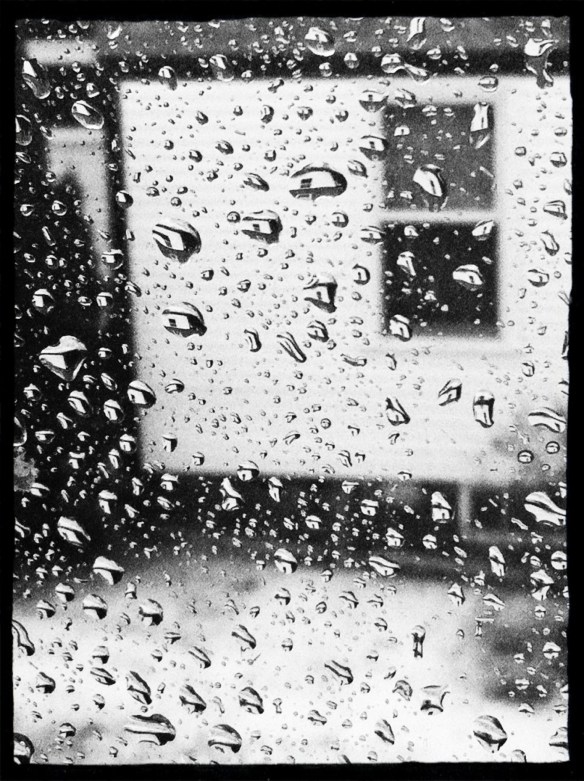
Do you see the shape of my neighbor’s house reflected in the water droplets?

What a place of magic this is, this mysterious home of mine. This place that is full of people yet feels so empty. This place whose stillness is magnified on days like today as snow falls and you see no one move, knowing that everyone, like you, is inside, being cozy, staring out the windows at the day as it passes, wondering what will happen, if the power will stay on, if there are enough candles, if the blankets are warm enough.

There is a beauty and  a strength to stillness: to the perception of self that comes when one is alone as the blizzard rages outside. To the awareness of one’s body sitting on a white couch, under a pink blanket, coffee brewing on the counter to your left. Wind howling, sky white-grey, oak tree branches black; even the birds seem to be hunkered down today as I haven’t seen them. Maybe it’s time to go outside and visit the birch trees down on the Sound, to see how they are faring on a day like today. Or maybe, sit and sew awhile, and see how the time passes.

blizzard 2

Rooftop, Trees, Fireside….

A Clear Eye and a Full Purse

“Being solitary is being alone well: being alone luxuriously immersed in the doings of your own choice, aware of the fullness of your one presence rather than the absence of others. Because solitude is an achievement.”

Alice Koller

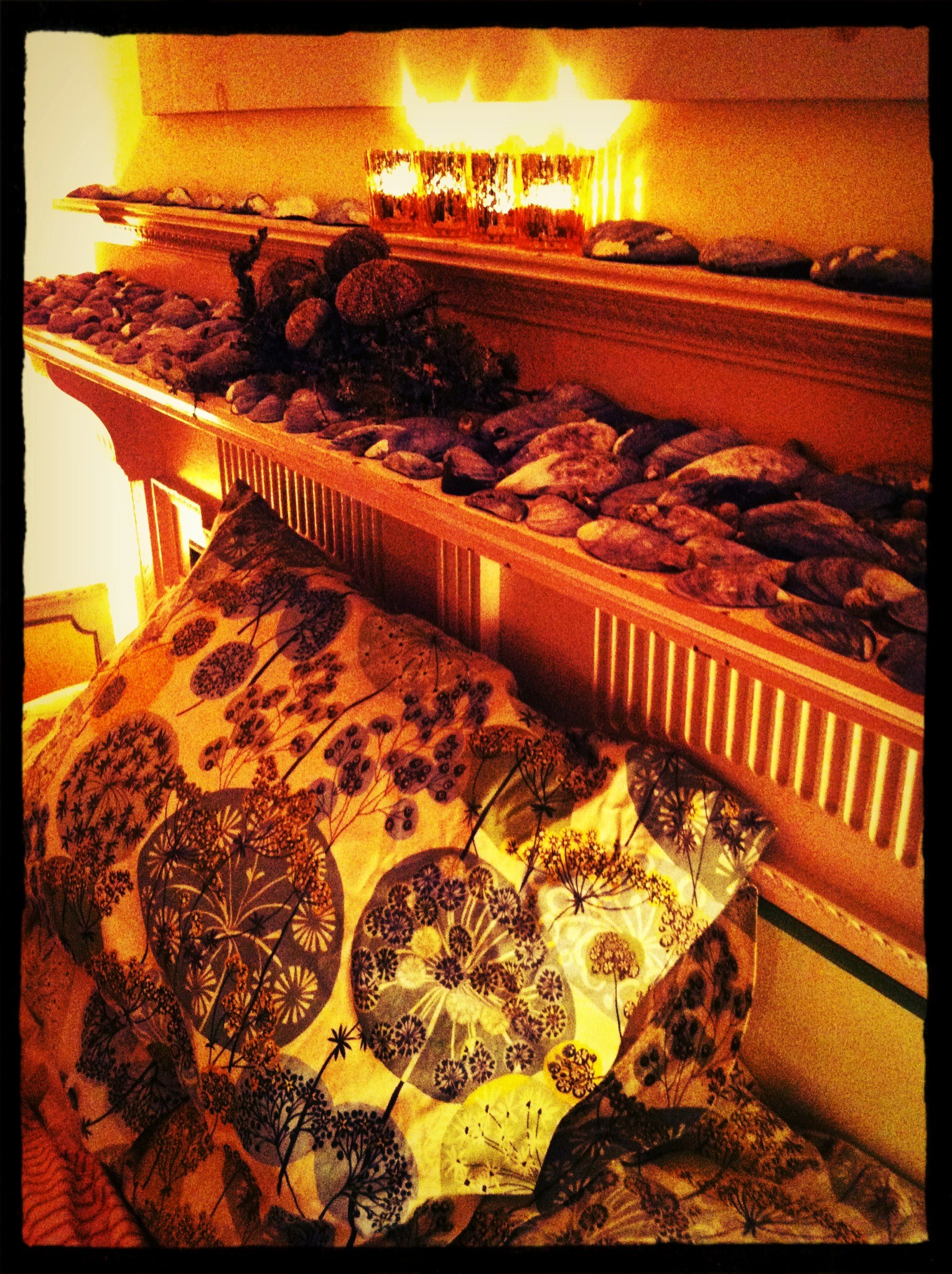
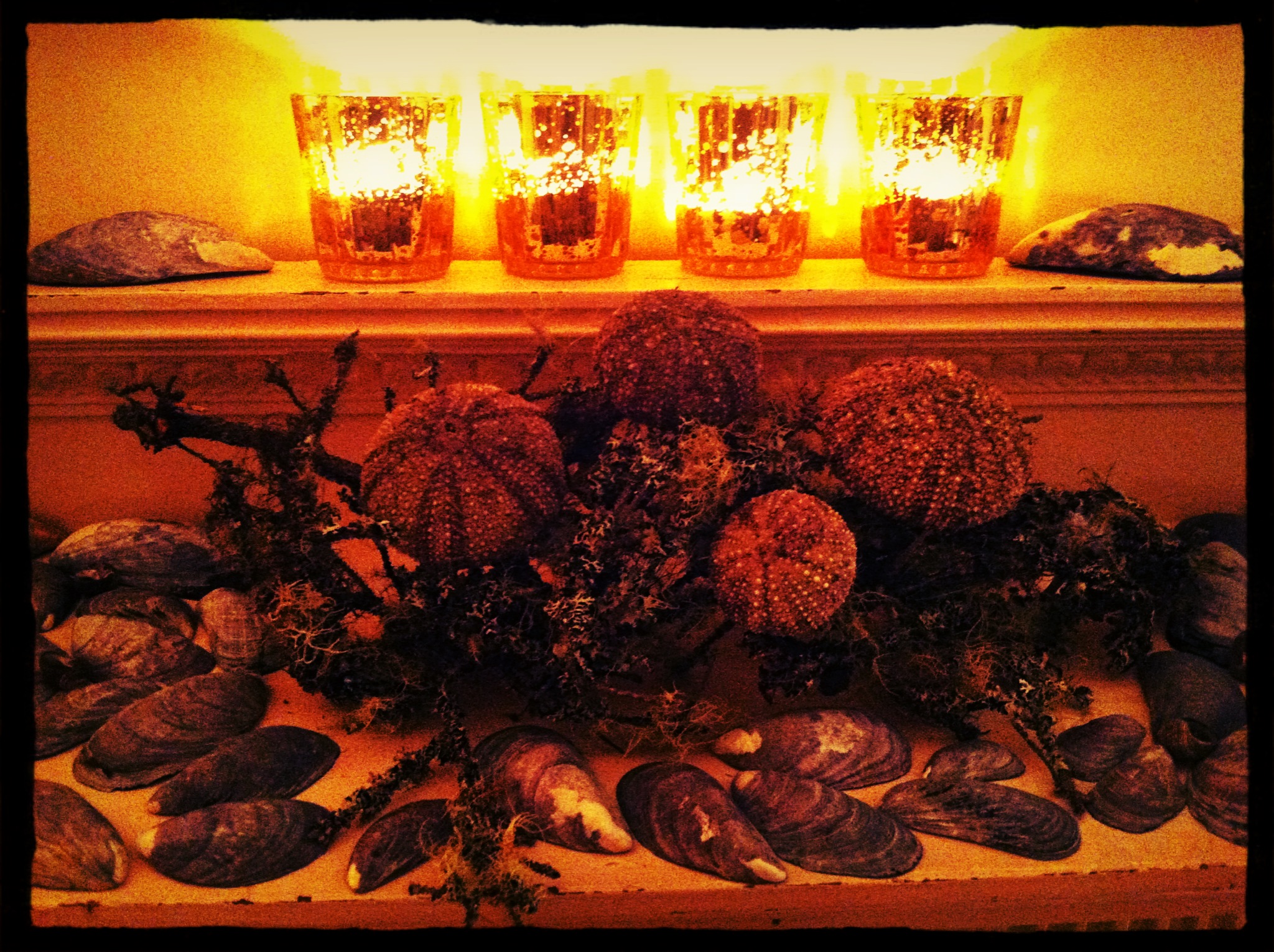
I spent this evening relaxing and redecorating my bedroom. Earlier today, I took all the objets d’art from above the bed and installed them in a shop window as part of the installation for the holidays. When I came home tonight, my bedroom looked remarkably naked, so instead of passing out on the bed (which is what, for a moment or two,  I wanted to do), I dug into bags and boxes, pulled out all the mussels from a mussel-hunting day last week, and…

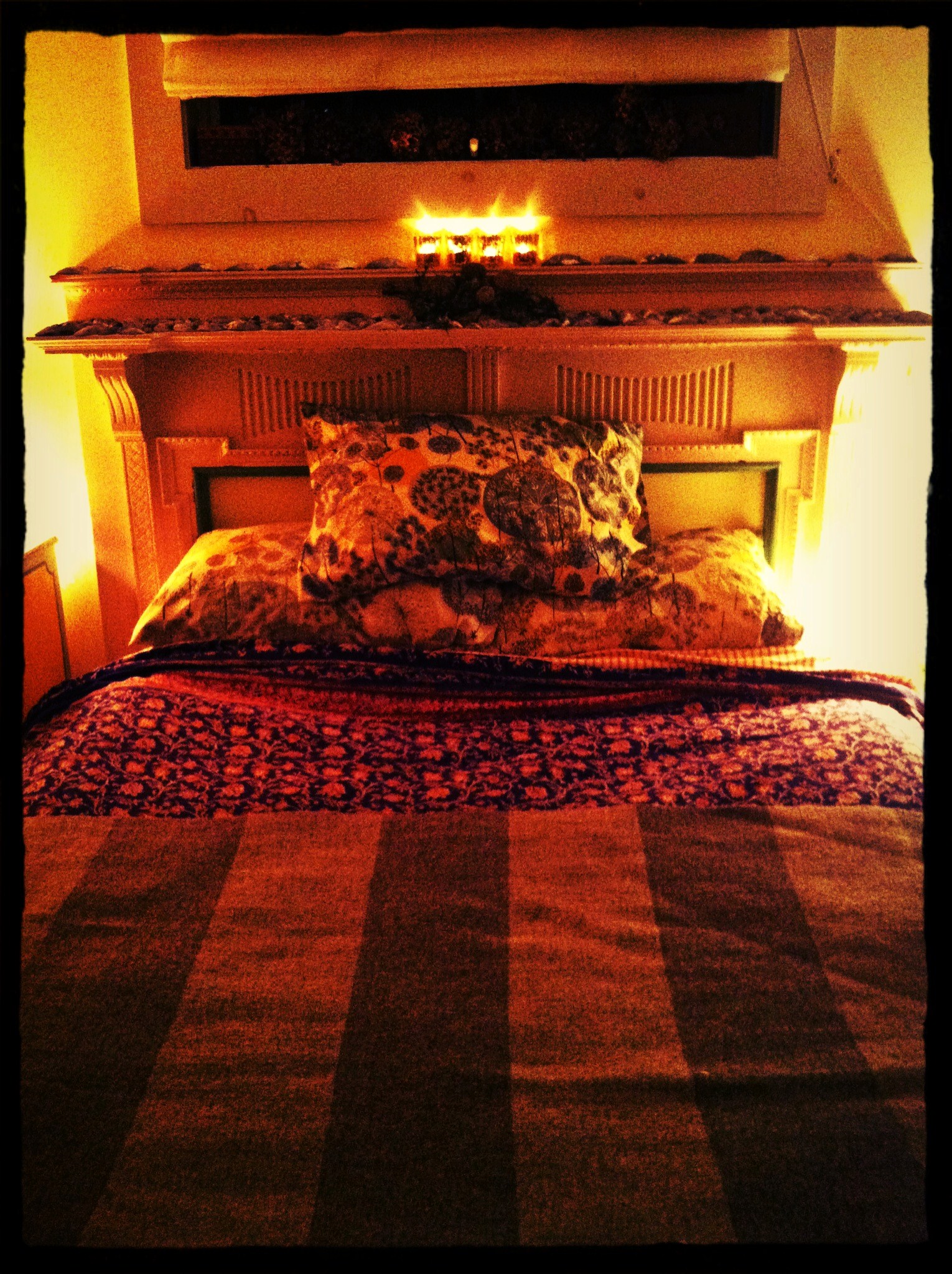
I made my bedroom new, again.

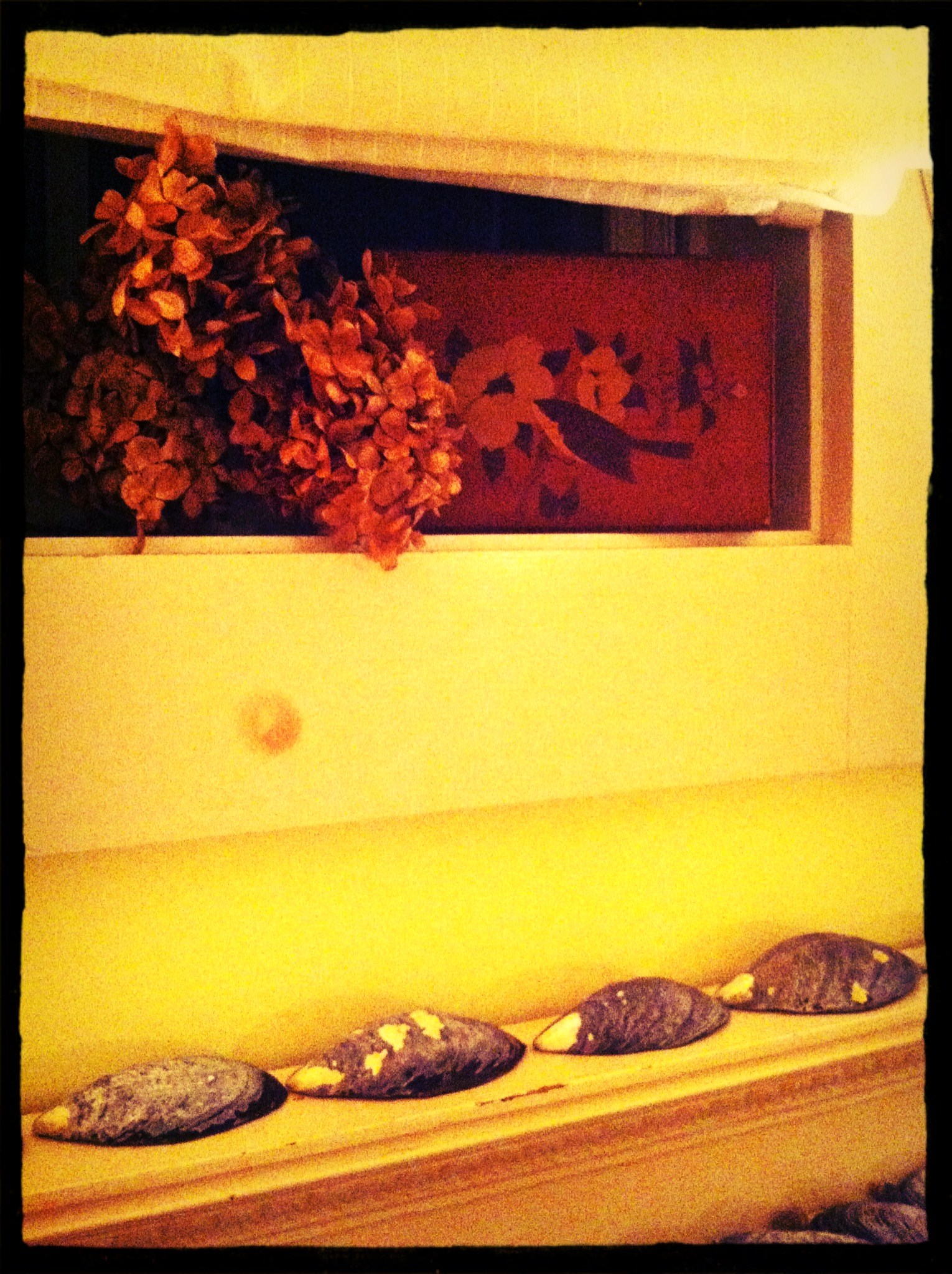
Using mussel shells, periwinkles, flickering candles, antique wooden boxes, a branch that fell into the garden of one of the summer mansions, sea urchin skeletons, and dried hydrangeas, I re-made the bedroom. As a friend of mine said a few days ago, “everything is artistic“…

After finishing the re-decoration, I read some more about Alice Koller. It always makes me laugh with wonder and a sense of bewilderment how sometimes things or ideas are thrust into your path to make you take a moment and reflect on what is happening. I stumbled across Alice Koller tonight when I was looking for thoughts about solitude. I found the quote above in my search, and then began looking for deeply for information about her.

Lately, I have spent a lot of my time on the phone with friends; this is because I spend the majority of my time here alone, and seek connection with my friend-family who are far away. This solitude is a first for me; I have always been a decidedly social person prior to my incarnation as the lady in cowboy boots who walks through Northeast Harbor, Maine.

It turns out that Alice Koller, at one point in her life, moved from the city to the country, to Nantucket. She moved with a puppy, while my animal companions are the crows, blue jays, and doves that fly outside my windows and in the garden below. Animal friends who I don’t have to own: the best kind of animals. Here is what Alice said, in 1983, about her short life in a small, small New England town, on her lonesome:

My urgent need was to find out what I believed and wanted and felt independently of what anyone else believed or felt or wanted me to believe or feel. Two factors were working for me. First, I knew how to think: I knew what should count as the statement of a problem; what evidence was persuasive and what inadequate; what a pointed question was and what was mere idleness; what fit well with matters whose outlines were already in hand and what conflicted outright with some other view of the facts so that one or the other had to be discarded (but which?). I subjected everything I had done that I could remember to that kind of thinking and I placed every conclusion I reached alongside one single question, “But is it true?”. I kept raising that question hour after hour, even though I had no criterion for what true would mark out until I was about halfway through my task.

The other factor was that I was at the same time learning what the shape and texture and focus of my daily life had to be. I was living in the country for the first time, and although Nantucket can scarcely be called a wilderness, Siasconset bestowed upon me great spreads of space and silence. To be outside I had only to open my door and take one step. With no people to have to thread my way around, my personal living space was without boundaries. I could go out into the low flat landscape and let the night display the patterns of the stars. At the edge of the moor no artificial lights illuminated the night, and I, a city girl, was astonished to discover that objects are cleanly visible under the light of the full moon. The beach, accessible to me on foot extended for two miles; there only Logos chased the gulls who dared to land, and only I walked. I acquired a taste for wildness and silence almost immediately.

By having removed all socially imposed regulations of my activities, I began to notice the natural rhythm of my day. I was changing almost imperceptibly each day, and I’d suddenly realize that the small increments had coalesced into something wholly new. Although I could not have given voice to it at the time, I was providing myself with the context in which I most naturally flourish…

I was then free to resolve that each moment of each day had to be lived in whatever way my then very weak understanding grasped as being right for me. I would not let it matter whether anyone else agreed with any of my decisions: I alone would judge the fittingness of everything I did. When any action I was considering or belief I was entertaining threatened to conflict with my most basic sense of what was right for me, I would do what I understood in the light of what I saw, no matter what the consequences were. It is a way to learn to consider consequences broadly and carefully so that you don’t unnecessarily visit harm upon yourself or others. But it’s also a way to teach yourself what you can and are willing to endure in the name of your sense of appropriateness.” [New York Times, 1983]

Fishermen here call sea urchins Whore’s Eggs – I have a few spines embedded in my thumb tonight