The Enormity of Spaces

next servicesWhen I was 19 or 20, I have forgotten which, I went on a long road trip with a college boyfriend out west, from Austin all the way to Washington state and back. We traveled through New Mexico, Arizona, Utah, Nevada, California, Oregon, Washington, Wyoming, Montana, Idaho, and Colorado all in a blue Ford Taurus that looked a little more worse for wear when we returned two months after we had left.

A highlight of this trip was our stop at the Grand Canyon. Previous to a random stop in Pecos, Arizona, town of art and college students, we were, like everyone else, going to stop at the South Rim of the Grand Canyon, walk along the plexiglass bridge and marvel at the sights alongside throngs of other tourists. In Pecos, we stopped in a cooperative art gallery and I started chatting with the man working the gallery that day and he told us we should go to the Toruweap entrance instead, and so, we did.

painted desertThe Painted Desert, on the way to Toruweap

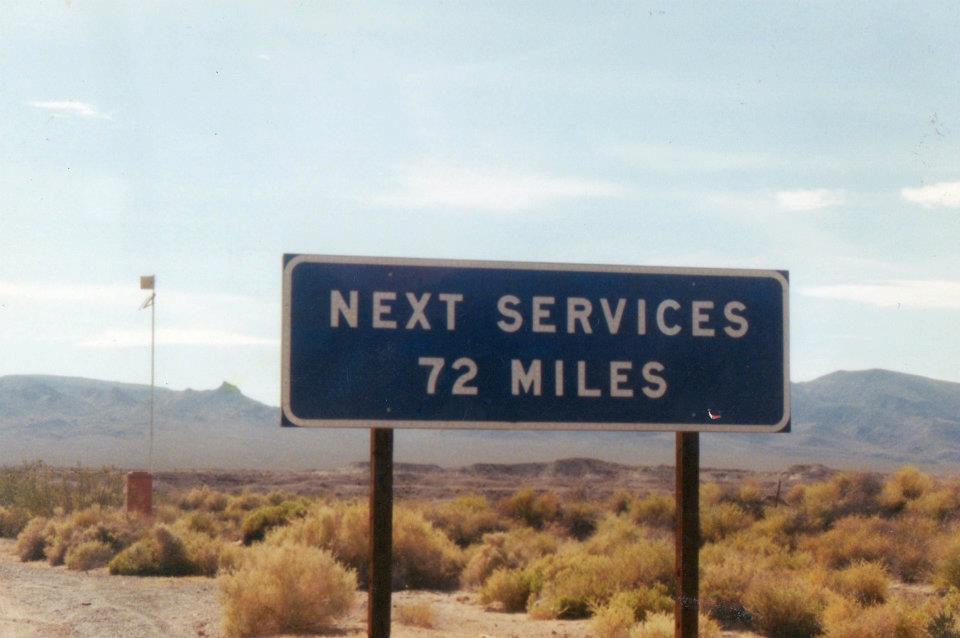
Toruweap is a hidden entrance to the Grand Canyon, one accessed by driving up into Mormon country and knowing where you are going because no one will give you directions. After a few turns here and there, you end up at the bottom of a valley with a very large sign at your right telling you the road ahead is 65 miles long and only suitable for all wheel drive vehicles. We pressed on in the Taurus, and two and a half hours later, arrived at a ranger station. We were allowed in and proceeded to drive along huge, flat slabs of limestone on our way to the rim of the canyon, at which point we parked and set up our tent, and walked to the edge of the canyon, realizing that we were the only ones there.

One of my first memories of the Grand Canyon campsite was looking around and noticing the largeness of that place. Later in the day, I walked through rattlesnake infested terrain, over rocks, and sat on the edge of the Grand Canyon, looking down. At that time, only the two of us were there and we were able to experience the Canyon in a way that most people do not: it was immense, many-layered, radiating with heat in the summer sunshine. I sat there a long while pondering how deep it really was, and how I could get down there, and what would happen if I were to fall?

That night we lit a campfire and stared at the stars, thinking about the monstrously huge cliff’s edge only a few feet from where we sat. In the morning, we woke up and went walking around, looking for strange rocks and plants, narrowly missing a rattlesnake, until we saw a small, white Toyota truck with a Utah license plate parked next to one of the picnic tables.

Walking up to the truck (we had already learned to just say hello to other folks on similar journeys to ours), we saw an old man with a long white beard, eating cantaloupe and drinking black coffee, reading Harry Potter and the Sorcerer’s Stone. Now here was an interesting character, who we learned had driven in late last night for the evening and was about to head home. We sat and shared cantaloupe and coffee, and talked about the world, and traveling, and quickly said goodbye to take off to our next stop: Arches National Park in Utah.

barn windowSalsbury Cove Barn Window

That trip was many years ago now, in fact it was something like twelve summers ago. If I look outside my window today, I see fog and dreariness: the markers of Maine spring. When I was a child, we would arrive in Maine every May and every time we pulled up the driveway of our camp house, with a grocery bag of chicken pot pies, tea, and who knows what else, it was always raining. My memories of Maine in late spring always involve fog, cold, and greyness.

sculptureSculpture and steps outside the jewelry studio at Haystack

It was been awhile since I have written here: too long, as life is passing me by quickly and the events that necessitate recording are piling up inside my mind. I haven’t written since just before leaving for my Haystack weekend, and suffice it to say, I am more than thrilled that I went and had that experience. I met many incredible people, made many things, learned how to be a baby blacksmith, drank a lot of bourbon, and didn’t really sleep for three days. Not sleeping turned out to be a bad decision as it left my body quite empty and shaken up for almost two weeks!!! No longer am I a woman who can party all night and stay up all day the next day…

early morning coffee cupsEarly morning light, many coffee cups…

At Haystack, also, the Maine spring was in full force and it was foggy and cold and clammy almost every day, culminating with our last day being downright soggy, slippery, and windy-cold. There are two bridges to Deer Isle: one is a green metal suspension bridge reminiscent of something you’d find in New York, and the other is a low stone bridge made of white stones that stand out in stark contrast to the grey and brown pebble beaches, the amber and golden seaweed, the green fir trees, the blue water, the white boats.

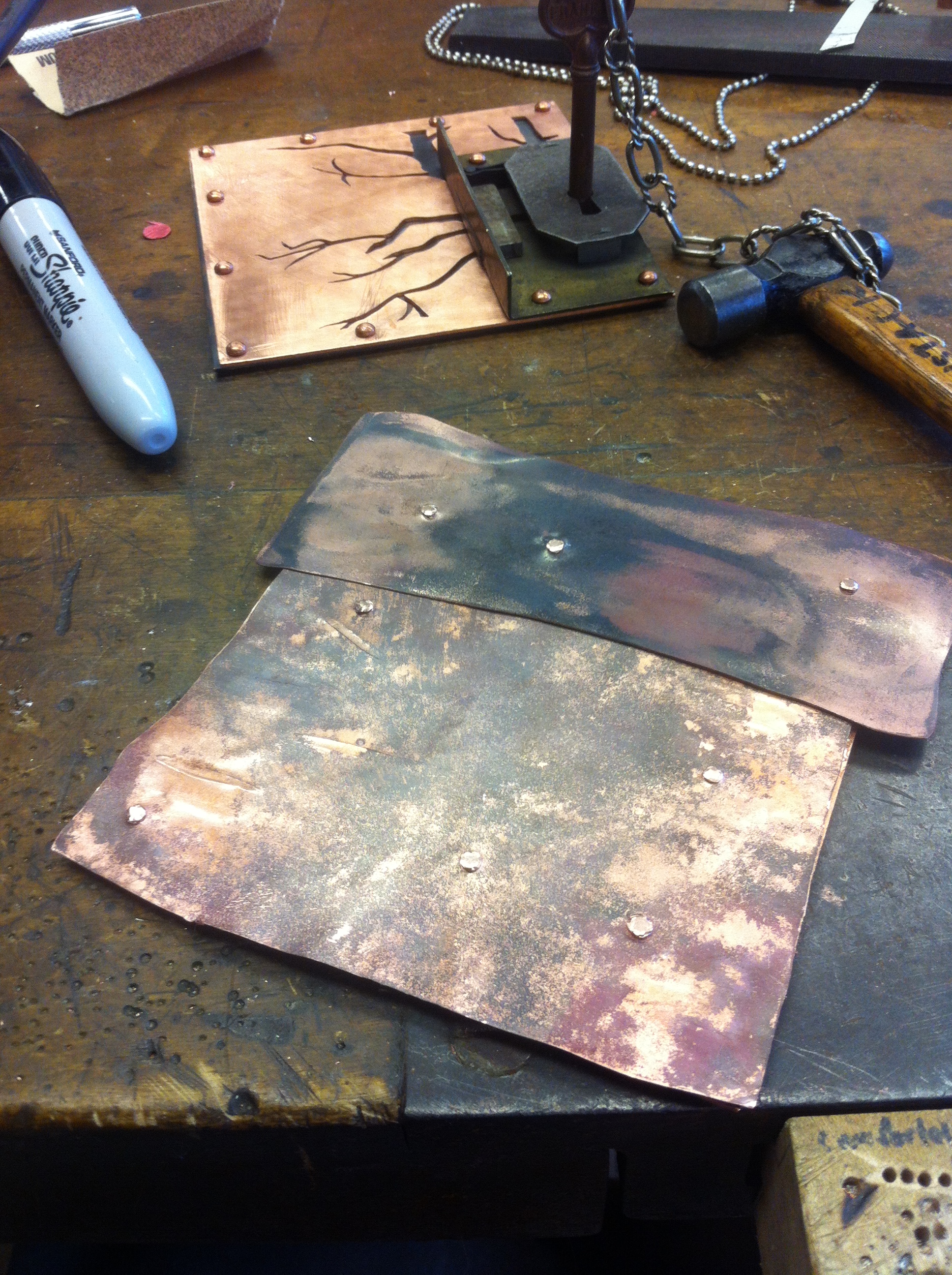
Haystack is a crafts school that was build in 1961 outside the village of Deer Isle, Maine, and sits on the edge of the ocean, on a small bay that is dotted with the fir covered islands so common to Downeast Maine. If you walk down to the bottom of the steps that run the length of the studios, and lean against the railing, you will see birds fishing and swimming in the water before you, some moorings, some lobster buoys, a large island draped with golden and amber seaweed, and many smaller islands laying long and flat along the horizon. If you sit down there at night when the wind is blowing, you will hear the banging of the cleats of the flag against the metal flagpole, and hear loons call their eerie song to you. You will see the nightlights passing through the wooden slats that make up the deck and stairs, and perfectly frame a pair of windy, Arthur Rackham trees that grow up out of the beach and against the bottom railing of the deck. These are the trees that became part of the top of the box that I worked on most of the weekend. The box is made of copper and bronze and a 100 year old lockset with key, copper rivets, and epoxy that covers a piece of paper from an old newspaper, asking the question: what shall we do with our daughters? What shall we, indeed?

treesInspirational Trees

box topDo you see them?

Haystack helped me understand something about myself: that I crave the night spaces, the dark times, and that I like to work uninterrupted by others. I can work with others, as long as do not have to interact with them very much. The first night at Haystack I experimented with tools like the hydraulic press and their very fancy rolling mill and their many daps and dapping stumps and made a really beautiful, tiny vessel that looks, almost, like an autumn leaf.

vesselLate night fold forming experiment

The night spaces at Haystack are what are special: the coolness of nighttime, the sounds of the wind rustling the trees, the glow of orange and white lights out of studio windows. The sound that the sliding door made when I opened and shut it, knowing no one else was there, was immeasurably gratifying. Opening the studio door early in the morning and seeing the blue morning light cascading through large windows, casting the anvils, the tables, the lights, the walls in an eerie, silvery light. The smell of that studio reminded me of my old studio in Austin, but much, much colder, as if the environment that surrounded us on all four sides penetrated the walls, becoming part of the building itself.

studio instagramLate night, empty studio

haystack benchWork space

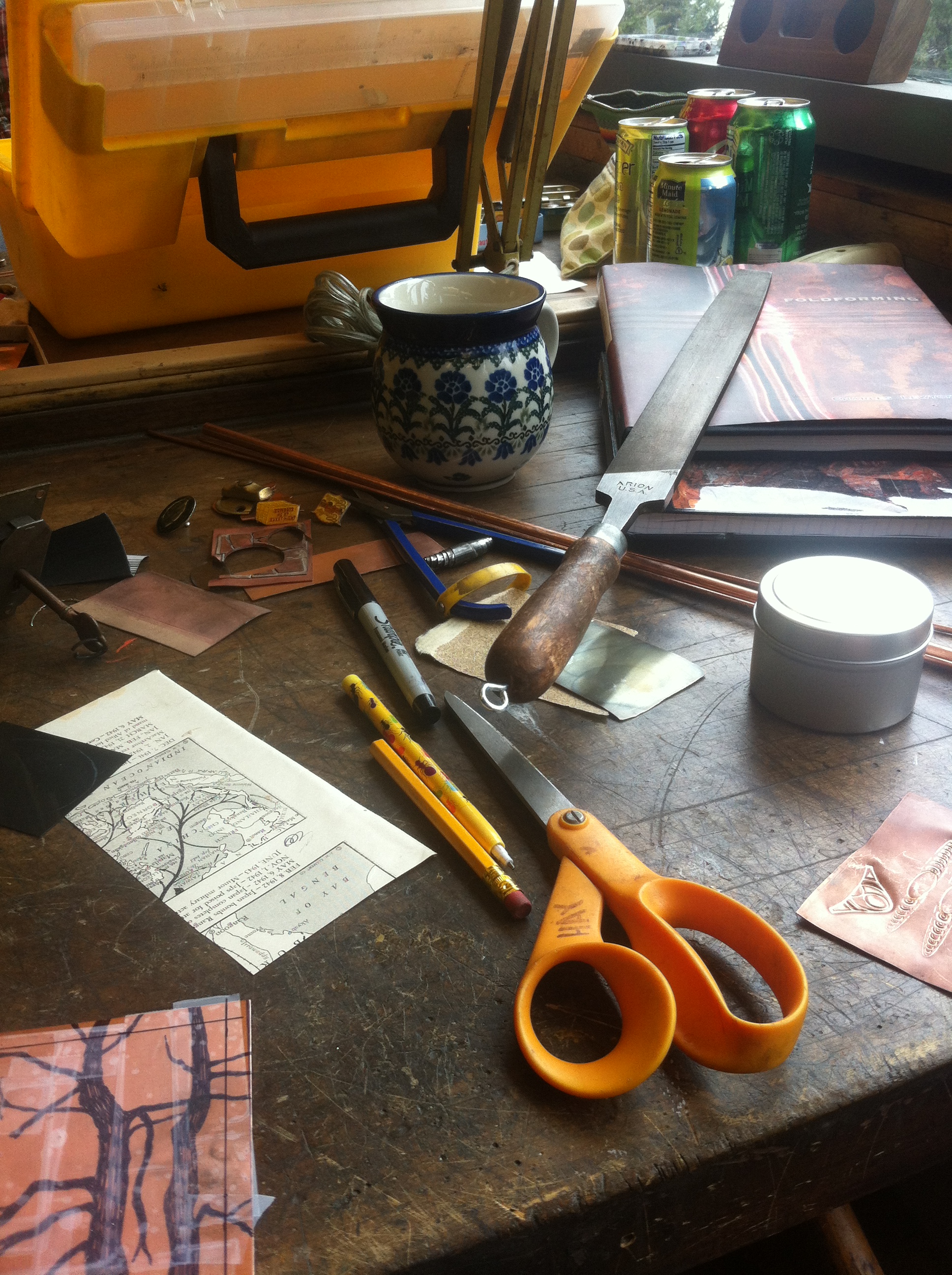
heat patinasExperimental heat patinas on paper-thin copper

heat patinas 2Detail

etchingsExperimenting with salt water etching

And that is, of course, my experience of life in Maine, that we are literally drawn into and become part of the landscape, and it of us. It is impossible to not be affected by and to effect the landscape, whether it be your footprints on old leaves whilst walking in the woods on a rainy day, or whether it simply be the memory of the way the birch trees with their white and black trunks look in contrast to their lime green new leaves. The landscape is burned into your mind, your heart, your soul, and becomes tied to its ever changing daily face, no two days the same, just like us.

When Haystack Weekend was over, and I was left completely exhausted after not sleeping the last night at all: I was blacksmithing til dawn and then just powered through to work on the box until crashing for about ten minutes at 9:30, my friend and I drove home along the windy roads of Downeast Maine, in the rain, talking about people, laughing about the weekend: making a wrong turn at one point, we ended up almost in Penobscot. The roads from Blue Hill to Deer Isle wind and wind, twist and turn around houses old and new, showing bushes bursting forth with spring color, lobster traps, old cars, hidden in the woods sometimes are even older houses, stone walls, and other mysteries that stay half hidden as the seasons keep rolling by.

It is hard for me to understand that in a few short days it will be the 1st of June, and that I have lived in Maine now for almost one year. I started writing here at the end of August of last year, and have watched the seasons change from summer to fall to winter to spring and soon, it will be summer again. Time keeps marching by, keeping its own pace, and we are simply swimming through, bearing witness to all the changes, small and large, planned and surprising.

boxThe box
Waiting

Bruegel_1565_Winter-scene-with-a-bird-trap_WIK

Pieter Bruegel the Elder – A Winter Scene, 1562

What do I think of when I am lying there?: on my stomach, propped up on my elbows, leafing through art books on Toulouse Lautrec and Pieter Bruegel and Peter Beard; gazing upon the paintings in the collection of the Mauritshuis Museum.

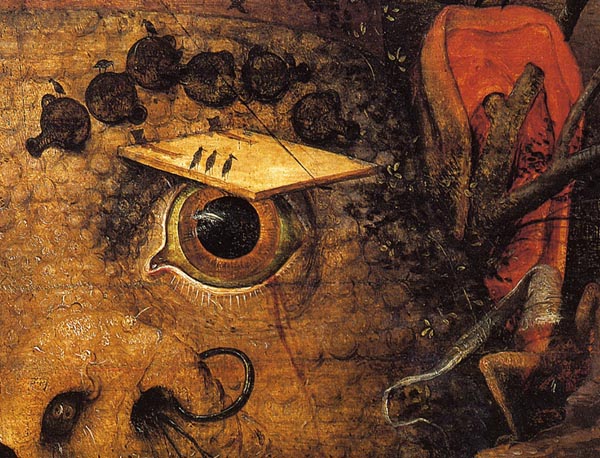
Mad_meg

Dulle Griet by Pieter Bruegel the Elder

Pressed into the floor, feeling the coarse plastic fibers of commercial carpet dig into my elbows, through the fabric of my light shirt, I catch myself looking around. Behind me is a pool table, under which stand two polar bears, staring out at me. Above me are deeply pocked marks of pool cues’ chalk, all over the ceiling. To my left are giraffes and hyenas, and up above the window, the skeleton of a sea turtle, many years gone from this world. To my right is my dearest friend here, lost in his own thoughts.

Before me is an off-white enameled Jotul wood stove, with a front window already stained with soot. Through the soot shadow, one can depict the licking of bright orange flames made amber as they filter through the dirty shade. The flames grow and gather, spewing up and across the ceiling of the stove, recirculating.

img645 web

I am thinking about birds’ wings and the lips of Nepenthes plants. I am thinking about patches of snow on the surface of Little Long Pond, and of playing Pac Man on the table consoles at Pizza Hut in the ’80s. I am thinking about the tea that I am drinking, about artificial, non-dairy creamer: the stuff you can light on fire if you sprinkle it onto a candle’s flame. I am thinking about scent, about wood shavings, about ice melting, about the songs of the birds that just recently reappeared.

I am thinking about change.

Mad-Meg-by-Pieter-Bruegel-I-PARTIAL-butthead

We all know that birds’ bones are hollow so that their bodies and wings are lighter than ours: this is one of the reasons that they can fly and we are glued to the Earth. Each morning I watch five crows flit around from tree to tree along my street. They break into peoples’ garbage seeking treasure. They yammer at the the doves and the blue jays yammer back at them. They swoop and dive, and turn their heads to look at each other, and to me, as I stare at them. They pretend to be scared of me, when I know better. They were here before me.

Yesterday I went skating, maybe for the last time, and played an age-old game on ice skates. Pretending that the patches of snow were obstacles, were pools of lava, my friend and I skated round and round them, ever tightening our circles in between and through them, forming curly-cues and slashes and ellipses and circles in skate marks between the snow patches. The snow patches, large and small, close together and far apart, became deadly territory that would turn you into a ghost if you touched them, and provided fodder for chasing each other, not too quickly, between them in a game of ghost tag. Ghost tag, so much like Pac Man, making me think of the way the crust crunched at Pizza Hut when I was a child: how greasy it was, and how all the windows were made of diamond shaped stained glass in clear and red. How we sat at booths together but snuck off to play video games at those strangely stalwart video game tables.

img651 web

These are the thoughts that cross my mind in mid-winter, in February, as the ice and snow melt outside, again. I learned my lesson last week, when a short February thaw had me convinced I’d be in sundresses in no time, only to be blasted by a fierce winter storm once more.

After the snow came roaring through, again, a few days ago, my friend and I drove down to Jordan Pond to assess the likelihood of skating. As we clambered over a snowbank, carrying skates down the path to the water, we crossed another, larger snowbank and were hit, full force, full frontal with 55 mph gusts of blowing snow. Wind so fierce that it blew ice crystals into your eyes. Wind so strong you couldn’t even look into it. Wind so loud it howled around and through your ears. Wind so tough that we both laughed and walked back to the truck; recognizing when to go home is a skill one learns during winter in Maine.

Mad-Meg-by-Pieter-Bruegel-I-PARTIAL-butthead

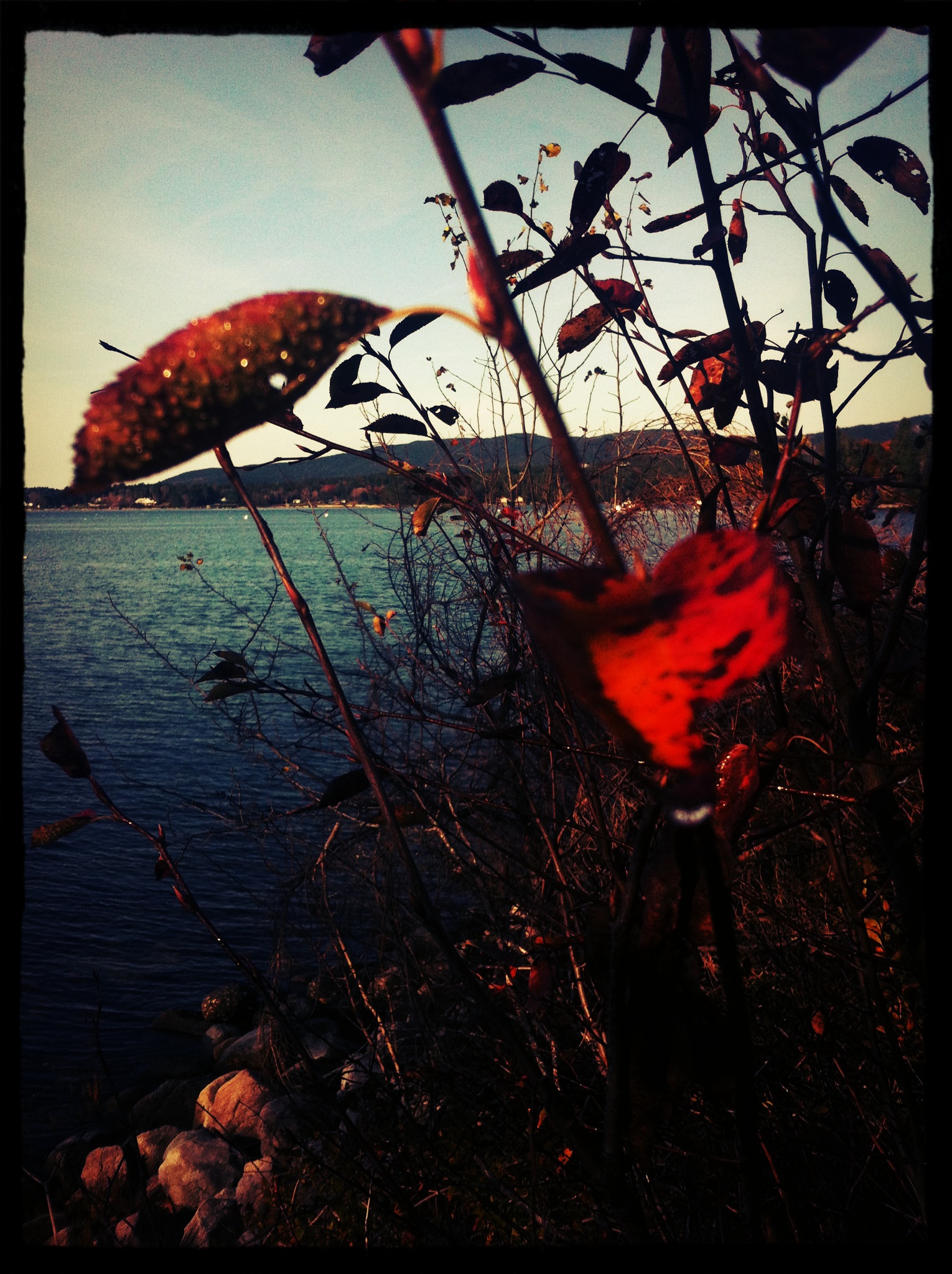
Winter is drawing to a close: you can feel it in the air. There is a lightness to the sky, as if the sun is coming back. The birds are calling. The days are full of sunshine, when for so long, they have been so dark. There is a sadness in this: a loss. The darker times when all that is before you is you and your work, you and the tiny world that surrounds you, when the sun sets before 4 and all you can think to do is create; well that time is shifting and going away. The light is returning, flooding us with the recognition that soon, buds will burst open on tree limbs, grass will grow, crocus will appear in front of our eyes. Soon, the light will return and the sunsets will change, the water colour will, too, and people will return to this place that has been so quiet and lovely for so long. Flowers will grow, shoulders will be bared, times will change. People will change.

People already are changing: a nervousness is invading every cell of every person, causing each of us angst and anxiety, expressed in unique ways. Peoples’ eyes flit back and forth, as if they are watching for something. Some people draw back, into themselves, away from those that they have held dear during the darker months. Some people are planning, some people are counting down the days, some people are thankful for the retreat of the ice and snow.

Some people are waiting; listening for the ice to crack.

Mad-Meg-by-Pieter-Bruegel-I-PARTIAL-woman

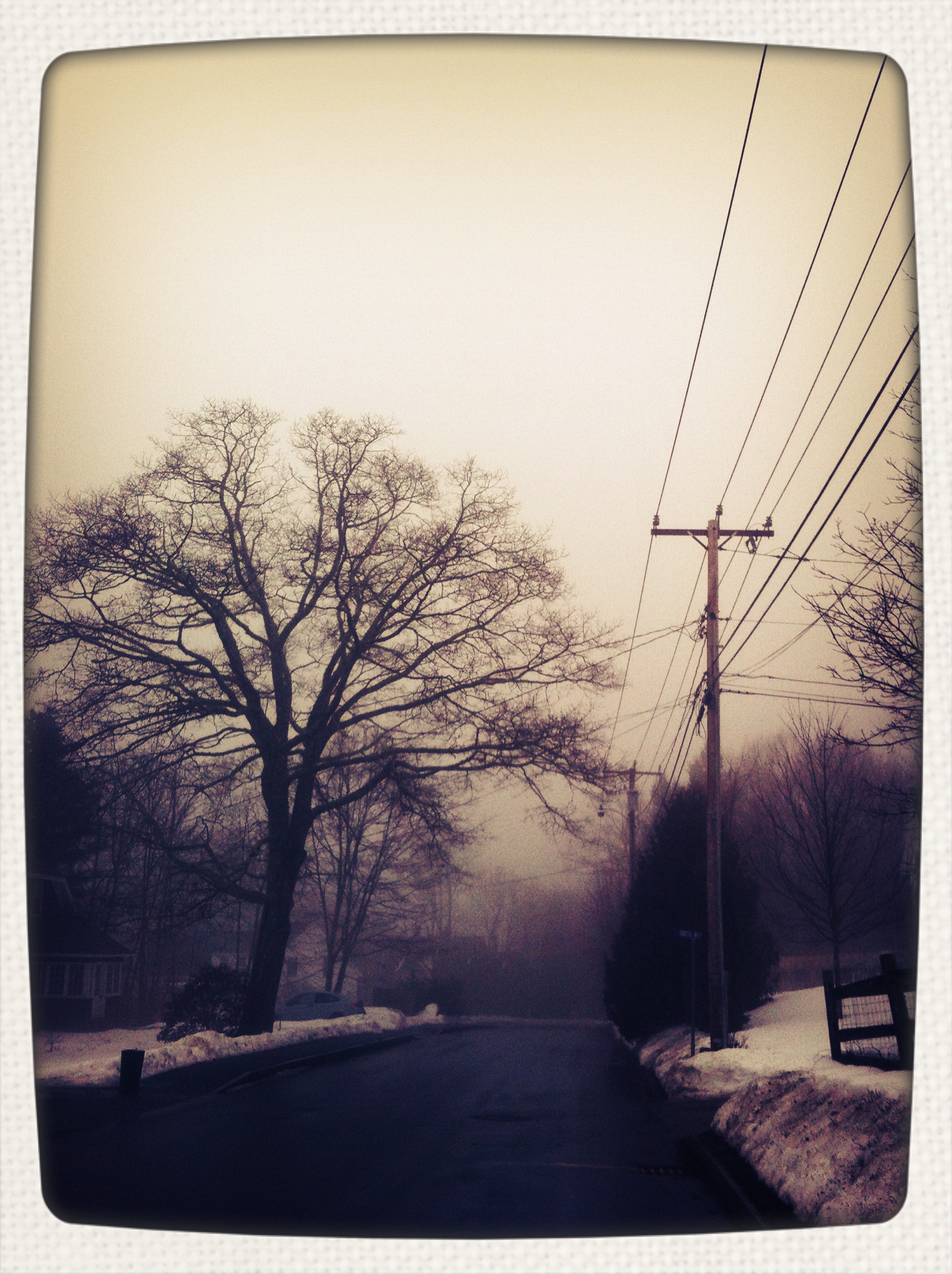
Photodiary – A Foggy Day in January

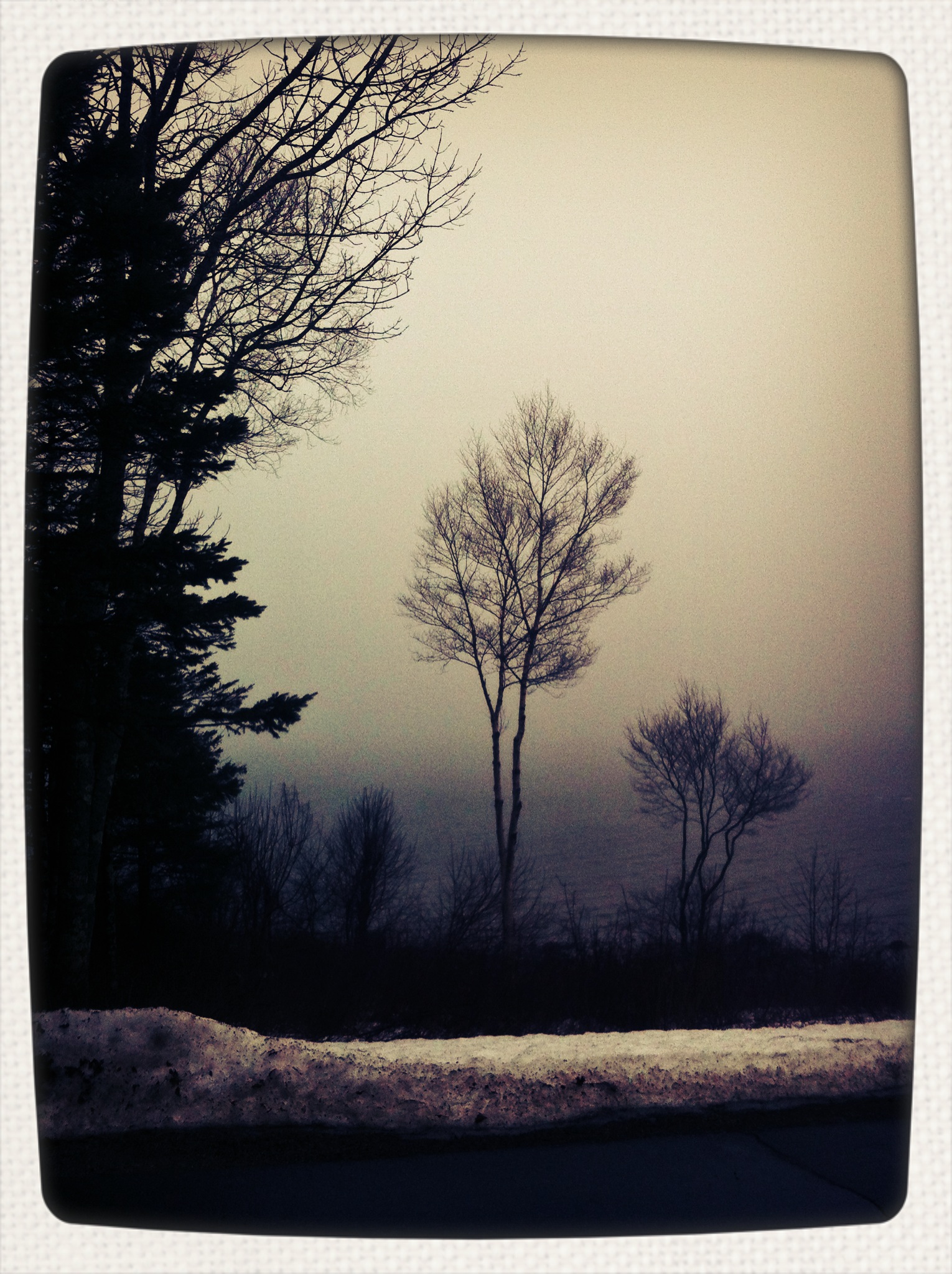
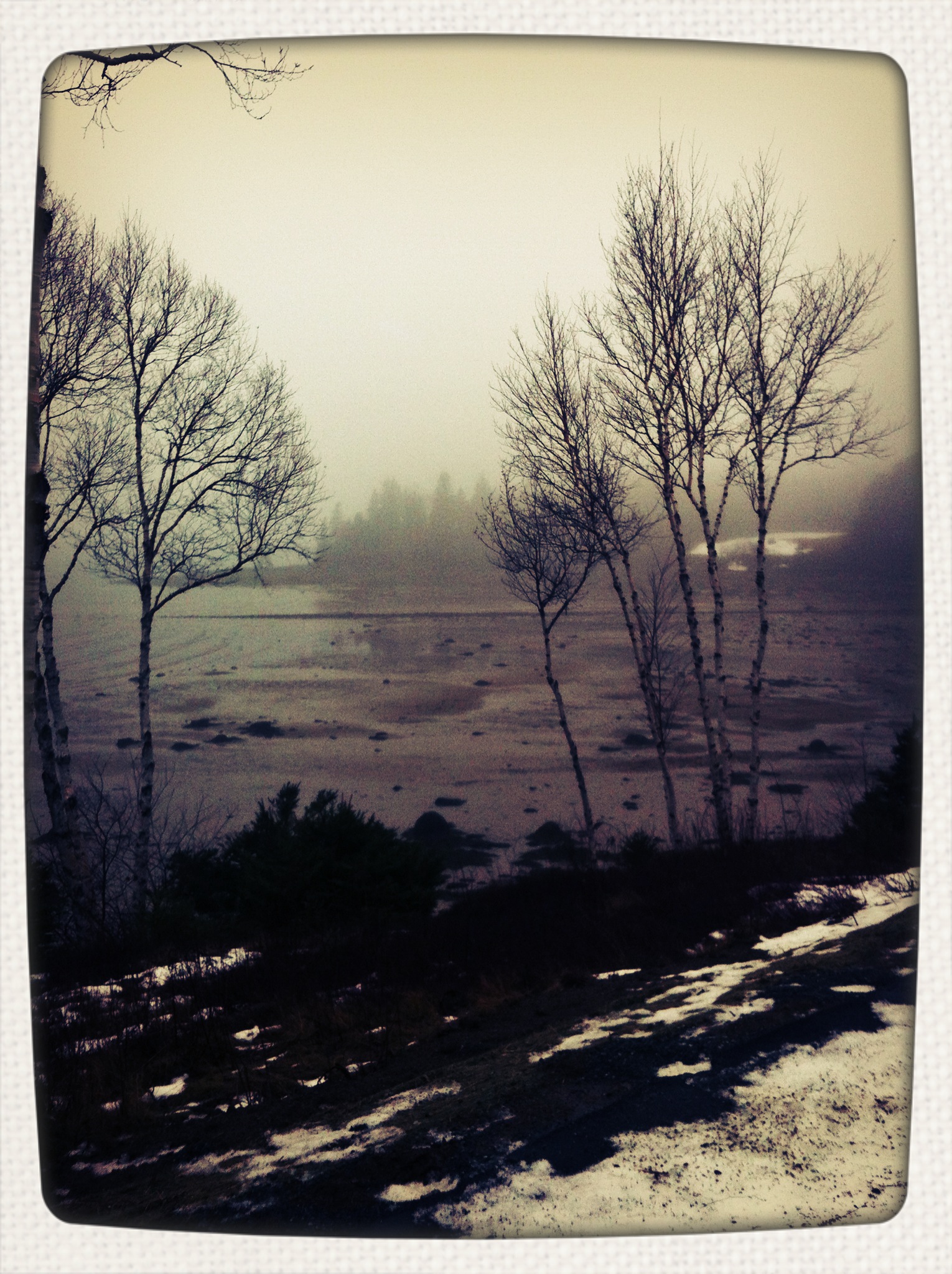
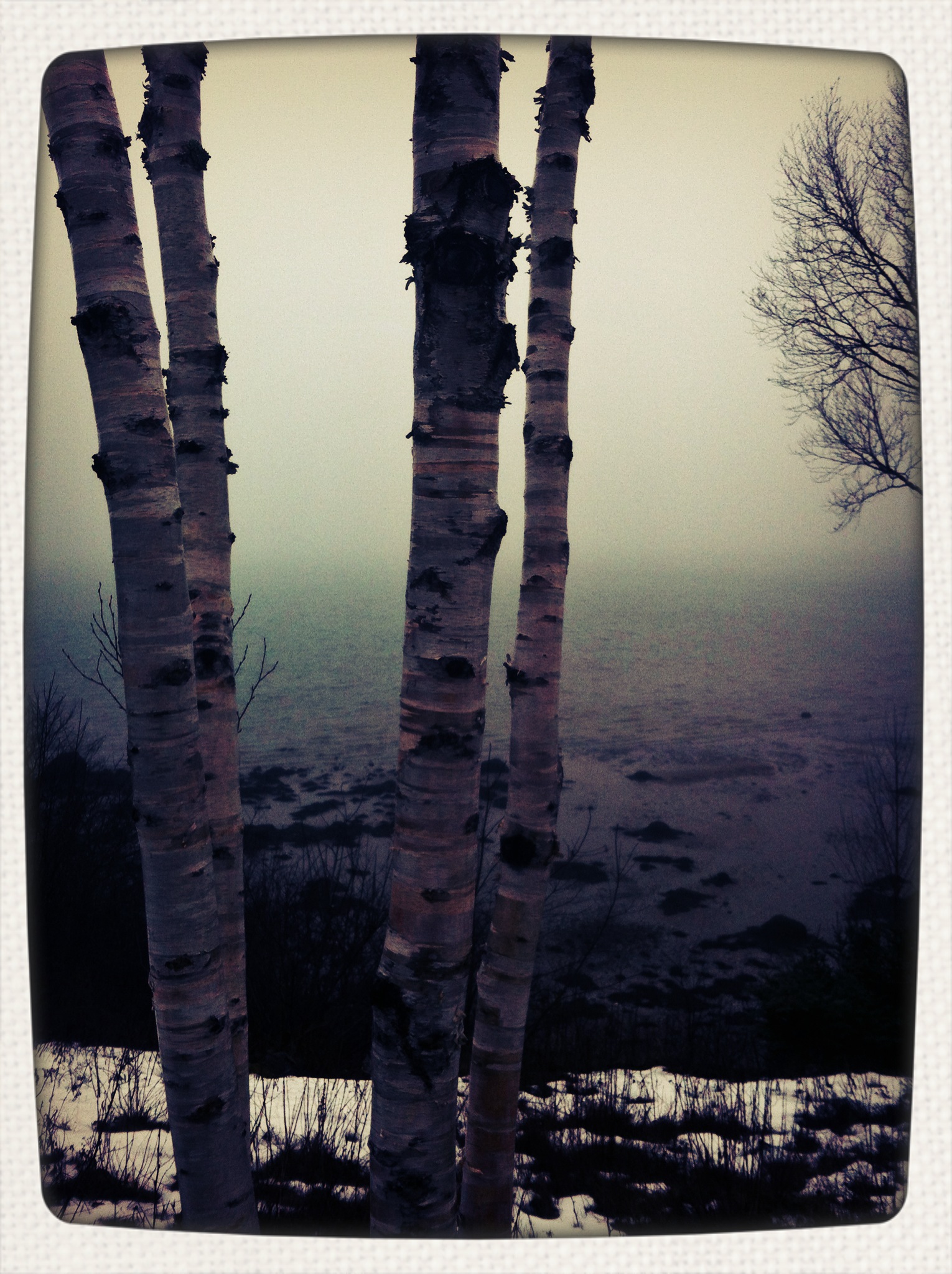
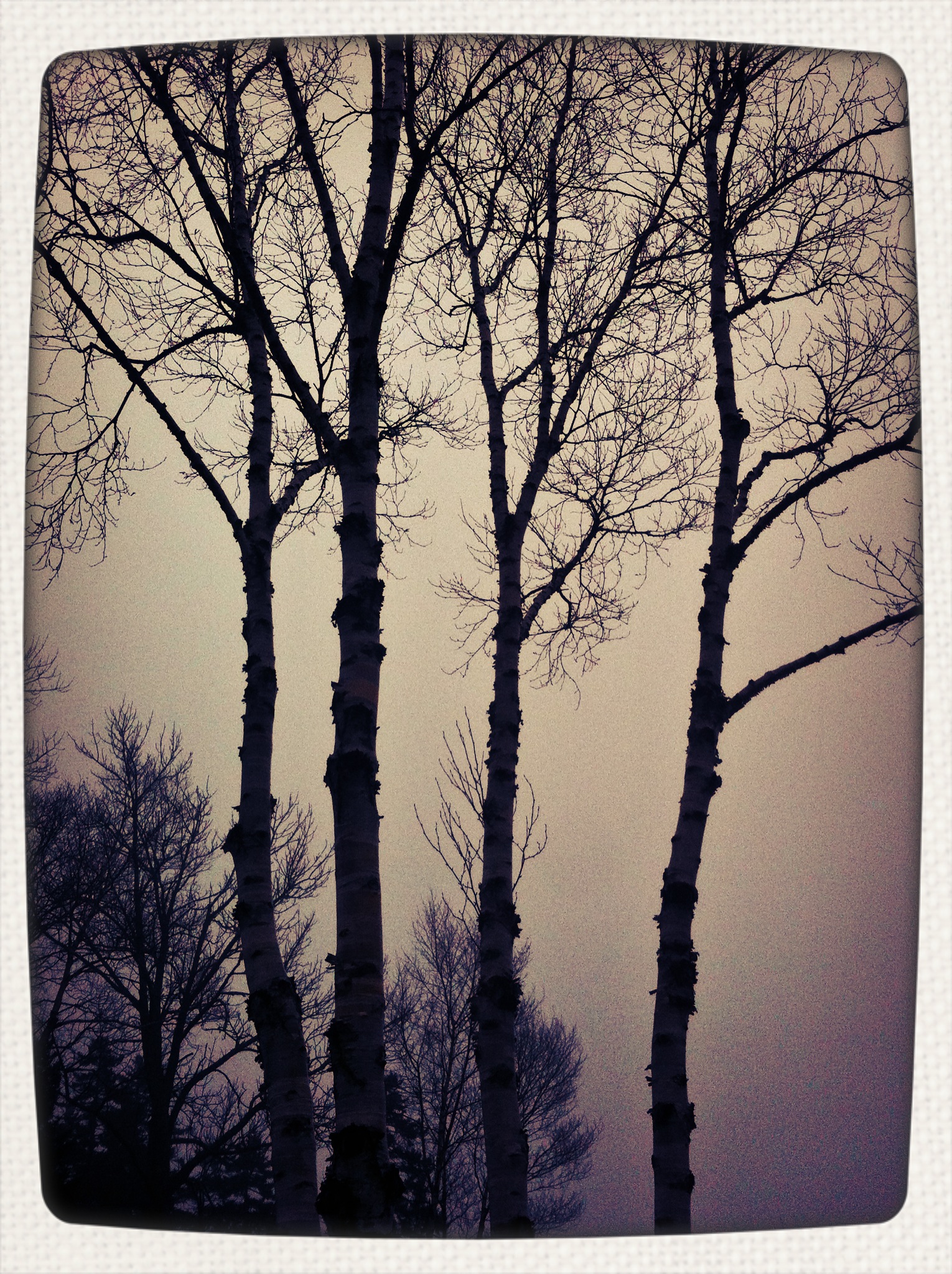
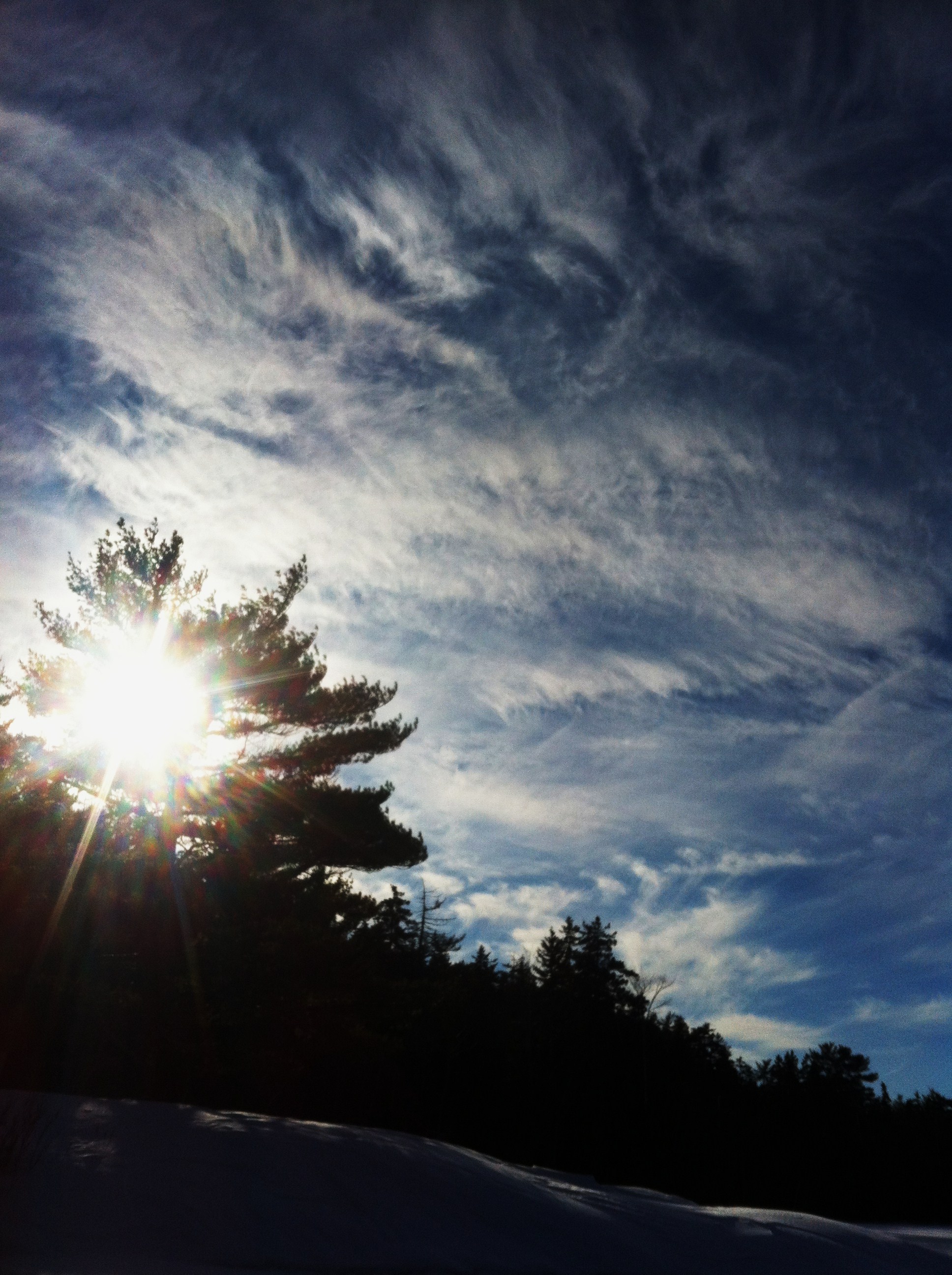
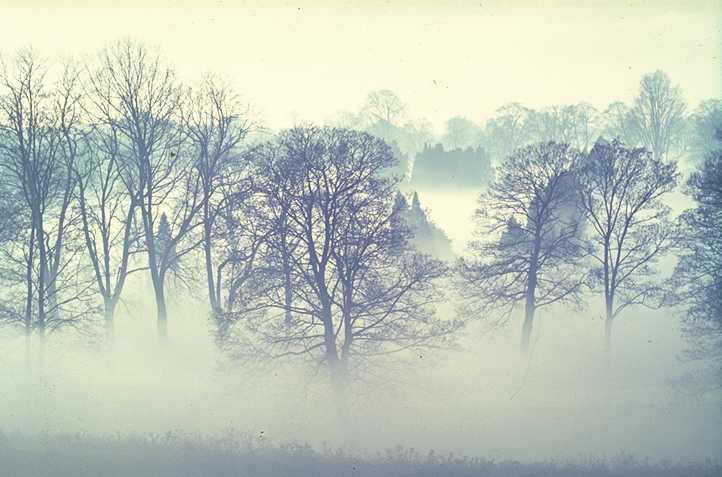
This morning, the second day of warmer temperatures caused most of the snow to sublimate to its gaseous state of fog. (This was my first experience with sublimation, and as an ex-middle school science teacher, it was really exciting.) Thick, pouring fog descended down from heaven and up from the roiling surface of the ocean and filled our tiny town with beautiful whiteness. White fog on top of white snow creates an incredible environment full of silhouettes: trees turn from three dimensional forms to black two-dimensional forms set upon the landscape.

Early this morning, I took a walk down to the water.

foggy january 1 foggy january 3 foggy january 4 foggy january 5 foggy january 6 foggy january 7 foggy january 8 foggy january 9 foggy january 10 foggy january 11 foggy january 12

By the end of the day, the fog had completely burned away and the sunshine returned.

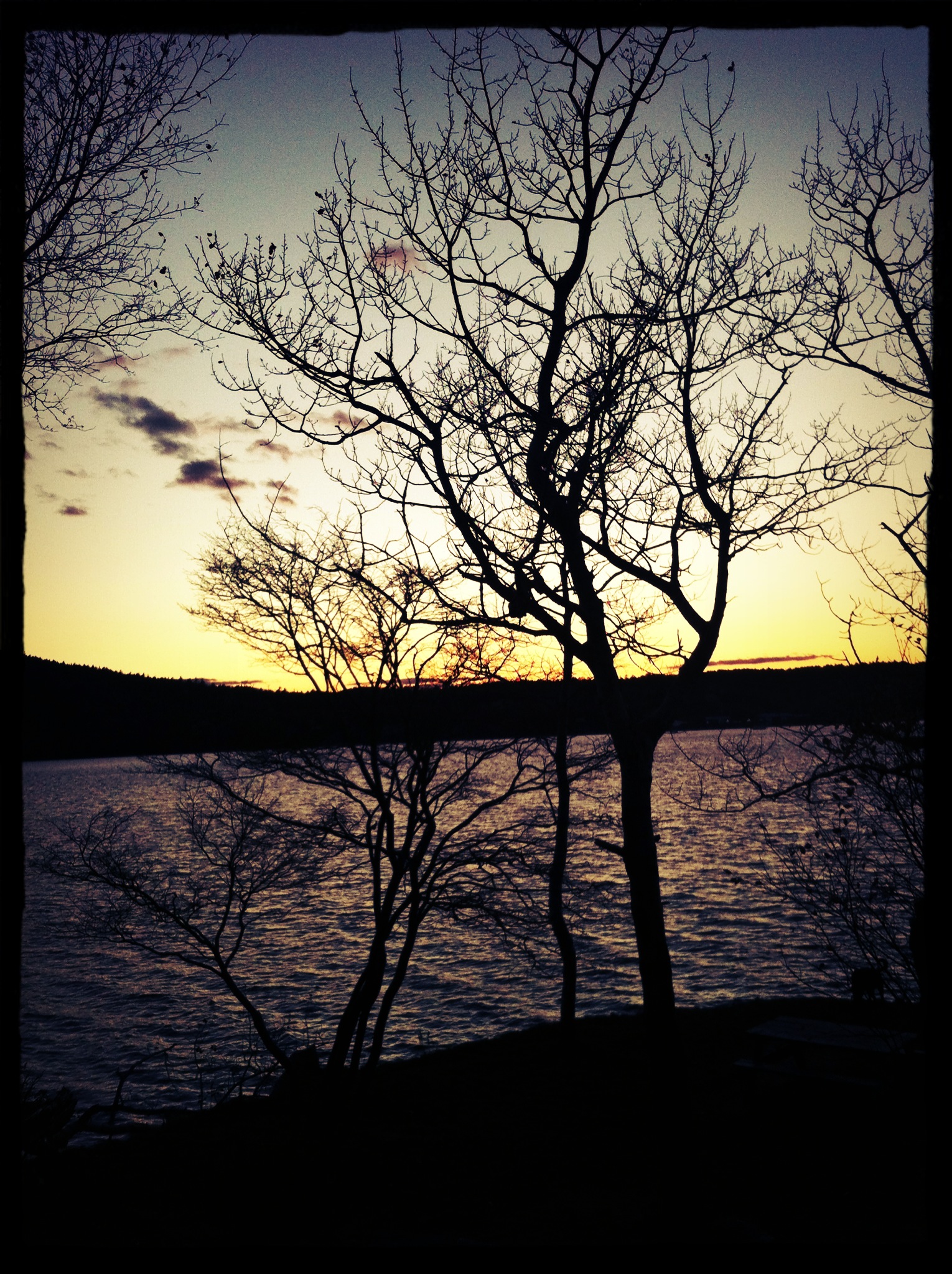
At dusk, the sunset was colored a bright marigold orange, smooth bands of color stretched horizontally out across the horizon. The ocean water was a continuous, deep blue, textured only with the bands of waves as the light wind played across its surface. The islands and trees were once again transformed into black two dimensional silhouettes, stark against the orange and deep blue. Standing on the deck of one of the Rockefeller’s summer houses, my boots deep in the remnants of snow, waiting only a moment lest I be caught, I watched the sun retreat below the horizon as one more day passed by.

Winter Begins

Marie Sioux – Flowers and Blood
“We take from life one little share,
And say that this shall be
A space, redeemed from toil and care,
From tears and sadness free.”

hadlock pond sunny

I came here in June, sick and tired. I came here late at night, with a headache splitting my head in two: it felt as if an axe blade was lodged in the left side of my skull. My car was packed with belongings and I drove, forward, through the black night, past houses and the ocean streamed at my right side. That night I cried, cried, cried, and continued through days and nights as my head hurt and my heart ached at realizing I had made it away from a place of so much pain. After re-decorating that basement space that was mine, for a time, I stayed in bed for weeks, while shingles wracked my body, erupting on my face and eyelids and scalp, causing pain and burning and itching. As it healed and the nerves reconnected, I had a hard time sleeping because it felt like electricity was running through my skin. There were days when I would venture out to swim or to bike ride, and feel as if I almost had to crawl back inside the house, into bed, because I was so tired.

“And, haply, Death unstrings his bow,
And Sorrow stands apart,
And, for a little while, we know
The sunshine of the heart.”

Time passed, and I began to feel better. In time, I ventured out more often, and was able to plant plants in the ground again, and be in the sunshine, take walks, swim across the lakes. Late in the summer, after a confusing but exciting trip to the Yucatan, during which I learned how to make pie crust in the tropics, became a certified scuba diver, watched a hurricane pass by, and learned that a special someone was not who I thought he was, I worked in a large, open barn with wooden sculptures everywhere. I started the day by weeding the granite paths in a flower garden, and passed the day helping children paint boards and wooden fish, and painted my own things, too. There was a moment on the third or fourth day when my head came back — my mind came back to my body and I felt reconnected again. It had been months since I had felt that way.

“Existence seems a summer eve,
Warm, soft, and full of peace,
Our free, unfettered feelings give
The soul its full release.”

Time passed, and the fall began. I continued to work in the garden, weeding cosmos flowers and beets and kale and onions. I watched pumpkin vines grow in compost piles, and planted evergreens on a steep hillside and pondered how quickly lavender will grow in a place with such a short summer. I took drives in a 1970s Porsche into the hills of this island, and looked at fancy houses and ocean views. I housesat in a little house in Seal Harbor, where I had to walk one mile to the beach to use my cell phone and reconnect with those people in my life who felt, at that time, so far away. One afternoon, one of those days of golden light and warmth, I was standing on a roof deck of a beautiful wooden summer house on the top of a hill and looked out at the trees that grew all over the mountaintops, at the water of Somes Sound, and decided to stay.

“A moment, then, it takes the power
To call up thoughts that throw
Around that charmed and hallowed hour,
This life’s divinest glow.”

Staying is hard for me. I am more apt to run: I am the world’s most skilled runner. Adaptable to any situation, a great and hard worker, friendly, I can fit in anywhere. I can come and go, and do, quite often, if I am unhappy. I find ways to escape: I am an artist that way. I am the Queen of leaving. Committing to anything is, well, plainly terrifying to me, and the decision to stay here, while I knew it was the right thing to do (I had originally planned to be in Mexico and had sold everything I owned toward that purpose), was scary. I felt I had to hide a little bit, hole up and re-evaluate, re-group. I rented a beautiful apartment, and then left on a huge trip across the country to see everyone that I loved. I documented that trip here, detailing all the themes that appeared in my mind and my life along the way.

“But Time, though viewlessly it flies,
And slowly, will not stay;
Alike, through clear and clouded skies,
It cleaves its silent way.”

I came back, and fall passed quickly. The light changed, and faded away. It became dark, and cold. I spent much time walking and looking, looking and listening, writing and sitting. I made a lot of jewelry and tried to stay quiet. Christmas came and went, as did the New Year. Emotions ran the rainbow of possibilities: I felt happy, then sad, then elated, then scared, then passionate. Then suddenly, the miasma of the holidays, the painful memories and the excitement at that season, passed, and it was winter.

“Alike the bitter cup of grief,
Alike the draught of bliss,
Its progress leaves but moment brief
For baffled lips to kiss”

Winter is a new experience for me. I have no frame of reference for this season. Yes, we all have experienced “winter” wherever we live as a cooling of temperatures and changes in light, but Maine winter is different. Maine winter is quiet. Maine winter is empty: you know the people are here, but you don’t see them. You see evidence of them in the glow of windows, and the sounds of snow plow trucks trundling past your house. Maine winter is three feet of snow that sits for weeks. Maine winter is going ice skating on a lake that a month ago was liquid water; now you can skate across the surface almost silently, watching ice fishermen wait for their orange flags to bob down letting them know they have caught a fish. Maine winter is watching people in canvas tents in the woods, nestled around woodstoves, escaping their daily lives for a day or so. Maine winter is cold, and the cold is biting. It freezes your toes and feet, and your hands. The wind whips around your face and stings your eyes and lips and nose. Maine winter steals heat from your body as you walk, sucking it out of the top of your head if you, stupidly, go without a hat. Maine winter is long, and it just began in earnest.

“The sparkling draught is dried away,
The hour of rest is gone,
And urgent voices, round us, say,
“’Ho, lingerer, hasten on!””

For the last week or so, I have been taking an informal survey on “What Winter Means”. I have asked everyone that I know who has lived here for a while the same few questions: Why is it so different? Why do people go kooky after New Years? and Is it true that everyone will go nuts in February?

“And has the soul, then, only gained,
From this brief time of ease,
A moment’s rest, when overstrained,
One hurried glimpse of peace?”

I can tell you that winter is a lonely time, if one is alone. It is cold, and you want to cozy up next to someone to get warm. Winter’s coldness is felt inside your body, down to your bones and further inside. Winter is scary because, in January, you realize that it will be like this until March or April, but most likely, April. Winter draws out before you with the promise of ice and snow and bright sunny days and deep cloudy ones. Winter causes you to question yourself, and realize that you do not know exactly what will happen to you in a place of this much cold, this few people, this slow of a pace.

“No; while the sun shone kindly o’er us,
And flowers bloomed round our feet,—
While many a bud of joy before us
Unclosed its petals sweet,—”

On Monday, I rode in a small steel boat to the outer islands to interview to become a substitute teacher in a two-room schoolhouse for 9 students. The ride out was cold, but it had the hopefulness of morning, and the water was deep blue and turquoise green and the smell of diesel is comforting, in its own way. People kept busy reading their mail, playing games; I spent the time knitting and chatting when I could. First we stopped at Great Cranberry, and I looked at the pileons all covered with bronze seaweed and barnacles. We pulled away and across the straight to Islesford, where I embarked and walked up a narrow road, perfectly snowplowed. Snow two feet deep was on either side of me, and most of the houses, summer places, were empty. The field that, last summer, I used to play volleyball with two friends from Philly lay vacant, vast, white and empty. Everything was silent with the empty echo of winter: the sound of silence and of hunkering down. This is survival time. I spent the day in the school, visiting with children and adults and a dog named Ruby, and then took the same steel boat back to Northeast Harbor. The sun set over the mountains as we rode in, all orange and red and salmon pink over deep blue mountains. It was cold, colder than cold on that boat, and everyone seemed to be adjusting to it well but me. I walked up the gangplank to the harbor area and felt colder than I have ever felt. Walking into town, I began to panic thinking I would never get warm, or I would get sick again, or both. I slipped on ice and sank into snow, feeling colder by the minute. In that cold, your head hurts with the cold air, your eyes water, your hands and feet ache despite boots and gloves.

“An unseen work within was plying;
Like honey-seeking bee,
From flower to flower, unwearied, flying,
Laboured one faculty,—”

I went to a friend’s house then and bemoaned the cold and he laughed and said he was at least happy that I understood that he wasn’t kidding when he said the cold was serious. I sat, practically hugged, the woodstove, took off my shoes and socks and he handed me steaming hot coffee and eventually, my warmth came back and I stopped panicking about the winter, about the cold.

“Thoughtful for Winter’s future sorrow,
Its gloom and scarcity;
Prescient to-day, of want to-morrow,
Toiled quiet Memory.”

And just like that, the deep cold left us that very next day. The next day, the sun shone on our town and the snow began to melt and temperatures that were in single digits and teens all of a sudden were almost to 40. The snow melted into water and dripped off the eaves of buildings into the street, making slick patches of clear  ice, impossible to see but easy to slip on, and catch yourself before a fall.

“’Tis she that from each transient pleasure
Extracts a lasting good;
’Tis she that finds, in summer, treasure
To serve for winter’s food.”

Despite our warmer week, the winter’s chill has taken hold and taken effect on people. People are changing. I wish to record these feelings here so that I remember them in a month, when winter is really in full swing, and in its depth of experience. People are spending less and less time out, more and more time in their homes. I, too, feel the desire to curl up inside and surround myself with blankets and fabrics and sewing projects, and other creations of comfort. I seek to design and build things that reflect those aspects of life that I miss: warmth, light, plants, flowers. I dreamt the other day of a place where the plants are still growing, where leaves are unfurling and flowers are in bloom. I remembered the pink oleander in front of my old house in Austin that still grew and even bloomed, sometimes, in the winter of central Texas.

“And when Youth’s summer day is vanished,
And Age brings Winter’s stress,
Her stores, with hoarded sweets replenished,
Life’s evening hours will bless.”

So what will Winter bring? I have no idea what is coming toward me, except a distinct sense that my perception and interaction with my environment will become even smaller than it is now. It is hard to imagine that a year ago I was living in a large American city, and now my world has shrunken so. In the cold, even though the light is returning to us, I envision a time of watching, and waiting. My new motto is “don’t think, don’t feel, any more than you can help, don’t conclude or decide — don’t do anything but wait.” Henry James must have spent a winter in Maine as an outsider, and spent much of his time just watching how people’s restlessness magnified, how all people turned inward to the coziness of houses and hearths.

dans guest room

***The poem cited here is Winter Stores by Charlotte Bronte,

a woman who knew the isolation of winter better than most.”

Sunday Faerie Tale

bedroom 1

Slumber

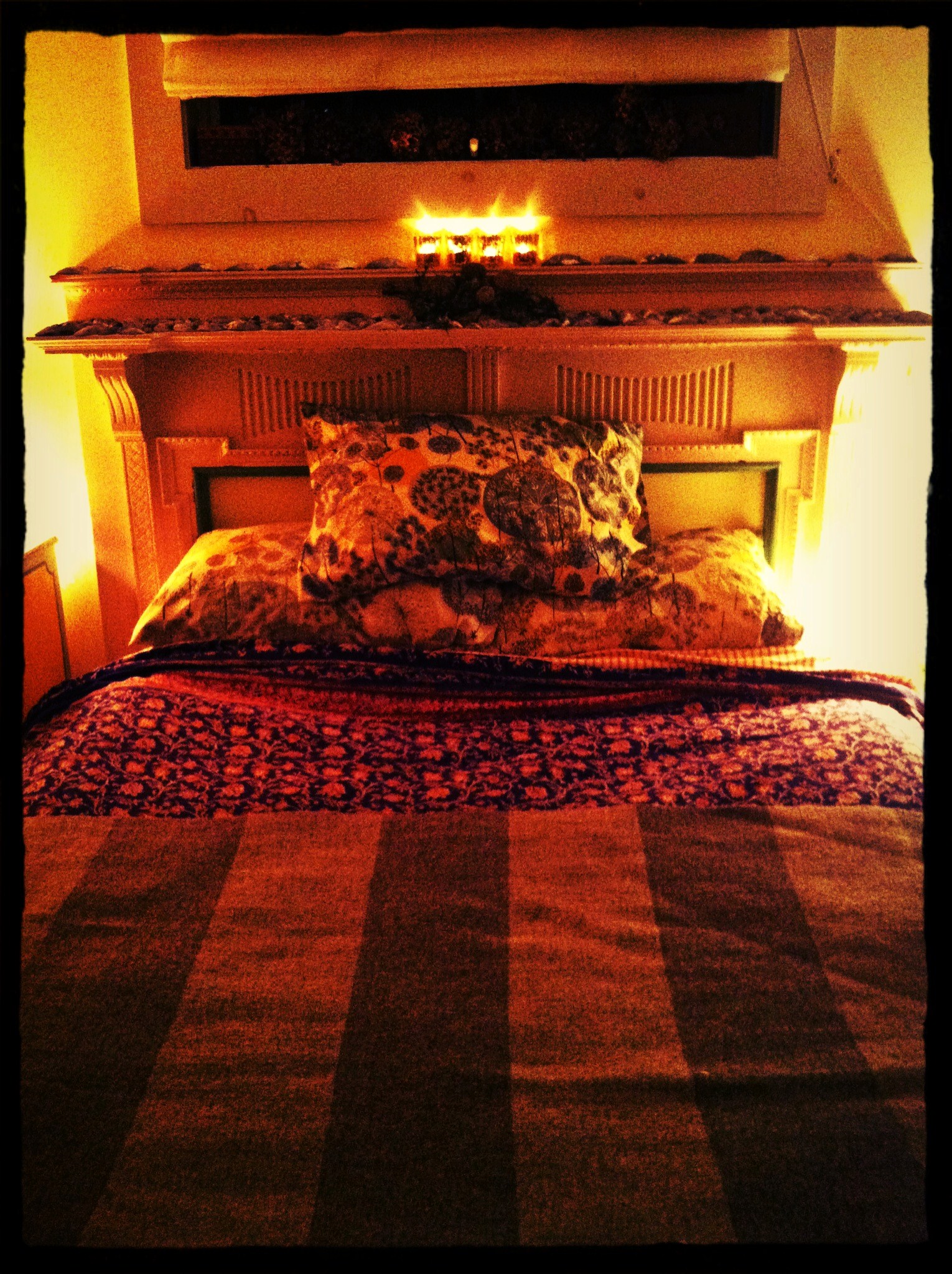
On my bed, I have a grey wool blanket with a herringbone pattern, an orange ticking-striped down comforter, a white cotton blanket and an old Indian cotton blanket. All of these magic elements of my bed were piled and curled around my sleeping body early this morning, in the grey light of the beginnings of sunrise, when I peeked my head out from between pillows decorated with abstract Queen Anne’s Lace, and gazed out that window that I gaze out of each morning.

Yesterday at sunrise, my neighbor’s windows glowed golden in the blue morning light. A beautiful feature of this much snow is that, in those moments before dawn, the scant amounts of light, the photons just drifting through the air from the east, cast a deep cobalt tone to the landscape. Everything is blue and black, and electric light is golden-bronze, held in place for mere moments, each morning.

This morning, however, snow was on the horizon; Icould see it coming in ombre grey folds of clouds up above the horizon, behind the trees. Layers, as if folds of a giant blanket, grew darker grey the further out I looked with my early morning, sleep-weighted eyes. In the air, I could see not light, but snow.

Pulling on two pairs of tights, one wool and one polyester, a wool skirt, a tank top, a wool shirt, a shawl, a vest, jacket and a hat, I took myself ice skating out onto Upper Hadlock Pond. It was very early, not even 7, and there was no one else at the pond. In that early morning moment, when all was very grey-white, no shadows at all because there was no sun, all was silent and amazingly colorful in its simple shades of green, white, grey and black. Mere moments later, an ice fisherman appeared with his sled and buckets, said good morning and that he was surprised we were the only people there, and stomped off across the ice to his favorite fishing spots.

As I skated around, getting my skating legs back (it always takes me a few moments) and skating across a huge rough patch that is the only path to the beautifully clear and smooth skating area, I stopped-and-started my way across, noticing the lumpiness of the ice, getting my skates caught in patches of ice-snow, noticing how the waves had frozen in place, and that bubbles, forced up as those waves froze, had frozen, too, into these strange circles that look like white eyeballs or lilypads floating at the surface.

upper hadlock pond4

This photo is from the other day, when the sun was shining…

Onward into the morning quiet went I, paying much attention to where I was going so that I didn’t fall like I did two days ago. In those early moments, all you could hear was the swishing of skates on ice, and occasionally the most magic of sounds, the shifting and cracking of the lake’s surface. As the ice cracks and bends, it makes a deep gurgling noise not unlike the sound wine makes when poured out the neck of the bottle.

The ice sighed today, heavy with the weight of water moving underneath it, over the dam at the other end of the pond. The ice sighed as I skated over it, and tiny cracks formed alongside my feet as I slid over and around it, making curlycues and stripes and curved lines with my steel blades. Sometimes the sighing and cracking spooked me: especially when a crack happened quickly and I watched it form in the blink of an eye next to my feet.

In the eerie stillness of this early morning, when the sky was grey and white, and the trees deep green and bronze, and the ice white, myself and the ice fisherman were black against a stark landscape. Parkman Mountain peeked over the tops of the trees, now completely coated in snow and dotted with the tallest of trees. It was at this moment that the scant snowflakes that started moments before transformed into huge pillow-like flakes that fell with the rapidity of a rainstorm onto myself and the fisherman, my silent companion on the ice. As I skated, snowflakes became caught in my eyelashes and stuck to my lips. The snow fell, fell, fell around me but there was no wind so it drifted, and sank, through the air from sky to pond’s surface. The snowflakes were huge and seemed to be held in the air, as if they were tiny feathers delicately drifting downward toward the center of the Earth.

I stopped skating for a few moments and just listened. One of my favorite things about snowstorms is their silence: you hear nothing. This morning was no exception: I stood on my skates, still, listening to nothing, ears echoing in that silence. I stared into a little finger sized cove on one end of the pond, watching the snow fall, listening to the silent air, noticing how the branches of the pine trees looked like the bronchi of our lungs, watching them catch the snowflakes in their boughs. Caught in the moment, I was overwhelmed by the beauty of the place, and not able to look away, became very emotional and breathless.

As the snow continued to fall, and the landscape became more fairy-tale like, and I was imagining all kinds of things happening as they would in faerie stories, and contemplating my life and the many interesting things that have happened and what it all means when one catches yourself in beauty for a moment at 7:30am on a Sunday morning, I began to realize that I could no longer distinguish my skate marks from the cracks in the ice. For a few more minutes, I spun around in large circles, holding myself up on my right foot and then my left, holding my hands above my head in a circle, bending my knees and straightening them, and slowly made my way back across the lake to the crossing point. For one last moment, I stood staring at Parkman Mountain again, now shielded from view by falling silent snow, and crossed the bumpy, crunchy ice back to the mouth of the pond. I skated over the pocked patches of ice, drawing more curls in the snow with my skates, dancing as best I could without falling. For a moment, I sat on the ice, on top of my mittens, taking off my skates and looking out at the landscape that was steadily filling with snow. Once again, silent, no sound save the swish of snowflakes falling around my ears.

I realized that, next time, I need to leave my boots upside down, for, as I was skating, they, too, had filled up with snow.

Winter Storm Advisory

blizzard 6

View from my living room window

I thought I would take a walk today, but nature had other plans: the first blizzard of this season, pouring down snow, blowing fiercely through trees and around houses in this tiny town. The snow has been falling now for several hours, and the wind is fierce, loud, tearing. It sounds as if it will rip the roof, or at least the shingles, off the house and open up my little home to the elements. It is cold, and wet and harsh: a real Maine winter’s day.

blizzard

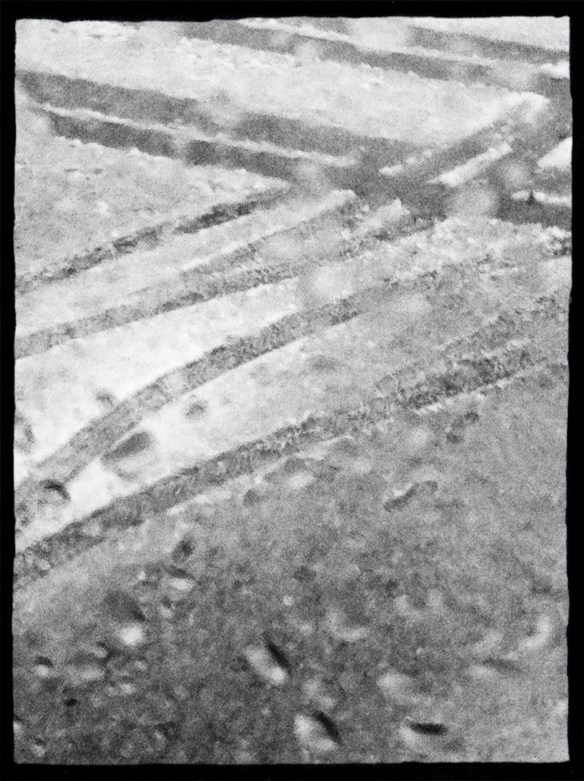
Tire tracks in snow

As I sit here, writing, listening to the icy wind, the sounds of pieces of ice being thrown down my street, through tree branches, decorating the wood of trees and the steps of houses with squishy-squashy piles of snowy mush, the darkness of a winter’s day hangs at the edges. Today is a day where it will never really get light, despite our steady march toward the light again, now that the solstice is passed.

blizzard 4

Trees

Last night was a cold, clear night in which the moon hung like a small, round beacon, tall in the sky. My friend came to my studio last night to tell me to come outside and look at the moon. We stood on the porch and gazed at our satellite – perfect and white-grey in the nighttime, framed by the glimmering glow of two planets. Later, after an amazing Italian-Greek-Maine style pasta dinner, after mouthfuls of anchovies and olives and raw garlic and American Parmesan cheese (the only type we could find in the Pine Tree Market last night), we went outside again, bundled up in jackets and hats against the cold, and held high-powered binoculars in steady hands to look at the man in the moon. He disappears when you look too closely at him: then all you can see are the waterless seas, the craters, the mountains, all of those features thousands of miles away, yet, so close.

We listened to the glug-glug-glug of a wine bottle pouring Bordeaux into old glasses, holding the neck of the bottle up to our ears, closely. I climbed upstairs and looked at all of his garlic held in suspension above the room, in the rafters of the roof. I looked at a red and black and white wool blanket over a bed that has never been used, stared at two red owls, swooping in suspended animation, hanging from the ceiling. I gazed upon piles of old National Geographic magazines, perfectly tied into bundles, stacked in a corner. On the floor are seeds of basil and dirt from the garlic heads: all fallen from ceiling to floor since they were put up in the fall. That room smells of dry pine, garlic, basil and sage. At night it is golden, full of light, and the windows are dark black, staring out into the sky, out at the moon.

blizzard 5

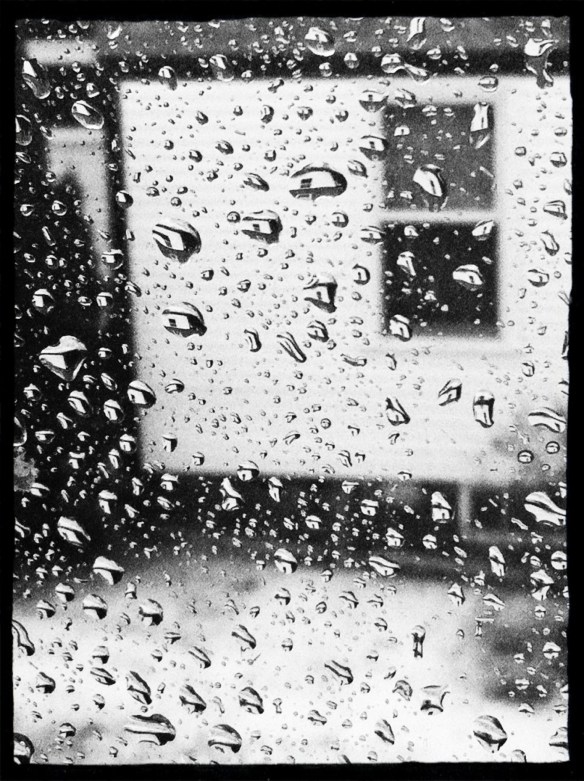
Do you see the shape of my neighbor’s house reflected in the water droplets?

What a place of magic this is, this mysterious home of mine. This place that is full of people yet feels so empty. This place whose stillness is magnified on days like today as snow falls and you see no one move, knowing that everyone, like you, is inside, being cozy, staring out the windows at the day as it passes, wondering what will happen, if the power will stay on, if there are enough candles, if the blankets are warm enough.

There is a beauty and  a strength to stillness: to the perception of self that comes when one is alone as the blizzard rages outside. To the awareness of one’s body sitting on a white couch, under a pink blanket, coffee brewing on the counter to your left. Wind howling, sky white-grey, oak tree branches black; even the birds seem to be hunkered down today as I haven’t seen them. Maybe it’s time to go outside and visit the birch trees down on the Sound, to see how they are faring on a day like today. Or maybe, sit and sew awhile, and see how the time passes.

blizzard 2

Rooftop, Trees, Fireside….

Winter Rain

milkweed

If You’re Afraid of the Dark, Remember the Night Rainbow

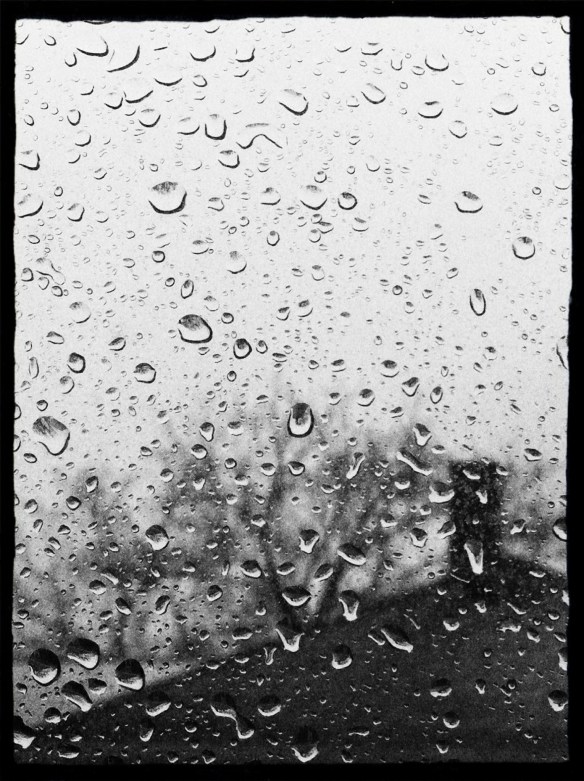
It is a very rainy day today in Northeast Harbor, Maine….we were supposed to get snow but got rain instead. The sky is grey, murky, no sky to be seen, really. The wind is blustery and gets underneath your clothes, no matter how much wool or rain gear you pile onto your self against it. Walking, you feel buffeted around by forces greater than yourself; pushed here, pulled there, by the invisible force that is the wind off the sea.

Apocalyptica is perfect winter rain music….

I just took care of the birds for the morning, talked to the crows and bluejays a while, watched the little chickadees and spied for my woodpeckers, the momma and poppa that I love to see each day, but they seem to be out of town. Maybe they are all cozied up in a nest somewhere? I always feel badly for the birds on days like today: their birdseed must get all mushy by the afternoon. I wonder if they know to come in and grab it while it’s fresh, when it’s raining.

cowboy boots

Welcome Home Cowboy Boots

As I sit here, on this old Afghani rug that I have carted with me for so many years, its colors, red, blue, pink, orange, worn and loved ever so much by me and by others who have sat upon it, I stare out my window at the morning: grey light, slightly tinted with blue. The power lines outside my window divide the view into perfect thirds: horizontal black lines across the window. The wind blows, moving them slightly up, then down. The trees, leafless, move in the distance. The houses appear all shades of grey today with no sunlight upon them to distinguish colors in the clapboards that encase their skeletons. The birds are now quiet, there are few cars, only the tick of the clock that hangs on the kitchen wall, and the sound of the wind as it whips around my home.

If I hold you with my emotions,

you’ll become a wished-for companion.

If I hold you with my eyes,

you’ll grow old and die.

So I hold you where we

both mix with the infinite.

– Rumi

Photodiary — Hidden Places

This morning, I woke up early and saw myself reflected in the morning sunshine in the mirror across from my bed. After doing my morning routine of yoga/pilates/meditation, I pulled on a light jacket and a pair of shoes and walked down the street.

This is what I saw….

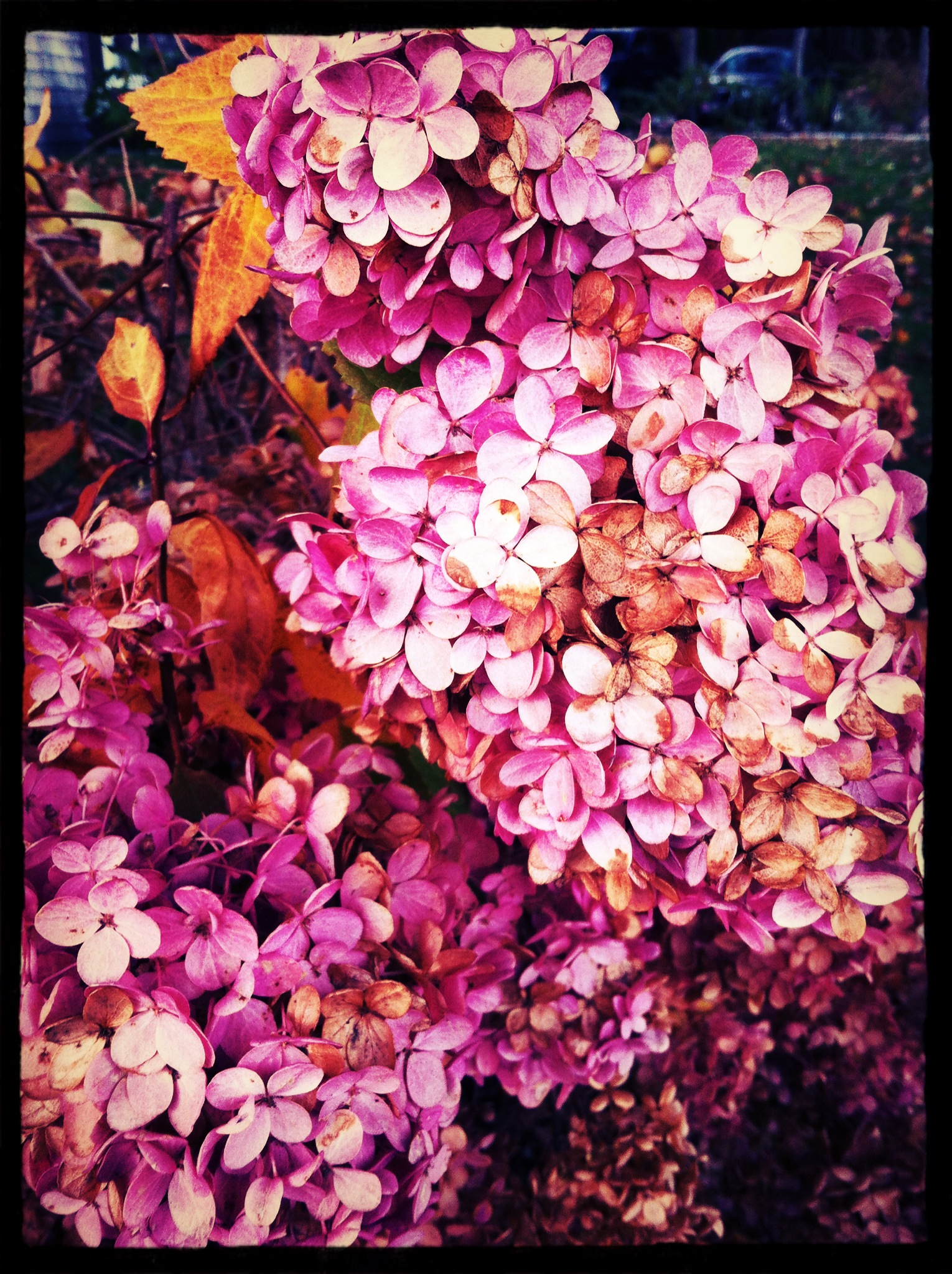
Hydrangeas Change Colour

This summer house is all closed up, so naturally, I snuck onto the property to sit by the sea.

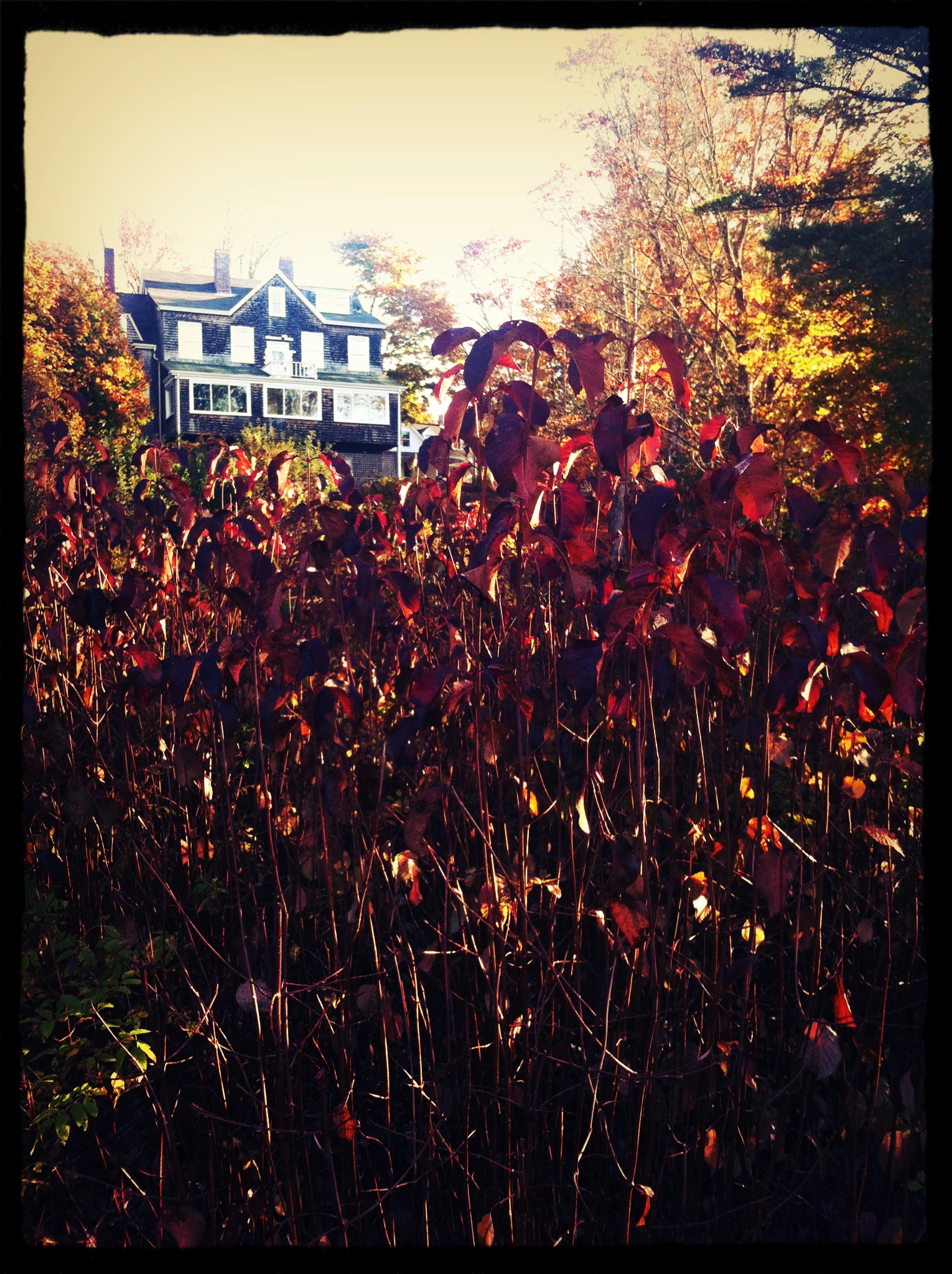
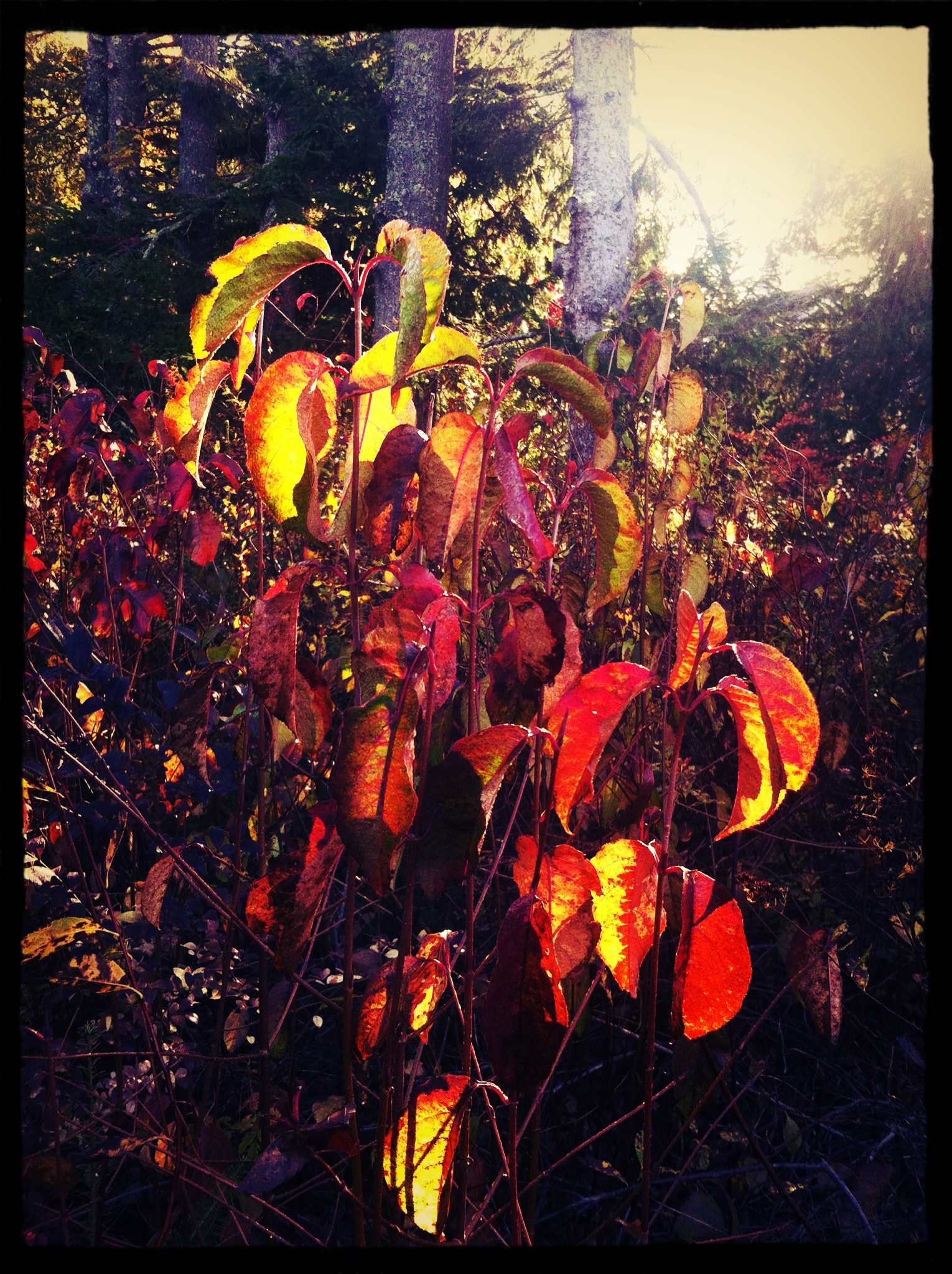
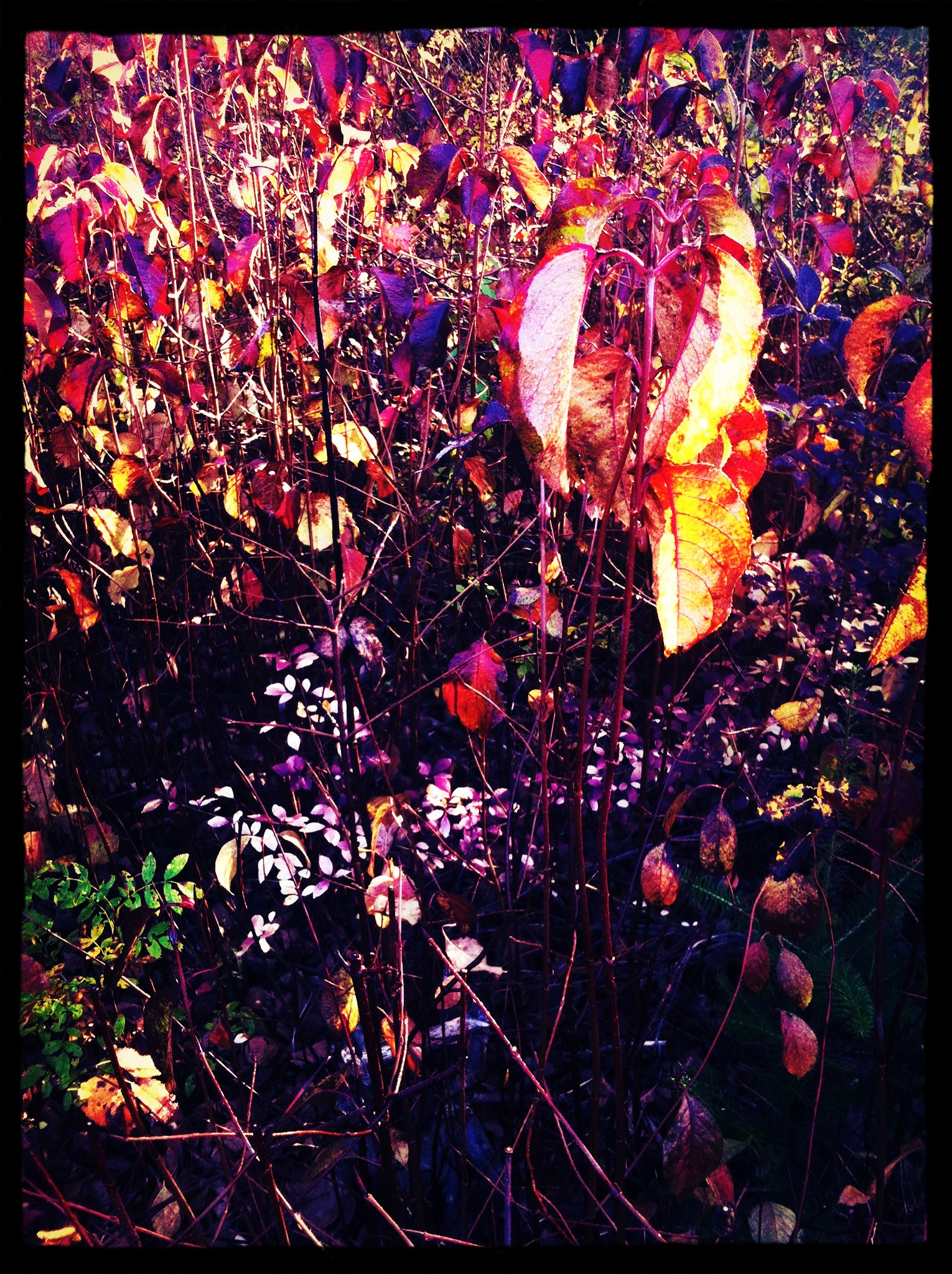
Early morning sun streams through fall leaves

The colours of every plant still growing are just incredible….nothing is more beautiful than this motley!

I gazed off up Somes Sound at lobster boats scooting across the water

I skipped some rocks whilst looking around

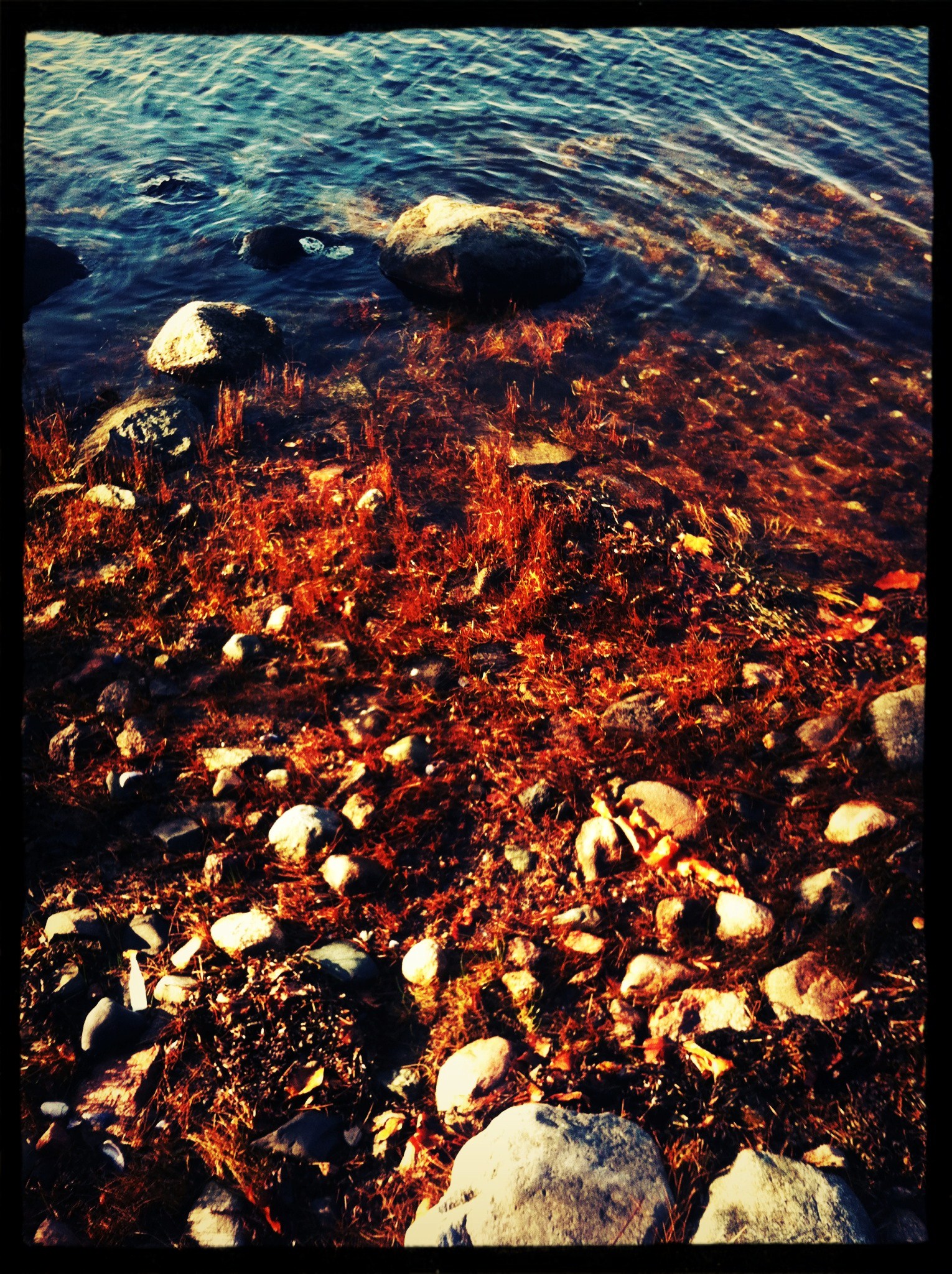
And stared out at the rocks and grass and seaweed

I gazed down at all the summer cottages wrapped up for winter

Come Monday, all these leaves will be gone!

The other day, I went strolling to a park nearby. At sunset, this is what I saw…

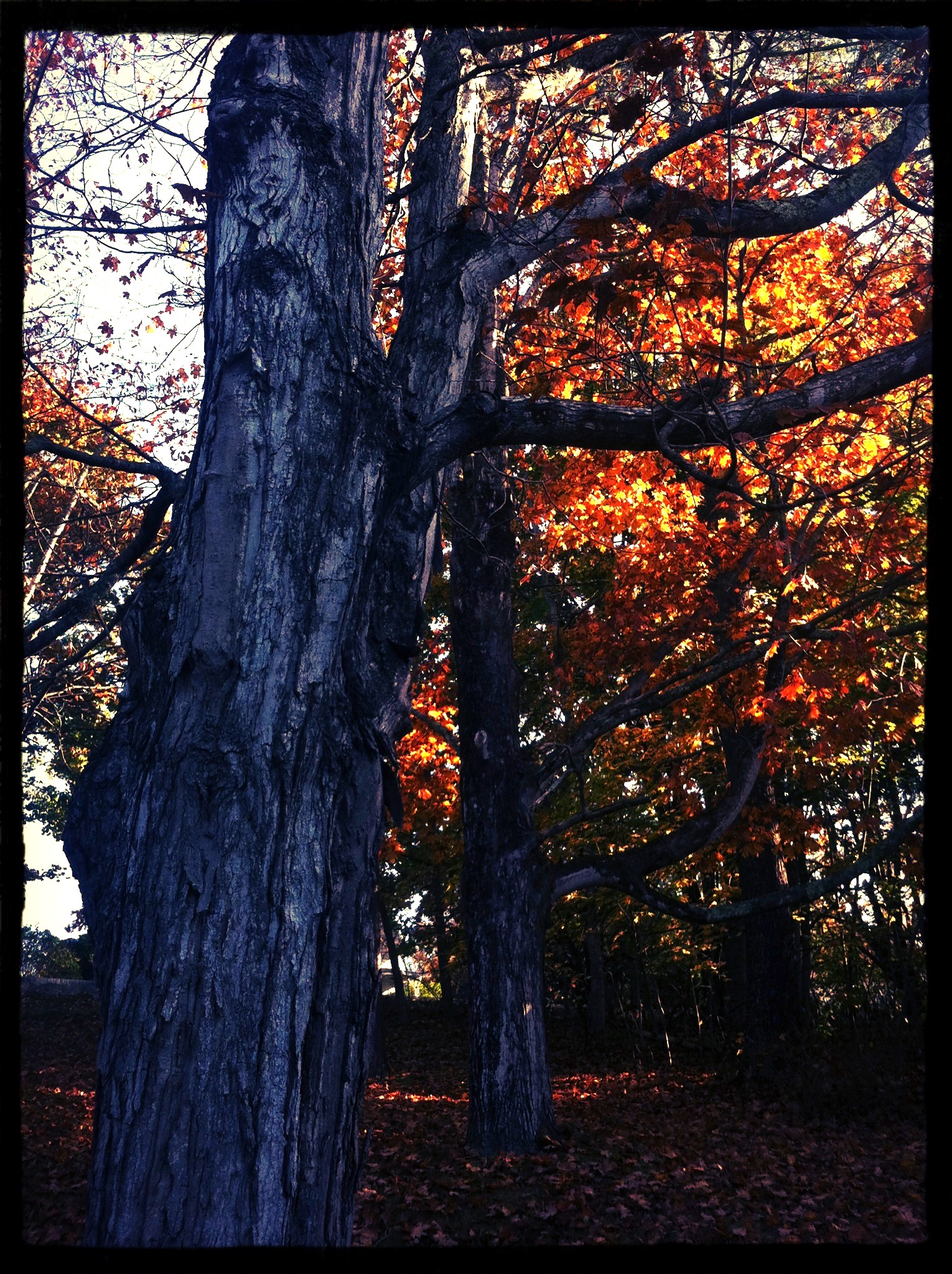
Autumn is a rainbow here

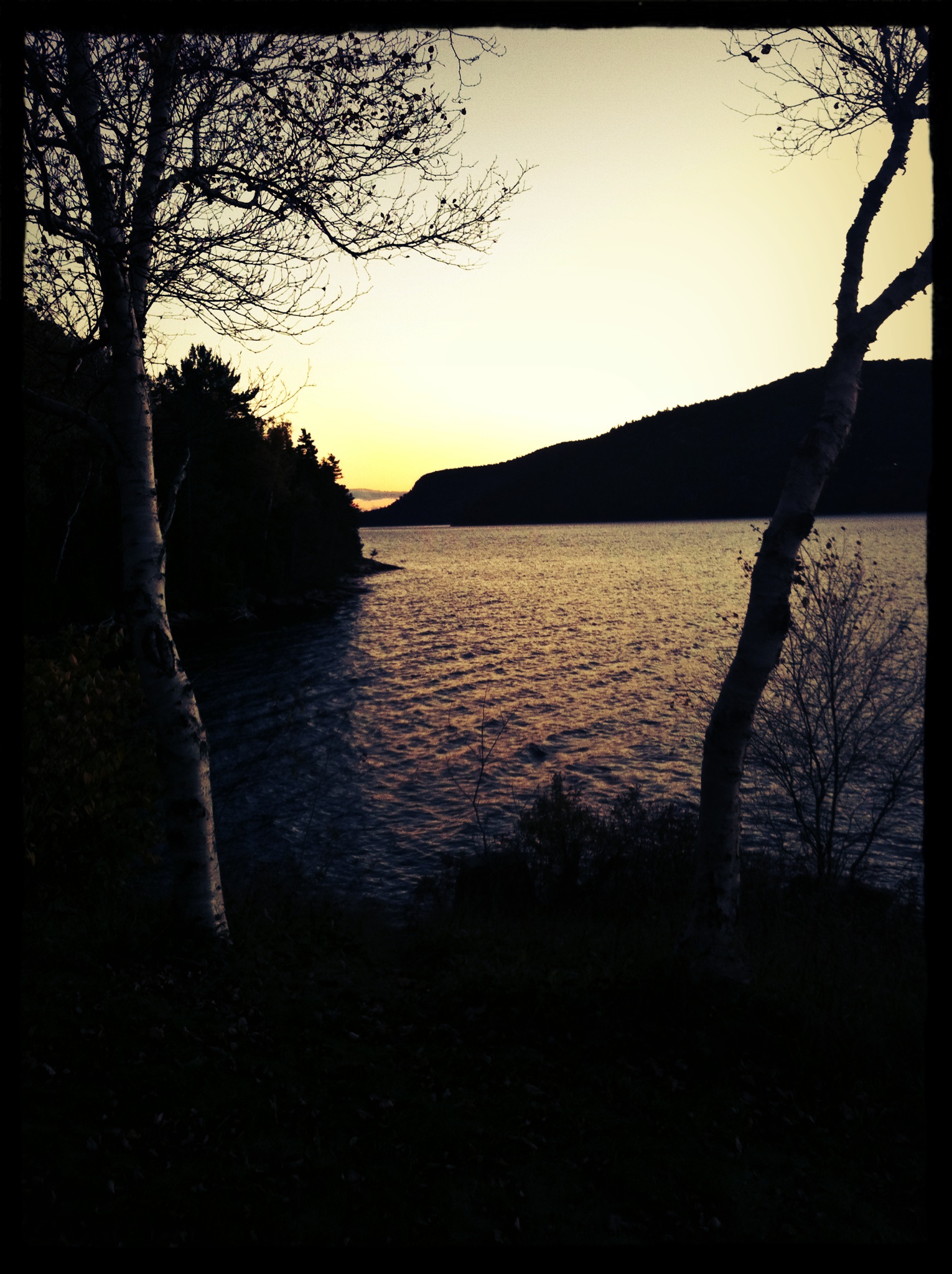
The sun set behind mountains and cliffs

And the sun shone on the bark of birch trees, until it all but disappeared

Now That I Know…

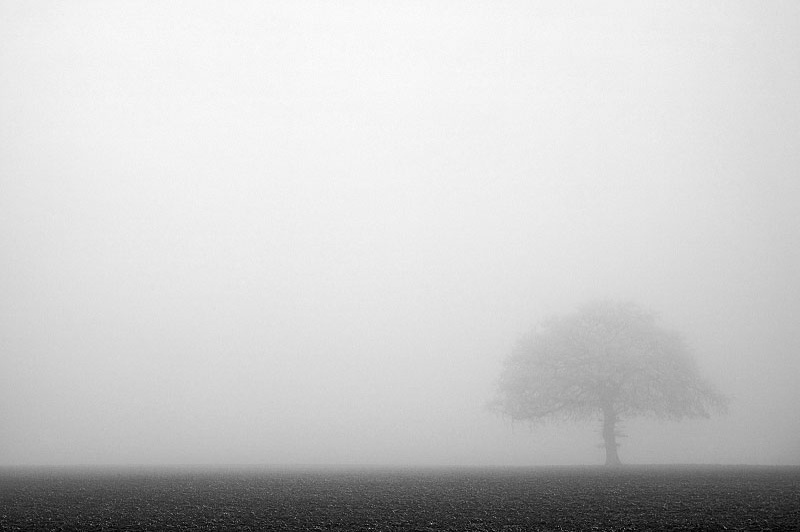
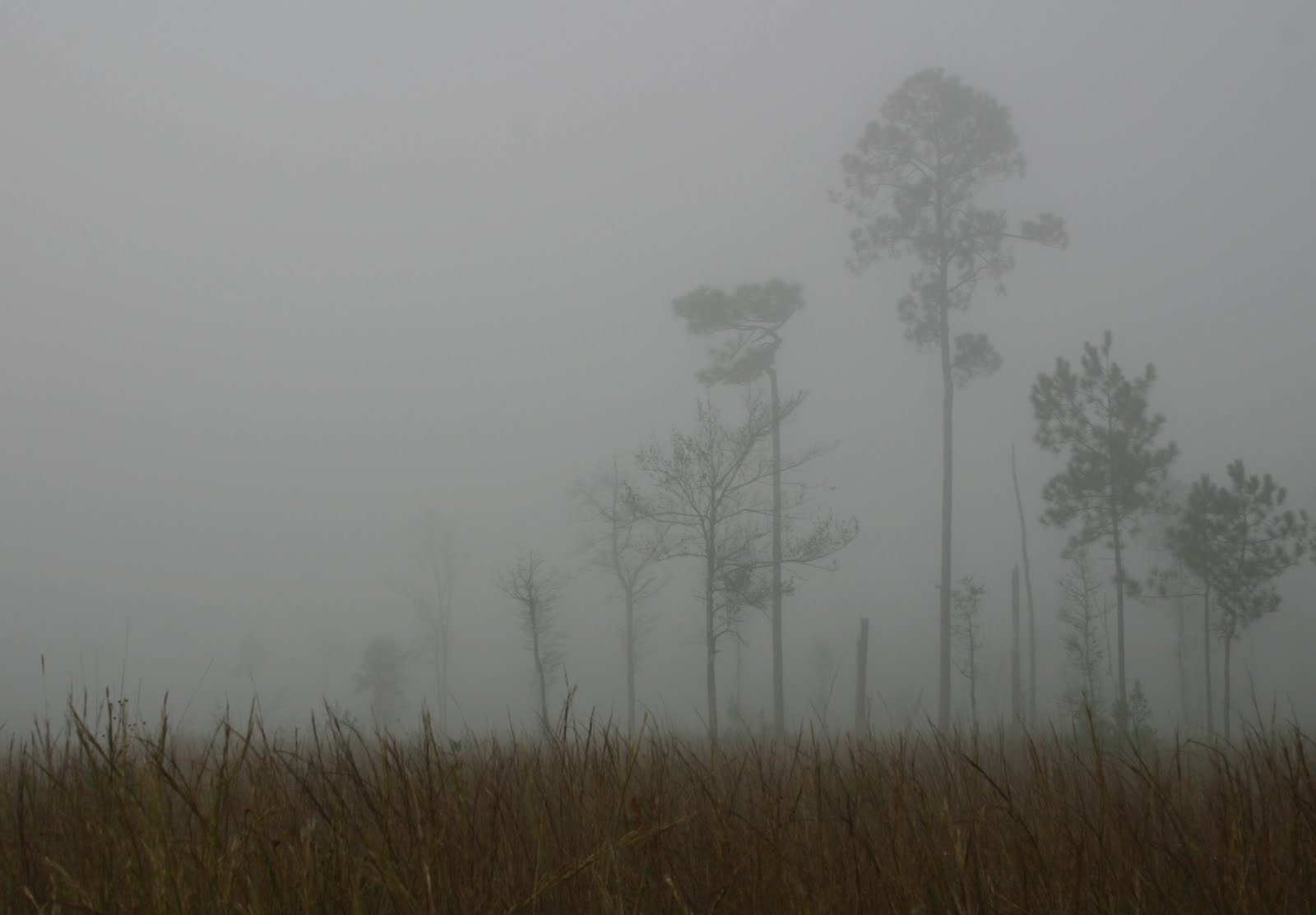
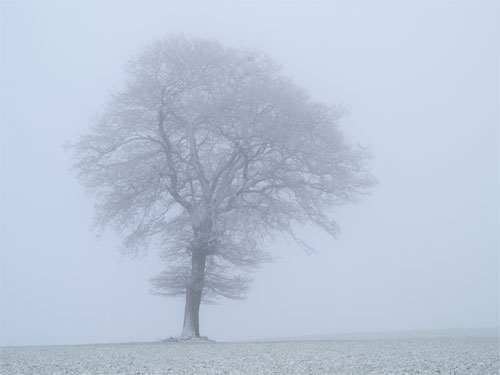
{only the last photo in today’s post is one of mine….all others are Google Images found by searching “fog”}

What seems like many years ago, I taught in a school in East Austin in a room with one bright orange wall.

Orange was the color that designated 8th grade rooms, although I taught all three grades in that room. Typically, while I was a teacher, I was “split” or taught multiple grades in the same year. It was really challenging at first, but became much easier as time went by. In this room, my second room in that school, there were many windows along the back wall and it looked out over the rooftop of the first floor and beyond that, the neighborhood where all the kids who came to us lived. That neighborhood was one of the worst in Austin, poor, ugly, dirty…a typical neighborhood that poverty and city neglect has left to decay and never improve. In that neighborhood there were no grocery stores or doctors, no movie theatres or good parks. You had to cross the interstate that was about a mile away to get to that sort of thing. I always wondered why a city would build a neighborhood so isolated from the city itself.

The orange wall was in the front of the room and was covered with two white boards and a flat screen tv, if you believe it. I taught almost everything via PowerPoint on that flat screen tv. Large screens with bright colors are lifesavers when you are teaching kids with the attention span of a fruit fly. There were two doors: one we used, and one we didn’t. The one we didn’t was typically covered in a huge poster made of butcher paper that somehow related to what we were studying. At that school, I made many of these posters as I loved to have large, colorful representations of what we were doing. My favorite one that we made was entitled “Dragon City” and was a city made of multi-colored block buildings all made by students. Below the city were tectonic plates that, tragically, were always moving, causing earthquakes. To the side there was a large volcano that was always on the edge of eruption. There was also an ocean with a tsunami at all times, high winds that caused hurricanes and weather conditions that created tornadoes. Life was rough and tough in Dragon City, but all the people lived there, anyway. When the students and I first made it, I made them watch part of Werner Herzog’s short documentary La Soufriere, and talk about why they thought the people would stay when they knew they might be killed.

Daily life in that school was difficult and funny. There were many students who were extraordinarily challenging, but there were also many who were great and inspiring with their intelligences. I tried my best to work with them and challenge them but also help them along, holding their hands a little bit and showing them things they would never otherwise see.

Because of the location of the school, up on a hill in the middle of Austin’s second greenbelt (although this greenbelt was unused by hippies looking for swimming holes), we had different microclimates than the surrounding neighborhood. Because we were up and away, typically our mornings, especially in the transition times between summer and fall, fall and winter and winter and spring, were very foggy.

In the back of my room I had an altar and a coffee machine (what more do you really need?). Every morning I made coffee with maple syrup in it; maple syrup was my reward for surviving there and at home as this was the year I got divorced. On foggy mornings, I started a tradition of fog bathing.

When the kids came in, I would throw open all the windows and we would let the morning fog roll into the room, filling the classroom with clouds. The fog clouds were cool and damp and murky-feeling, as if you were in a forest, not a building. If you looked out of the windows, you could see the fog pouring in over the sills, into our low pressure, controlled climate atmosphere of our school. Sometimes, when the kids weren’t in the room, during an off period, for example, I would sit in the front of the room, doing work at the computer and look up to see banks of fog like water rolling in toward me.

That school, despite its many problems, was in a beautiful spot in east Austin: ringed with trees and fields it sat. It sat on top of a seam of calcite, metamorphic limestone, that had been blasted to build the school. Oftentimes I would take the students in my elective out for a constitutional and we would go and collect beautiful rocks to bring back to the classroom. We would crawl around the retaining walls that were built along the back of the school, hiding when principals or janitors came by (they didn’t understand the need for constitutionals or for beautiful rocks), putting rocks and dead bugs in pockets to cart them inside and place them, delicately, on shelves or windowsills. Nothing ever happened to these rocks despite the concerns of principals: none were ever thrown at each other or through glass.

Sometimes we would go exploring in the woods just to see what was out there, and I would try to get the kids to scream primal screams with me in the woods; they had no experience of the outdoors and were scared of it. One of them even told me, “Miss? Black people don’t go into the woods!”. But after a few journeys, they liked going out there and climbing over cedar trees and into spiders’ webs and finding evidence of people living in those woods. They climbed around over cliff’s edges and got dirt in their shoes and needles in their hair. They would always come back when called, and in we would go again, to reintegrate into the world that was our school.

At that school we had a school garden, and goats, and an after school program in which we wrote a literary magazine and made pinhole cameras. I sat in the hallways and talked to students during my time off, and went into other classrooms who were struggling when their teachers quit in the morning, or the middle of the day.

The best times, for me, in terms of reflecting on what I was doing, what the work actually was, came though, on those days when I could stand, drinking coffee with maple syrup, and stare out those back windows. If I could stand and stare awhile at the plants, at the rocks, at the books on the altar, at the posters on the walls and floor, at the mobiles hanging from the ceiling, I could wrap my head around what I was trying to do there. I later realized that, although I was great at crowd control and counseling, that I needed to learn how to teach, and so I left that school after two years. It is only now, four years later, that I can look back and see the forest for the trees. Now I can see the beauty even of that place: the waves of fog pouring into my classroom as students worked on building cricket homes or proving photosynthesis in test tubes or reading about light years.

Sunset at Suminsby Park, Northeast Harbor

Now the fog I see and experience rolls toward me from the harbor that is 4/10 of a mile away. It rolls up the streets from out in the ocean, traveling like someone floating up into town, drifting down the main street, up Summit Road and toward me. It flows and falls between houses and garages, and peeks between the branches of trees. Fog is so much a creature of its molecular structure: water pours even in its different phases. A few days ago, I woke up to a foggy day where everything was grey and green. I stood out on the porch awhile, watching the fog move down my street, through the tall juniper trees, over my neighbor’s cottage, along the driveway and out toward the street.

Texas Nights

Mesquite Root Chandeliers

It rained all day today, and the night was cool and muggy. Texas fall nights, quiet time, knitting with a dog at my feet…

““The eastern sky was red as coals in a forge, lighting up the flats along the river. Dew had wet the million needles of the chaparral, and when the rim of the sun edged over the horizon the chaparral seemed to be spotted with diamonds. A bush in the backyard was filled with little rainbows as the sun touched the dew.
It was tribute enough to sunup that it could make even chaparral bushes look beautiful, Augustus thought, and he watched the process happily, knowing it would only last a few minutes. The sun spread reddish-gold light through the shining bushes, among which a few goats wandered, bleating. Even when the sun rose above the low bluffs to the south, a layer of light lingered for a bit at the level of the chaparral, as if independent of its source. The the sun lifted clear, like an immense coin. The dew quickly died, and the light that filled the bushes like red dirt dispersed, leaving clear, slightly bluish air.”

from Lonesome Dove by Larry McMurtry