Conversations with…

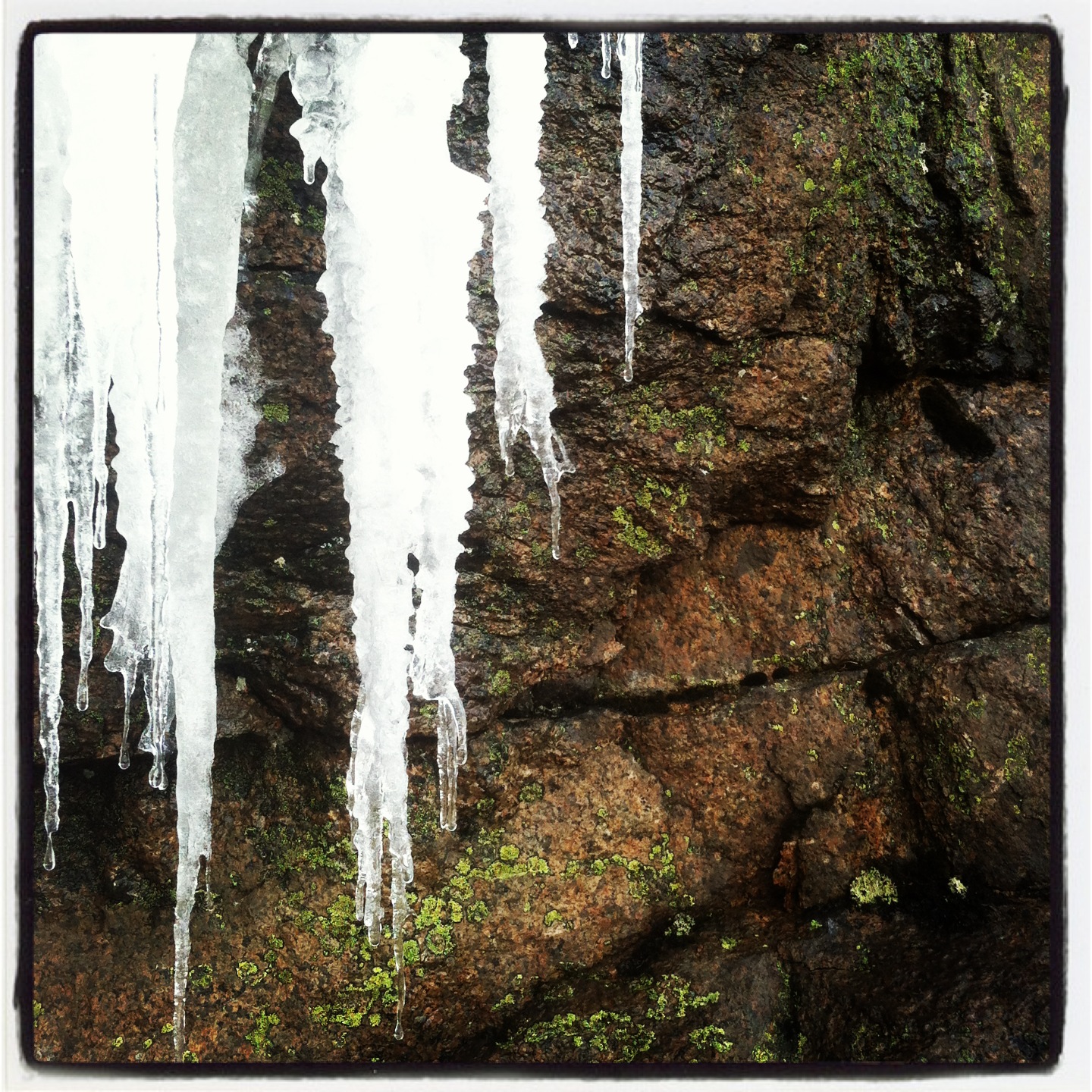
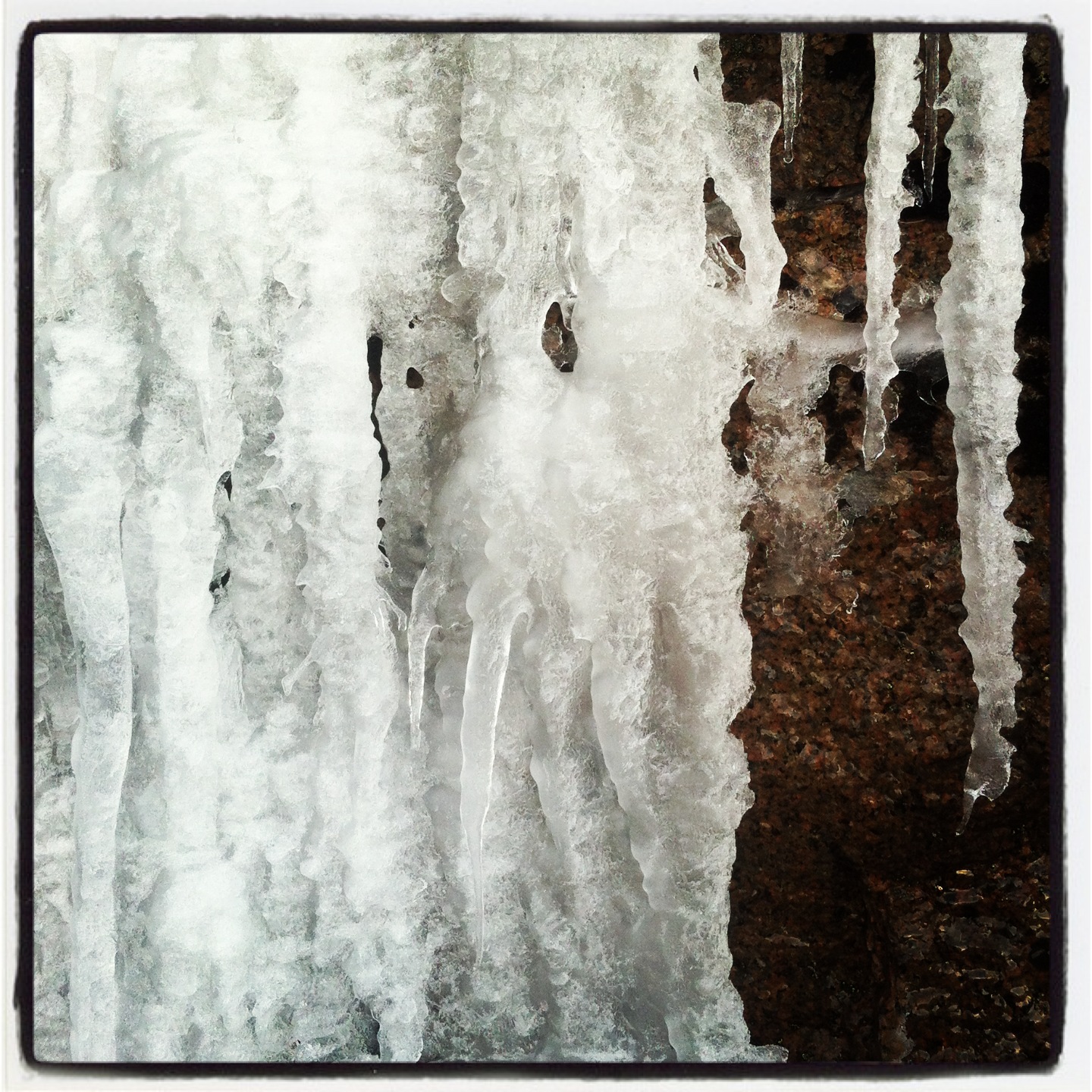
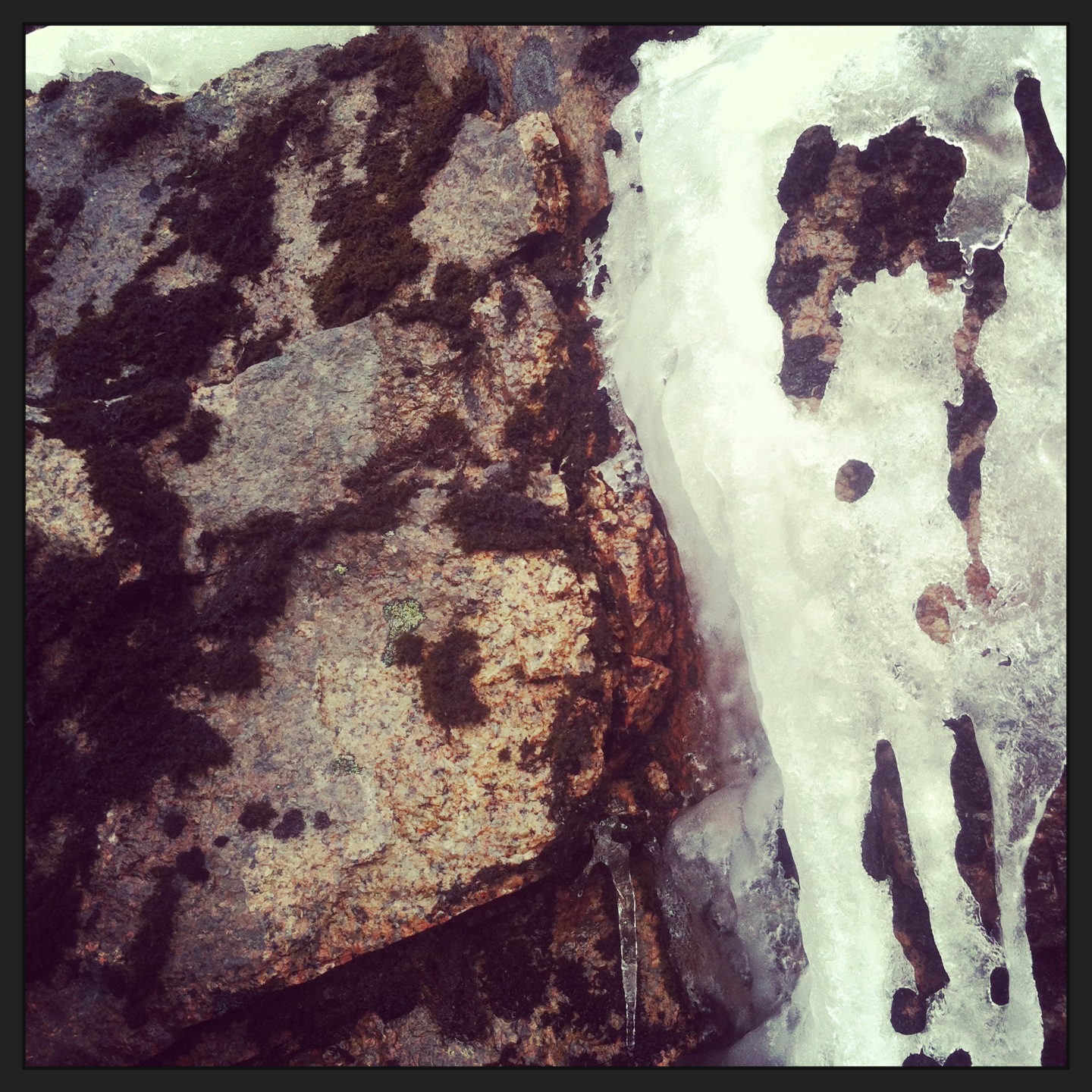
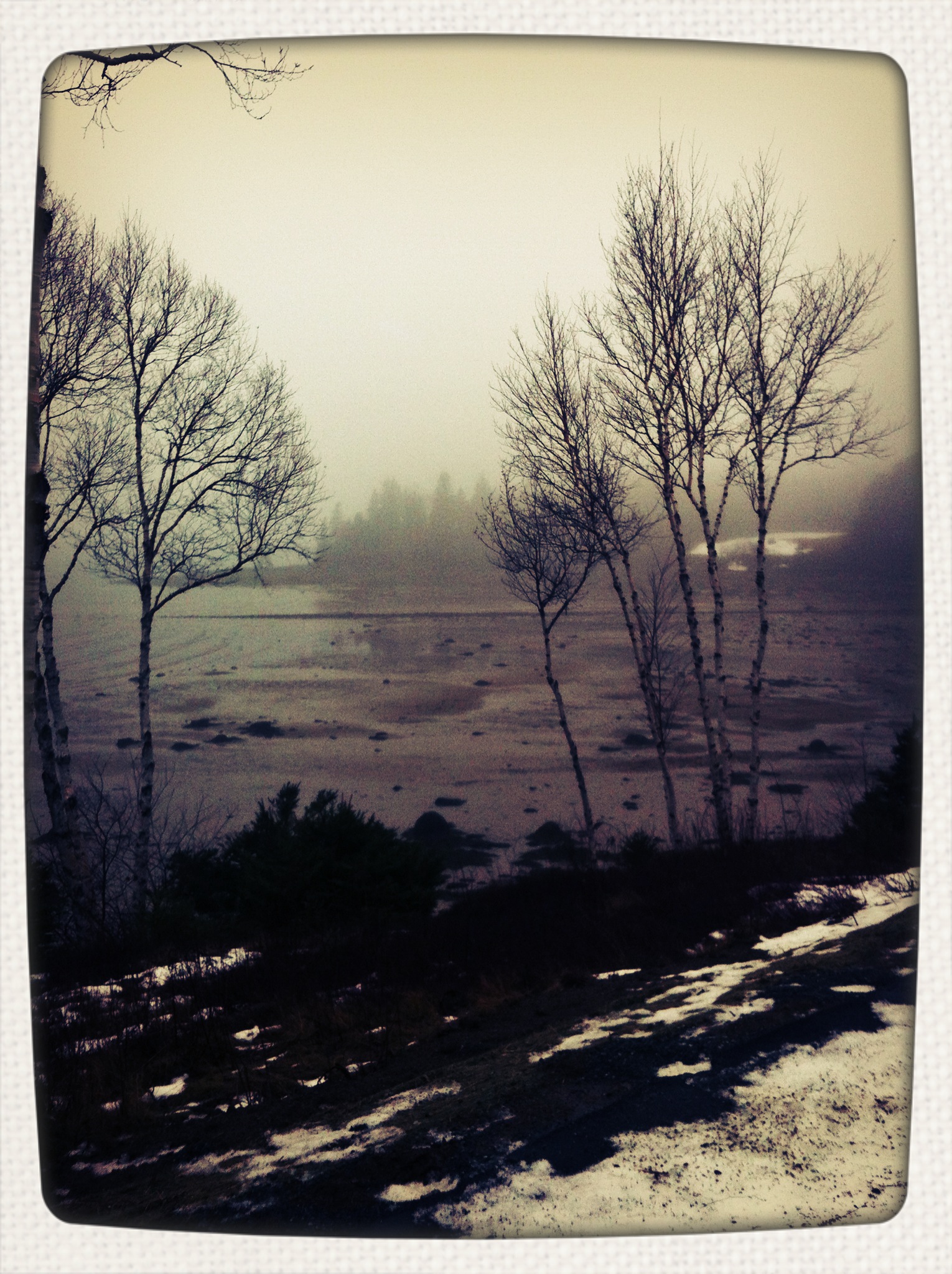
march 2013 4Somes Sound

I had a friend who I will call M. M was 52 when she died about three years ago, after a very short battle with a very intense cancer. M was my ex-husband’s best friend’s mother, and when we met, about ten years ago, we instantly became friends. At that time, she was living with her husband and youngest son in a wonderful bungalow in the Heights, an older neighborhood of downtown Houston: one of its oldest suburbs. The house was filled with artwork, and old furniture, trunks, animals, coffee cups, ashtrays, and M.

M was an acquired taste to many people. She could be difficult, she was snarky, she was wickedly intelligent, and had a wry smile that instantly communicated how she felt about any situation. She was genuine, she didn’t beat around the bush, she struggled, she never knew what to do, but always tried her best.

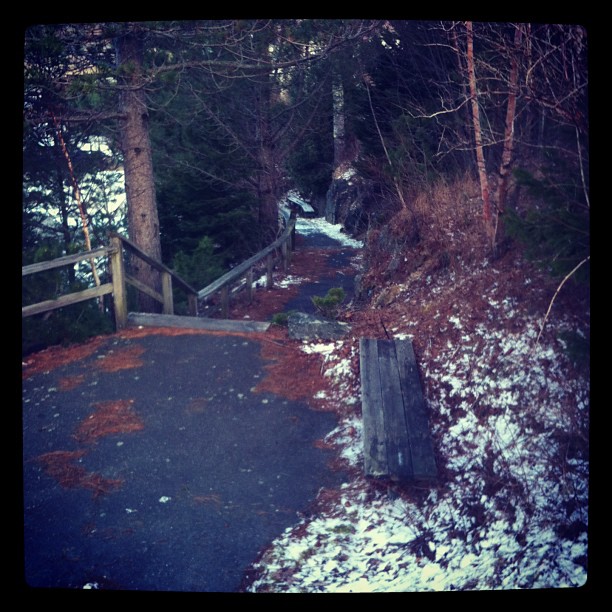
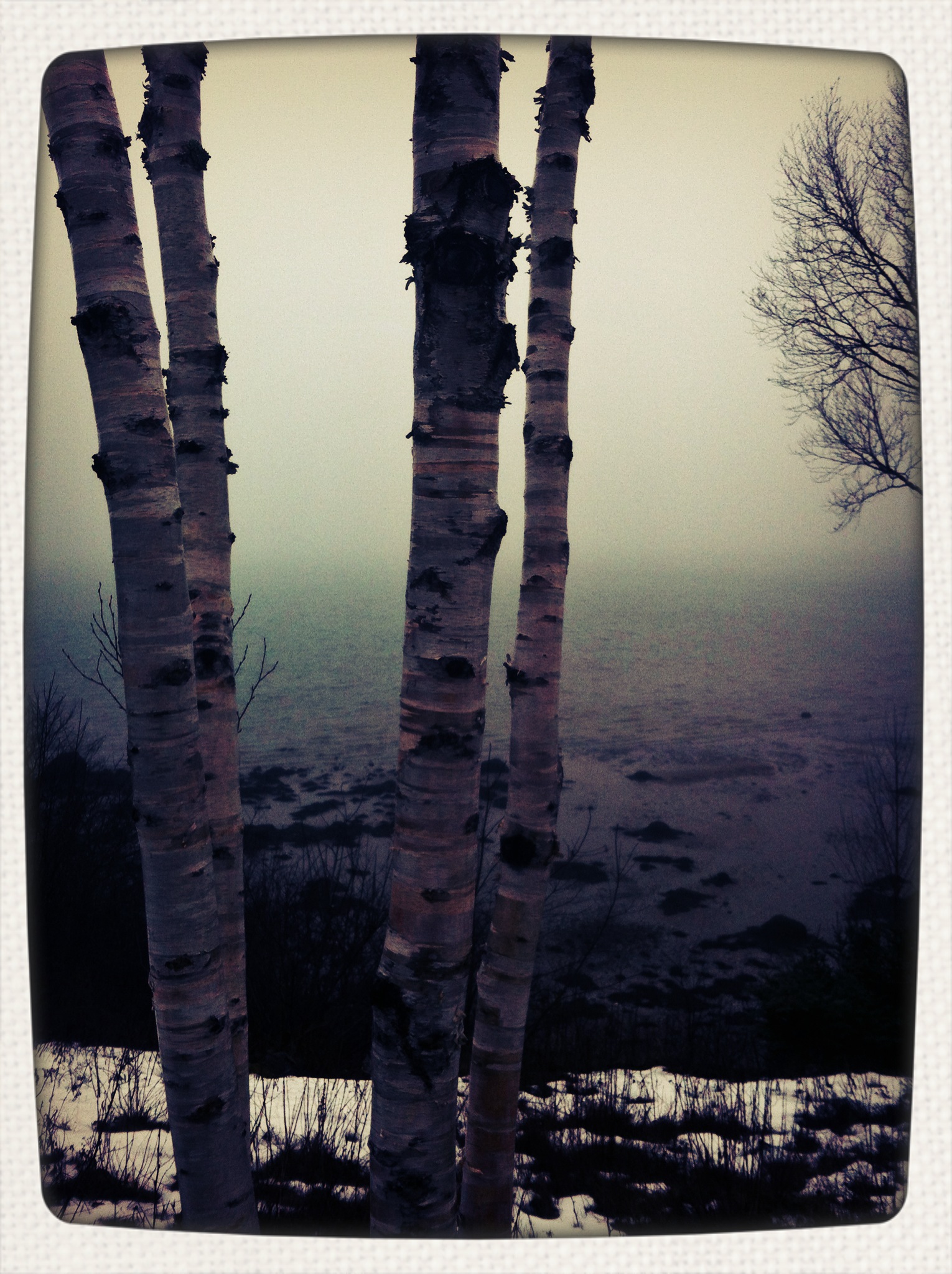
march 2013 8Precipice Trail

When I learned that M had cancer, it was about a year after I had split from my husband and about six months after we had divorced. I hadn’t spoken to her in quite a while because of the divorce, and I sort of felt like she was part of my ex-husband’s family, and so assumed that I wouldn’t see her again. But, when I learned she was sick, my heart was hit with what felt like a rock, and I realized that I needed to see her. I called her the next day, and told her I wanted to come over. It was near the end of the school year that year; the heat of the Texas summer already beating down on me as I walked through the parking lot of her apartment complex in South Austin.

When I walked into her apartment, she said something very simple to me. She said, “It is so good to see you.” And it was true; it was great to see each other. What was not great was that she was so sick that she was having a hard time using one side of her body and could not use one arm at all. Her apartment was a mess, and her younger son who used to be precocious and seven years old, was now sixteen and scared out of his mind, and expressed that fear by withdrawing and flunking out of school.

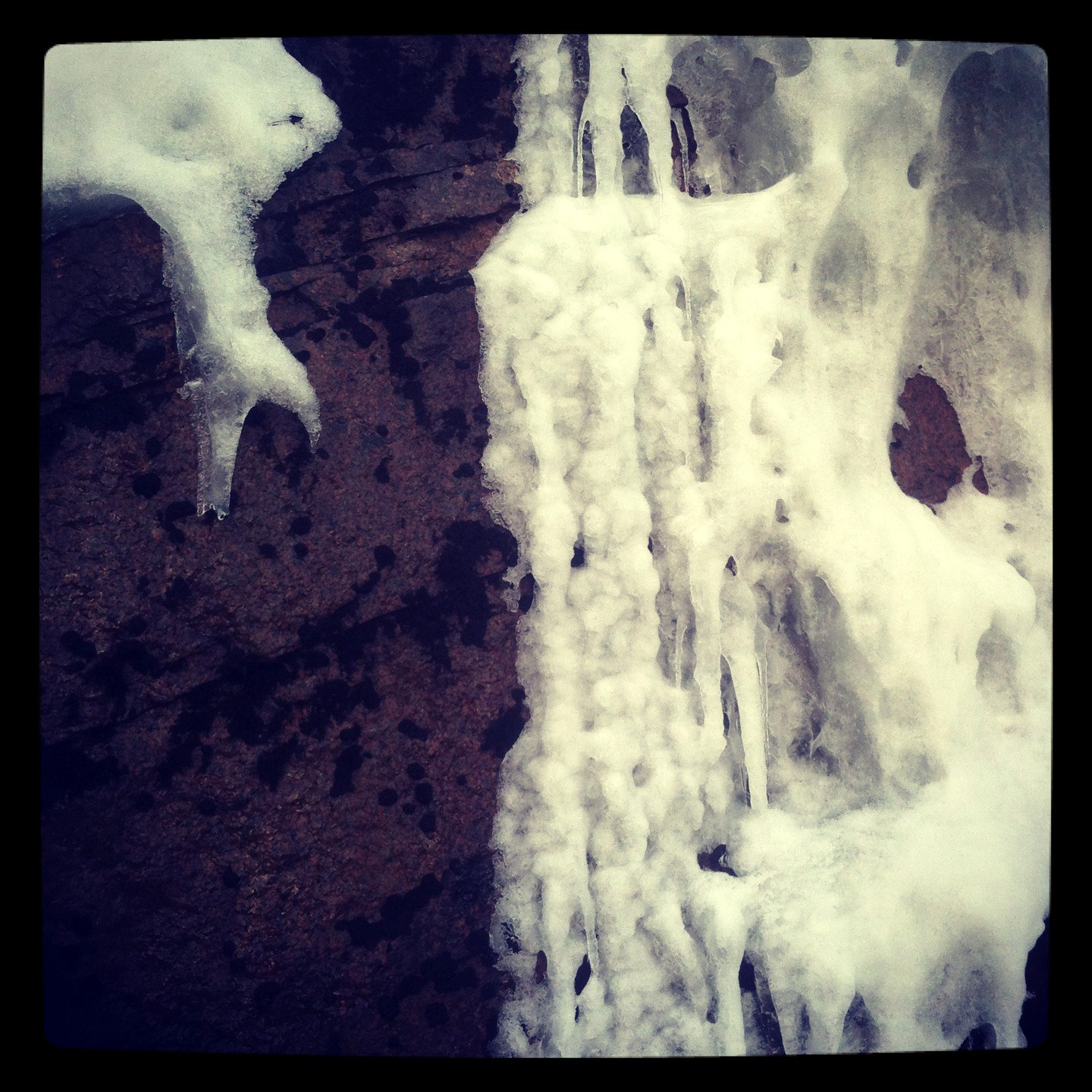
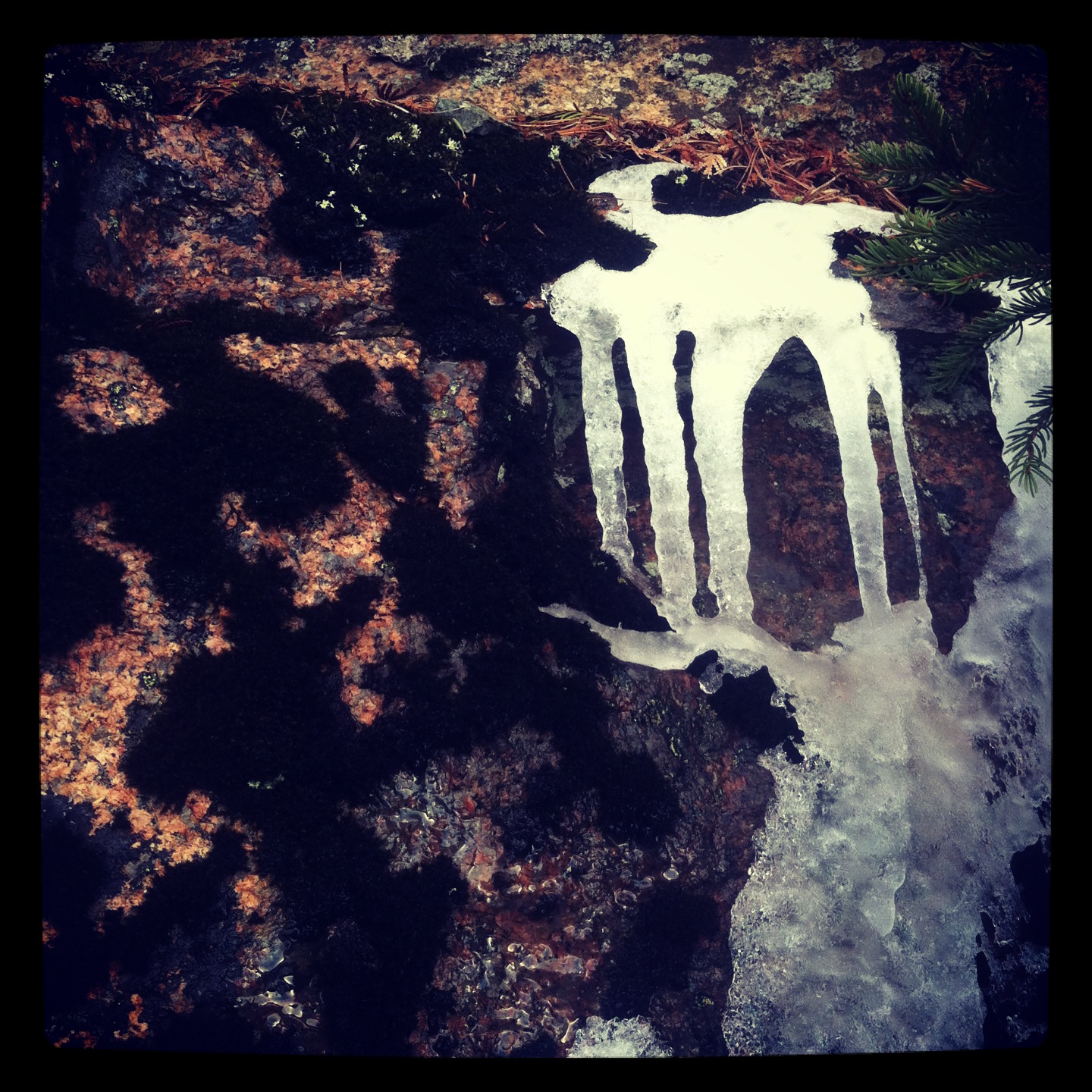
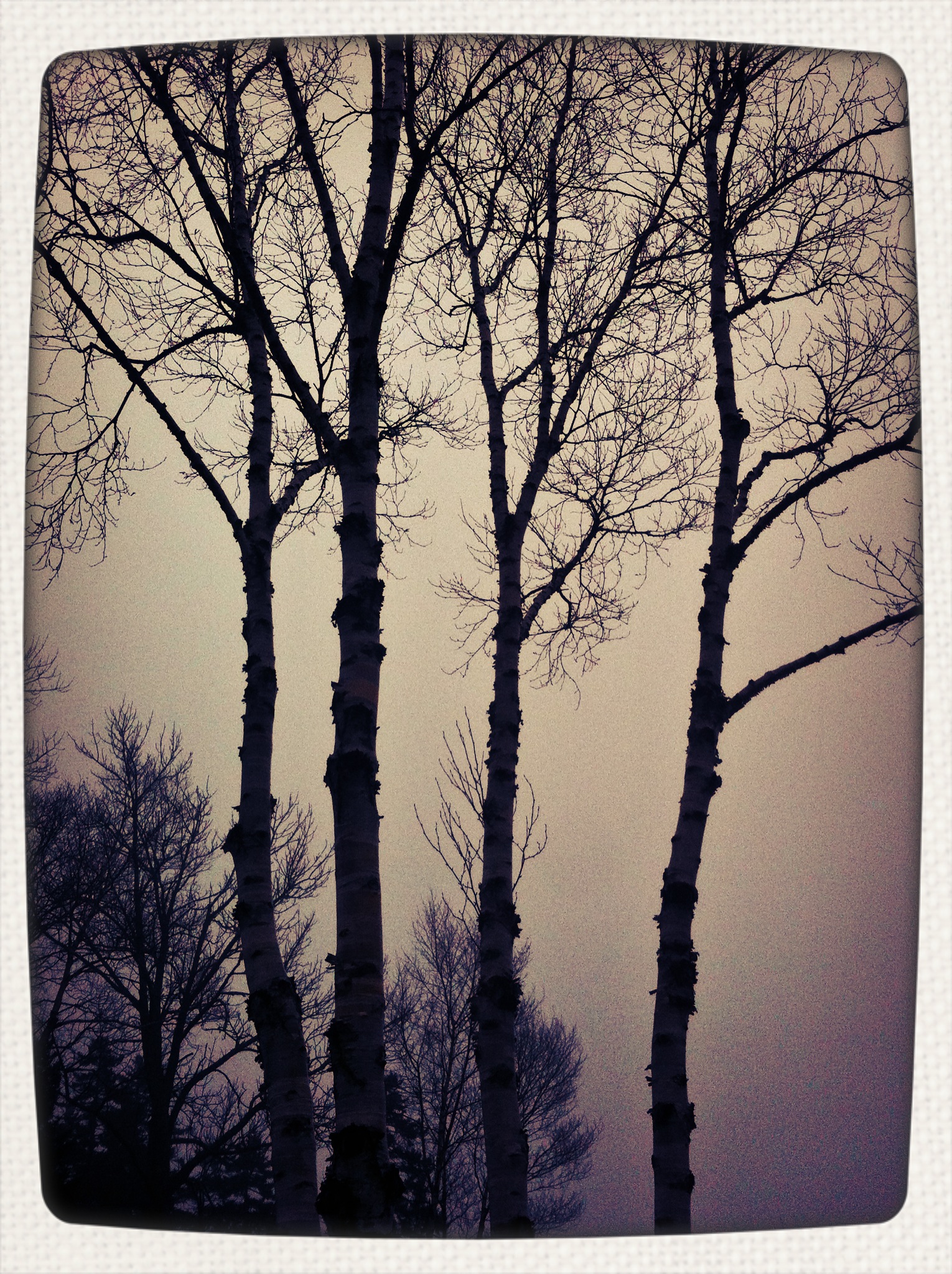
march 2013 5In the Woods

Over the next four months, I saw M almost every day, and tried my best to wrap my head around cancer, families, relationships, fear, death, illness, our failing healthcare system, courage, acceptance, grief, denial, and a host of other emotions. I took her to the doctor, I took her to the emergency room, I took her to a man named Francis the Healer, who let her lie on a bed and relax. It was at Francis’s that we had our most profound conversations. We spoke about love and life a lot. We spoke about the temporal nature of life, about what it was for and why it was important. We spoke a lot about me, and some of the time about her. M was an adopted mom of a sort, but she was more like that aunt that has always done her own thing, is irreverent and uncategorizable, who makes you uncomfortable sometimes, but who you are drawn to, like a magnet of life inside her just pulled you in.

M was tough. She was demanding, and most importantly, she was intensely protective of her three sons and how the situation impacted them. Denial is a serious and complicated emotion, and has a very important place when you are dealing with cancer. Denial comes in the form of your ex-husband showing up with $300 worth of organic groceries despite knowing that his ex-wife can barely eat anything. Denial comes in the form of renting a house with a crazy, winding set of front stairs knowing your mom is in a wheelchair, and planning on building a ramp so that she can get in an out of this beautiful house in a beautiful place. Denial is late night phone calls and emails begging someone to come and see his mother because she is dying, and him not listening. Denial is looking at your friend’s dead body in a hospital room, knowing she is gone, and not being able to leave her body because she hasn’t been alone, not even for a moment, for four months. Denial is fighting, from all sides.

Acceptance comes in strange ways, too. Acceptance comes in the form of arriving on the doorstep, even for two days, from across the country. Acceptance is not being able to speak in the emergency room of a hospital when your mom has to have an emergency blood transfusion. Acceptance is listening to a nurse explain to you that you should take your friend to France because there is no care for her at her age, without insurance. Acceptance is sitting on the stairs in that same house with all the steps, looking at photo after photo of your friend smoking cigarettes for her whole life, all the while touching her youngest son, just to let him know that he and you are physically here, in this moment.

I came up here, to Maine, for about two weeks, during that summer when M was dying. I called her one night, it was July 4th and I wanted to see if someone had taken her to the fireworks. We had this hilarious conversation in which she told me she wanted to be taxidermied and stuffed so that she could still come to all the important events in our lives, and that we could just carry her around to holidays and weddings. In this same conversation, as I was sitting on my friend’s brick patio, in July, in Maine, she told me that she understood what death was, that it was a crossing, but that she would be able to cross back sometimes and communicate in some way. She was in acceptance of what was happening and knew where she was going.

The day before she died, she was very in and out of her body and of time, she was traveling all over the world and through different eras. She said a lot of funny things, but the thing that she kept repeating was how much she loved her boys. There was no doubt, to anyone, about how much she loved them. No matter how much morphine she was on, or how much pain was racing through her tiny little body, she kept communicating that she loved them, she loved them, she loved them.
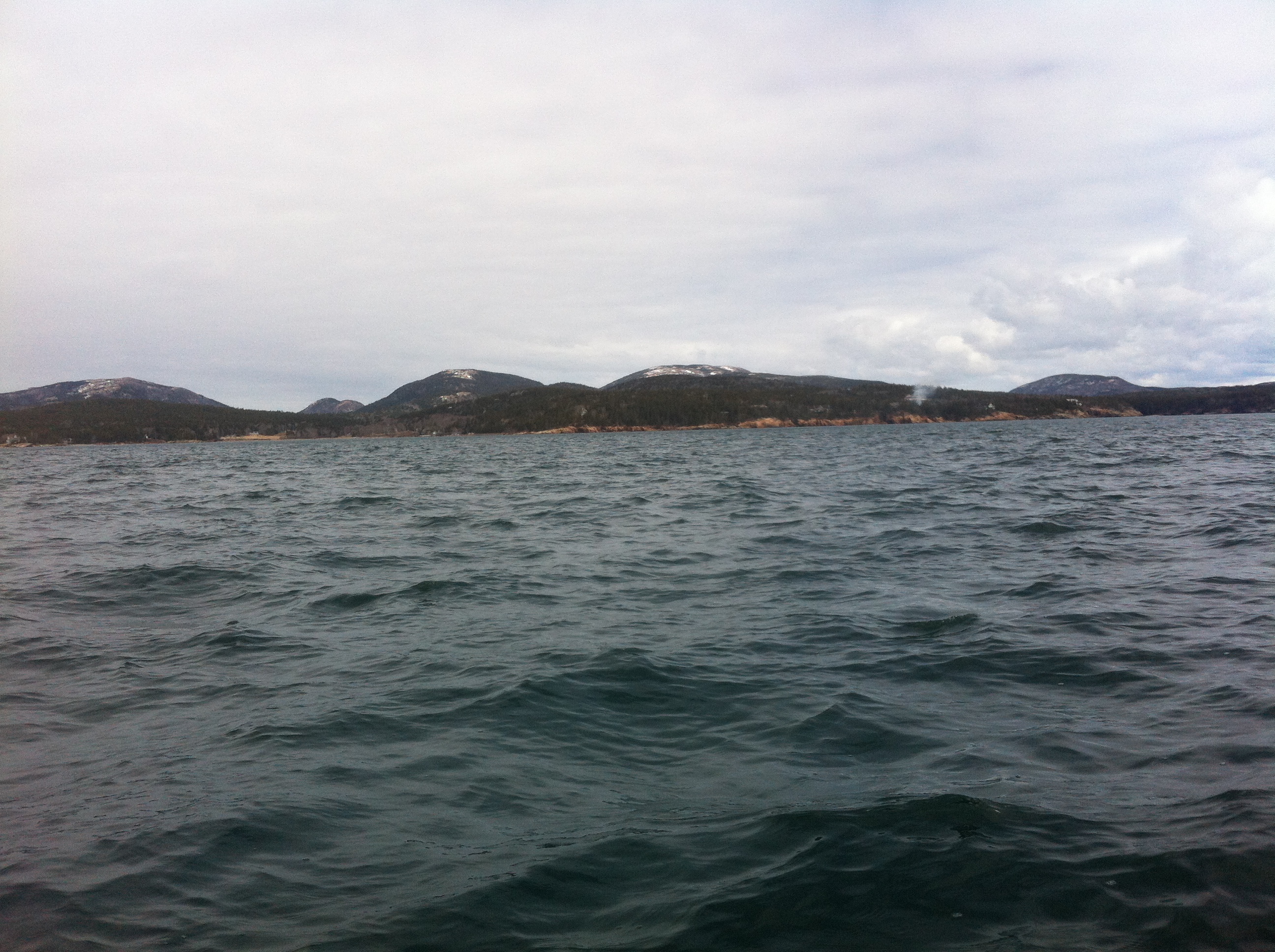
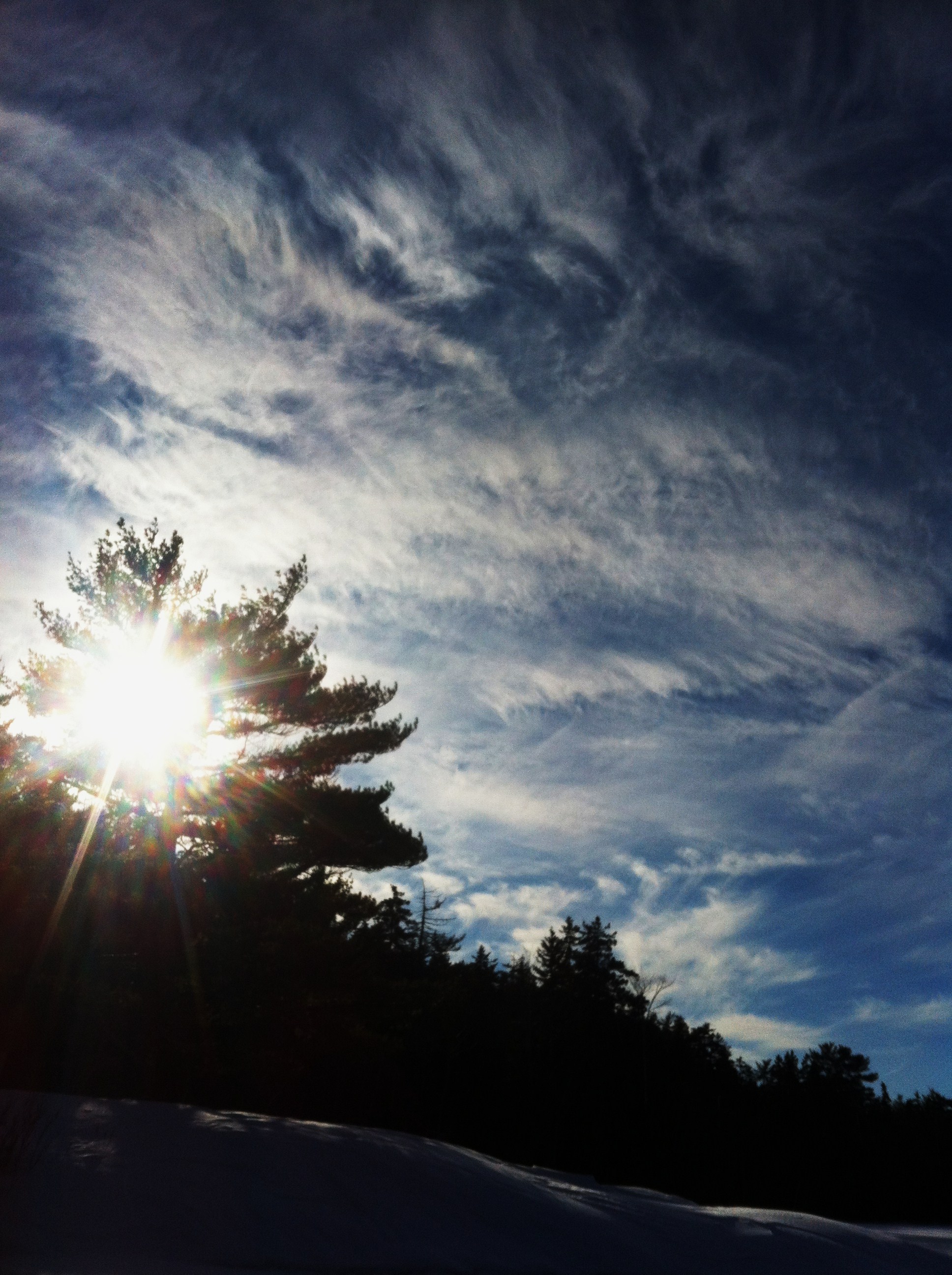
march 2013 11Looking Back at Mount Desert from Islesford, from a very tiny boat!

What does this have to do with me, now, today, in Northeast Harbor, Maine, after my two week hiatus, when I house sat in the woods with ten cats, and made jewelry, and mulled over my life? Tonight, I sat out on my deck for a while and stared at the stars, and watched the moon rise over the harbor, and talked to ________ (whatever you want to call it) for a while.

march 2013 10Moon Rise over the slowly melting Snow Mountain

While speaking to __________ tonight, on the deck, I asked the question: “why do I feel so lonely here? Why is it that this place is so lonely, so alone?” I love this place, but the sense of solitude is Great, and I mean great as in size, not value or experience. I feel, in my heart, that the loneliness here is part of the place, meaning that it is somewhat inescapable, and therefore, must be accepted into your heart as not a negative aspect, but just another part of the environment, like the wind off the ocean, the sculpted granite, the six month long winter, the call of seagulls from the roofs of buildings. My question of loneliness was more related to my own fear of closeness with others. In cities, there are so many people and restaurants and cafes and museums that you are never confronted with that truth of our own isolation, our aloneness in the world. You can be so easily distracted and meet so many people to have friendships with that you never have to confront the deep thoughts that come in winter, in Maine, on a wooden deck, on the edge of a harbor.
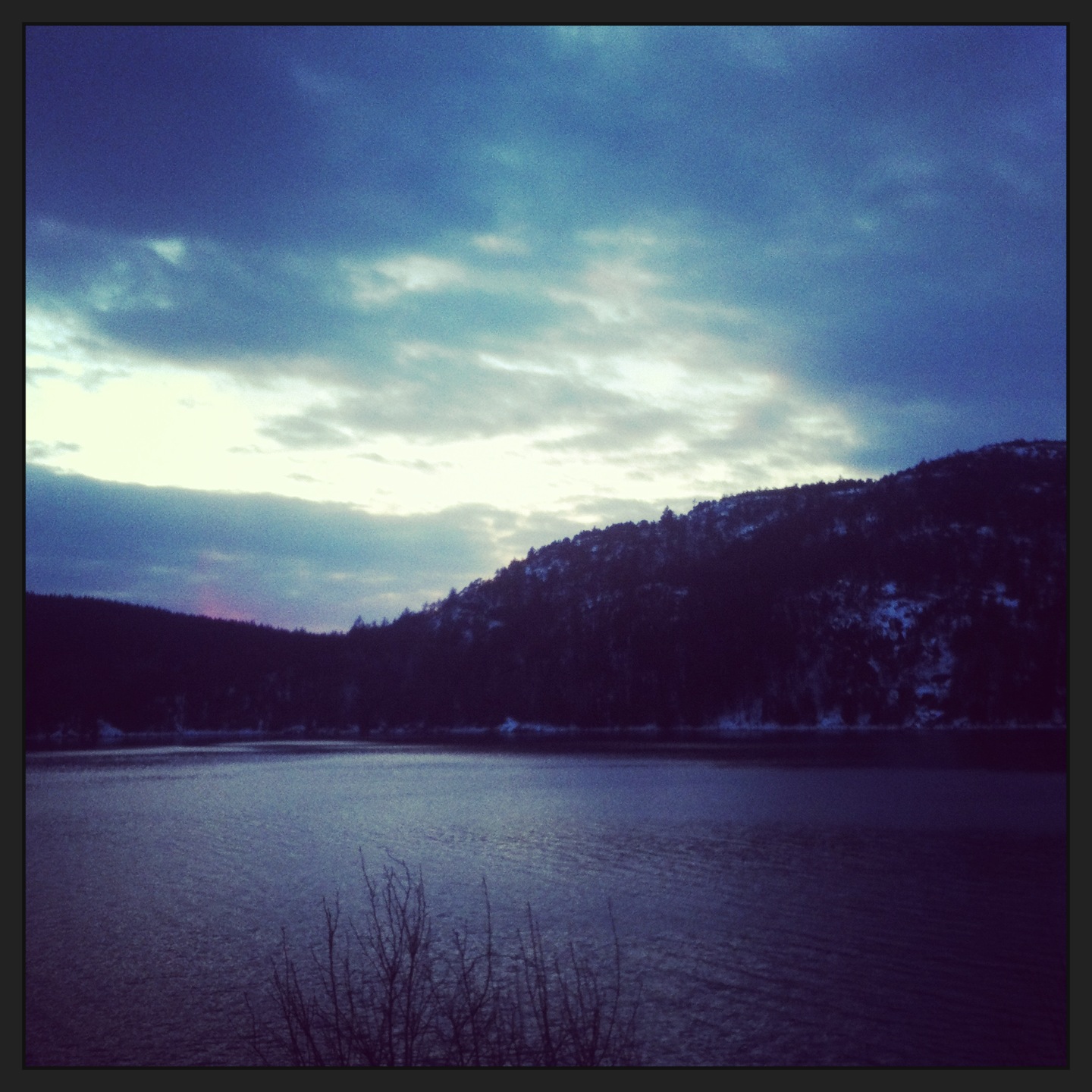
march 2013 1Somes Sound from Sargeant Drive

Coming back to my friend M: when I first saw M in that tiny apartment, when her arm didn’t work (Francis and M and cancer treatments fixed that, by the way), she told me that she knew how she had gotten cancer. I looked at her and asked her, “how?”. She told me that every morning she poured a cup of coffee and went outside to smoke her morning cigarette and asked the same question: “Well, what the fuck am I going to do now?”. She told me that she believed she got cancer because that was the energy she put out every morning, and the thought with which she started each new day. Whether you believe in that or not, she believed in it, and it resonates with me to this day.

One of the things that I have learned from winter, from Maine, from Northeast Harbor, is that this life, this time, is all about perspective. Sometimes the tininess and the loneliness of this place scares me, like tonight. And sometimes, the loneliness, the solitude, is utterly joyous because you feel like your slice of the world is wholly yours, and that the beauty of the moment is happening to only you, as if you can hold on to beauty and awe in your hand, heart and mind, for pure moments of time.
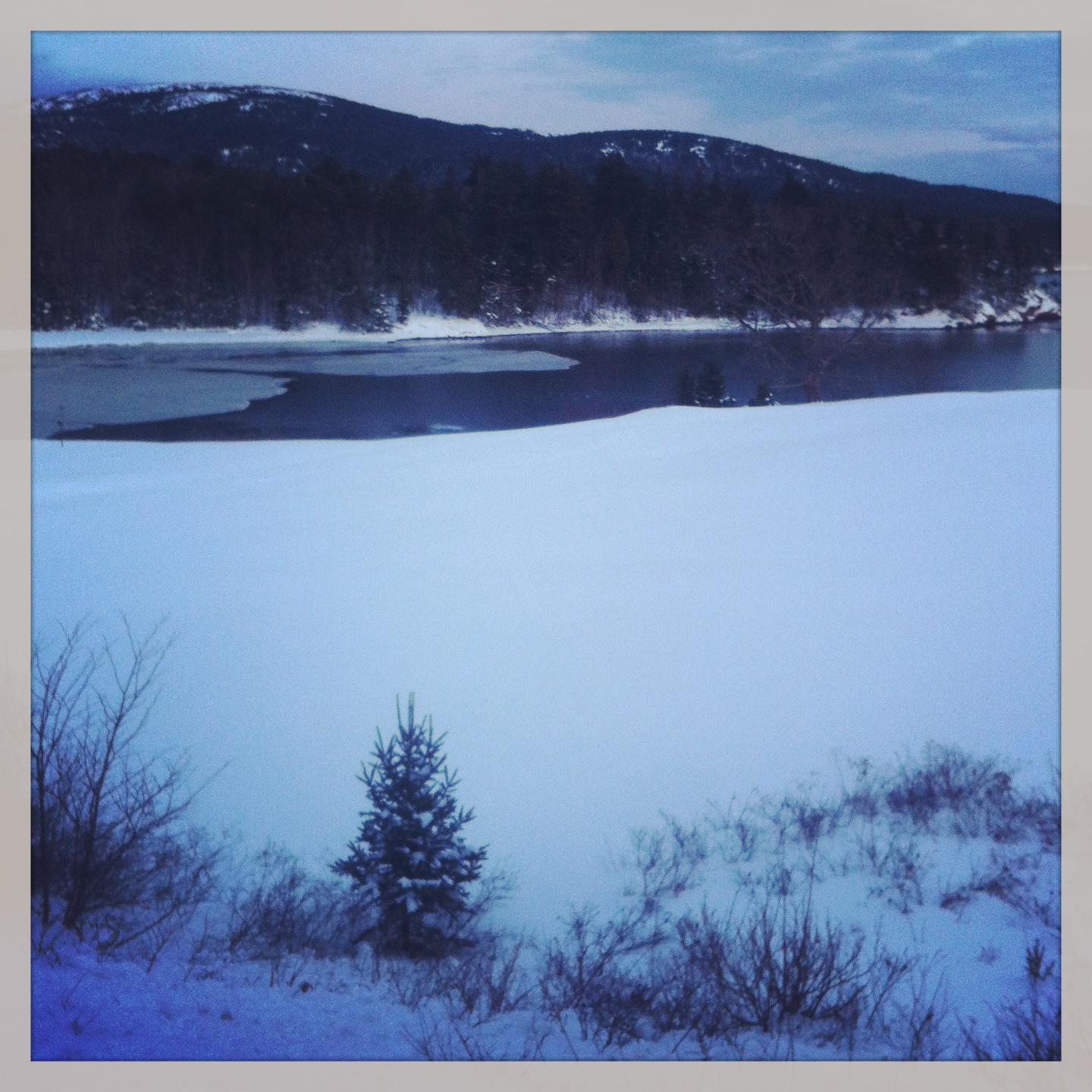
march 2013 3Somes Sound

Today, for the first time in months, I sat on the grass, with a cup of coffee, a book, some chicken salad and some french bread and had a picnic with myself in the spring sunshine. I had just spent two hours digging out a path to my new house, from the road. The path will be lined with rocks, and filled with grey pea stone. It will be a lovely start to my first garden in a long time: the first garden, really, since I sold my house back in the fall of 2009. So, perspective comes with time, and the memory of those who have impacted our lives in myriad ways. Perseverance comes in the last dregs of winter, knowing that change is on the horizon, that the sun is coming back, that green things are almost ready to peep out of the ground, and the warmth on the back of your head isn’t from a knit cap, but from the warmth of a new season itself.

march 2013 7The Tarn
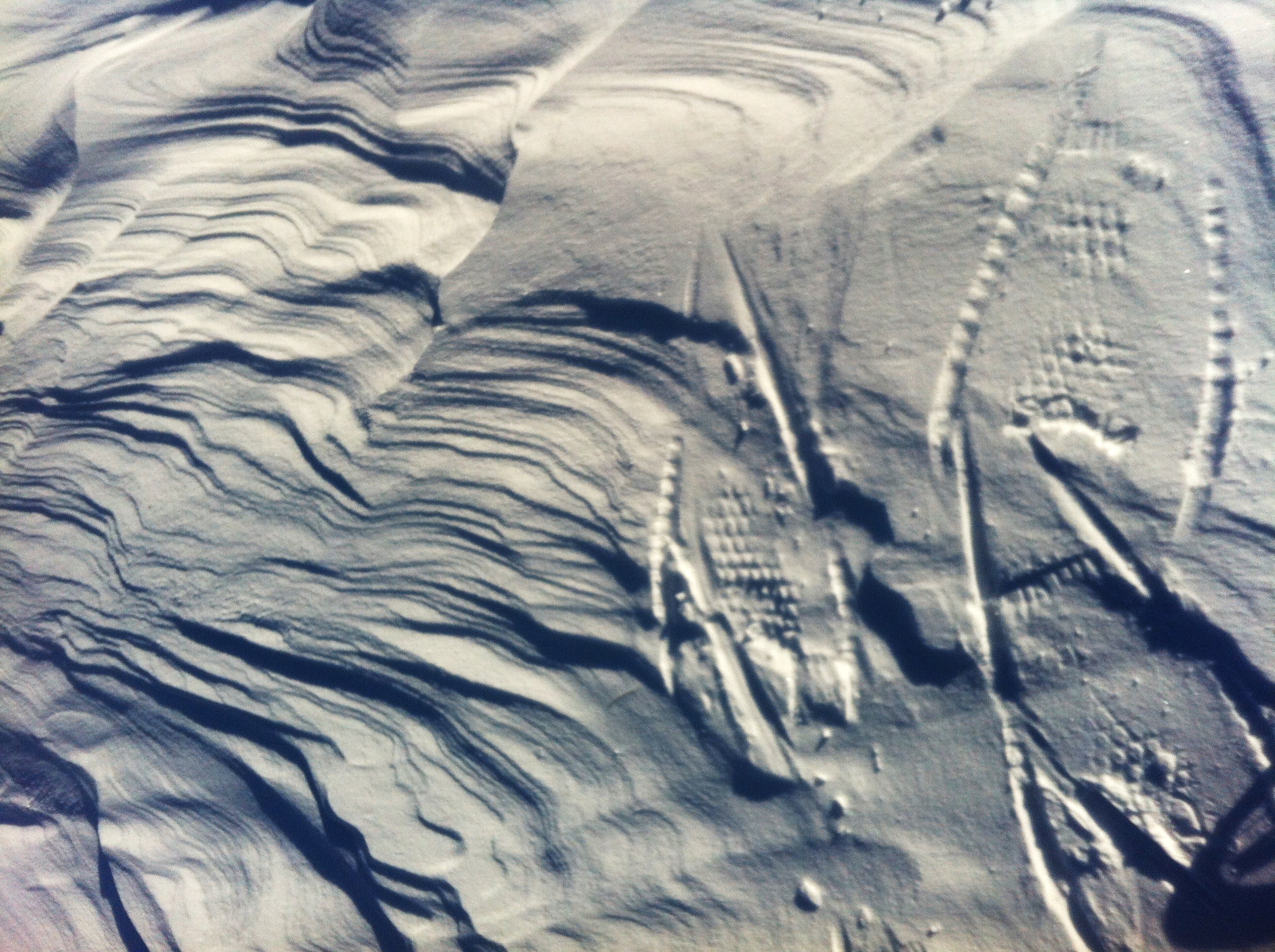
I Wake to Sleep, and Take My Waking Slow

“Reflection must be reserved for solitary hours; whenever she was alone, she gave way to it as the greatest relief; and not a day went by without a solitary walk, in which she might indulge in all the delight of unpleasant recollections.”

Jane Austen

path

On Sunday, I begin housesitting at a beautiful post-and-beam house in the woods. This house is made of wood and windows, and is populated by ten cats who perch on shelves and beams and chairs and stairs. Outside are twelve large chickens who live in a henhouse with a red light, and two giant angora bunnies with tufted ears. Inside, in a black cage that hangs from the ceiling are two lady canaries who, I was informed, occasionally lay tiny eggs which, when cooked, have whites that stay clear, not turning to white as chicken eggs do.

During this housesit, this time in the woods, this time away from town, I am embarking on a daily writing and photography project, which will, of course, begin and end here. A photograph of the day, at least, and a prompt will frame the course of the day. Almost two weeks of time alone, to reflect on all that has happened, to prepare for the coming spring, to think about what lies ahead. The steps, still, are a bit murky, are still covered with snow and ice. The path’s end isn’t clear, as has been the case now for many months. I am beginning to be comfortable with the unknowns, with the trust that I will be borne by the universe, carried by my community, and spurred forth by love and faith in myself, by friends, by putting one foot in front of the other. I am looking forward to this small vacation in a home away from home.

I wake to sleep, and take my waking slow.
I feel my fate in what I cannot fear.
I learn by going where I have to go.
We think by feeling. What is there to know?
I hear my being dance from ear to ear.
I wake to sleep, and take my waking slow.

Of those so close beside me, which are you?
God bless the Ground! I shall walk softly there,
And learn by going where I have to go.

Light takes the Tree; but who can tell us how?
The lowly worm climbs up a winding stair;
I wake to sleep, and take my waking slow.

Great Nature has another thing to do
To you and me, so take the lively air,
And, lovely, learn by going where to go.

This shaking keeps me steady. I should know.
What falls away is always. And is near.
I wake to sleep, and take my waking slow.
I learn by going where I have to go.

Theodore Roethke

Waiting

Bruegel_1565_Winter-scene-with-a-bird-trap_WIK

Pieter Bruegel the Elder – A Winter Scene, 1562

What do I think of when I am lying there?: on my stomach, propped up on my elbows, leafing through art books on Toulouse Lautrec and Pieter Bruegel and Peter Beard; gazing upon the paintings in the collection of the Mauritshuis Museum.

Mad_meg

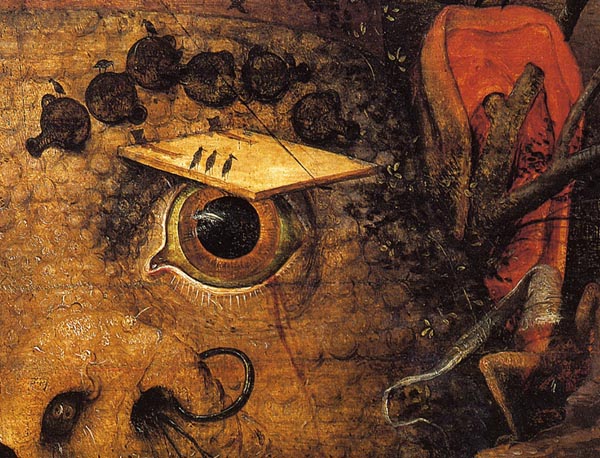
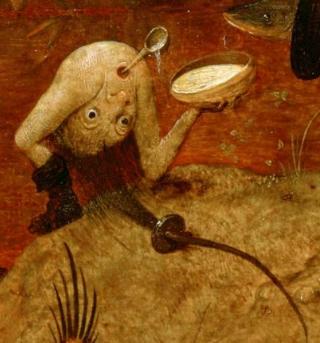
Dulle Griet by Pieter Bruegel the Elder

Pressed into the floor, feeling the coarse plastic fibers of commercial carpet dig into my elbows, through the fabric of my light shirt, I catch myself looking around. Behind me is a pool table, under which stand two polar bears, staring out at me. Above me are deeply pocked marks of pool cues’ chalk, all over the ceiling. To my left are giraffes and hyenas, and up above the window, the skeleton of a sea turtle, many years gone from this world. To my right is my dearest friend here, lost in his own thoughts.

Before me is an off-white enameled Jotul wood stove, with a front window already stained with soot. Through the soot shadow, one can depict the licking of bright orange flames made amber as they filter through the dirty shade. The flames grow and gather, spewing up and across the ceiling of the stove, recirculating.

img645 web

I am thinking about birds’ wings and the lips of Nepenthes plants. I am thinking about patches of snow on the surface of Little Long Pond, and of playing Pac Man on the table consoles at Pizza Hut in the ’80s. I am thinking about the tea that I am drinking, about artificial, non-dairy creamer: the stuff you can light on fire if you sprinkle it onto a candle’s flame. I am thinking about scent, about wood shavings, about ice melting, about the songs of the birds that just recently reappeared.

I am thinking about change.

Mad-Meg-by-Pieter-Bruegel-I-PARTIAL-butthead

We all know that birds’ bones are hollow so that their bodies and wings are lighter than ours: this is one of the reasons that they can fly and we are glued to the Earth. Each morning I watch five crows flit around from tree to tree along my street. They break into peoples’ garbage seeking treasure. They yammer at the the doves and the blue jays yammer back at them. They swoop and dive, and turn their heads to look at each other, and to me, as I stare at them. They pretend to be scared of me, when I know better. They were here before me.

Yesterday I went skating, maybe for the last time, and played an age-old game on ice skates. Pretending that the patches of snow were obstacles, were pools of lava, my friend and I skated round and round them, ever tightening our circles in between and through them, forming curly-cues and slashes and ellipses and circles in skate marks between the snow patches. The snow patches, large and small, close together and far apart, became deadly territory that would turn you into a ghost if you touched them, and provided fodder for chasing each other, not too quickly, between them in a game of ghost tag. Ghost tag, so much like Pac Man, making me think of the way the crust crunched at Pizza Hut when I was a child: how greasy it was, and how all the windows were made of diamond shaped stained glass in clear and red. How we sat at booths together but snuck off to play video games at those strangely stalwart video game tables.

img651 web

These are the thoughts that cross my mind in mid-winter, in February, as the ice and snow melt outside, again. I learned my lesson last week, when a short February thaw had me convinced I’d be in sundresses in no time, only to be blasted by a fierce winter storm once more.

After the snow came roaring through, again, a few days ago, my friend and I drove down to Jordan Pond to assess the likelihood of skating. As we clambered over a snowbank, carrying skates down the path to the water, we crossed another, larger snowbank and were hit, full force, full frontal with 55 mph gusts of blowing snow. Wind so fierce that it blew ice crystals into your eyes. Wind so strong you couldn’t even look into it. Wind so loud it howled around and through your ears. Wind so tough that we both laughed and walked back to the truck; recognizing when to go home is a skill one learns during winter in Maine.

Mad-Meg-by-Pieter-Bruegel-I-PARTIAL-butthead

Winter is drawing to a close: you can feel it in the air. There is a lightness to the sky, as if the sun is coming back. The birds are calling. The days are full of sunshine, when for so long, they have been so dark. There is a sadness in this: a loss. The darker times when all that is before you is you and your work, you and the tiny world that surrounds you, when the sun sets before 4 and all you can think to do is create; well that time is shifting and going away. The light is returning, flooding us with the recognition that soon, buds will burst open on tree limbs, grass will grow, crocus will appear in front of our eyes. Soon, the light will return and the sunsets will change, the water colour will, too, and people will return to this place that has been so quiet and lovely for so long. Flowers will grow, shoulders will be bared, times will change. People will change.

People already are changing: a nervousness is invading every cell of every person, causing each of us angst and anxiety, expressed in unique ways. Peoples’ eyes flit back and forth, as if they are watching for something. Some people draw back, into themselves, away from those that they have held dear during the darker months. Some people are planning, some people are counting down the days, some people are thankful for the retreat of the ice and snow.

Some people are waiting; listening for the ice to crack.

Mad-Meg-by-Pieter-Bruegel-I-PARTIAL-woman

Photodiary — Snowshoeing on Jordan Pond

“Well, I know now. I know a little more how much a simple thing like a snowfall can mean to a person.”

Sylvia Plath

snowshoeing

snowshoeing14

snowshoeing12

Last week we had a huge snowstorm here. Nemo, we were warned, was the storm of the century, but it turned out just to be about two feet of snow and lots of wind. The wind woke me up that night because it shook the house. I dislike sleeping on the second floor of buildings: I am more comfortable on the first floor, and this apartment is very high off the ground. At some points it felt as if the whole building was twisting around its center point, and I remembered how, in the old days here, they used to bolt the houses into the ground using ropes and later, cables, that were driven into the bedrock to stop the houses from blowing away during the gales. The coast of Maine: so wild, so windy, with its daily changing weather and unpredictable light, dark, air, stars, water. Last week, during the storm, the seas were up to 30 foot swells and the boats stayed in the harbor, lashed down to the docks with nylon ropes. The sea roiled and boiled and changed color to a darker winter green as it swooped all around our island. A storm surge of 2 feet covered the rocks and froze the grasses at water’s edge.

snowshoeing5

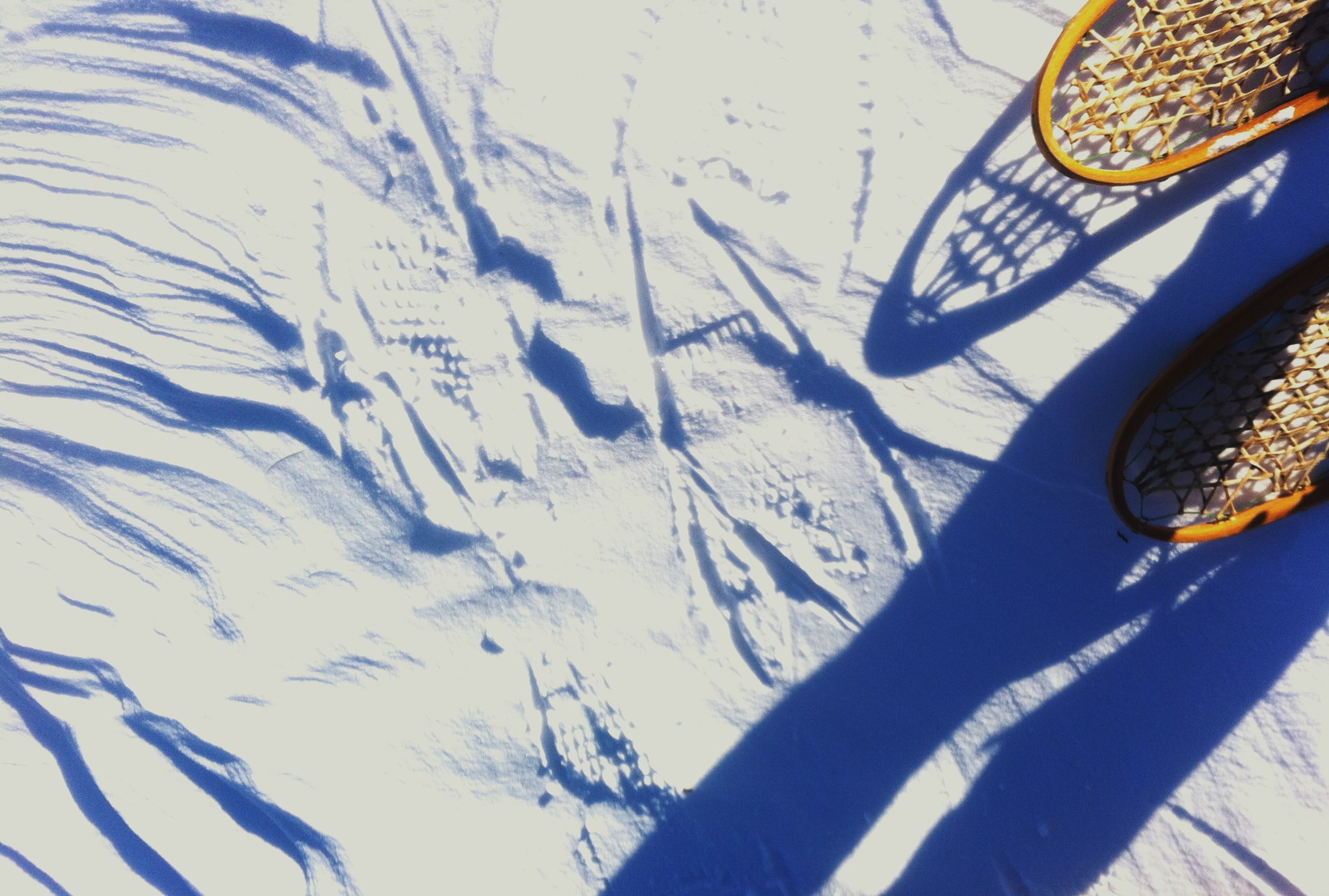
After the storm had passed, and I had dug myself out of the driveway, I went snowshoeing for the first time, down at Jordan Pond, my favorite skating spot that was now covered in snow.

snowshoeing6

This place is a winter wonderland, and now that I am no longer scared of winter, and know what it is, and how long it lasts and how different it makes you feel, so reflective, I love to go outside and explore how it changes from day to day. Each day is distinct: as if the environment switches, late at night, when we are asleep, like the screens in that story The Veldt. Each morning when I wake up I see differences in the snow, in the ice, in the light; I hear different bird calls and the shadows on the rocks have changed. The idea of Earth as Dynamic is nowhere more true than here: where you can watch the landscape change almost before your eyes.

snowshoeing8

Here I am, just past the point of no return for winter, when the first hints of spring are peeping in the tips of oak trees in the forests….when the birds are singing more than they have for three months. In other places, plants are bursting forth, but for us, we have a while yet to wait.

snowshoeing2

snowshoeing9

snowshoeing11

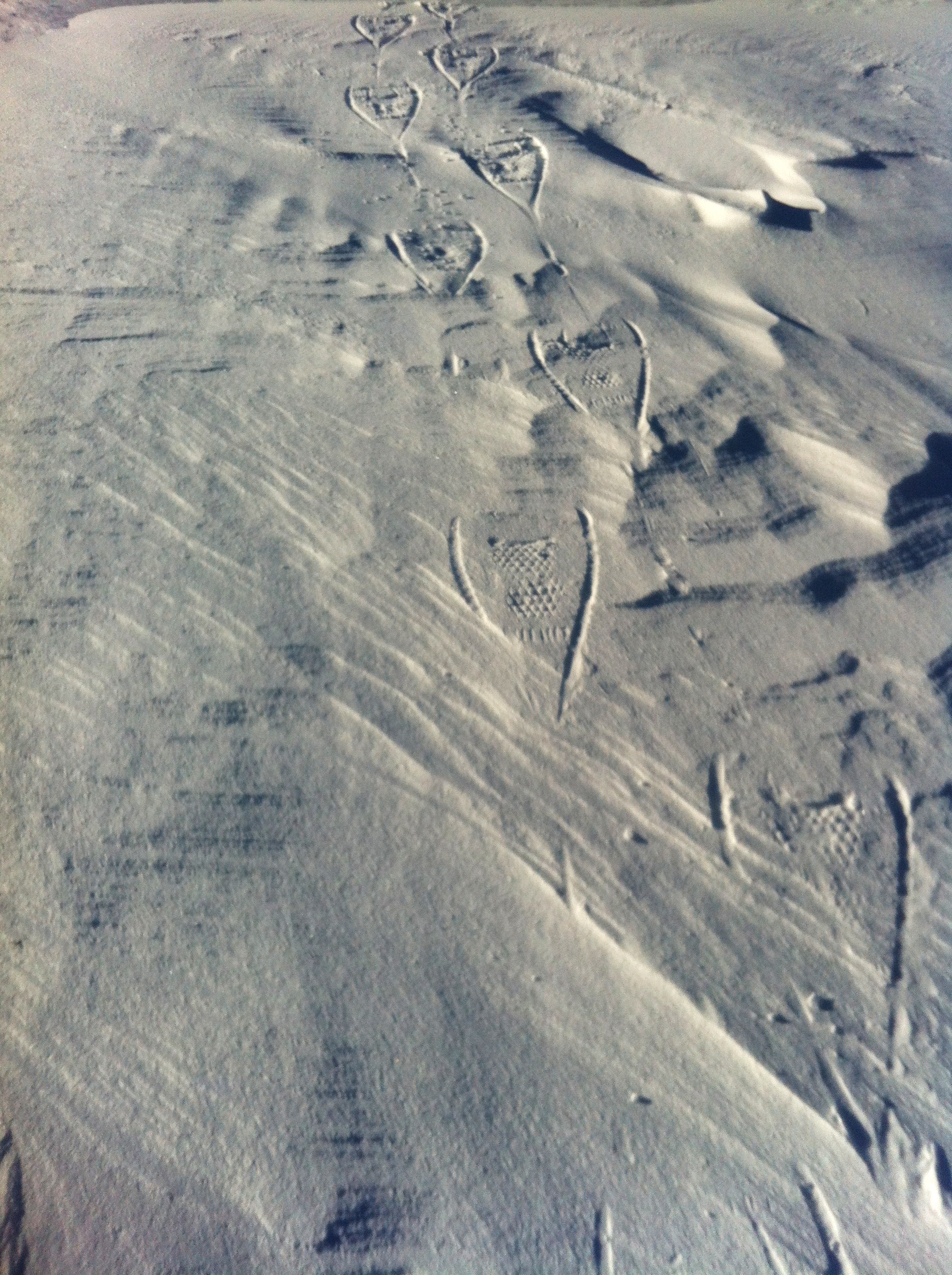
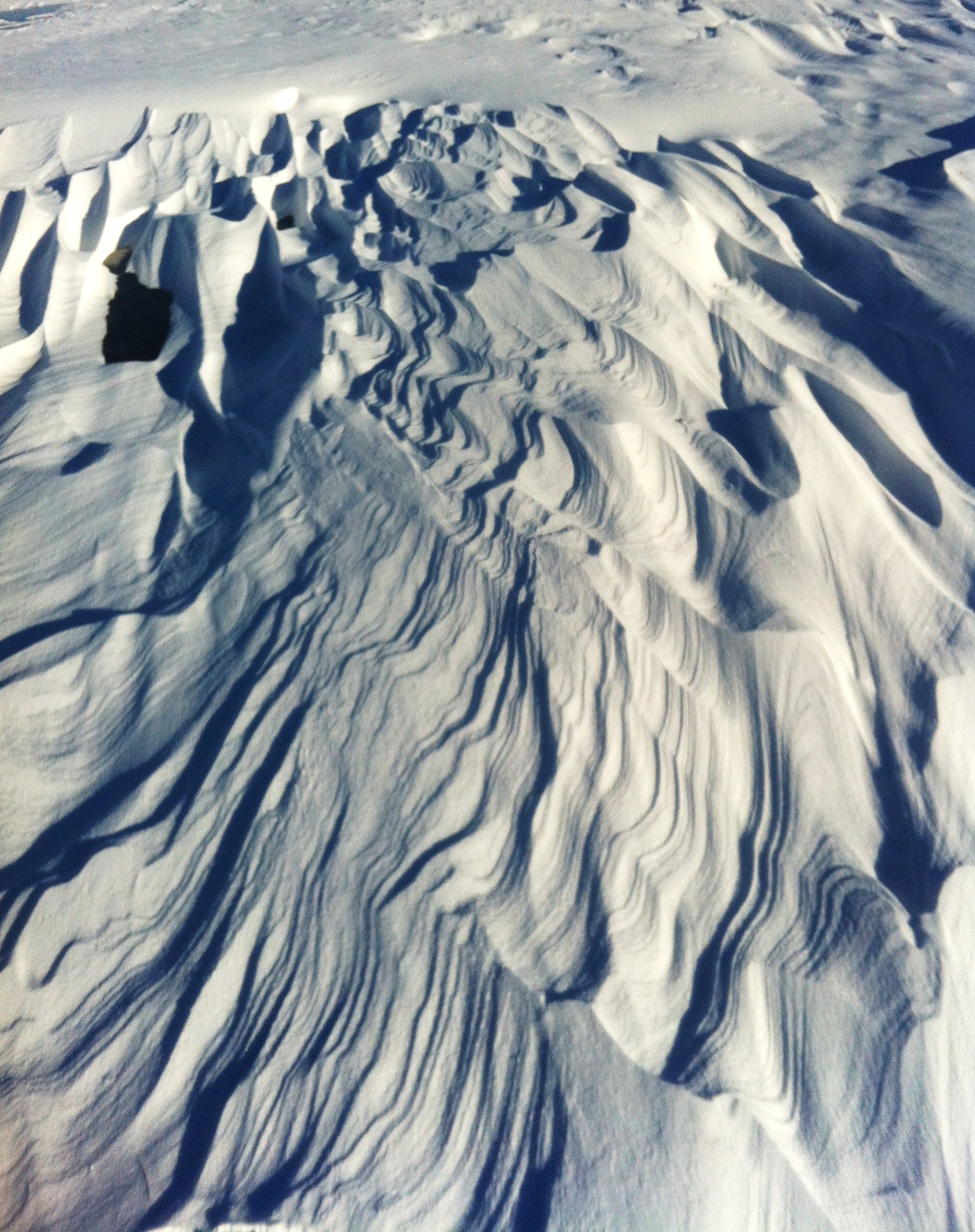
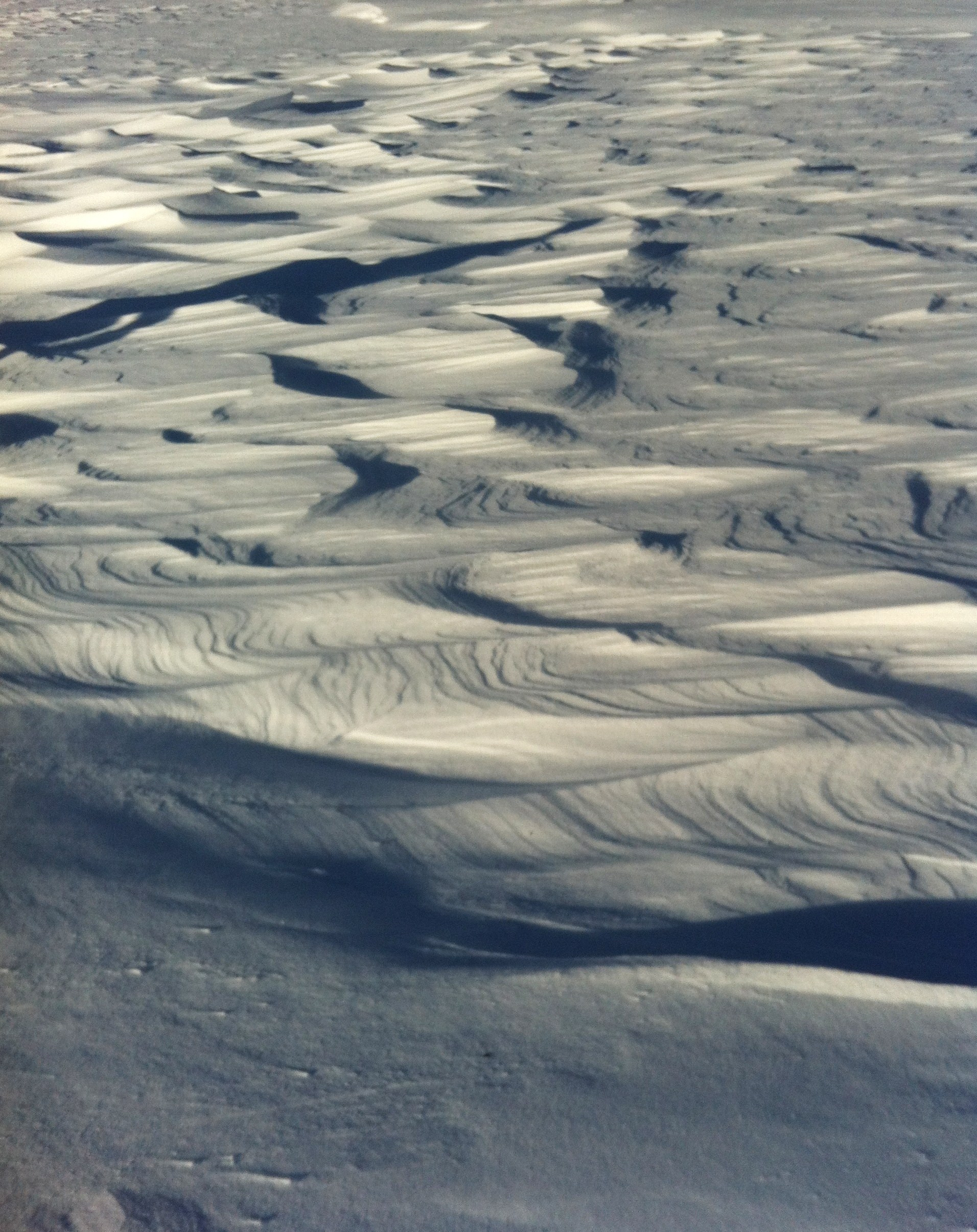
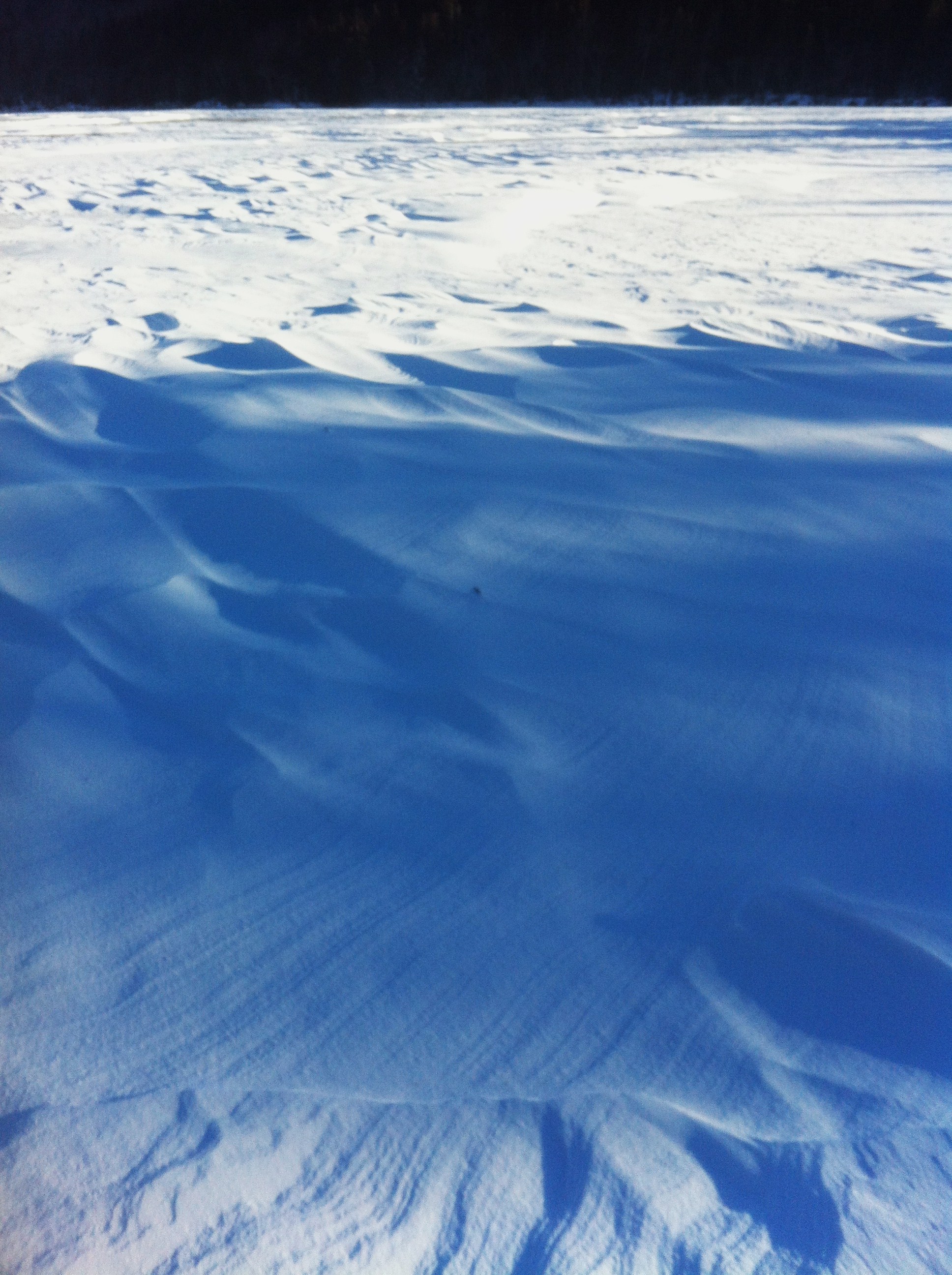
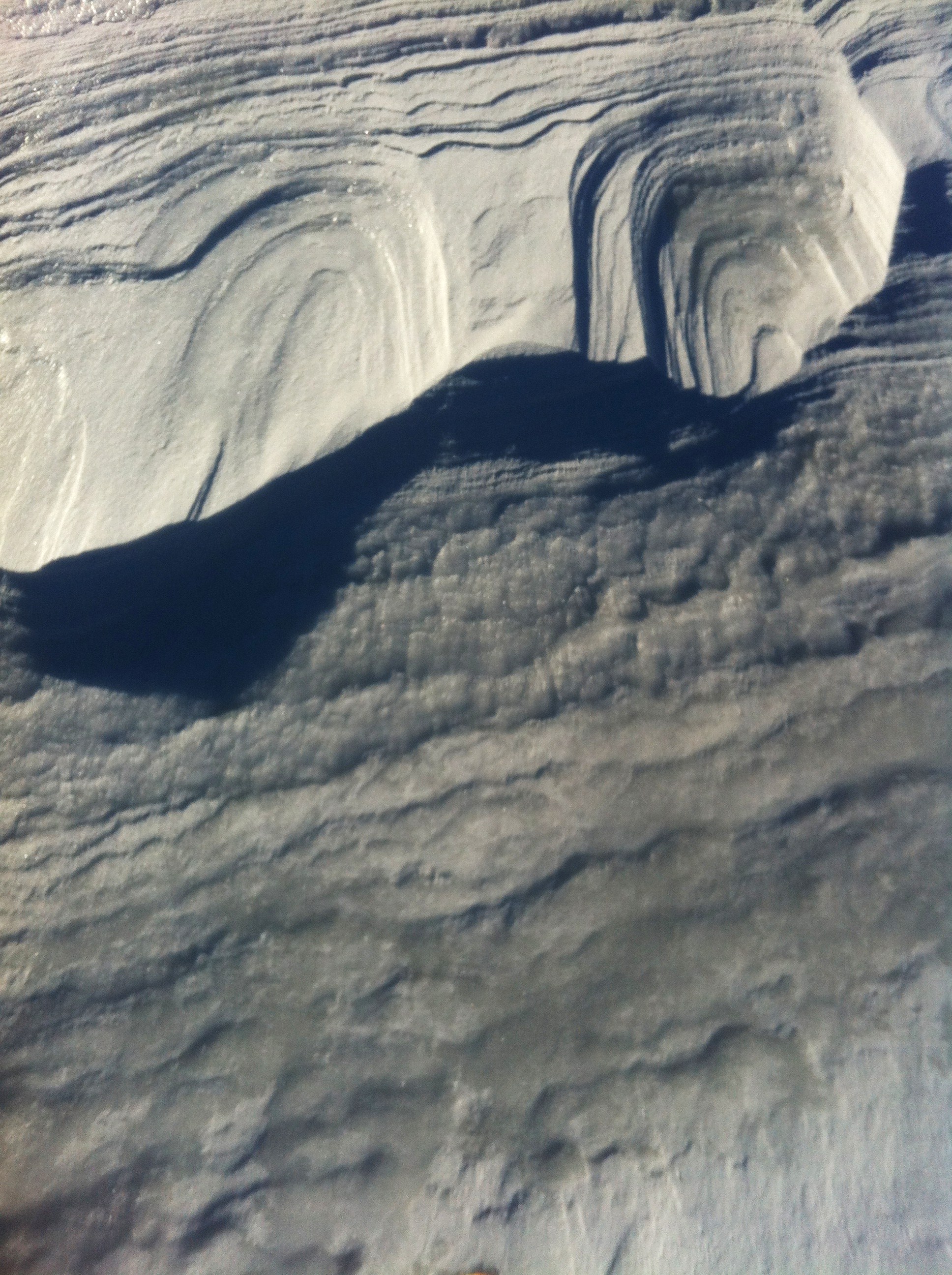
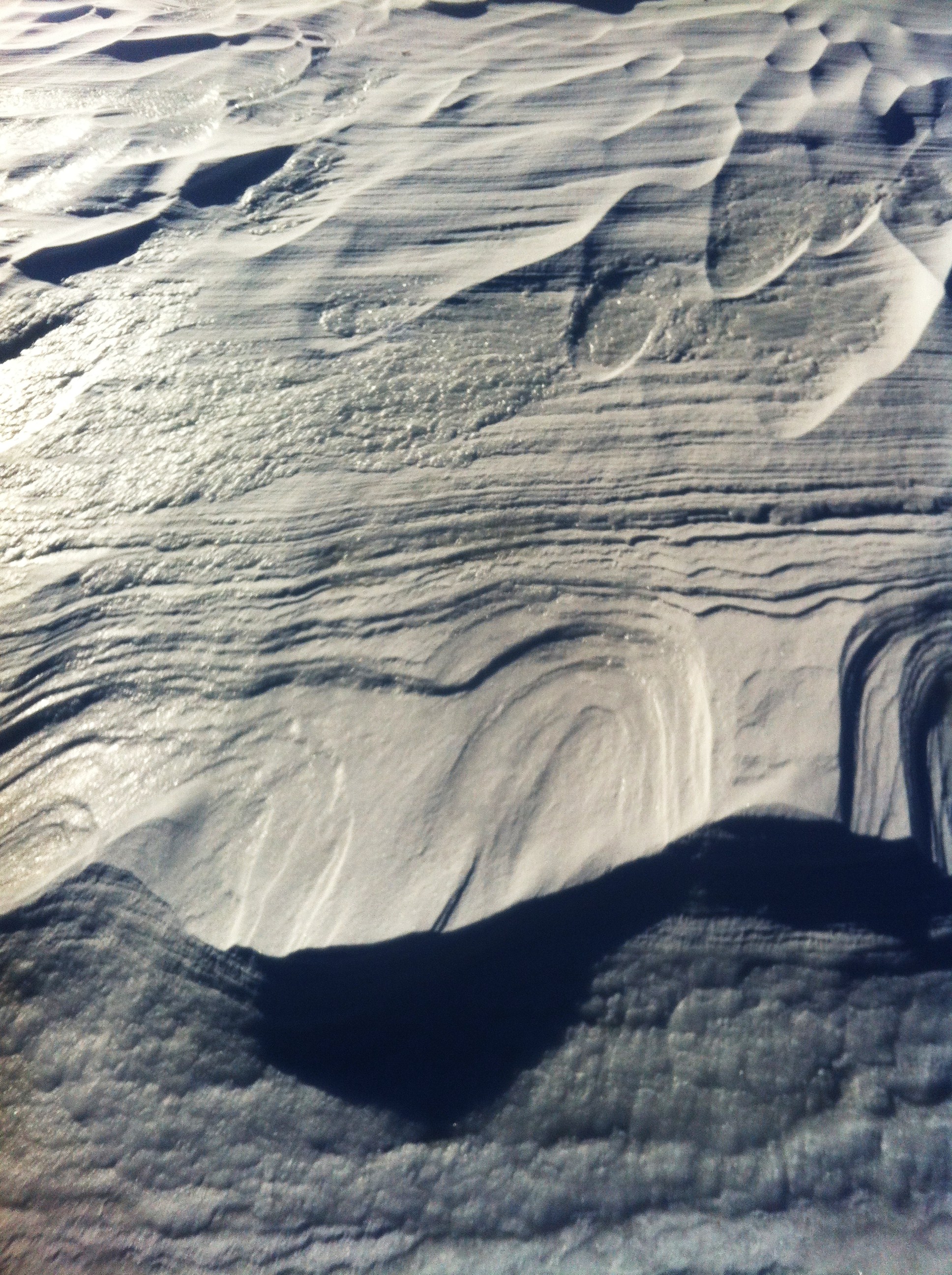
While snowshoeing, I paid attention to the snow, and noticed how much it looked like sandstone in the desert. The wind had licked layers of ice crystals and made beautiful dunes that reminded me of being at the beach in England, or in the desert of California.

snowshoeing13snowshoeing10snowshoeing7

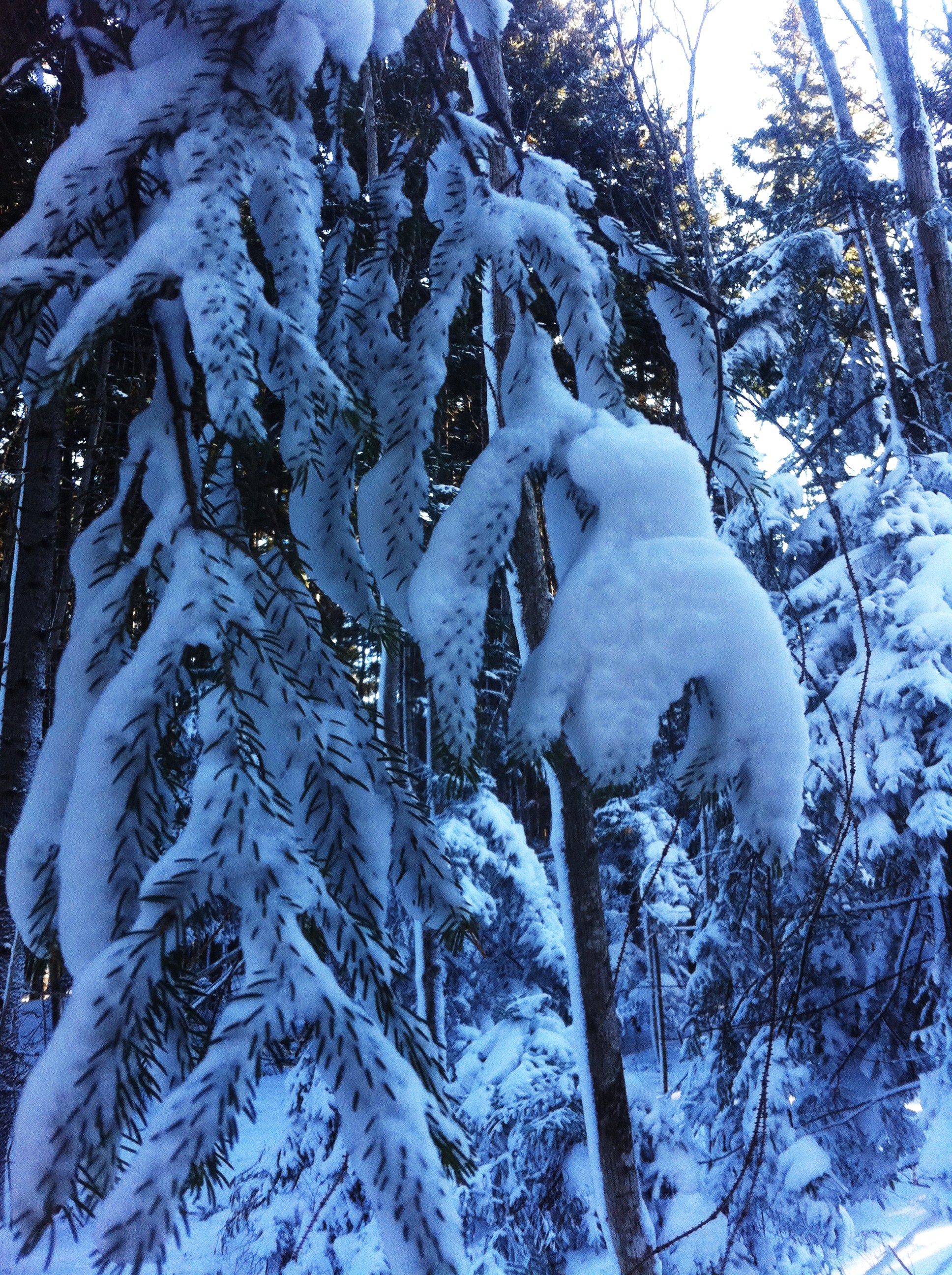
After snowshoeing on top of the frozen lake, on top of the powdery snow, I took a moment to snowshoe into the woods at pond’s edge and look at the trees. So much like the setting of a fairy story, this wintertime; I am constantly on the lookout for wolves, or harpies, or secret, magic people dressed in capes, or….something. Mostly, though, I see no one at all.

snowshoeing16snowshoeing15snowshoeing17“The clearest way into the Universe is through a forest wilderness.”

John Muir

A Laborious Mosaic


“She was very aware that it was temporary. She was not defensive about it; she was offensive about it. She would say that it was an attribute. Everything was for the process–a moment in time, not meant to last.” Arthur C. Danto about Eva Hesse

I have been accused of being a perpetual boyfriend-chaser.

I have also been labeled a love addict.

Tis too true — I love falling in love, being in love, feeling love. Although, I must admit that I do not truly know what it is to be a participant in mutual, building, sustainable love. I love helping people and I love loving others. I love feeling them need me; I love attention.

owl-horizontal

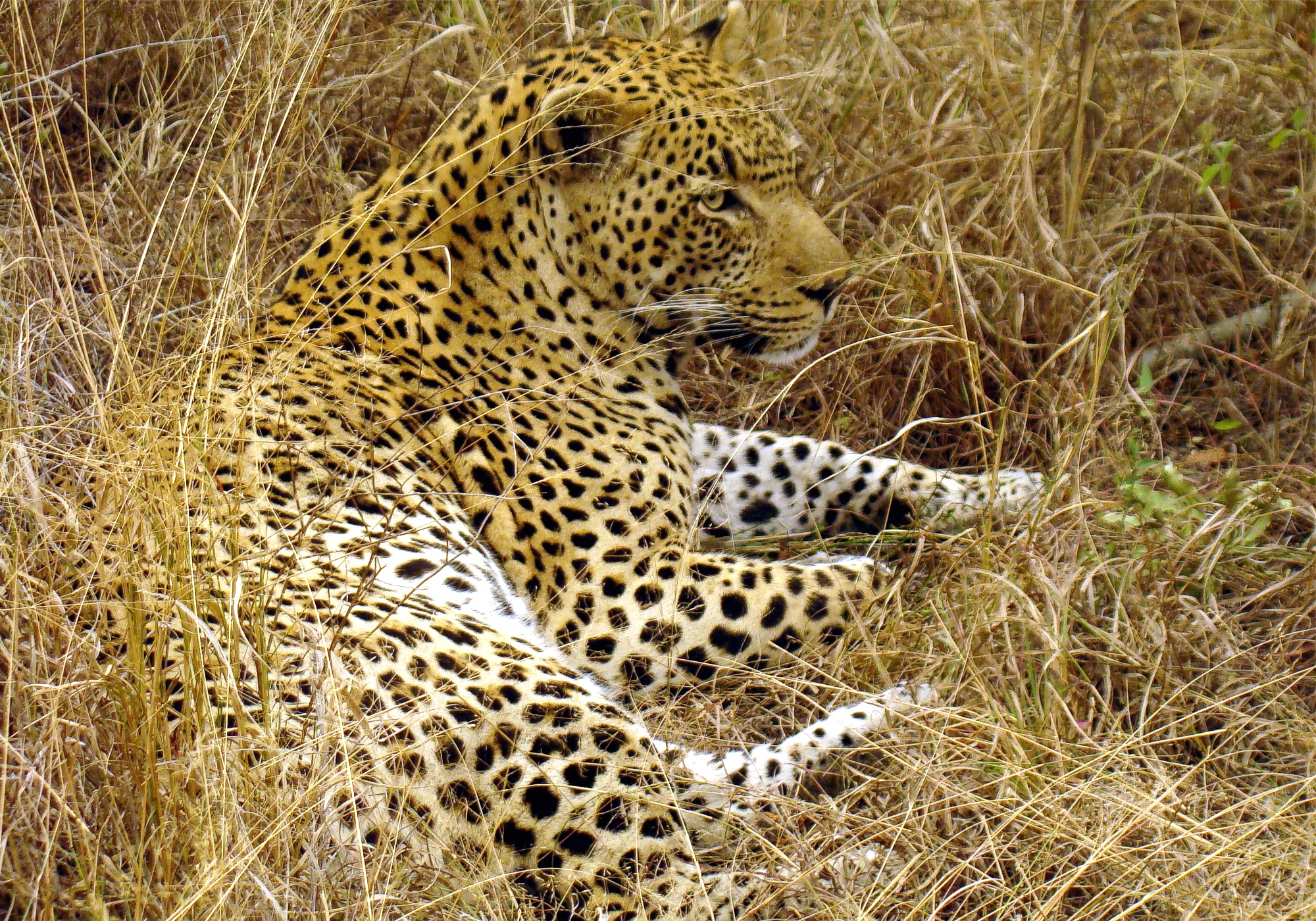
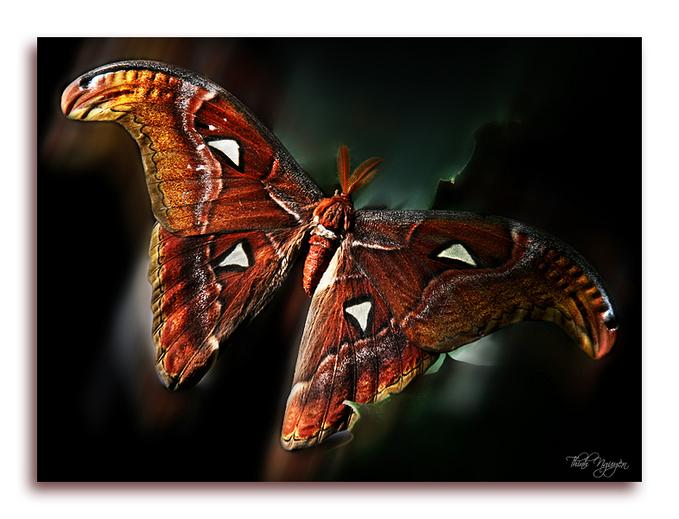
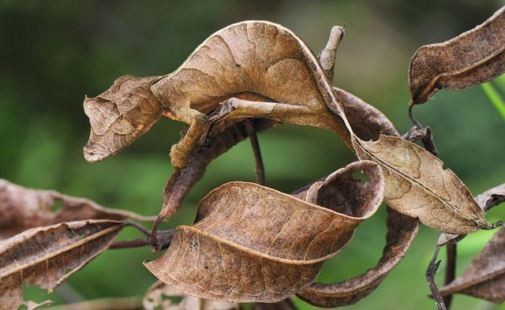
That being said, I choose the wrong partners almost every single time. OK: every single time so far. I choose partners who are selfish, who cannot really love another person. I choose partners who are emotionally unavailable. I choose partners who are artistic and aloof. I choose partners who are needy and manipulative. I choose partners who see me as someone, as one someone, and I change into that person. I am a chameleon for men. I have written here earlier that I am the Queen of Running, and that I can adapt to almost every situation. Maybe my spirit animal should be the chameleon, or one of those amazing walking sticks that look like leaves, or a black panther or the moth that has cobra heads on its wings. I have changed for whomever comes across my path and shows interest in me. I am natural nurturer, and if someone lets me take care of them, I will. I will care and nurture and support until I am left, hollow and exhausted, usually about two years later.

5675513-md

The exception to the two year rule was my husband, who I was with for almost seven years. We made it those seven years for various reasons. We split because we had never learned to communicate, could not disagree in a productive way, he had no motivation to really be a partner to me, he depended almost entirely on his parents who were always going to be more important than me or us. We had become roommates, friends, not lovers. Our life had become routine, so routine. Our life was managed by me, nurtured by me, maintained by a series of expected movements and dependable, predictable routines cultivated over the years. I worked the stable job, I managed the money, I organized our life: I was the one that held it all together. We could have kept that life going for a little while longer, maybe another two years, but the progression of life was not there: we had stagnated. There is a saying about relationships that they are like sharks: they have to keep swimming or they die. Ours was a sleeping shark, drifting downward into the depths. I simply cut off its fins and forced it to sink faster when I asked, after months of painful deliberation, that we separate.

Camouflage - Find The Animals - 8

The other exceptional thing about my ex-husband is that he was easy-going and meek. He was artistic and creative, but not passionate. He didn’t possess the animation, the mad energy, the lust for life, that many other lovers have possessed. He didn’t spin in mental and rhetorical circles, or live in a house that was crumbling and had no refrigerator. He didn’t have long hair and love to go backpacking up the sides of mountains with no map, he didn’t write me poetry and weep in my arms, he didn’t ride bicycles until 7 in the morning and come home drunk and angry at something inside himself. He didn’t live in a foreign country in a beautiful house, separated  from what he really wanted but with enumerable possessions, and he didn’t pretend to be someone he was not by dulling himself with alcohol or drugs, spinning records on weeknights, using philosophy as a tool for avoiding people and experiences, but he was, in the end, like all the others, a liar.

When my friend asked my other friend if I was a perpetual boy-chaser, she was referring to my seemingly endless pursuit of the passionate man, the man whose madcap dash through life is something akin to a drug for me: something that I will seek and find, even unconsciously. Put me in a city of millions or an island of a few thousand, and I will still find this man. I find him everywhere, even when I am not looking. This spirit of chaos, this spirit of degradation, of manipulation, of skewed love, of lust, of power, of personal disaster will be rooted out, as if there is a magnet or a hidden sign emblazoned on my spirit, heart, or soul…..here I am, it says.

camouflage_animals_19

Another friend of mine says that it is like I have two minds: one that knows what I should do, and one that tricks me into torturing myself, into the painful place of this type of relationship. I can tell you where it comes from, but it doesn’t really matter, and you can probably guess, anyway. Many of us have these same issues, coming from that man that we grew up with. Suffice it to say, my father suffers cruelly from what David Foster Wallace called The Terrible Master, and I look or act or sound or remind him of someone from his past that recalls the painful terror that echoes through his inner dialogue. Since I was about thirteen, I was a fairly easy target for his frustration, his failure. I listened, I internalized, I began to question if what he said was true. And almost every person I choose as a partner reflects those questions back at me and I end up telling myself the same thing: if I can just stay here a bit longer, then he will get better/happier/more stable/more successful/more loving/more open/more motivated and will be able to show me what I need. I know he will. And of course, he never does because he was unable to, all the way at the beginning.

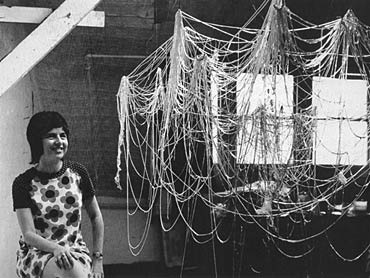
leopard-camouflage I read a beautiful article today about an artist named Eva Hesse, a woman that previous to today, I had never heard of.

“At this point,” Hesse wrote, “I feel a little guilty when people want to buy it. I think they know but I want to write them a letter and say it’s not going to last. I am not sure what my stand on lasting really is. Part of me feels that it’s superfluous, and if I need to use rubber that is more important. Life doesn’t last; art doesn’t last.” 

Born in Germany but who lived a short time, part of her short life, here in the United States, Hesse was a 1960s modern artist, a sculptor who sought to navigate through her world and interpret it through her sculptures of industrial materials, anatomical forms, and repetition. She named her pieces with coy names, or ones that reflected scientific discoveries of her age, or her opinions on the direction of the movement she participated within.

eva hesse

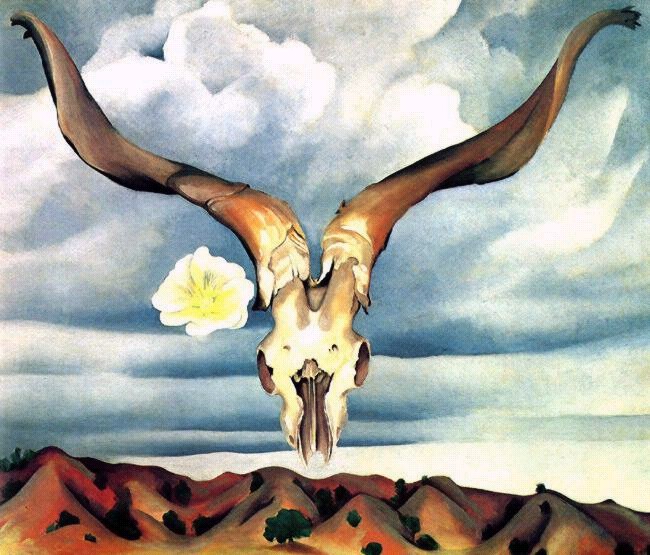
One of the things that I love about being a woman, and especially a woman artist, is our ability to craft work based on our experiences and our lives. All of us, man or woman, has a life whose path is fraught with pain and difficulty, as I said before, Life can be Suffering. (I have amended that Buddhist belief for my own devices.) Woman artists have a unique capacity, I think, to craft and exhibit that pain and make it remain beautiful. Look at Frida Kahlo‘s self portraits, or Georgia O’Keefe‘s flowers, or Eva Hesse‘s sculptures, Annie Leibovitz‘s portrait photography, Yoko Ono‘s drawings and sculptures, and, more simply, the huipils of women in Central America whose embroidery communicated the stories of their culture as the Spanish decimated their people with disease and domination.

frida

Traditionally, women are seen or expected to take on this role of nurturer as if that means that they are to bend, to be flexible, to be willing to support no matter what. I believe that one of the great gains of feminism is an understanding of how those roles can be both male and female, and that women, too, can be ambitious, business-like, healthily selfish, and strong. I believe that the women’s movement is about choice, and that men, too, can gain from an understanding that feminism helps men break out of their codified existences of cold, emotional distance or “strength” at any cost. Feminism is all-encompassing, if we let it be.

OKeeffe_Georgia_Rams_Head

To get back to my original point, of being the boyfriend chaser, the love addict who seeks the wrong sort of love in place of the real thing, I am seeking to combine the understanding that it is time to find self-love and then real love, it is time to create art out of the understanding and final comprehension of these experiences, to channel the spirit of other woman artists who have broken their patterns and found their inner artist. As one line from one of my favorite poems says: it is time to eat my last meal in my old neighborhood. In many ways, the tiger trap I found myself in lately, was a gift because all I had to do was look up, grab those pieces of bamboo, and begin climbing out.

Climbing out, for me, as a woman artist, as a person whose own experience and own Terrible Master has clouded her judgement for so long, involves speaking to other people, and sharing these experiences. Today I read this article, and found it gut-wrenching, so I am linking to it. Today I spoke at length with a new friend and she opened my eyes in ways that others had not been able. Today I recommitted to being a woman artist and making this journey work, whatever it ends up being, wherever it ends up going. When I get into that boat of my dreams, every morning as I wake up, and make the conscious decision to do this, to really do it, to being the artist that I am, it is about looking these fears and decisions and successes and challenges in the face and moving through them, slowly. It is about taking moments to savour the beauty of everyday experience, like ice-skating alone today down a creek bed. It is about standing up with a straight back and liberating the self from years of patterned behavior. It is about writing, and looking, and creating, and melting metal into new shapes and forms. It is about trusting others, but trusting oneself most of all.

Being a woman is being “of fierce delicacy and passionate fragility,” and of recognizing that those two aspects are not weaknesses, but beautiful pillars to share with the world through art, or writing, or speaking, or however else you choose to communicate.

“There are very few human beings who receive the truth, complete and staggering, by instant illumination. Most of them acquire it fragment by fragment, on a small scale, by successful developments, cellularly, like a laborious mosaic.”

Anais Nin

crane heart

North Wind

Jordan Pond January 34

In the midst of a meadow

A skylark singing

Free from everything

Jordan Pond January 35

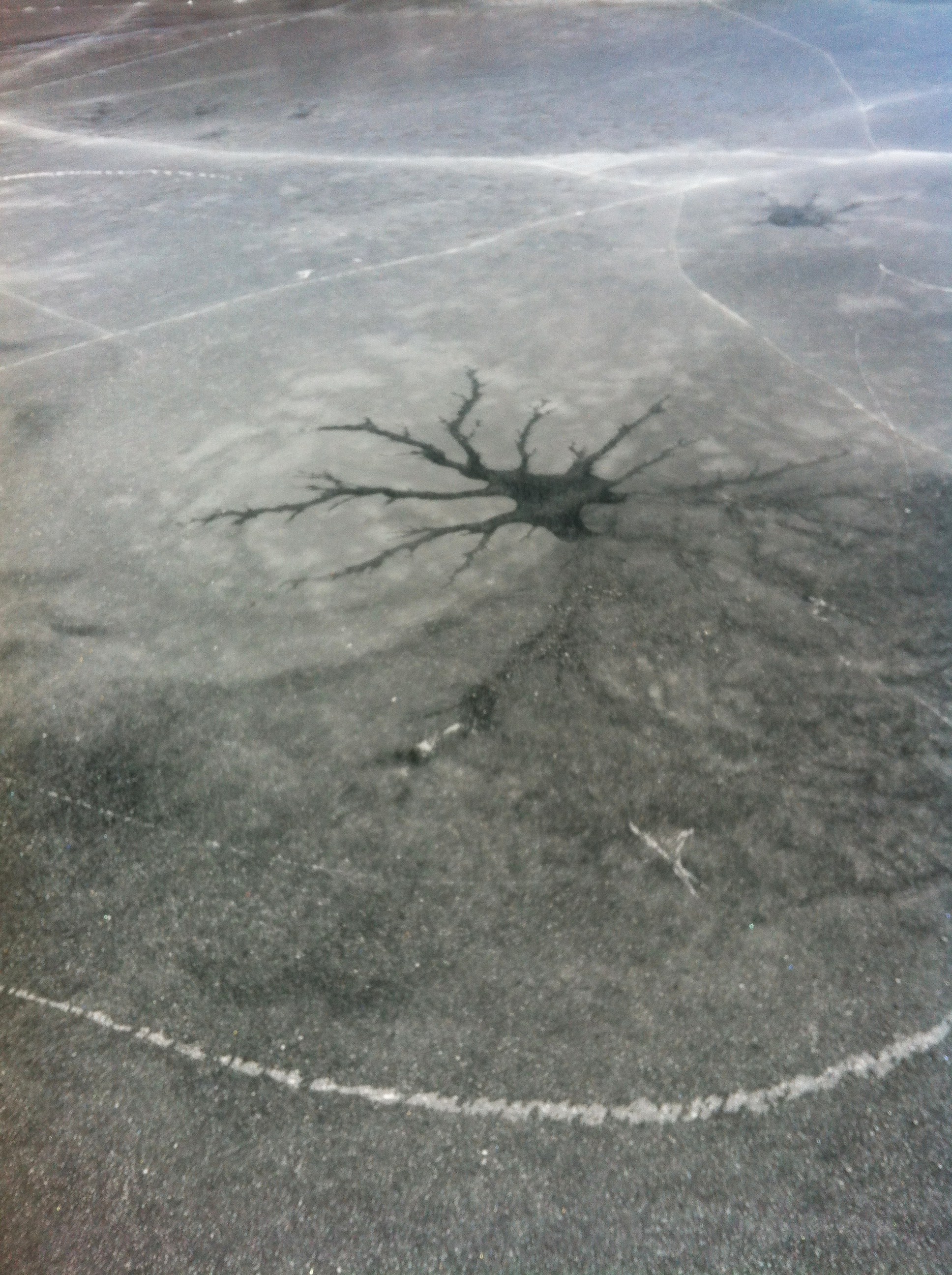
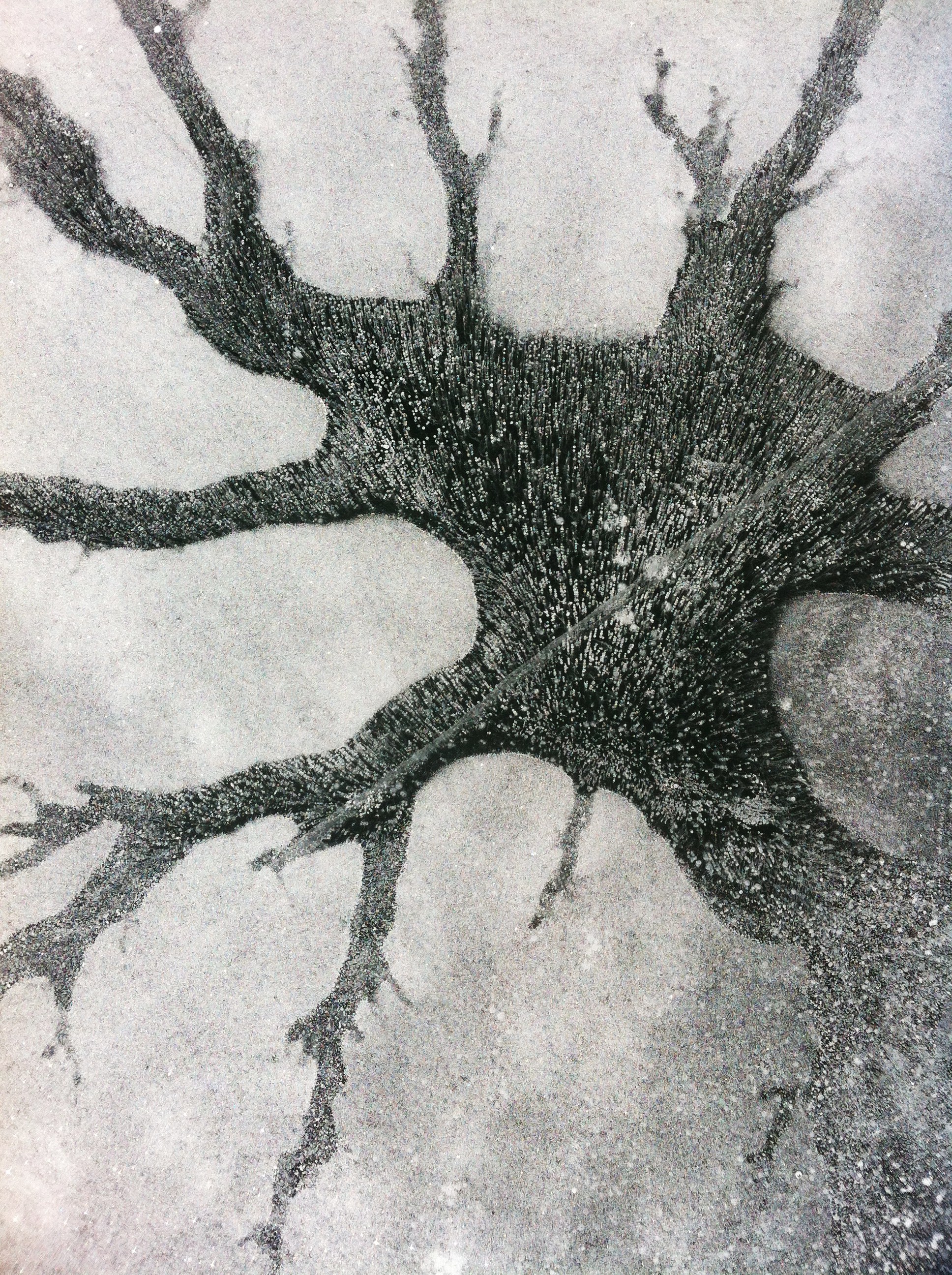
There are hotspots on the ice, on the lakes and ponds of our island, that look like black neurons embedded in the hard, icy surface. The pattern they make echoes perfectly the endings of our neural cells, or the pattern of growth in reindeer moss, or the paths of rivers as they progressively etch the surface of our planet.

Jordan Pond January 36

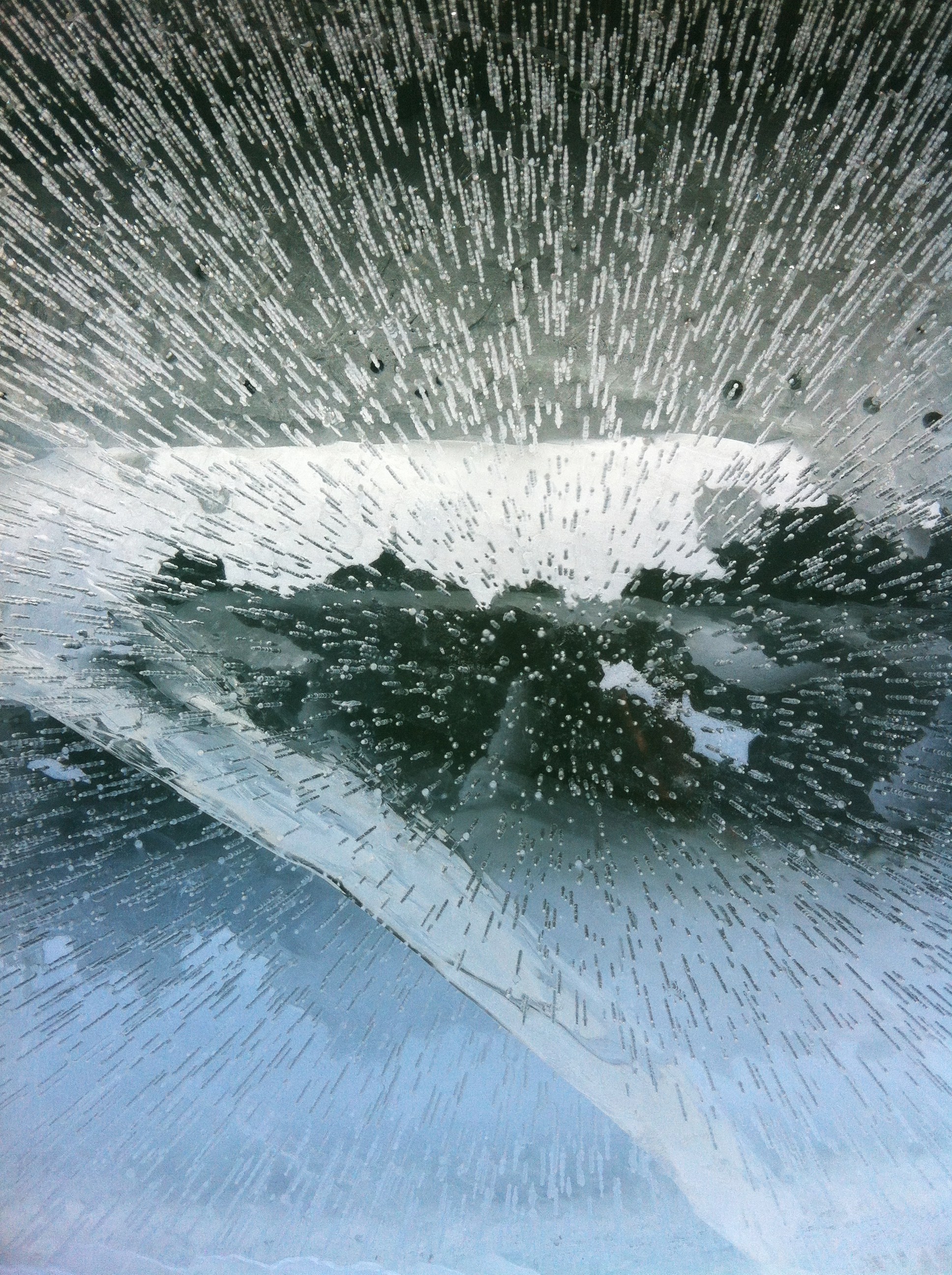
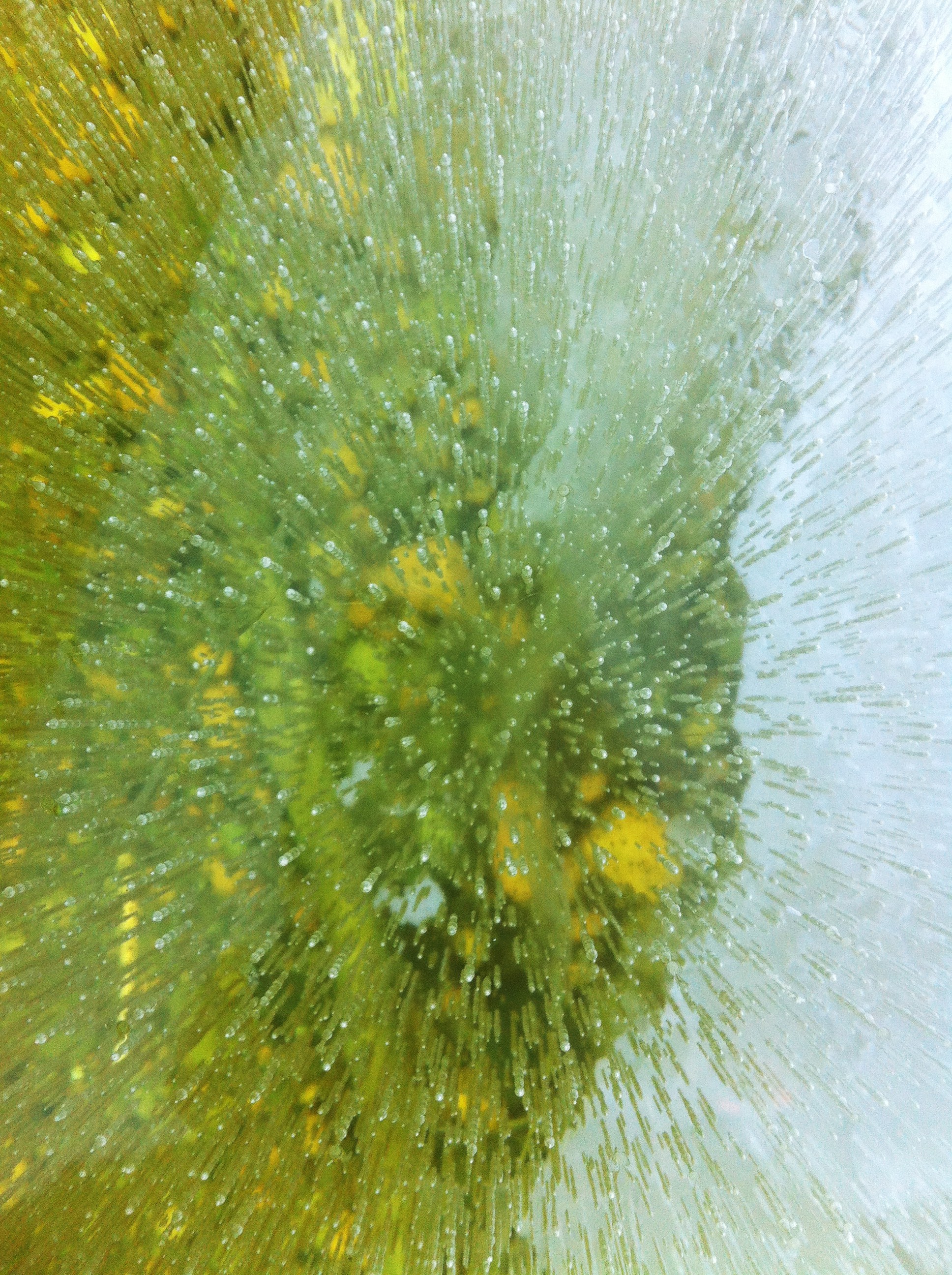
Why are there such similarities in shapes and forms that are found in nature? Why is that the millions of bubbles suspended in the ice of a frozen pond mimic the lattice of old bridges, or that the edge of a huge crack in that same ice, one of the cracks that stretches thirty feet in one direction and 4 inches down, has the same structure and form as a chunk of granite a few feet away at the water’s edge? Why does ice, frozen under the lake’s surface, look like a field of daisies, or the surface of a sea urchin, or the tentacles of a jellyfish?

Jordan Pond January 22

Are we, as humans, so desperate to find meaning in our lives, however short they may be, that we find meanings and patterns in natural phenomena? Or are those patterns simply patterns: repeating shapes and structures that are big and small, in hot and cold, in water and air, all through our Earth system? When I look at photographs of nebulas and galaxies, I see shapes that resemble eyes and horseheads. When I sit on a frozen pond and stare down through the ice, I see shapes that resemble stars and clouds in space. Perhaps there is no great meaning in these similarities: perhaps they are simply a repetitive alignment of the atoms that make up all that is our planet Earth.

Jordan Pond January 5Jordan Pond JanuaryJordan Pond January 14

It is very, very cold here at the present moment. Last week, on the coldest day of the year, I went ice skating with a friend on Little Long Pond, at sunset. As the sun’s light descended into peach and orange, all around us, the shadows stretched long and the fir trees reflected, black, on the pond’s surface. I skated to the far end of the pond, across a patch that, in summer, is a swampy bog of reeds and grasses. I skated over ice with brambles and grasses growing up out of it: it looks like hair growing out of skin. As I headed back to my boots as they sat on shore, I noticed the sunset, pink, reflected on the ice’s surface.

Jordan Pond January 6

Three times lately, I have been skating at Jordan Pond — an epic and majestic place with two mountains at the end of the lake, and trees on all sides. In summer, this place is crawling with people; now, not a soul. On my first and second visits, the wind blew, shrieking with all her force, out of the north with a viciousness and a bite that is unexplainable except when you are experiencing it. (Estimated wind chill was -33F!!!). I struck out on the ice, fighting the wind and battling forward along the middle of the pond. The pond narrows at the boat launch, where my boots and the truck sat, and funnels the wind into a tunnel of cold, strong air. The wind was blowing at 30 knots at least, and it almost blew me over as I stood up on my skates.

Jordan Pond January 1

Fighting forward, swinging my arms and legs side to side like a high speed Olympic skater in slow motion, I was dressed in mechanic’s coveralls over a down jacket, performance fleece, wool leggings, corduroys, a hat and a  hood on my head and a scarf wrapped around my face. I scooted, slowly over the ice, occasionally pausing during greater wind gusts, turning my face away from the inevitability of frostbite and giving my legs a break. Slowly, across an intense, bumpy ice flow that spanned the width of the lake, I inched my way toward the smooth center of Jordan Pond, and stared down beneath my feet at frozen bubbles and black water. So clear that you could detect stones and branches beneath you, it felt scary and unnatural, as if you were flying or scuba diving, or both.

Jordan Pond January 3

Skating over this alien landscape felt dangerous and otherworldly: as if I was caught here in this moment in time, and that I would never be able to be here again because it could just disappear with the snap of my fingers, or this week’s thawing temperatures. Flying and gliding over the ice is like riding a bicycle or racing a sailboat or sawing a piece of silver or vacuuming a large carpet: all you think about in those moments of movement is the act itself, of paying attention to the ice beneath your feet so that you don’t catch your skate blade in a crack and fall. In those moments, you hear the wind howling in your ears, the rapid flapping of the leather of your mittens, the clattering of a piece of velcro as it is wrenched loose from the hood that protects your head from losing all of your heat, gliding over green water and black, staring at pond stones and deer bones and birch trees now suspended, frozen, at the lake’s bottom.

Jordan Pond January 13Jordan Pond January 11

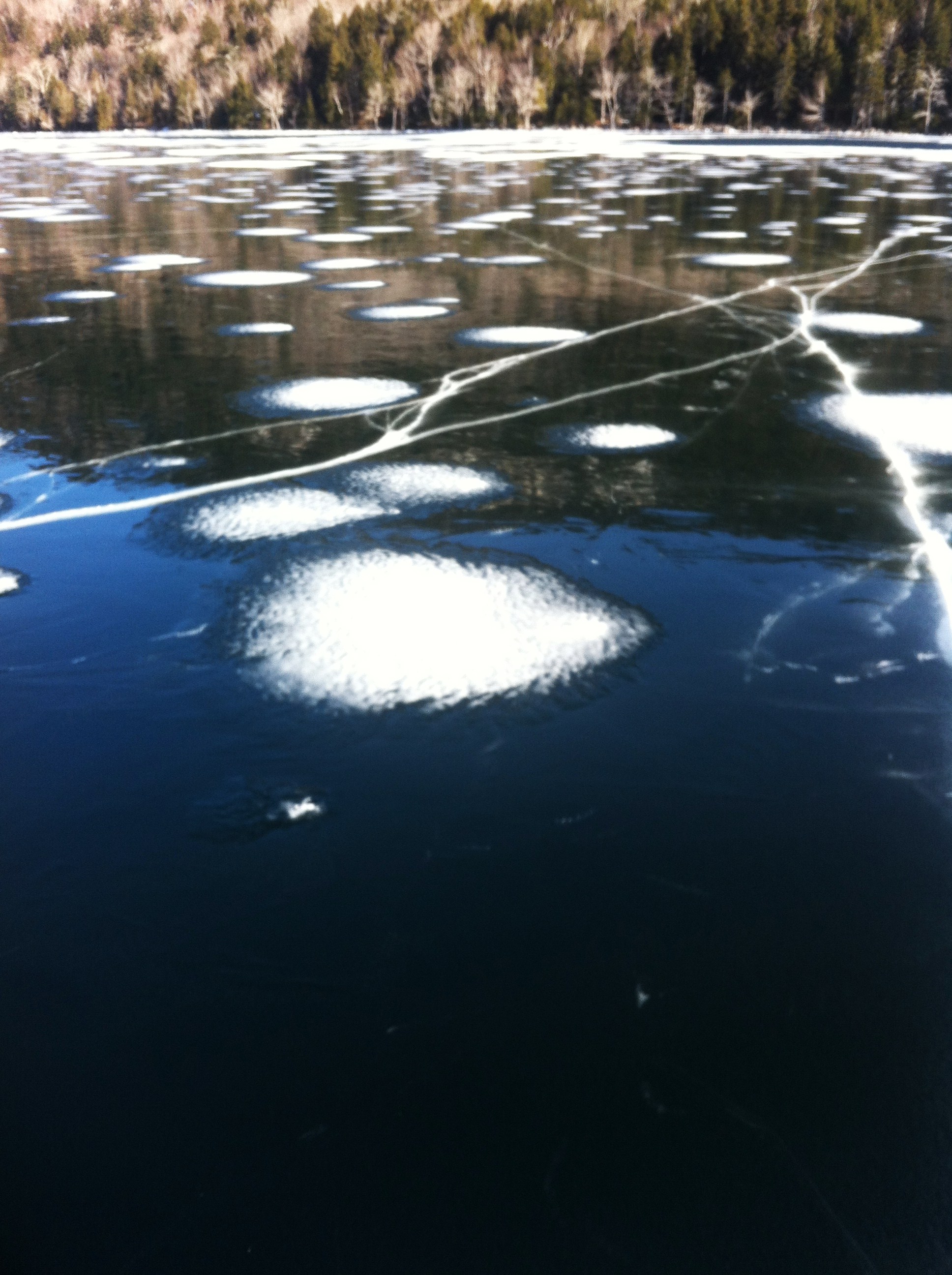
 This past summer I took some friends who had never been to Mount Desert Island around this lake on a walk, and listened to the water lap the rocks at pond’s edge. Now the water is silent and like glass; it still looks like open water at a distance, but is 6-10 inches thick, solid, frozen. Patches of snow-ice dotted the pond the further I skated down, as if they were giant white lilypads stretched across the lake’s surface. Skating over those lilypads is deliciously bumpy, and you feel the shock absorbing properties of your knees and ankles as skates and your body bounce across.

Jordan Pond January 10

The wind was at my back as I skated over to a sacred spot discovered the day before: a place where the ice had frozen into tiny, perfect floral shapes, where it looked like algae or sea urchins or jellyfish, or all three at the same time. The wind, with so much force, pushed me so hard that I sped up very fast and took a few moments just to glide between the icy lilypads, leaning on one skate or the other to direct my path around and between them. Needing no push from my muscles, I was simply guided forward by gusts of intense north wind. I finally managed to slow down by doubling back and facing the wind again: able to slow down and stop, I took a moment and looked at the two mountains that are the distinguishing feature of this pond.

Jordan Pond January 18

Returning for a third visit this morning, at sunrise, I spied birds’ wings made of ice trapped under the pond’s surface, and vertebrae, and skeletons. I saw the shape of two birds fighting each other, complete with feathers flying. I saw jellyfish, and shapes that looked like antique carousels, and baskets, and cages. I saw spirals trapped and motioning me down into the black depths. I took a few moments and lay down on the ice and stared at a 10 inch crack in the surface. I looked at it from one side and saw how the early morning sunlight was shining through its cracks, making it appear polka dotted, or etched by some invisible hand. I looked at it from the other side, and peered closely and noticed how much it echoed the shape of the mountain that stood in front of me, on the west side of the pond. I noticed the strings of bubbles and noted how similar their patterns are to the way cave glow-worms hang, or the shape of the nails and pins we use to build houses. As my friend and I lay there, bundled up against the cold, on our bellies, gazing into the ice, a huge boom echoed below us as a new, large crack formed somewhere behind us. The boom, the cracking, was so forceful it shook us: you could feel the vibration all through your body. At that moment, we stood up and skated around each other again for a few moments, savouring the serendipity and the silence and silkiness of perfect ice, and then went off to begin the day.

Jordan Pond January 4

In Fertile Fields of Long Ago..

sieur de monts1

“If you do not breathe through writing, if you do not cry out in writing, or sing in writing, then don’t write, because our culture has no use for it.”

Anais Nin

Tonight is a night of clear skies and twinkling stars, of descending temperatures and the promise of snow.

sieur de monts7

In fertile fields of long ago
I’m sure I had a mistress though
Her face fleet footed flees recall
And aught remains save winter’s pall

In fertile fields of long ago
When I knew all there was to know
I set my hopes on happy days
And borrowed joy which time repays

In fertile fields of long ago
Where fruits once ripened gloom does grow
In fertile fields of yesteryear
I lost the ones that I held dear

In fertile fields of long ago
When summer lulled and days were slow
Youth concealed the freeze and frost
That settle in when all is lost

Author Unknown — it was sent to me in a letter long ago

sieur de monts2

I have kept diaries consistently since I was eleven years old, since 1992. My first diary is The Dahl Diary, and is one of my all time favorites since it has pictures from Roald Dahl books and snippets and quotes from him sprinkled throughout. I have journals with fancy covers and simple ones, journals that are tall and some that are short. My favorite journals are Moleskines with gridded pages. I have a shelf on my bookshelf dedicated to four things: my flower press, my Prismacolors, my Grandpa’s old Minolta camera that he used to photograph my parents’ wedding with the lens cap still on, and my diaries. The diaries take up over half the shelf.

My diaries tell me stories from my past, and without them, I would forget all the things that have happened. When I got divorced and immediately afterward got into an abusive relationship with someone with a mental illness, I stopped journaling, and when I discovered this at the end of that relationship,  I made a promise to myself to not do that again. I said to myself that I would always keep writing, if not every day, then almost every day, so that I would never again lose great chunks of time.

Time passes so fast: I blink and six months have passed. I blink again and it’s the middle of January in 2013. I realized tonight that I met my best friends 11 years ago and how it feels like I have known them forever but that the intervening years are a blip: they passed us by so quickly.

sieur de monts6

Self determination is a quality of life that we all possess, especially here in the United States, a place where we are so lucky to be able, within limits, to do whatever we want to do whenever we want to do it. This is a powerful aspect of our culture, and one that can create a sense of being crippled by choices. As a woman in 2013, especially a woman who has an almost 10 year career behind her and who was married for almost that length of time, those choices are even further complicated by the questions of children and marriage and partners and the social pressures still placed upon us despite our abilities to forge career paths and live by ourselves, out of our parents’ houses.

sieur de monts5

I grew up in a house probably similar to yours: my father worked and my mom stayed at home until I was in seventh grade when my father lost his job and our family collapsed around what I recognize now was a very tenuous existence based on materialism and status in 1980s Houston. My father suffered an emotional crisis, my mom went to work for the first time, and my brother and I continued living our suburban life. My parents worked hard to keep our life as much the same as they could. We always had a roof over our heads and the power was always on, we had clothes and food. My father never really recovered from this time and steadily has passed his time (this was 1994) growing more and more angry at something or someone outside himself that doesn’t really exist.

sieur de monts3

For the last several years, I have been adjusting to the fact that life is full of tragedies; as is said sometimes, Life is Suffering. I realized the other day that this year is the 10 year anniversary of the death of a man who was very, very important to me for a time. Love,  I have learned, is rather uncontrollable and inconvenient and sometimes you don’t even recognize it, and sometimes, when you do, it can be so scary that you run away from it as fast as humanly possible. It is hard for me to believe that it has been ten years since I last spoke to this friend and since he left us in the way he had nightmared about for months before his actual death. One of the things I loved about him was that he was always open and honest; speaking from his heart, he was brash and eloquent and challenging.

you and i have not the strength,
compassion, or centered-ness to shake other humans
loose.  the delusion is just too strong.  for the most
part, penetrating the oceans of bullshit in which we
swim requires WILLINGNESS–the unprepared, the
unwilling just don’t get it.  you know, you tell
someone, yo.  yer living in a nightmare.  please, WAKE
UP!  and they say, huh?  like that.”

I have come to realize that our faults are a factor of our daily lives. Our faults are yes, what make us “human”, but they are also the things that make us ashamed of ourselves, and less likely to be honest with others. I believe this is what makes it hard to sustain meaningful relationships. For my whole life, I have been afraid to be honest lest I disappoint someone, hurt someone, or make someone feel that I am not “good enough” or perfect. This is real, this is me. This is hard to admit because it means that others will know that I am not perfectly capable in any given situation, even though I may appear to be.

sieur de monts4

“The moving finger writes, and having writ
Moves on.  Nor all your piety and wit
Can call it back to cancel half a line
Nor all your tears wash out a word of it.”

from the Rubaiyat of Omar Khayam

“Now all the truth is out
Be secret and take defeat
From any brazen throat…
Bred to a harder thing
Than Triumph, turn away
And like a laughing string
Whereon mad fingers play
Amid a place of stone
Be secret and exult,
Because of all things known
That is most difficult.

W.B.Yeats


The passages above, as well as many others, were things written to me over the course of a very intense time of communication and mutual love. These writings and their intensity I recognized as love, I knew that we were in love, that we loved each other, but the danger of the other person’s decisions at the time made that love not a realistic possibility. His intensity too much, I, as I am wont to do, ran away and into the arms of someone safe but great, in his own way: the man I married. Of course he wasn’t the right person, and of course the marriage dissolved, and here I am, ten years later, re-reading the letters of one who loved me as I loved him, but he was not the man for me. It is hard to recognize love when it is flat in front of your face, when it is complicated and scary and one person is too young and the other too…something that I do not have a name for.

Tonight, as I enter my 33rd year on the planet, and am able to look backward very far and forward just a few steps, and am beginning to turn a corner on this life that I have been stuck on for years now, I have to remember that love is the spirit of the universe, and that understanding the place of others in this life, and that they may be fucked up, or confused, or upset, or perfect or seeming to be, or strong, or weak, or whatever it is that they are, that our loved ones are what create meaning for us in the daily stew of this confusing life, this rolling, pitching ship on which we all find ourselves. This is the sentiment I get from this letter, received well over ten years ago now, but apropos at this exact moment:

“i see you in my mind with that sly grin on your face,
that flash in your eyes, and i hear you laughing.

which is not to say that you are always happy, rather,
that you make ME happy when i find you again after
long and hazy journeys of many months, wiping the dust
and sweat of all that horseshit striving and yearning
from my eyes and thinking how TIRED i am of this
cycle, this dance that goes on and on and on and i’ll
probably be reborn as a cockroach, and there YOU are
and i hear that brilliant laugh of yours that starts
as an amused giggle and soars, lifting me with it, and
i feel better for a time, knowing that you are in the
world.

you know, i feel this way about you, and i’ve the
sneaking suspicion that i always will.  it makes me
happy to know that my feelings are not the result of
delusions and striving.  you don’t have to BE
anything, if you know what i mean.  you’re just you
and that’s special enough.  ah, P…if you could see
yourself with my eyes, you wouldn’t worry about
anything pretty much ever.”

“and in my mind you are poking shit at the patent
absurdity of the world and laughing like the
mischief-crazed madwoman you in fact are.”

Photodiary – A Foggy Day in January

This morning, the second day of warmer temperatures caused most of the snow to sublimate to its gaseous state of fog. (This was my first experience with sublimation, and as an ex-middle school science teacher, it was really exciting.) Thick, pouring fog descended down from heaven and up from the roiling surface of the ocean and filled our tiny town with beautiful whiteness. White fog on top of white snow creates an incredible environment full of silhouettes: trees turn from three dimensional forms to black two-dimensional forms set upon the landscape.

Early this morning, I took a walk down to the water.

foggy january 1 foggy january 3 foggy january 4 foggy january 5 foggy january 6 foggy january 7 foggy january 8 foggy january 9 foggy january 10 foggy january 11 foggy january 12

By the end of the day, the fog had completely burned away and the sunshine returned.

At dusk, the sunset was colored a bright marigold orange, smooth bands of color stretched horizontally out across the horizon. The ocean water was a continuous, deep blue, textured only with the bands of waves as the light wind played across its surface. The islands and trees were once again transformed into black two dimensional silhouettes, stark against the orange and deep blue. Standing on the deck of one of the Rockefeller’s summer houses, my boots deep in the remnants of snow, waiting only a moment lest I be caught, I watched the sun retreat below the horizon as one more day passed by.

Winter Begins

Marie Sioux – Flowers and Blood

“We take from life one little share,
And say that this shall be
A space, redeemed from toil and care,
From tears and sadness free.”

hadlock pond sunny

I came here in June, sick and tired. I came here late at night, with a headache splitting my head in two: it felt as if an axe blade was lodged in the left side of my skull. My car was packed with belongings and I drove, forward, through the black night, past houses and the ocean streamed at my right side. That night I cried, cried, cried, and continued through days and nights as my head hurt and my heart ached at realizing I had made it away from a place of so much pain. After re-decorating that basement space that was mine, for a time, I stayed in bed for weeks, while shingles wracked my body, erupting on my face and eyelids and scalp, causing pain and burning and itching. As it healed and the nerves reconnected, I had a hard time sleeping because it felt like electricity was running through my skin. There were days when I would venture out to swim or to bike ride, and feel as if I almost had to crawl back inside the house, into bed, because I was so tired.

“And, haply, Death unstrings his bow,
And Sorrow stands apart,
And, for a little while, we know
The sunshine of the heart.”

Time passed, and I began to feel better. In time, I ventured out more often, and was able to plant plants in the ground again, and be in the sunshine, take walks, swim across the lakes. Late in the summer, after a confusing but exciting trip to the Yucatan, during which I learned how to make pie crust in the tropics, became a certified scuba diver, watched a hurricane pass by, and learned that a special someone was not who I thought he was, I worked in a large, open barn with wooden sculptures everywhere. I started the day by weeding the granite paths in a flower garden, and passed the day helping children paint boards and wooden fish, and painted my own things, too. There was a moment on the third or fourth day when my head came back — my mind came back to my body and I felt reconnected again. It had been months since I had felt that way.

“Existence seems a summer eve,
Warm, soft, and full of peace,
Our free, unfettered feelings give
The soul its full release.”

Time passed, and the fall began. I continued to work in the garden, weeding cosmos flowers and beets and kale and onions. I watched pumpkin vines grow in compost piles, and planted evergreens on a steep hillside and pondered how quickly lavender will grow in a place with such a short summer. I took drives in a 1970s Porsche into the hills of this island, and looked at fancy houses and ocean views. I housesat in a little house in Seal Harbor, where I had to walk one mile to the beach to use my cell phone and reconnect with those people in my life who felt, at that time, so far away. One afternoon, one of those days of golden light and warmth, I was standing on a roof deck of a beautiful wooden summer house on the top of a hill and looked out at the trees that grew all over the mountaintops, at the water of Somes Sound, and decided to stay.

“A moment, then, it takes the power
To call up thoughts that throw
Around that charmed and hallowed hour,
This life’s divinest glow.”

Staying is hard for me. I am more apt to run: I am the world’s most skilled runner. Adaptable to any situation, a great and hard worker, friendly, I can fit in anywhere. I can come and go, and do, quite often, if I am unhappy. I find ways to escape: I am an artist that way. I am the Queen of leaving. Committing to anything is, well, plainly terrifying to me, and the decision to stay here, while I knew it was the right thing to do (I had originally planned to be in Mexico and had sold everything I owned toward that purpose), was scary. I felt I had to hide a little bit, hole up and re-evaluate, re-group. I rented a beautiful apartment, and then left on a huge trip across the country to see everyone that I loved. I documented that trip here, detailing all the themes that appeared in my mind and my life along the way.

“But Time, though viewlessly it flies,
And slowly, will not stay;
Alike, through clear and clouded skies,
It cleaves its silent way.”

I came back, and fall passed quickly. The light changed, and faded away. It became dark, and cold. I spent much time walking and looking, looking and listening, writing and sitting. I made a lot of jewelry and tried to stay quiet. Christmas came and went, as did the New Year. Emotions ran the rainbow of possibilities: I felt happy, then sad, then elated, then scared, then passionate. Then suddenly, the miasma of the holidays, the painful memories and the excitement at that season, passed, and it was winter.

“Alike the bitter cup of grief,
Alike the draught of bliss,
Its progress leaves but moment brief
For baffled lips to kiss”

Winter is a new experience for me. I have no frame of reference for this season. Yes, we all have experienced “winter” wherever we live as a cooling of temperatures and changes in light, but Maine winter is different. Maine winter is quiet. Maine winter is empty: you know the people are here, but you don’t see them. You see evidence of them in the glow of windows, and the sounds of snow plow trucks trundling past your house. Maine winter is three feet of snow that sits for weeks. Maine winter is going ice skating on a lake that a month ago was liquid water; now you can skate across the surface almost silently, watching ice fishermen wait for their orange flags to bob down letting them know they have caught a fish. Maine winter is watching people in canvas tents in the woods, nestled around woodstoves, escaping their daily lives for a day or so. Maine winter is cold, and the cold is biting. It freezes your toes and feet, and your hands. The wind whips around your face and stings your eyes and lips and nose. Maine winter steals heat from your body as you walk, sucking it out of the top of your head if you, stupidly, go without a hat. Maine winter is long, and it just began in earnest.

“The sparkling draught is dried away,
The hour of rest is gone,
And urgent voices, round us, say,
“’Ho, lingerer, hasten on!””

For the last week or so, I have been taking an informal survey on “What Winter Means”. I have asked everyone that I know who has lived here for a while the same few questions: Why is it so different? Why do people go kooky after New Years? and Is it true that everyone will go nuts in February?

“And has the soul, then, only gained,
From this brief time of ease,
A moment’s rest, when overstrained,
One hurried glimpse of peace?”

I can tell you that winter is a lonely time, if one is alone. It is cold, and you want to cozy up next to someone to get warm. Winter’s coldness is felt inside your body, down to your bones and further inside. Winter is scary because, in January, you realize that it will be like this until March or April, but most likely, April. Winter draws out before you with the promise of ice and snow and bright sunny days and deep cloudy ones. Winter causes you to question yourself, and realize that you do not know exactly what will happen to you in a place of this much cold, this few people, this slow of a pace.

“No; while the sun shone kindly o’er us,
And flowers bloomed round our feet,—
While many a bud of joy before us
Unclosed its petals sweet,—”

On Monday, I rode in a small steel boat to the outer islands to interview to become a substitute teacher in a two-room schoolhouse for 9 students. The ride out was cold, but it had the hopefulness of morning, and the water was deep blue and turquoise green and the smell of diesel is comforting, in its own way. People kept busy reading their mail, playing games; I spent the time knitting and chatting when I could. First we stopped at Great Cranberry, and I looked at the pileons all covered with bronze seaweed and barnacles. We pulled away and across the straight to Islesford, where I embarked and walked up a narrow road, perfectly snowplowed. Snow two feet deep was on either side of me, and most of the houses, summer places, were empty. The field that, last summer, I used to play volleyball with two friends from Philly lay vacant, vast, white and empty. Everything was silent with the empty echo of winter: the sound of silence and of hunkering down. This is survival time. I spent the day in the school, visiting with children and adults and a dog named Ruby, and then took the same steel boat back to Northeast Harbor. The sun set over the mountains as we rode in, all orange and red and salmon pink over deep blue mountains. It was cold, colder than cold on that boat, and everyone seemed to be adjusting to it well but me. I walked up the gangplank to the harbor area and felt colder than I have ever felt. Walking into town, I began to panic thinking I would never get warm, or I would get sick again, or both. I slipped on ice and sank into snow, feeling colder by the minute. In that cold, your head hurts with the cold air, your eyes water, your hands and feet ache despite boots and gloves.

“An unseen work within was plying;
Like honey-seeking bee,
From flower to flower, unwearied, flying,
Laboured one faculty,—”

I went to a friend’s house then and bemoaned the cold and he laughed and said he was at least happy that I understood that he wasn’t kidding when he said the cold was serious. I sat, practically hugged, the woodstove, took off my shoes and socks and he handed me steaming hot coffee and eventually, my warmth came back and I stopped panicking about the winter, about the cold.

“Thoughtful for Winter’s future sorrow,
Its gloom and scarcity;
Prescient to-day, of want to-morrow,
Toiled quiet Memory.”

And just like that, the deep cold left us that very next day. The next day, the sun shone on our town and the snow began to melt and temperatures that were in single digits and teens all of a sudden were almost to 40. The snow melted into water and dripped off the eaves of buildings into the street, making slick patches of clear  ice, impossible to see but easy to slip on, and catch yourself before a fall.

“’Tis she that from each transient pleasure
Extracts a lasting good;
’Tis she that finds, in summer, treasure
To serve for winter’s food.”

Despite our warmer week, the winter’s chill has taken hold and taken effect on people. People are changing. I wish to record these feelings here so that I remember them in a month, when winter is really in full swing, and in its depth of experience. People are spending less and less time out, more and more time in their homes. I, too, feel the desire to curl up inside and surround myself with blankets and fabrics and sewing projects, and other creations of comfort. I seek to design and build things that reflect those aspects of life that I miss: warmth, light, plants, flowers. I dreamt the other day of a place where the plants are still growing, where leaves are unfurling and flowers are in bloom. I remembered the pink oleander in front of my old house in Austin that still grew and even bloomed, sometimes, in the winter of central Texas.

“And when Youth’s summer day is vanished,
And Age brings Winter’s stress,
Her stores, with hoarded sweets replenished,
Life’s evening hours will bless.”

So what will Winter bring? I have no idea what is coming toward me, except a distinct sense that my perception and interaction with my environment will become even smaller than it is now. It is hard to imagine that a year ago I was living in a large American city, and now my world has shrunken so. In the cold, even though the light is returning to us, I envision a time of watching, and waiting. My new motto is “don’t think, don’t feel, any more than you can help, don’t conclude or decide — don’t do anything but wait.” Henry James must have spent a winter in Maine as an outsider, and spent much of his time just watching how people’s restlessness magnified, how all people turned inward to the coziness of houses and hearths.

dans guest room

***The poem cited here is Winter Stores by Charlotte Bronte,

a woman who knew the isolation of winter better than most.”